


Pink Cranberry Glass Lamp
A pink cranberry glass lamp brings rich, warm colour and nineteenth-century domestic light into a room.
Pink Cranberry Glass Lamp
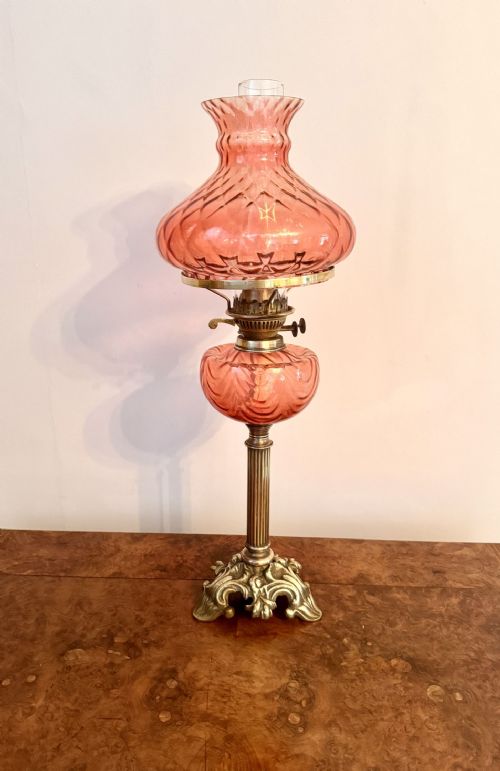
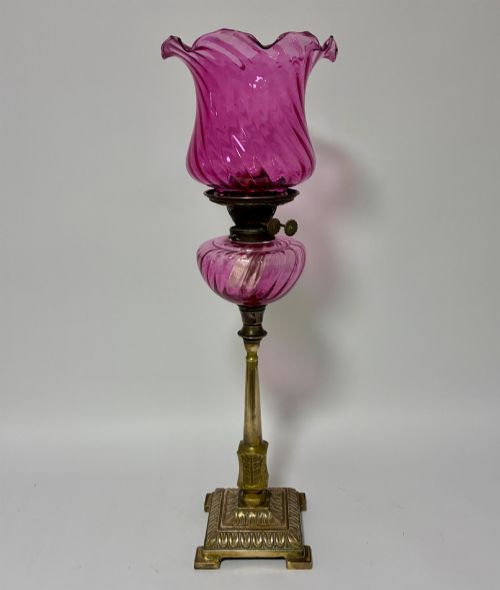
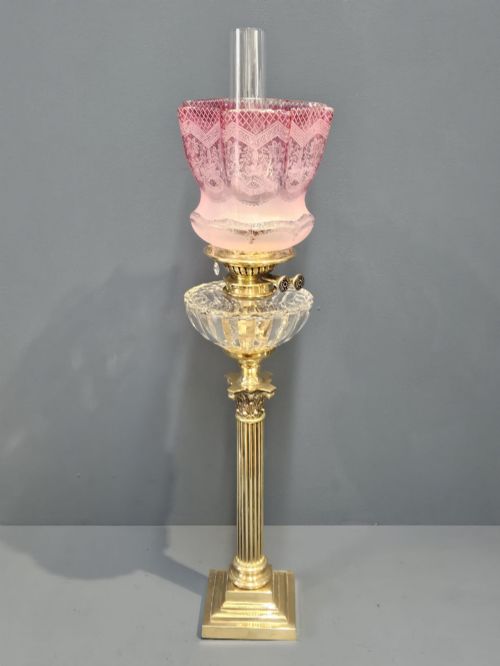
When you search for a pink cranberry glass lamp, you are looking at nineteenth- and early twentieth-century lighting fixtures that combine deep red-tinted glass with brass, ceramic, or porcelain bases. The pieces on this page span the Victorian and Edwardian eras, taking forms from simple table lamps to tall floor standards, desk lamps, and ceiling fittings.
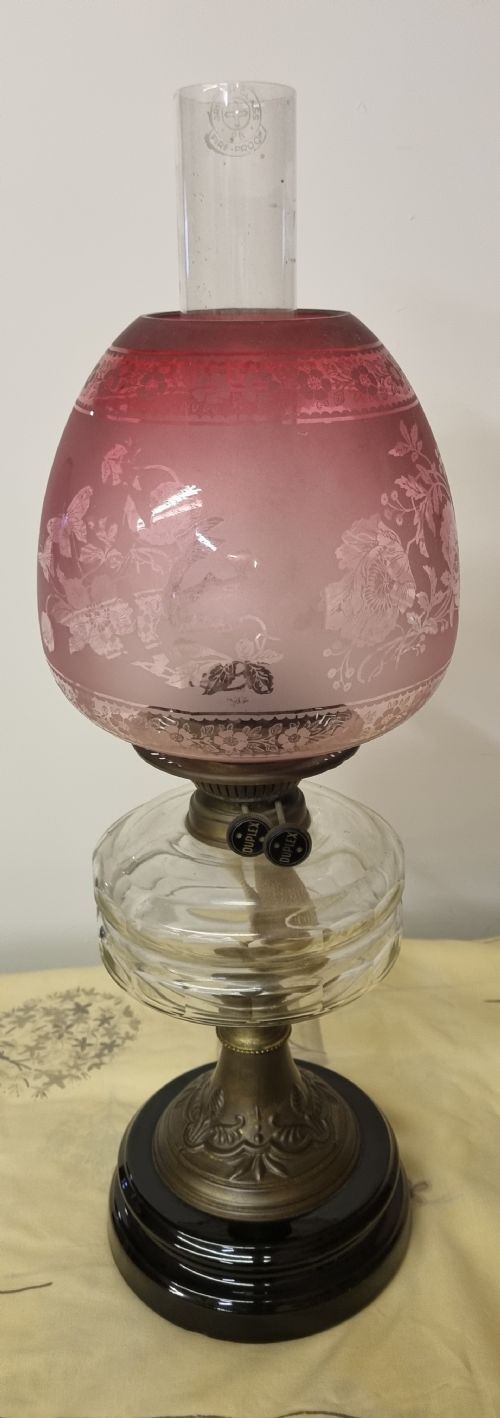
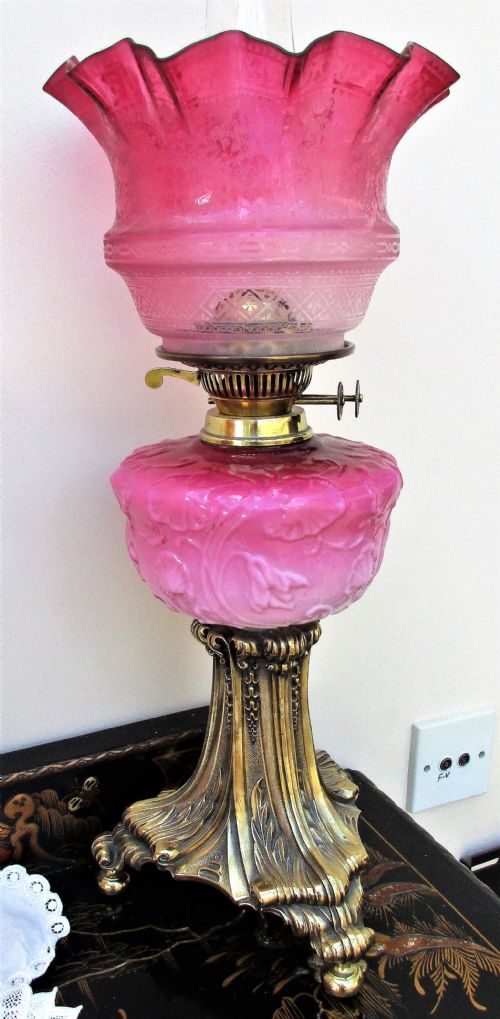
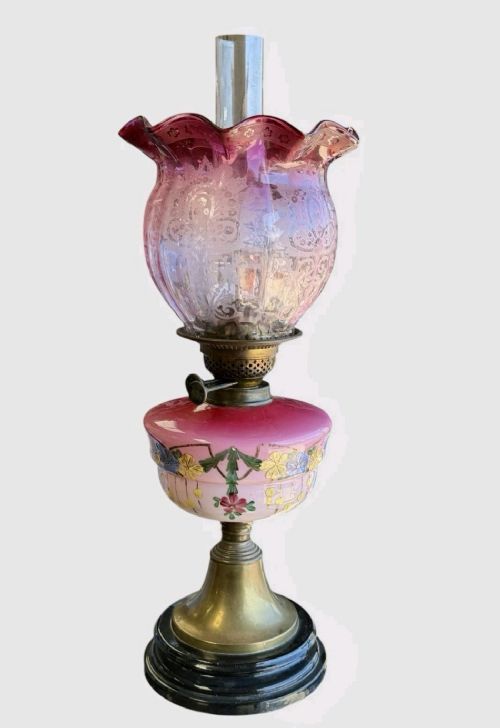
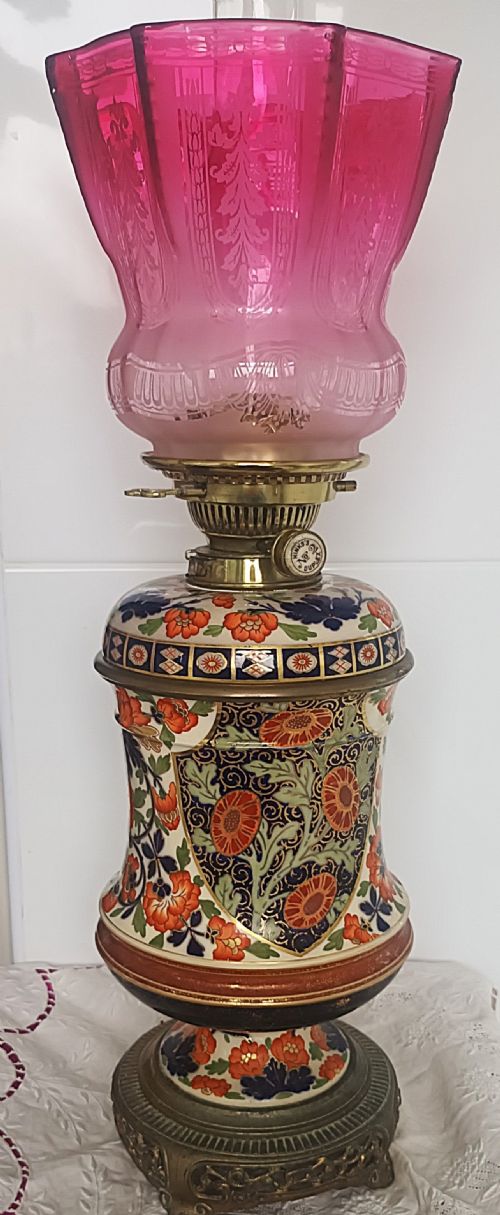
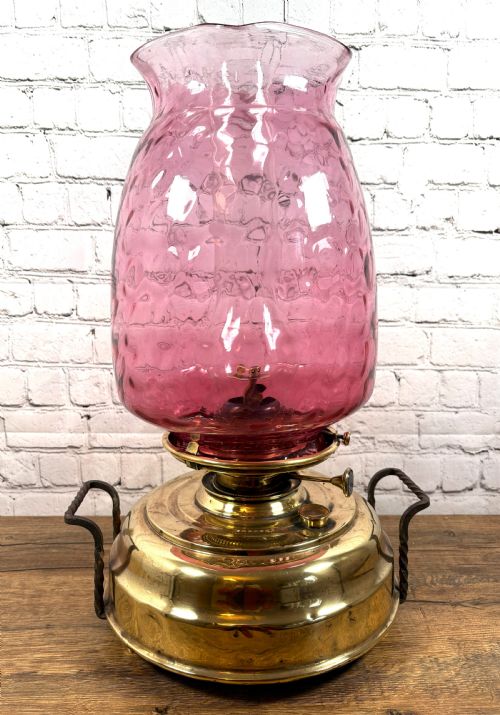
You are most likely to meet a Victorian oil lamp featuring a brass column, a ceramic or glass reservoir, and a crimped or hand-painted cranberry shade. Many of these survive as converted electric lamps or retain their original burners by makers such as Hinks.
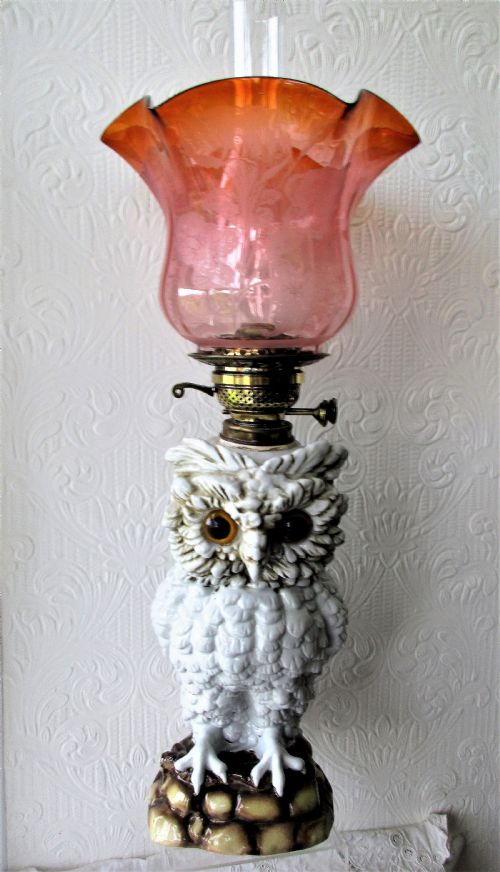
The selection also includes specialised variants like pulpit heaters, chandeliers, and adjustable desk lamps, alongside standalone shades in frilled and etched designs. Origins range from English workshops to German porcelain factories like Sitzendorf.
How they were made
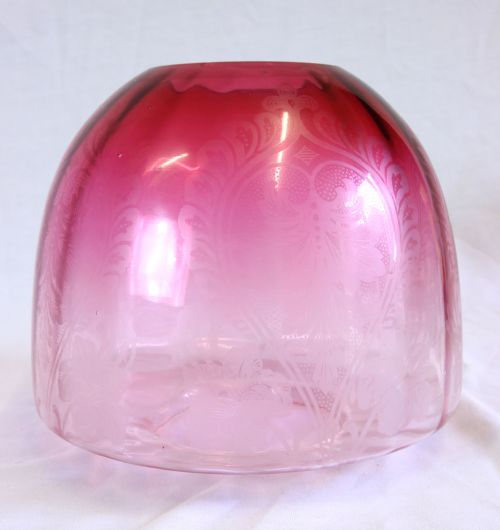
The cranberry glass components rely on gold chloride added to the molten batch to achieve their characteristic pinkish-red tone, which is then blown into moulds or manipulated by hand. Shades often feature frilled edges, etching, or hand-painted floral motifs applied before a secondary firing.
Bases combine cast brass columns in reeded or Corinthian styles with ceramic and porcelain vessels, occasionally incorporating opaque pink glass bodies. Metalwork is frequently mounted on heavy stepped plinths to support the weight of the glass reservoirs and shades.
Object forms span table oil lamps, ceiling fittings, desk lamps, floor standards, and loose shades.
What varies in quality
Quality rests on the depth and saturation of the cranberry glass colour and the crispness of any hand-painted or etched decoration on the shade. Heavier, more complex brass castings, such as Corinthian columns or adjustable mechanisms, distinguish finer examples from standard production pieces.
The integration of materials also defines the tier of the piece, particularly where porcelain figures like the Sitzendorf owl lamps are modelled with fine detail rather than generic moulding.
Hinks·Taylor Tunnicliff·Sitzendorf
The Pink Cranberry Glass Lamp Glossary
- Cranberry glass
- A transparent glass coloured with gold chloride, producing shades from pale pink to deep ruby red. It was widely used for Victorian lampshades and vessels.
- Corinthian column
- A classical architectural column form with an ornate capital decorated in acanthus leaves, frequently utilised for Victorian brass lamp bases.
- Font
- The oil reservoir of a lamp, positioned above the base and below the burner. In these pieces, it is often made of cranberry glass, pink opaque glass, or decorated porcelain.
- Standard lamp
- A tall floor-standing lamp designed to provide ambient room illumination. These typically date from the Edwardian period and incorporate brass uprights.
- Frilled shade
- A lamp shade with a ruffled or crimped edge created while the glass was still hot and malleable. This is a common feature on Victorian cranberry shades.
Pink Cranberry Glass Lamp: Frequently Asked Questions
What is a cranberry glass lamp?
A cranberry glass lamp is a nineteenth- or early twentieth-century lighting fixture featuring distinct pinkish-red glass elements, usually in the shade or the oil reservoir.
Most examples combine this coloured glass with brass columns or ceramic bases, reflecting Victorian and Edwardian domestic interiors.
How do I date a brass and cranberry lamp?
Dating relies on stylistic markers such as reeded or Corinthian brass columns, burner manufacturer stamps, and the complexity of the glass shaping.
Victorian pieces often feature heavy classical metalwork, while Edwardian examples introduce sleeker adjustable desk formats and simpler standard lamp designs.
Were these lamps originally for oil?
Yes, the majority of these pieces were manufactured as oil lamps before domestic electricity became widespread in homes.
Many retain their original burners and reservoirs, though a significant number have been professionally converted for modern electric use.
What is the difference between a font and a shade?
The font is the container that held the lamp oil, sitting centrally on the body of the lamp beneath the burner. The shade is the decorative glass dome positioned on top to diffuse the light.
Both components in these pieces are frequently made from matching cranberry or pink glass.