
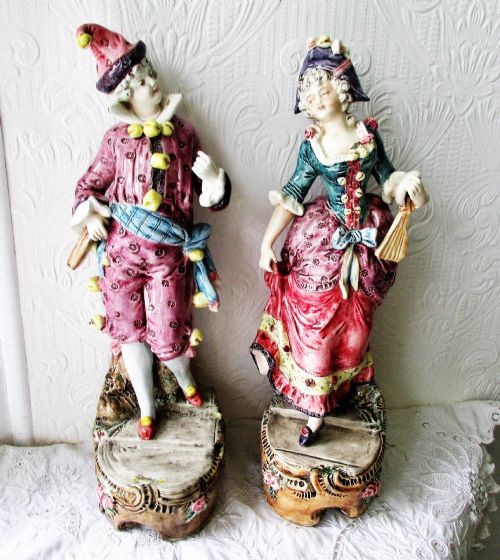
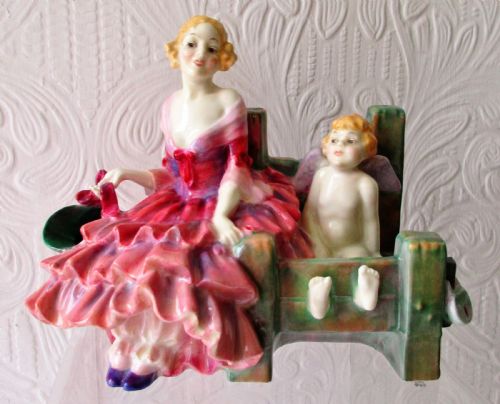
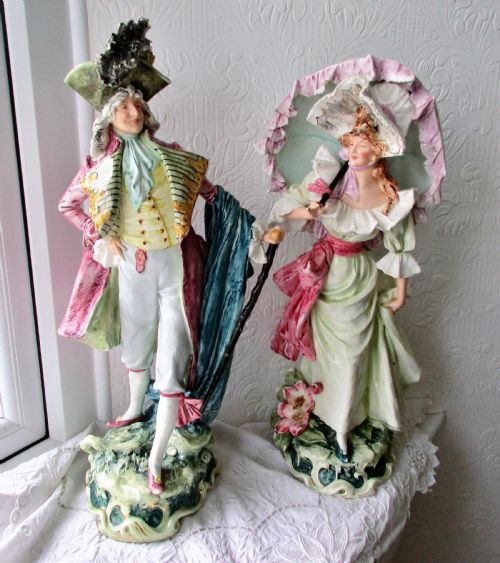
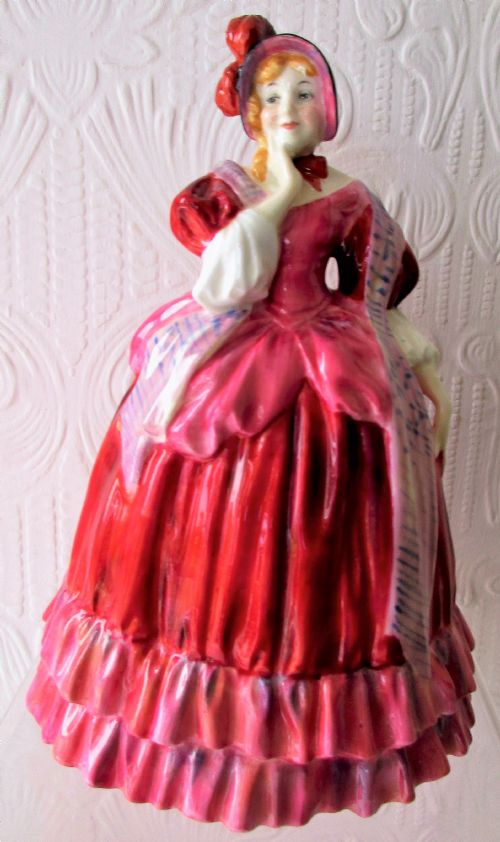


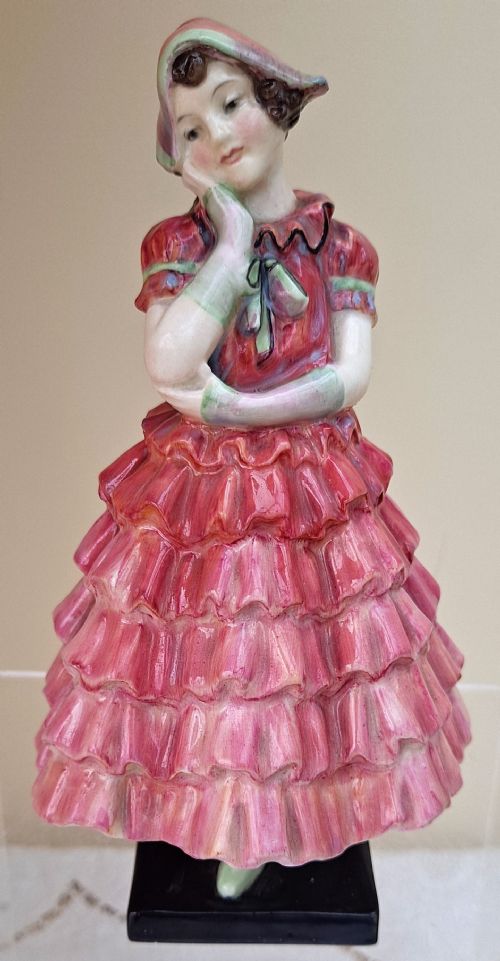


Pink Glazed Ceramic Figurines
Pink glazed ceramic figurines are moulded portraiture and decorative figures finished in blush tones, prized for their delicate palettes and period character.
Pink Glazed Ceramic Figurines
Pink glazed ceramic figurines span multiple decades and stylistic movements, ranging from Victorian portrait figures and Edwardian romantic models to Art Deco studies and French earthenware works.
Buyers searching for pink glazed ceramic figurines encounter decorative subjects such as gallants, ladies, royal figures, mythological characters, and natural forms modelled in earthenware, porcelain, and faience.
The material surface varies considerably across these periods, encompassing high-gloss ceramic glazes, soft enamel accents, and coloured parian bodies that define the character of each piece.
How they were made
Potters shaped these figures using porcelain, earthenware, bone china, and faience, frequently employing moulds to achieve intricate detail before applying coloured glazes and enamel highlights.
Firing techniques varied from traditional kiln glazing to specialised majolica and ceramic finishes, securing rich surface tones across Victorian and Art Deco productions.
Listings feature periods from the nineteenth century through to 1930, utilising porcelain, earthenware, faience, and bone china.
What varies in quality
Glaze application and surface preservation dictate the visual strength of a piece, with smooth, even colour distribution and well-preserved enamel details elevating the overall execution.
Royal Doulton·Royal Dux Bohemia·Royal Worcester·Copeland
The Pink Glazed Ceramic Figurines Glossary
- Faience
- Tin-glazed earthenware originating in Europe. This technique produces an opaque, smooth surface suitable for painted details.
- Majolica
- A colourful lead-glazed earthenware popular during the nineteenth century. It is known for vibrant, heavy-metal oxide colours.
- Parian
- A fine-grained, unglazed porcelain resembling carved marble. Coloured variations introduce distinct tinted bodies to sculptural figures.
- Flatback
- A style of Staffordshire figure modelled primarily for display against a wall. The reverse is typically unglazed and unmodelled.
Pink Glazed Ceramic Figurines: Frequently Asked Questions
How do I date these figures?
Dating relies on factory marks, registration numbers, and stylistic cues such as Victorian realism or Art Deco geometry.
Comparing the glaze type and modelling style against known production eras helps narrow down the decade of manufacture.
Where were these figures displayed?
Victorian and Edwardian households placed these decorative pieces on mantelpieces, sideboards, and occasional tables as parlour ornaments.
Flatback figures were specifically designed to sit flush against drawing-room walls.
How should I clean them?
Dust surfaces gently with a soft, dry brush to prevent accumulation in crevices and around delicate enamel details.
Avoid submerging antique pieces in water, as moisture can penetrate hairline fractures in older ceramic glazes.
What is the difference between porcelain and earthenware?
Porcelain is fired at higher temperatures, resulting in a vitrified, non-porous body that is often translucent.
Earthenware is more porous and opaque, requiring a complete glaze coating to achieve a waterproof and finished surface.