


Pink Glazed Ceramic Figures
Pink glazed ceramic figures bring character to a room, ranging from playful nineteenth century pottery to Art Deco table pieces.
Pink Glazed Ceramic Figures
When you search for pink glazed ceramic figures, you encounter a varied assortment of decorative objects spanning the Victorian era through the Art Deco period. These pieces take the form of porcelain figurines, earthenware figures, vanity accessories, and large sculptural models created by prominent European factories.
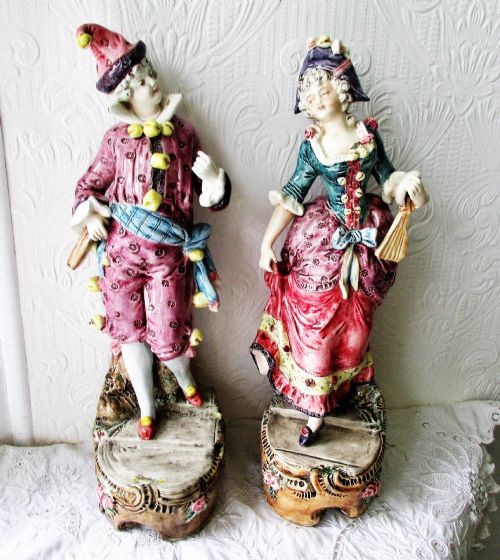
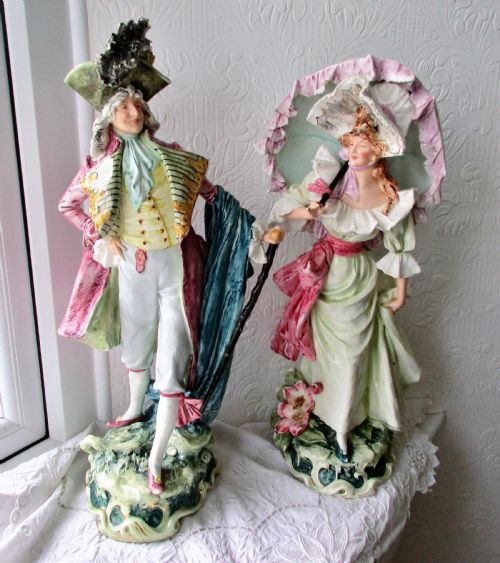
The nineteenth century examples often present historical portraits, pairs of gallants and ladies, or classical subjects styled in Victorian, Rococo Revival, or French Rococo aesthetics. Staffordshire flatbacks and French faience demonstrate the earlier Victorian taste for narrative and portraiture.
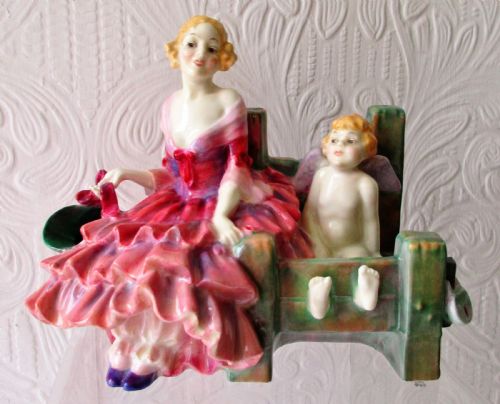
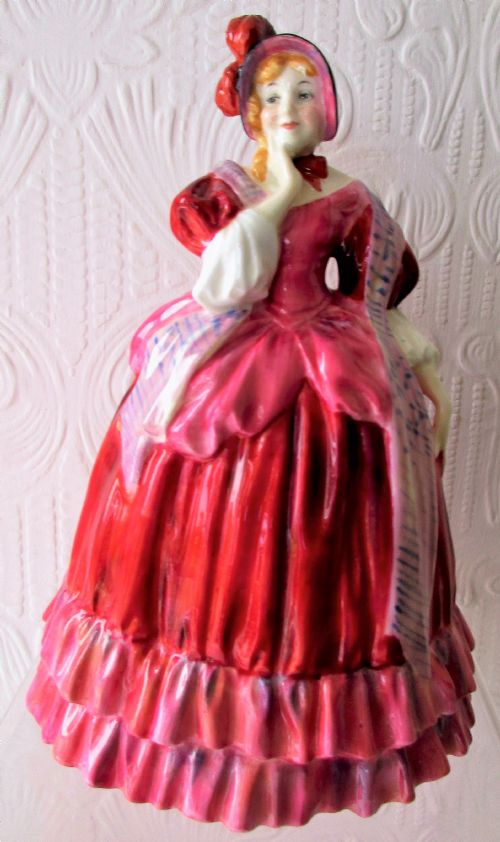
By the Edwardian era and the 1930s, the style shifts towards Art Nouveau and Art Deco designs. You find powder puff stands, perfume vanity sets, and ceramic nudes alongside Royal Doulton characters and Royal Dux models from Bohemia.
What varies in quality
Early numbered models and signed pieces by noted modellers demonstrate higher artistic ambition. The distinction between factory production grades determines the refinement found in the finished figurine.
Staffordshire potters immortalised royal weddings in clay, allowing Victorians to place miniature monarchs directly onto their mantelpieces.
Royal Doulton·Royal Dux Bohemia·Royal Worcester·Eichwald·Copeland
The Pink Glazed Ceramic Figures Glossary
- Faience
- Tin-glazed earthenware produced in Europe, often associated with French decorative traditions. It provides an opaque white surface suitable for painted decoration.
- Majolica
- A colourful lead-glazed earthenware pioneered by factories such as Royal Worcester in the nineteenth century. The technique creates rich, vibrant tones across figurative subjects.
- Bone china
- A type of porcelain incorporating bone ash, yielding a durable and slightly translucent body. English potteries utilised this material for detailed character figurines.
- Flatback
- A ceramic figure designed with an unglazed or finished flat rear side meant for placement against a wall or mantelpiece. This method was standard for Victorian Staffordshire portrait figures.
- Bisque
- Unglusted porcelain fired to a matte, porous finish resembling marble. It appears in Victorian pairs alongside glazed elements to create textural contrast.
Pink Glazed Ceramic Figures: Frequently Asked Questions
How do I date an antique porcelain figure?
Dating relies on factory marks, the ceramic body, and stylistic markers such as Victorian dress or Art Deco geometric lines. Reference numbers and signatures on the base often point to a specific decade of production.
Changes in glazing techniques and materials from the nineteenth century to the 1930s further clarify the manufacturing period.
How were vanity accessories used?
Powder puff stands and perfume sets served as decorative dressing table accessories in the early twentieth century. They combined sculptural art with practical functions for daily grooming.
These pieces brought colour and novelty to bedroom interiors during the Art Deco era.
Are pairs of figures more desirable?
Matched pairs of figures, such as gallants and ladies or companion animals, were originally produced to balance mantelpieces or display cabinets. Surviving pairs retain their original decorative symmetry.
Collectors often value intact pairs because matching pieces frequently become separated over time.