



Pink Glass Vase
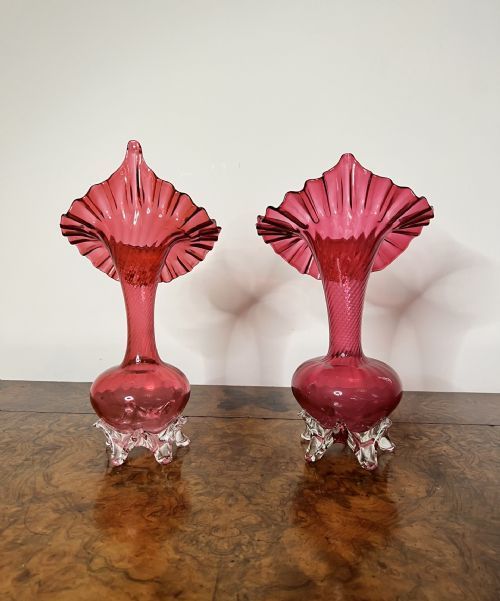
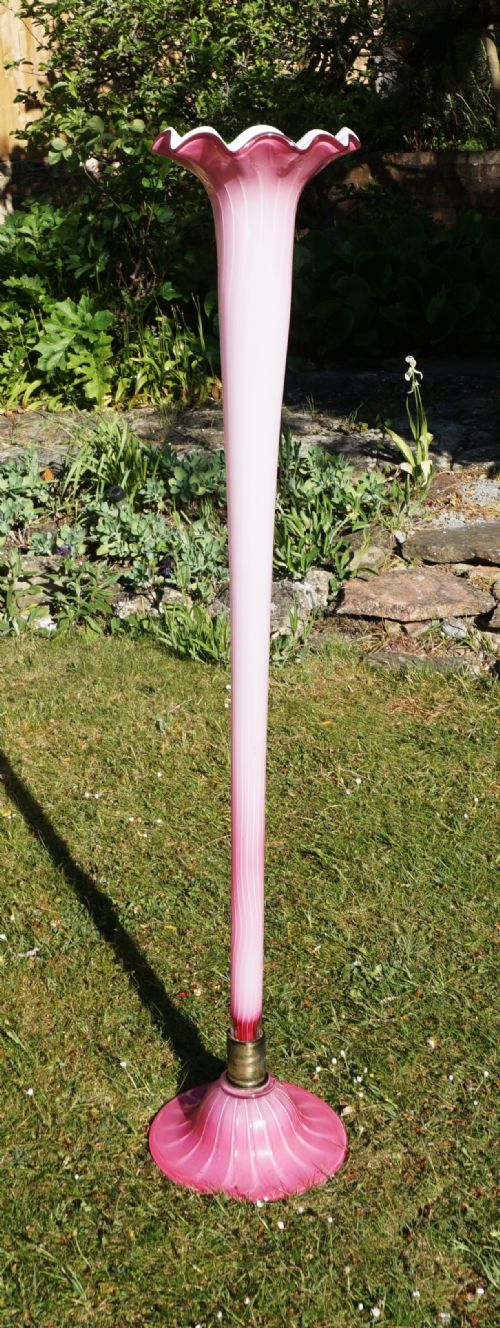
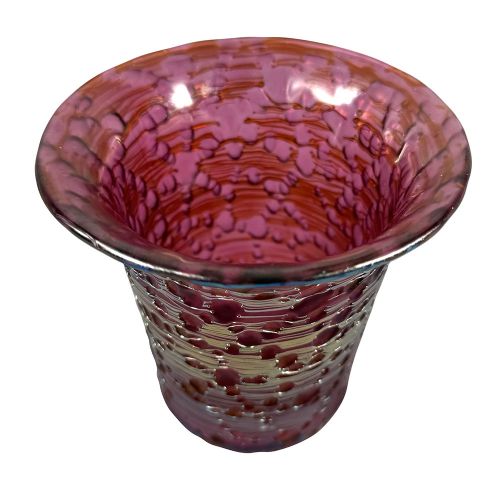
A pink glass vase brings immediate warmth to a room, catching the light through rich cranberry hues, delicate opaline surfaces, and iridescent art glass finishes.
Pink Glass Vase
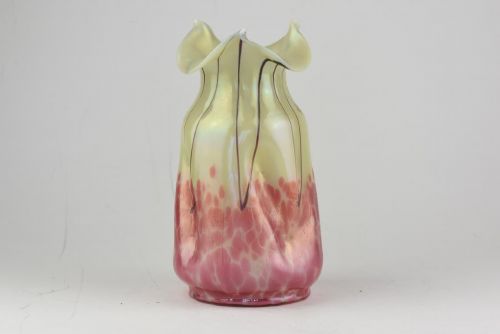
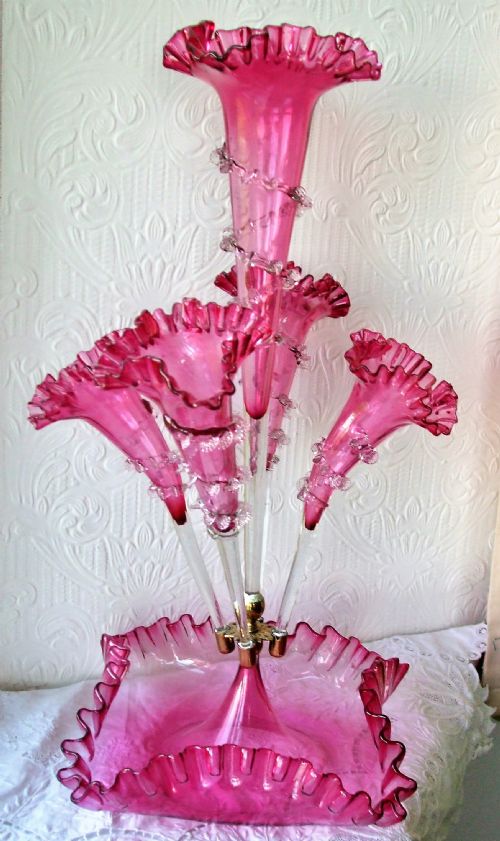
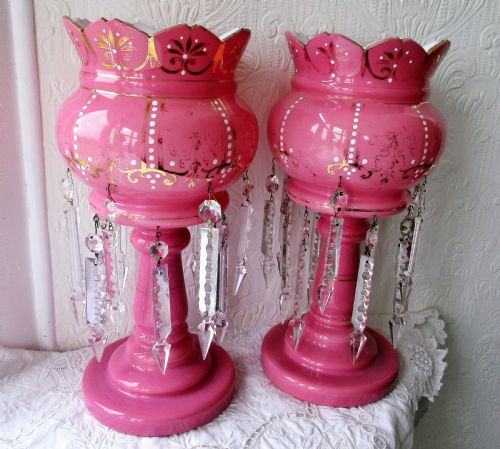
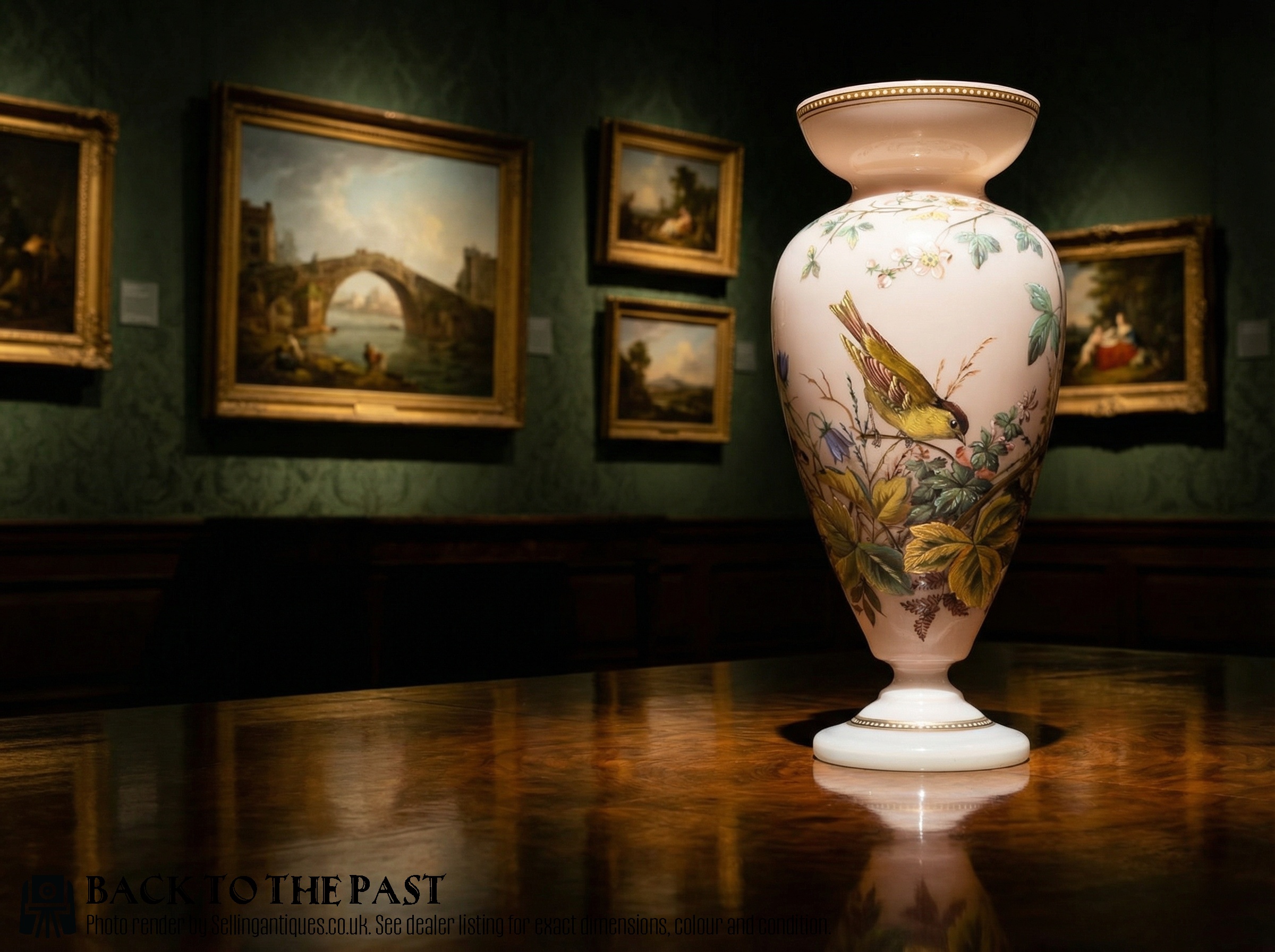
A pink glass vase encompasses a diverse array of forms, ranging from tall lily shapes and jack-in-the-pulpit designs to elaborate mantle lustres and multi-piece epergnes. The selection spans the nineteenth century through the Victorian era into the art nouveau and art deco periods.
Buyers will most frequently encounter nineteenth-century Victorian cranberry glass and art nouveau pieces on this page. These items often feature characteristic applied trails, enamel decoration, or cased glass construction originating from English, Bohemian, and continental makers.
How they were made
Glassmakers utilised techniques such as cased glass, where layers of different coloured glass are fused together, alongside acid-etching and cameo carving to create depth and contrast. Molten metal was shaped freehand into organic forms or blown into moulds to achieve specific silhouettes like cornucopias and fluted lilies.
Surface ornamentation involved hand-painting with enamel, applying gold leaf accents, or adding contrasting trails of white cane and uranium green glass bases. Lustres and epergnes frequently incorporated brass components to support hanging glass prisms and detachable trumpets.
Pink Glass Vase Retail Price Guide 2026
Typical asking prices for pink glass vase among the pieces listed under this phrase on Sellingantiques today, from the lower quarter to the upper quarter. They describe what is for sale here now, not the wider market.
Listings feature items spanning the 1860s through the mid-twentieth century, encompassing Victorian, art nouveau, and art deco periods.
What varies in quality
The distinction between tiers rests upon the execution of the glassblowing and the precision of the surface decoration. Superior pieces display crisp cameo carving with distinct layers, finely controlled iridescence, and meticulously hand-painted enamel details that remain sharp and well-defined.
Proportion and balance also dictate standing, as demonstrated in the symmetry of matched pairs and the structural integration of complex epergnes and lustres. Greater finesse in the manipulation of hot glass, evident in smooth casing and clean applied trails, elevates an example above standard production.
Thomas Webb and Sons·Emile Galle·Pallme Konig·Libochovice·Walther and Sohne·Harrach
The Pink Glass Vase Glossary
- Cranberry Glass
- A rich pinkish-red transparent glass coloured with gold chloride during the melting process. This tone became immensely popular during the Victorian period for tablewares and decorative ornaments.
- Cased Glass
- Glass made from multiple distinct layers of different colours, often white inside and pink outside. Craftsmen frequently cut away portions of the outer layer to reveal the contrasting colour beneath.
- Epergne
- A large table centrepiece featuring a central bowl with multiple detachable arms, trumpets, or baskets. They were typically fashioned from cranberry or pink glass to hold flowers and fruit.
- Mantle Lustre
- A decorative vase fitted with a ring of hanging glass prisms designed to catch and refract candlelight. These pieces were traditionally displayed on fireplace mantles during the nineteenth century.
- Jack-in-the-Pulpit
- A distinctive nineteenth-century vase shape featuring a wide, ruffled rim pulled upwards to resemble the flower of the same name. They often utilised striking cranberry or vaseline glass.
- Cameo Glass
- A luxury art glass technique where layers of contrasting colours are acid-etched or carved away by hand. The resulting low-relief designs often depict floral or natural motifs.
Pink Glass Vase: Frequently Asked Questions
How do I clean an antique epergne?
Wash each detachable component individually using lukewarm water and a mild detergent. Avoid submerging any brass mounts or painted enamel sections to protect the delicate surfaces.
Allow every piece to dry completely on a soft cloth before reassembling the centrepiece. Take care when handling slender trumpet sections and hanging prisms.
What is the difference between cranberry glass and ruby glass?
Cranberry glass relies on gold chloride to produce a characteristic transparent pinkish-red hue. It typically appears lighter and warmer in tone.
Ruby glass often employs different mineral formulations that yield a deeper, denser coloration. Both varieties saw extensive use across Victorian decorative objects.
How do I identify art nouveau pieces?
Art nouveau items display organic, flowing lines inspired by natural forms such as flowers, vines, and water plants. Makers utilised iridescent finishes and cameo carving to echo these fluid structures.
Look for sinuous contours and botanical motifs that break away from strict Victorian symmetry. Many pieces from this movement feature stylised signatures or distinct decorative decors.
Where should I display a mantle lustre?
Place mantle lustres where ambient light can pass through the glass and strike the hanging prisms. They suit prominent flat surfaces such as sideboards, mantelpieces, or entrance tables.
Ensure they sit safely away from heavy household traffic to protect the dangling crystal drops. Position them singly or as a matched pair depending on the scale of the room.