


Pink Gemstone Pendant
A pink gemstone pendant brings a soft, botanical glow to the neckline, combining warm gold settings with lively tourmalines, sapphires, and pearls.
Pink Gemstone Pendant
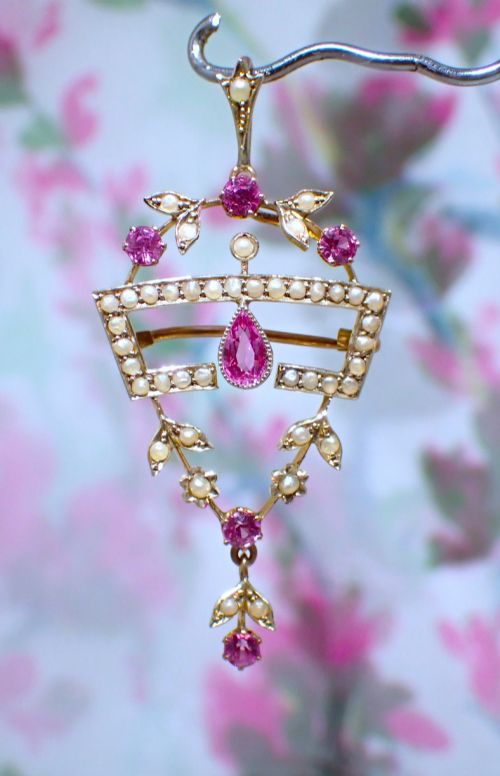
A pink gemstone pendant captures the lighter side of antique and vintage jewellery, appearing most frequently in Edwardian, Victorian, and mid-century forms. The selection here leans heavily towards Edwardian drop pendants and lavaliers, alongside contemporary classic and modernist interpretations.
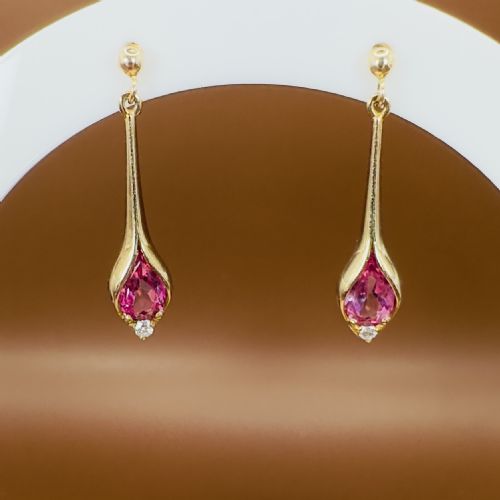
Makers set these pink stones in fifteen-carat gold, nine-carat yellow and white gold, and silver, often pairing the central pink mineral with pearls, diamonds, or contrasting peridots and white sapphires. The resulting pieces range from delicate ribbon-bow motifs to geometric mid-century clusters.
Buyers seeking a pink gemstone pendant will find items that double as brooches, alongside straightforward drop necklaces. The diversity of the era, spanning from eighteen-ninety through to nineteen-sixty, ensures varied expressions of the pink gemstone pendant form.
Materials and construction methods
Goldsmiths constructed these pieces using fifteen-carat gold, nine-carat yellow gold, eighteen-carat white gold, and silver to house the stones securely. Metalwork techniques included fine wirework, gallery settings, and claw mounts designed to let maximum light through the transparent minerals.
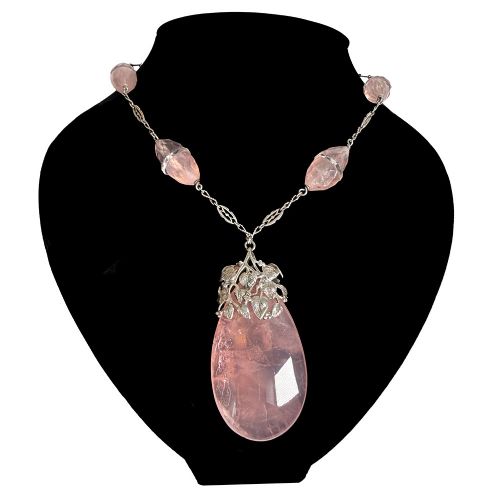
Makers incorporated natural pink tourmalines, padparadscha sapphires, pink topaz, rose quartz, and conch pearls into the designs. These gems were frequently faceted into pear cuts or marquis cuts, or left as carved elements such as horse heads, combined with small accent diamonds and seed pearls.
Distinctions in craftsmanship and materials
The standard of a pink gemstone pendant rests on the integration of the metalwork with the selected stones. Finer examples display meticulous claw or bezel work in higher-carat gold, framing stones with vibrant internal saturation rather than muted colour.
Pieces featuring balanced gemstone combinations, such as tourmalines paired with natural pearls and old-cut diamonds, demonstrate superior design harmony. The precision of the piercing and the integrity of the original settings distinguish the more accomplished works from simpler production.
Amy Sandheim·Chaumet
The Pink Gemstone Pendant Glossary
- Lavalier
- A pendant featuring a stone suspended from a shorter drop, hanging freely from a neck chain. This style enjoyed particular popularity during the Edwardian period.
- Tourmaline
- A complex silicate mineral that occurs in various colours, including the pink and rose shades seen frequently in antique drops and necklaces.
- Suffragette jewellery
- Pieces incorporating the colours green, white, and violet or pink, associated with the early twentieth-century movement. They often combine peridot, white sapphire or pearl, and pink tourmaline.
- Conch pearl
- A non-nacreous pearl found in the queen conch snail, displaying a distinctive flame-like surface pattern. It appears in Victorian and late nineteenth-century pendants.
Pink Gemstone Pendant: Frequently Asked Questions
What periods do these pendants come from?
The pieces span from the late nineteenth century through the Edwardian era and into the mid-twentieth century. You will encounter Victorian, Edwardian, and nineteen-sixties designs.
Each period brings its own characteristic metal choices and gemstone cuts, moving from high-carat gold drop work to modernist cluster arrangements.
How do I wear a pendant that is also a brooch?
Many Edwardian pieces feature a concealed pin and a folding loop at the reverse, allowing the owner to wear the item interchangeably on a chain or pinned to a garment.
Ensure the safety catch functions securely when wearing it as a brooch, or keep the pin tucked firmly away when hung from a necklace.
What stones accompany the pink gems?
Makers frequently paired pink tourmalines and topazes with white pearls, old-cut diamonds, and contrasting green peridots. These combinations enhanced the colour and brilliance of the central stone.
In some pieces, such as suffrage-linked designs, the stones carry specific historical colour arrangements.
How do I care for antique gold and tourmaline?
Clean these items gently with a soft cloth, avoiding harsh chemical dips that might damage softer pearls or delicate gemstone settings. Professional ultrasonic cleaners should be avoided for pieces containing pearls or organic gems.
Store each pendant separately in a lined box to prevent the metal and harder diamonds from scratching the softer pink stones.