


Natural Pearl Pendant Drop
A natural pearl pendant drop brings together delicate organic lustre and fine period goldsmithing, offering an understated elegance collectors prize.
Natural Pearl Pendant Drop
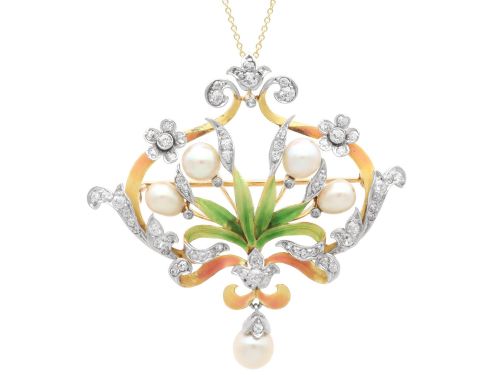
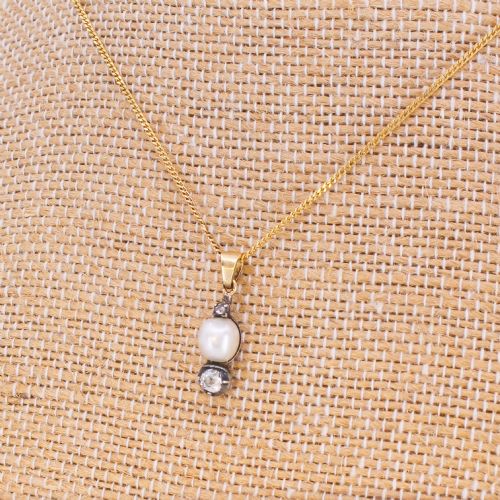
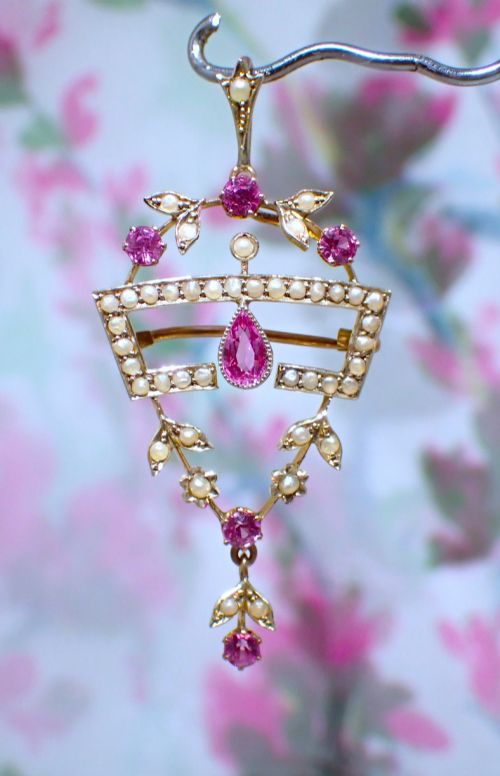
A natural pearl pendant drop is a refined piece of jewellery featuring an organic pearl suspended below a secondary gem or mount, designed to hang gracefully from the neck or ear. These pieces span from the late Victorian and Edwardian eras through to the Art Deco period, capturing distinct shifts in design from opulent clustered settings to geometric platinum lines.
The selections on this page highlight a variety of forms including pendant necklaces, convertible brooch combinations, and matching drop earrings. Buyers frequently encounter Edwardian and 1920s examples where pearls are paired with old-cut diamonds and coloured gemstones such as tourmaline, sapphire, and opal.
Materials and construction
Goldsmiths of the late nineteenth and early twentieth centuries constructed these pendants using combinations of yellow gold, 15ct and 18ct gold, and platinum. Platinum gained favour during the Edwardian and Art Deco periods for its strength, allowing intricate wirework and millegrain edges that held diamonds securely around the central pearl.
Natural saltwater and freshwater pearls form the focal point of these drops, often accompanied by accent stones like rubies, sapphires, and turquoise. Metal components were hand-fabricated, incorporating hinged bails, pin stems for convertible brooch use, and delicate chains.
Materials appearing across the current inventory include yellow gold, platinum, silver, and diverse coloured gems alongside natural pearls.
Judging quality and character
Quality in a natural pearl pendant drop rests on the orient and surface skin of the pearl itself, alongside the harmony of its setting. Superior examples display a thick nacre with a deep, iridescent lustre that reflects light evenly across the drop form.
The standard of metalwork and the choice of complementary gemstones further distinguish the pieces. Fine platinum piercing, crisp millegrain decoration, and well-matched diamonds elevate an antique pendant from a simple accessory to a work of high craftsmanship.
The Natural Pearl Pendant Drop Glossary
- Natural pearl
- A pearl formed spontaneously in a mollusc without human intervention, prized for its distinct organic layers and orient. Unlike cultured varieties, these are entirely natural growths found in saltwater or freshwater environments.
- Millegrain
- A decorative jewellery technique involving a line of tiny raised metal beads along the edge of a setting. This finish softens the transition between metal and stone, characteristic of Edwardian and Art Deco platinum work.
- Lavaliere
- A pendant necklace featuring a central drop suspended from a shorter chain or rigid bar, popular during the Edwardian period. They often incorporate swinging stones that catch the light with movement.
- Parure
- A matched set of jewellery intended to be worn together, frequently comprising earrings, a necklace or pendant, and a brooch. Victorian sets often utilise uniform gemstones and pearls across every component.
Natural Pearl Pendant Drop: Frequently Asked Questions
How do I care for antique pearl pendants?
Organic pearls require gentle handling because nacre is sensitive to acids, cosmetics, and perfumes. Wipe them softly with a clean, damp cloth after wearing and store them away from hard gemstones.
Avoid submerging antique pieces in liquid cleaner, particularly if the pearls are secured with adhesive or mounted on delicate historic gold and platinum settings.
Can these pendants be worn daily?
While platinum and gold settings are durable, natural pearls are softer than diamonds or sapphires. Occasional wear for social occasions preserves the integrity of the silk threading and the pearl surface.
For regular use, check the security of the suspension loop and the condition of the chain to prevent accidental loss of the drop.
How do I identify an Edwardian pendant drop?
Edwardian pieces often feature light platinum or white gold frameworks decorated with millegrain edges and openwork garland motifs. They frequently pair pearls with diamonds, aquamarines, or tourmalines in airy, symmetrical designs.
Heavier yellow gold mountings combined with rich coloured stones usually point to earlier Victorian origins, whereas geometric rigidity indicates the later Art Deco period.