


Pink Frosted Glass Lamp
A pink frosted glass lamp brings a soft, diffused glow to a room, combining tactile nineteenth-century and early twentieth-century textures with warm illumination.
Pink Frosted Glass Lamp
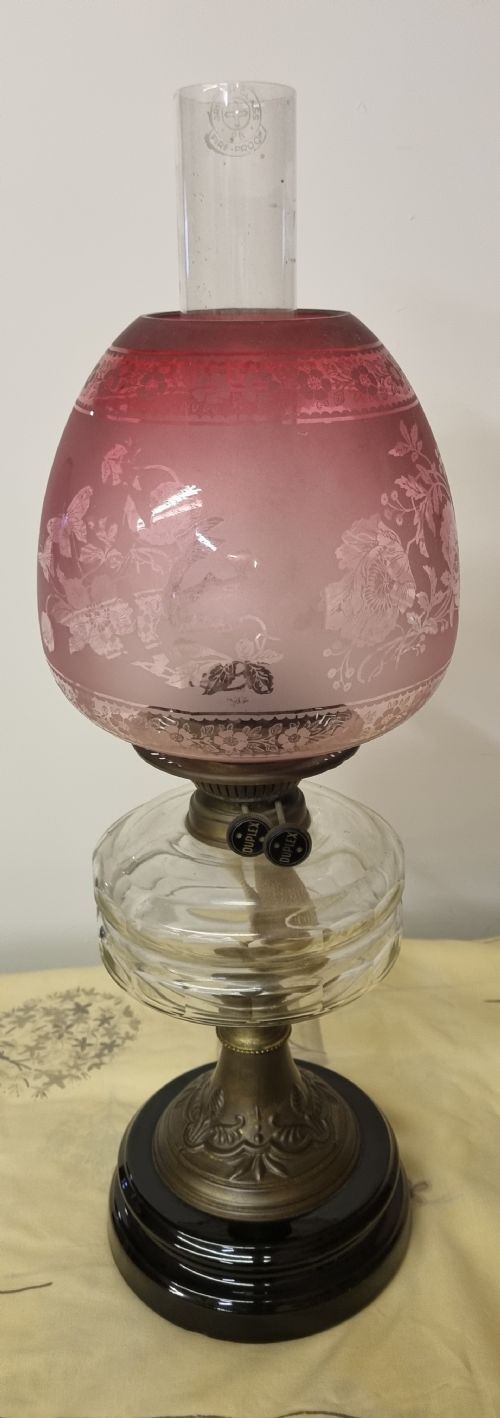
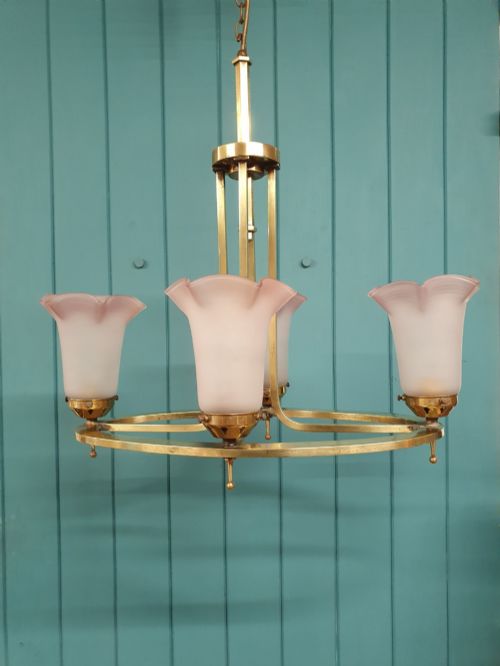
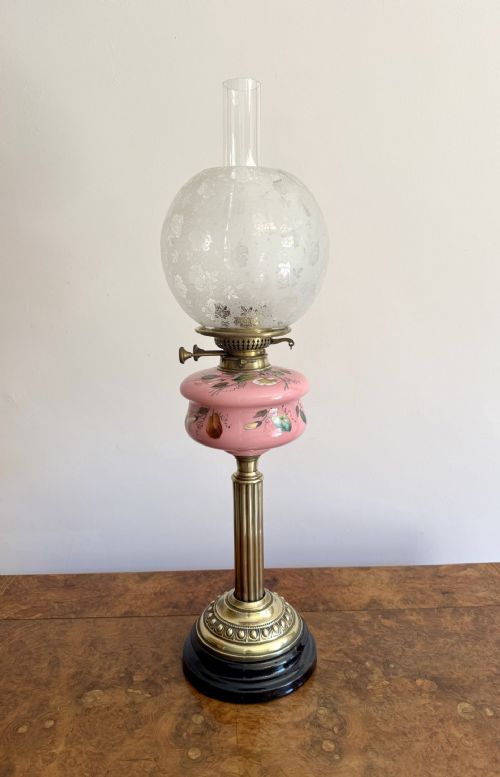
When you search for a pink frosted glass lamp, you encounter items shaped by Victorian, Edwardian, and Art Deco design, spanning table lamps, oil lamps, desk lamps, and hanging shades. These pieces range from nineteenth-century brass oil lamps with tinted glass reservoirs to geometric 1930s creations.
The version most commonly met on this page combines heavy brass or marble bases with delicate tinted glass shades or reservoirs. You will find items that began life as paraffin burners alongside electrical table lamps and directional desk lights from the early twentieth century.
How they were made
Maker's workshops combined cast or spun brass, white marble, and sometimes spelter with moulded or acid-etched glass components. Metalwork forms sturdy reeded columns, swan-neck frames, and stepped bases designed to anchor top-heavy glass shades securely.
Listings feature items spanning from the 1860s through to the 1930s, constructed primarily from brass, marble, and frosted glass.
What varies in quality
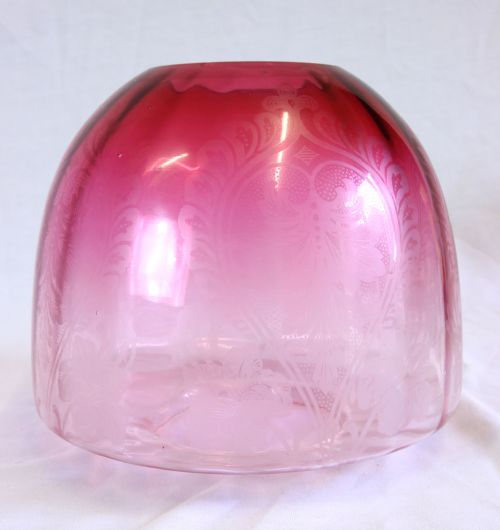
The distinction between ordinary and exceptional examples lies in the crispness of the metal casting and the depth of the glasswork. Heavier gauge brass, substantial marble plinths, and deeply etched botanical or geometric patterns indicate superior craftsmanship.
Proportion and integrity also define the better specimens. Pieces that retain their original matched shade and weighted column demonstrate a higher level of historical preservation than those assembled from mismatched parts.
Walther and Sohne·Hinks
The Pink Frosted Glass Lamp Glossary
- Frosted glass
- Glass treated by acid-etching or sandblasting to create a translucent, non-reflective surface that softens light. This technique became widespread during the Victorian and Art Deco periods for interior lighting.
- Cranberry glass
- A rich red-pink glass produced by adding gold chloride to the molten batch. It is a defining material of nineteenth-century decorative lighting and tableware.
- Spelter
- An alloy of zinc and lead used as a cheaper alternative to bronze for sculptural lamp bases, frequently painted or bronzed to resemble heavier metal. It is commonly found on twentieth-century figural and mood lamps.
- Reeded column
- A vertical shaft decorated with parallel convex mouldings, frequently utilised on nineteenth-century brass oil lamps for a classical architectural appearance.
Pink Frosted Glass Lamp: Frequently Asked Questions
Are these lamps converted to electricity?
Many oil lamps and paraffin burners from the Victorian period have been safely adapted for modern electrical use over time. Some retain their original burners alongside concealed wiring, while others are designed exclusively for standard bulbs.
Check individual descriptions to understand how a specific piece is wired and whether it requires specialised vintage bulbs or standard modern fittings.
How do I clean frosted glass?
Wash frosted glass gently in warm soapy water using a soft cloth, avoiding abrasive pads that can scratch the delicate textured surface. Rinse thoroughly and dry with a lint-free cloth to prevent water spots.
Take extra care around acid-etched or hand-painted details, as harsh chemical cleaners can damage the vintage finish.
How do I date a brass lamp base?
Victorian and Edwardian brass bases often feature heavy reeded columns, ornate casting, and threaded components characteristic of nineteenth-century engineering. Art Deco examples from the 1920s and 1930s tend to show geometric stepped designs or streamlined curves.
Examining the construction methods, screw types, and overall weight helps distinguish nineteenth-century production from later twentieth-century manufacturing.
Can I use modern lamp shades on these bases?
Original shades are proportioned specifically to match the weight and fitter size of each base, particularly on oil lamps and desk fixtures. Replacing a shade requires matching the precise fitter gallery diameter to ensure the glass sits securely.
Preserving the original pairing maintains both the aesthetic balance and the historical integrity of the piece.