


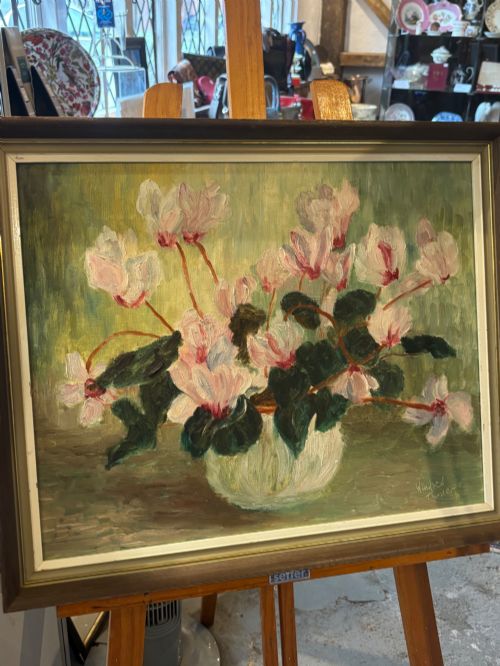


Pink Floral Oil Painting
A pink floral oil painting brings soft botanicals and rich texture into a room, offering enduring warmth through layered pigments.
Pink floral oil painting
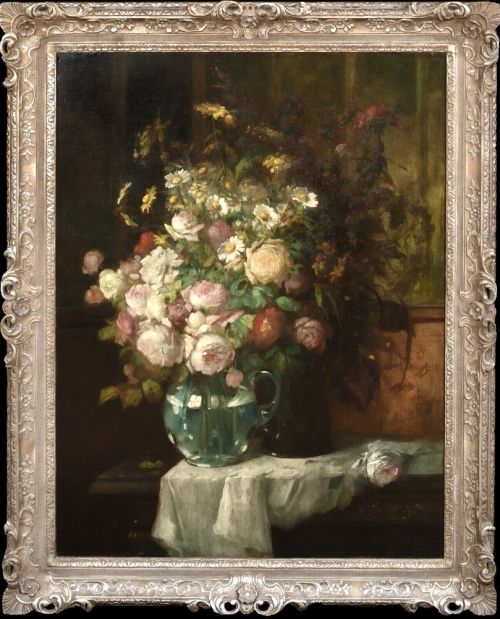
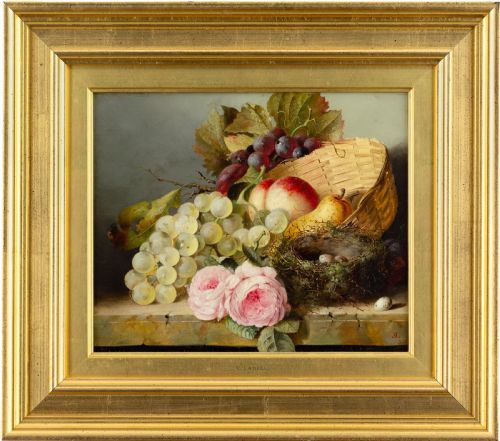
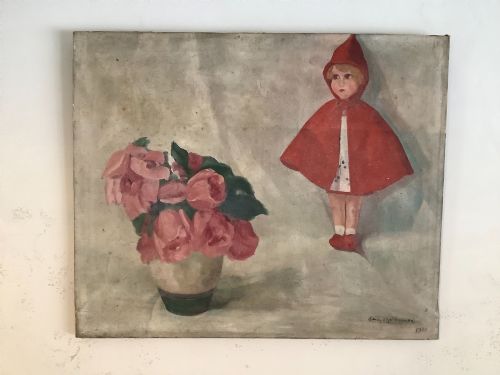
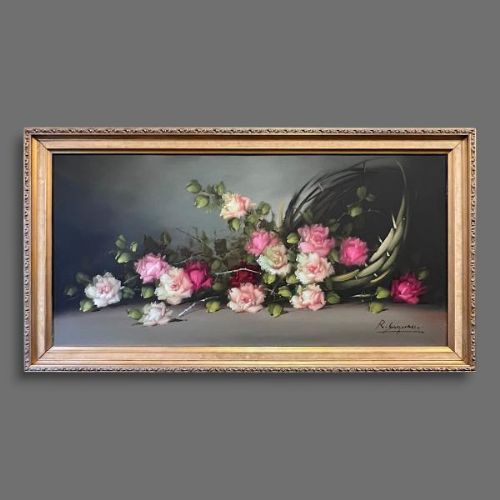
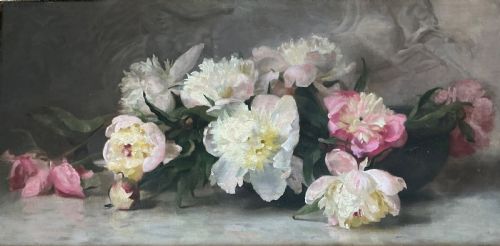
A pink floral oil painting captures botanical subjects through expressive brushwork and substantial pigment, bringing warmth and character to an interior. These works span the nineteenth century and the early twentieth century, presenting studies of roses, sweet williams, geraniums, and tulips.
The compositions vary from simple tabletop arrangements to detailed vases set against draped cloth. Buyers will encounter both canvas and board supports, housed within wooden or gilt frames that complement the painted flora.
Origin and stylistic approach shift across the selection, encompassing French impressionism and post-impressionism alongside nineteen-thirties realism. Each piece records a distinct artistic interpretation of floral subjects rendered in oil.
How they were made
Artists built these works by applying oil paint to woven canvas or rigid wooden board surfaces. The medium allowed for impasto buildup and smooth blending, creating depth within the petals and leaves.
Finished paintings were secured within wooden frames, sometimes finished in gilt to enhance the visual weight of the composition. The physical support determined the longevity and texture of each botanical study.
Retail Price Guide 2026
Typical UK retail prices for pink floral oil painting, calculated from the Sellingantiques database of over a million retail prices indexed since 2003. This retail price guide relies exclusively on Sellingantiques data; no external sources or auction records are used, so the figures do not describe the wider market.
Artistic approaches represented include realism alongside French impressionism and post-impressionism.
What varies in quality
Quality rests in the handling of light and the confidence of the brushwork across the petals and surrounding drapery. Superior examples demonstrate a careful balance of tone and structural integrity within the floral arrangement.
The preservation of the pigment and the harmony of the original frame elevate certain works above simpler decorative studies.
Freda Marston·Jules Felix Ragot·W E Littlewood
The Pink Floral Oil Painting Glossary
- Oil paint
- A slow-drying medium composed of pigments suspended in a drying oil, typically linseed. This allows artists to blend colours seamlessly and build textured surfaces.
- Canvas
- A heavy woven fabric stretched across a wooden frame to serve as a support for painting. It provides slight spring and uniform texture.
- Board
- A rigid flat panel used as a painting support instead of stretched fabric. It offers a firm surface for direct application of pigments.
- Gilt
- A thin layer of gold leaf or gold paint applied to wooden frames. It adds reflective warmth to the perimeter of the artwork.
- Impasto
- Paint applied thickly to a canvas or board, leaving brush or palette knife marks standing proud of the surface. This technique creates physical dimension.
Frequently Asked Questions
What periods do these paintings come from?
The works originate from the nineteenth century and the early twentieth century, including pieces dated to the nineteen-thirties.
These periods reflect varied artistic movements from realism to French post-impressionism.
What surfaces are used for these artworks?
Painters utilised both stretched canvas and rigid wooden boards as supports for their oil pigments.
Each surface imparts a distinct character to the handling of the paint and the overall presentation.
How should I frame an oil painting?
Selecting a wooden or gilt frame that matches the historical period helps preserve the aesthetic integrity of the artwork.
Proper framing also protects the edges of the canvas or board from environmental wear.
What floral subjects appear most often?
The compositions frequently feature roses, sweet williams, geraniums, and tulips arranged in vases or on draped cloths.
These botanical studies highlight the varied tonal possibilities of pink pigments within still life traditions.