




French School Still Life
These French school still life paintings capture domestic and botanical subjects with continental flair, offering collectors a rich slice of history.
Defining the French school still life
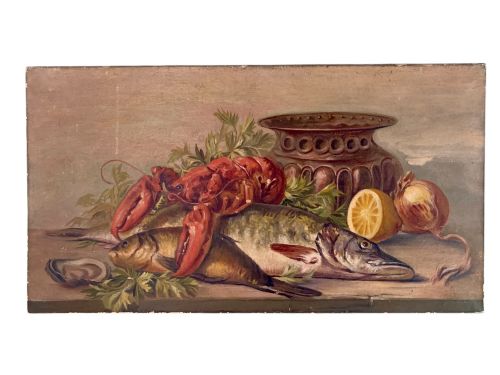
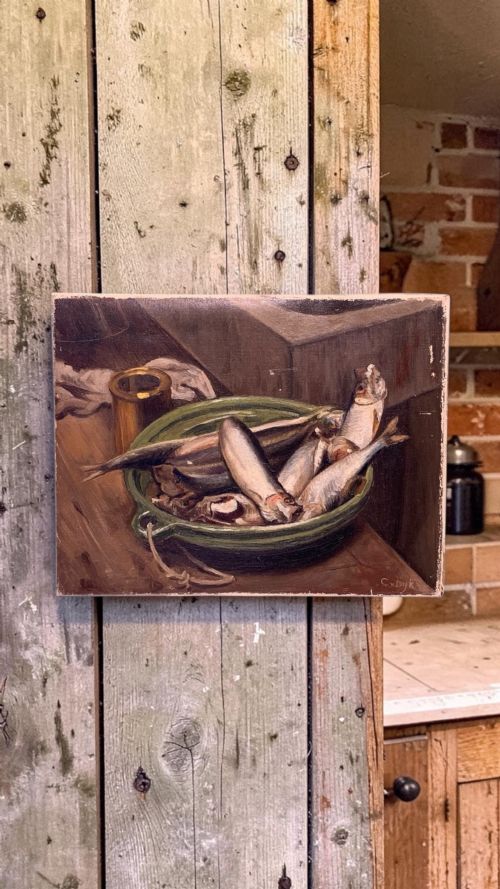
A french school still life brings together carefully arranged objects, florals, and foodstuffs rendered in oil on various supports. These works capture everyday subjects, from humble fish and cottage flowers to elaborate urns of roses and cascading fruit.
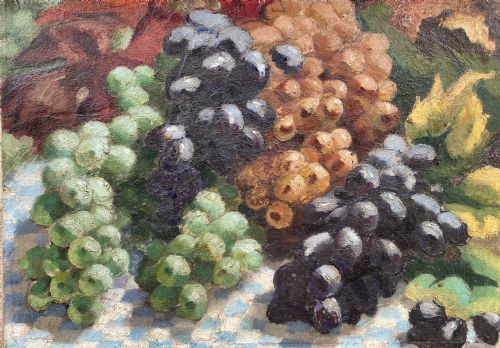
The pieces appearing on this page span the nineteenth century, the nineteen-thirties, and the nineteen-forties. Buyers regularly encounter subjects featuring anemones, grapes, snails, and songbirds alongside traditional floral arrangements.
Subgenres range from detailed botanical studies to works bearing the influence of realism and impressionism. Each canvas or metal panel reflects the distinct aesthetic priorities of its period of origin.
Materials and construction
Artists painted these compositions primarily using oil paint applied to woven canvas supports. Selected works instead utilise metal plates as a sturdy ground for the pigments.
The application of oil paint allows for subtle tonal gradations and rich textures, particularly visible in the rendering of flower petals, fruit skins, and draped cloth.
Certain compositions include unexpected garden visitors, featuring snails creeping near clusters of grapes alongside perched songbirds.
Assessing the execution
Quality rests upon the artist's command of light, shadow, and compositional balance within the arrangement. Superior examples demonstrate confident brushwork that defines form and texture without overworking the surface.
The handling of secondary details, such as drapery folds or foliage, distinguishes accomplished studio work from simpler decorative pieces. Stronger paintings retain vibrant pigment application and secure adherence to the primary support.
JULES FELIX RAGOT·A. Fremont
The French School Still Life Glossary
- Canvas
- A heavy woven fabric stretched across a wooden frame to serve as a painting surface. It provides a slightly textured ground suited for oil pigments.
- Oil paint
- A slow-drying medium composed of pigments suspended in a drying oil, typically linseed oil. This medium allows for rich colour blending and impasto effects.
- French realism
- An artistic movement focusing on the everyday depiction of subjects without idealisation. It prioritises truthful observation of the physical world.
- French impressionism
- A style capturing transient visual impressions through small, thin brush strokes and an emphasis on accurate depiction of light. It informs many later botanical and domestic compositions.
Frequently Asked Questions
What subjects appear in these paintings?
The compositions feature natural and domestic subjects including fish, cottage flowers, roses in urns, and various fruits such as grapes and plums.
Additional elements like songbirds, butterflies, and draped cloths frequently accompany the primary arrangements to add narrative depth.
Which materials were used by the artists?
Makers applied oil paint to traditional woven canvas supports or occasionally onto rigid metal plates.
These durable materials have preserved the varied floral and botanical scenes across multiple centuries.
How do these works reflect different periods?
Earlier eighteenth and nineteenth-century pieces often employ formal arrangements influenced by realism, focusing on detailed botanical accuracy.
Twentieth-century examples from the nineteen-thirties and nineteen-forties introduce looser brushwork and more vibrant palettes characteristic of impressionist developments.
Where should I hang a still life?
These domestic paintings suit dining rooms, drawing rooms, or studies where traditional lighting flatters the rich oil pigments.
Pairing them with period furniture helps integrate the continental aesthetic into modern interiors.