




Pink Enamel Bowl
A pink enamel bowl brings rich, hand-painted colour to a room, offering both decorative charm and historical depth.
Pink Enamel Bowl
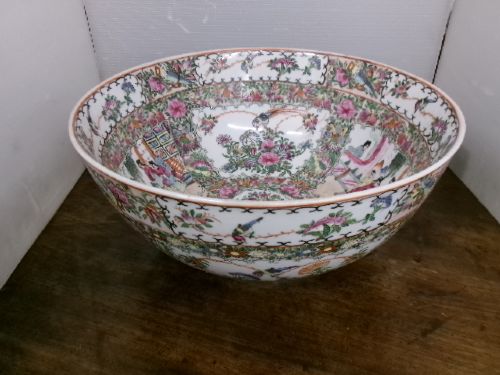
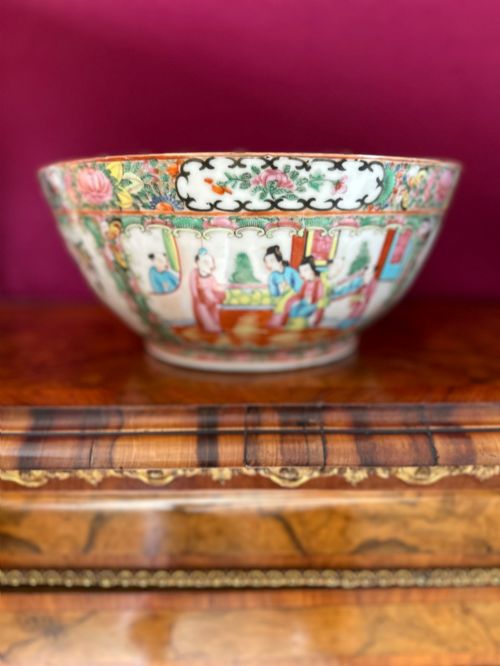
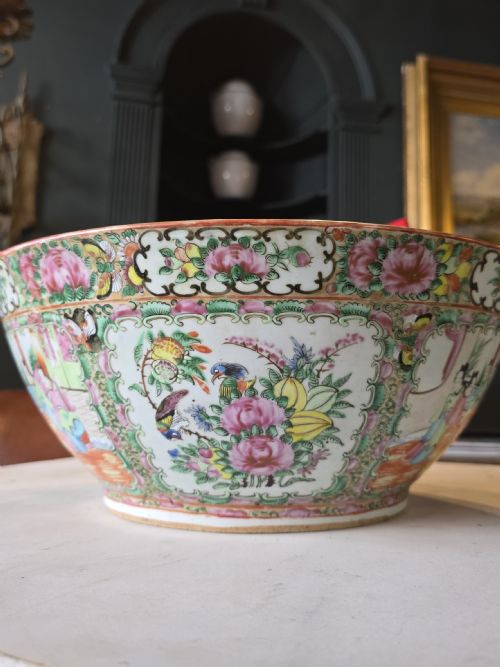
A pink enamel bowl encompasses a variety of antique vessels, from large Chinese Canton punch bowls to small 18th century Limoges salt cellars and Victorian dressing table accessories. When searching for a pink enamel bowl, buyers frequently encounter porcelain pieces decorated in the Cantonese Famille Rose palette or Rose Medallion style, alongside occasional European metal and enamel works.
The objects span multiple periods, with 19th century Chinese export porcelain appearing alongside 18th century French pieces and 1930s British silver and enamel items. Forms range from massive jardinieres and punch bowls down to delicate tea bowls and saucers.
What varies in quality
The precision and detail of the hand-painted brushwork dictate the distinction between standard and superior examples, particularly in complex figures, medallion borders, and floral motifs. Crisp definition in the gilding and richness in the pink overglaze enamels signal higher craftsmanship.
The weight, stability, and integrity of the underlying porcelain or metal body matter significantly, as larger punch bowls and jardinieres require robust construction to survive centuries without structural compromise.
Listings feature 18th century, 19th century, and Art Deco periods, utilising porcelain, enamel, copper, brass, and gold leaf.
Samson Of Paris
The Pink Enamel Bowl Glossary
- Famille Rose
- A prominent palette of opaque pink and rose enamel colours introduced to Chinese porcelain during the Qing dynasty. Artisans used this palette to depict intricate figures, flowers, and narrative scenes.
- Rose Medallion
- A specific Chinese export porcelain decorative style featuring segmented panels filled with birds, butterflies, and figures, arranged around a central medallion. Pink enamel dominates these detailed floral and figural compositions.
- Plique-a-jour
- An enamelling technique resembling miniature stained glass, where enamel is fired in open cells without a metal backing. This method allows light to shine through the translucent coloured glass.
- Mandarin Pallet
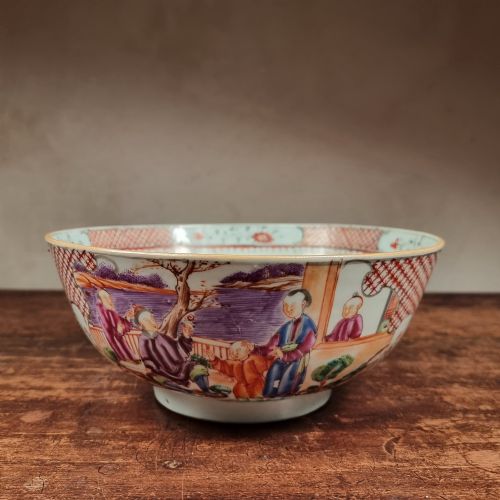
- A style of Chinese export porcelain decoration characterised by pictorial scenes depicting court figures and daily activities. These designs make extensive use of rose enamel and rich gilding.
- Jardiniere
- A large decorative bowl or pot designed to hold growing plants or flowers. These substantial vessels often feature heavy hand-painted enamel decoration.
Pink Enamel Bowl: Frequently Asked Questions
Are these bowls safe for food use?
Most antique bowls featuring overglaze enamel and gold leaf are intended strictly for decorative display rather than daily dining. Historic enamels can contain trace elements and older pigments that are unsuitable for acidic or hot foods.
Gentle use for dry items like potpourri or wrapped sweets is acceptable, but modern culinary use should be avoided to protect the hand-painted surfaces.
How do I tell Chinese export from European pieces?
Examine the base clay body and the specific style of the enamel pigments. Chinese export porcelain typically displays distinct foot rings and characteristic paste textures differing from French or British manufactures.
Subject matter and brushwork technique also provide clear indicators, as Cantonese and Qing dynasty pieces follow specific traditional decorative conventions.
What is the difference between a punch bowl and a jardinere?
A punch bowl is a wide, open vessel historically used for mixing and serving beverages at social gatherings. These pieces feature finished interior and exterior decoration designed to be viewed from all angles.
By contrast, a jardiniere is built heavier to hold potted plants and soil. They often lack interior decorative painting because foliage and water usually conceal the inside.