





Pink China Figurine
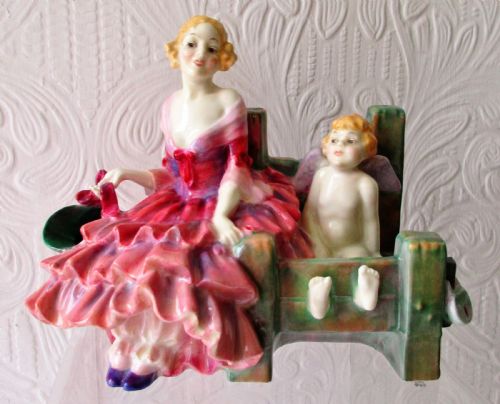
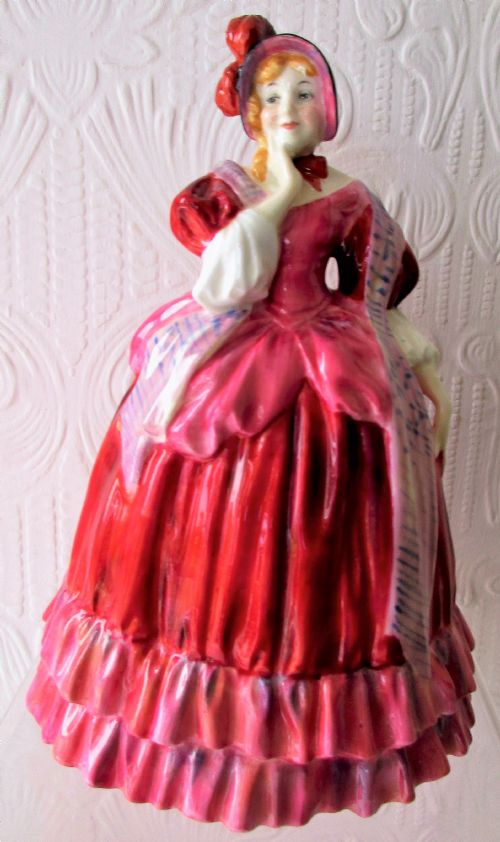
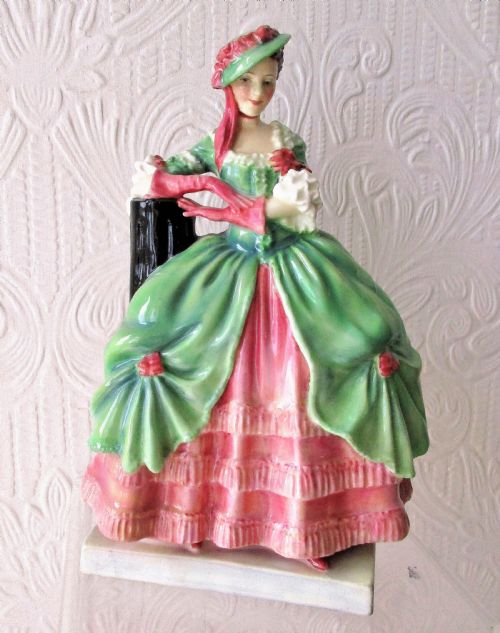
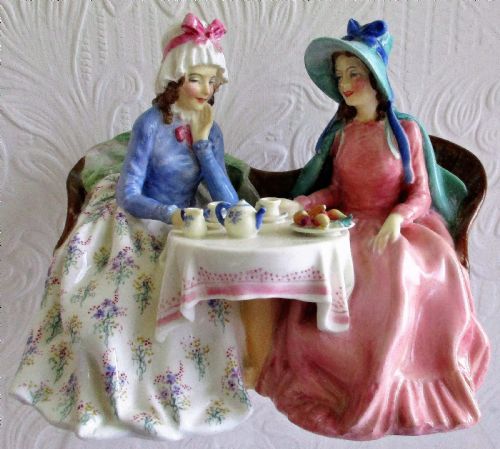
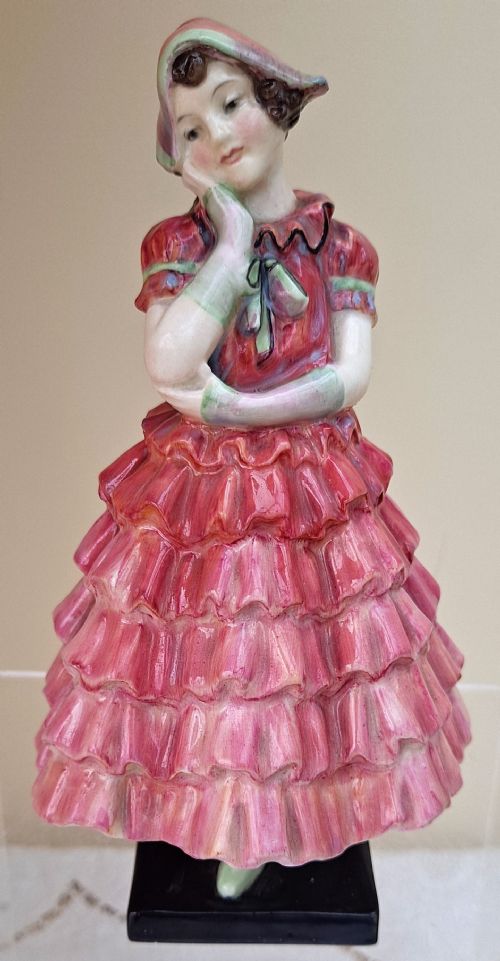
These pink china figurine examples combine porcelain and glaze to bring sculptural character and colour into a room.
Pink China Figurine
A pink china figurine represents a sculpted person or scene modelled in ceramic form, often carrying soft pastel hues and detailed painting. When you search for a pink china figurine, you encounter pieces spanning from the mid-eighteenth century to the mid-twentieth century.
The selections on this page range from early English porcelain and German Victorian fairings to French biscuit porcelain figures and later twentieth-century English porcelain models. Many of these decorative objects take the form of named characters or allegorical figures produced by notable European potteries.
How they were made
Makers shaped these objects using porcelain, bone china, and biscuit porcelain, applying ceramic glaze and enamel to seal the surface and add colour. Gold leaf details appear on select early examples to highlight decorative edges and garments.
Techniques varied from the delicate pastel painting seen on eighteenth-century English porcelain to the unglazed bisque finish utilised by French and German workshops in the nineteenth century.
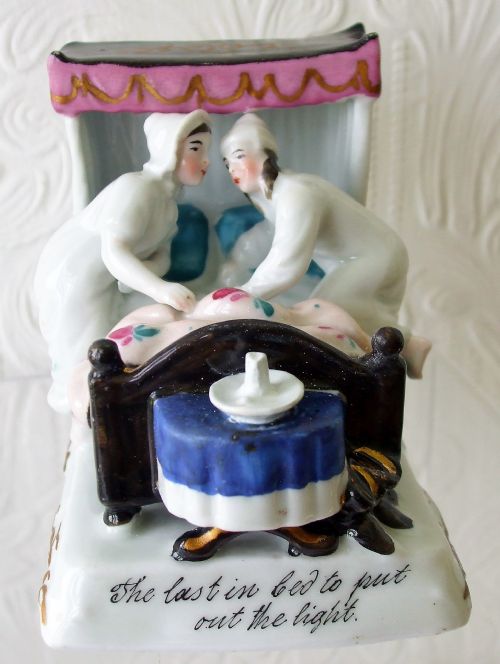
Victorian fairings capture domestic humour with titles like The Last in Bed to Put Out the Light.
What varies in quality
The refinement of the modelling and the precision of the hand-painted enamel decoration distinguish the finer examples from simpler commercial output. Early figures show careful attention to facial expression and the drape of garments.
The choice of body material also marks a difference in quality, with translucent bone china and early soft-paste porcelain representing distinct manufacturing traditions compared to later mass-produced ceramics.
Royal Doulton·Chantilly·Bow·Volkstedt
The Pink China Figurine Glossary
- Biscuit porcelain
- Unadorned ceramic material that has been fired once without a glossy glaze, producing a matte, tactile surface. This finish allows sculptural details to remain crisp.
- Bone china
- A type of porcelain containing bone ash, known for its high strength and milky white translucency. It provides a smooth base for painted enamel decoration.
- Fairing
- A small, humorous ceramic ornament popular in the Victorian era, often depicting domestic scenes with a narrative title. These pieces were frequently given as prizes at fairs.
- Gold leaf
- Extremely thin sheets of beaten gold applied to ceramic surfaces for ornamentation. It highlights specific contours on clothing and bases.
- Enamel
- Coloured vitreous glass fused to the ceramic body during firing to create permanent painted details. It provides the pink and pastel hues characteristic of these figures.
Pink China Figurine: Frequently Asked Questions
How do I clean a pink china figurine?
Dust these delicate ceramic objects gently with a soft dry brush to remove particles without damaging the painted surface.
Avoid using harsh chemical cleaners or submerging glazed or biscuit porcelain in water, as moisture can harm older painted details.
What periods do these figurines cover?
The pieces span from the mid-eighteenth century through the nineteenth century and into the nineteen-thirties and forties.
Early examples display rococo influence and pastel hues, while later twentieth-century pieces often feature named characters and distinct maker marks.
Where were these ceramic figures made?
Production centres include England, Germany, and France, with specific factories contributing distinct styles of modelling and glazing.
English potteries produced character figures, while German and French workshops created allegorical pieces and fairings.
How can I tell early porcelain from later china?
Early porcelain often exhibits a softer body paste and hand-painted pastel hues, sometimes accompanied by factory marks like anchors.
Later pieces from the twentieth century utilise refined bone china and carry specific model numbers alongside factory stamps.