

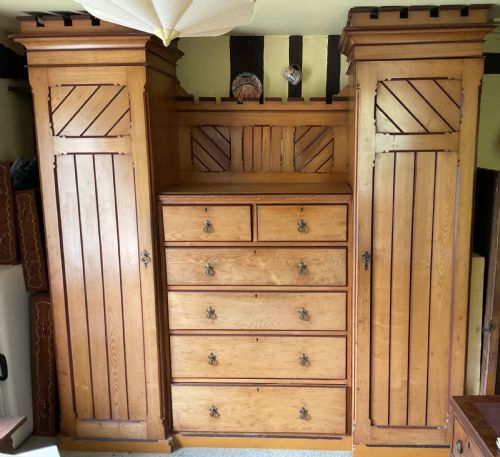
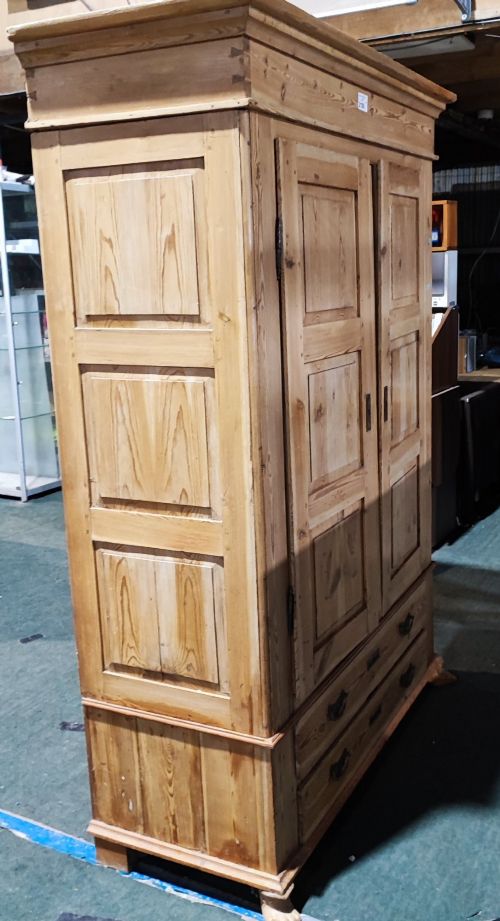
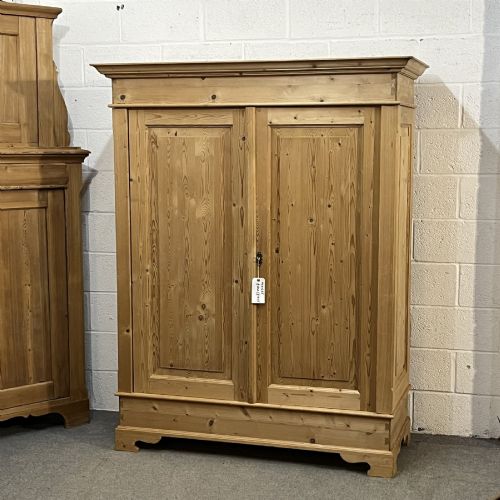
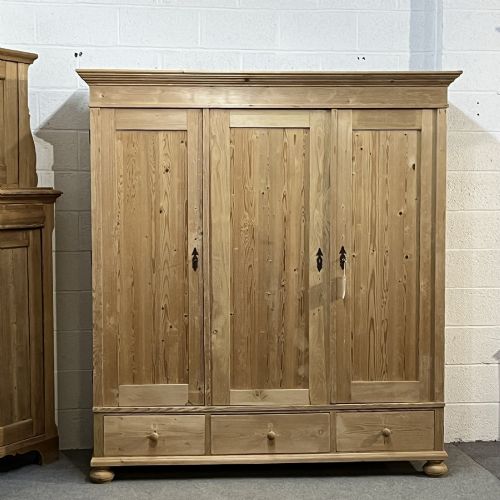
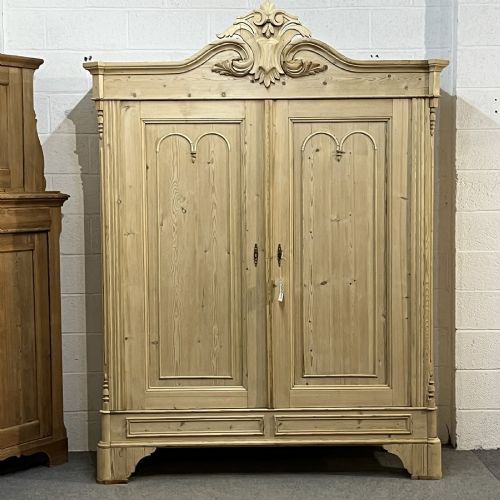
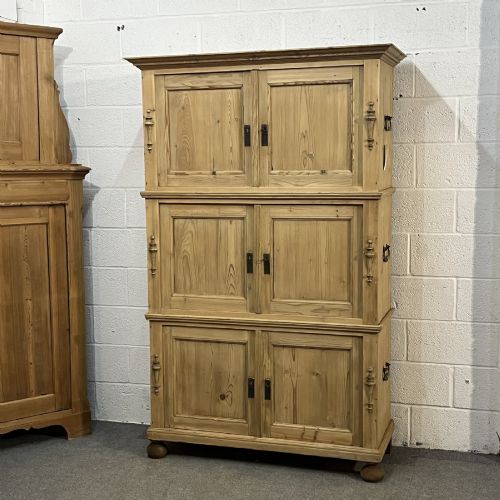
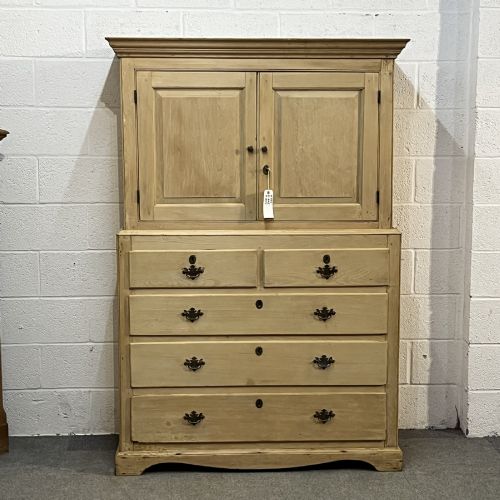
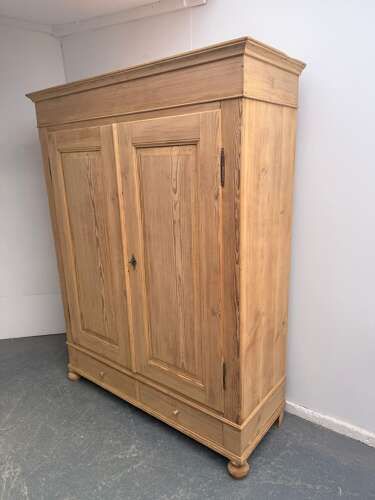
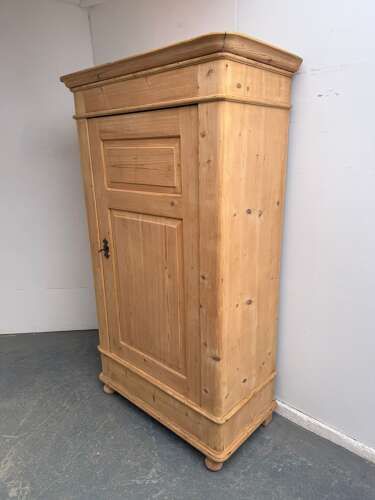
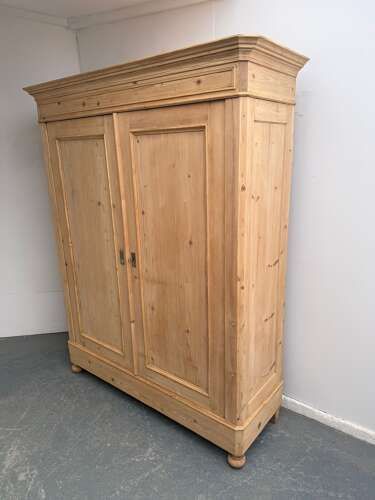
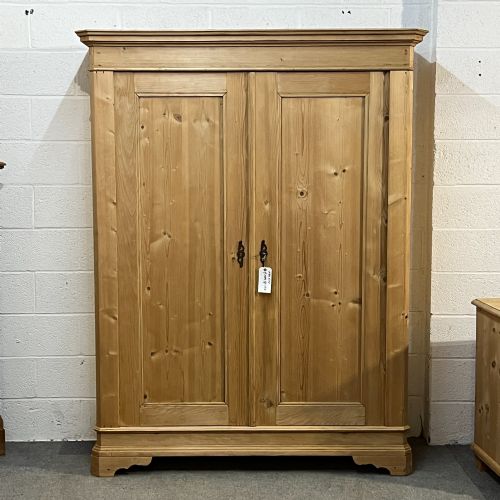

Pine Wardrobe Cupboard
A pine wardrobe cupboard provides generous domestic storage in sturdy timber, bringing practical utility and soft warmth to a bedroom.
Pine Wardrobe Cupboard
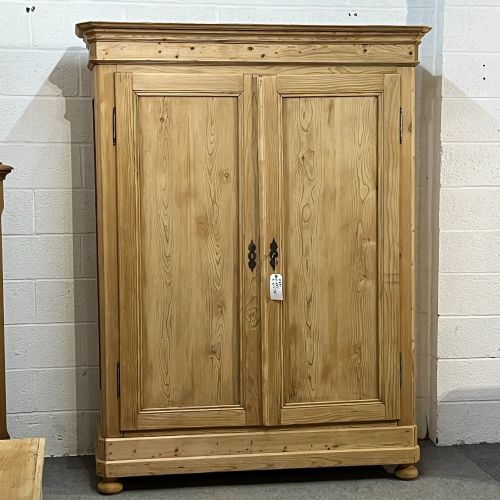
A pine wardrobe cupboard serves as a substantial place for hanging garments, linen storage, and household organisation. These pieces span Georgian, Victorian, and early twentieth-century periods, alongside French and Swedish country traditions.
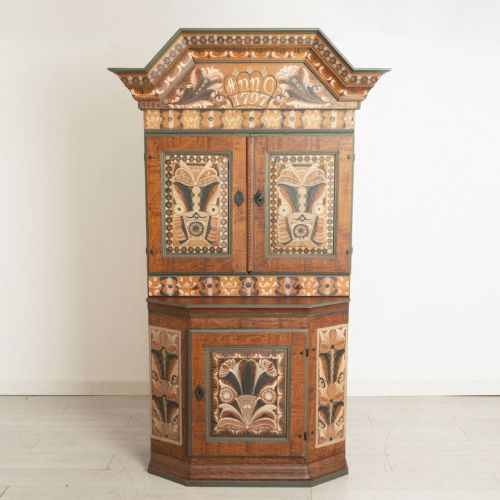
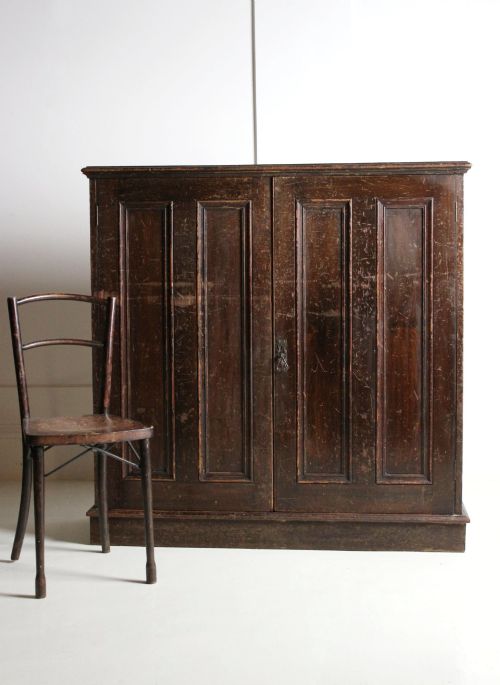
The buyer most frequently meets large knockdown wardrobes, tall kitchen housekeeper's cupboards, and two-door storage units. These items appear in waxed finishes or historical painted surfaces.
Cabinetmakers constructed these functional articles for domestic utility across rural farmhouses, town residences, and country chapels.
Materials and Construction
Joiners built these carcasses primarily from solid pine, utilising iron, brass, and glass for hinges, handles, and occasional glazed doors. Surfaces received either a clear wax treatment or layers of historical paint, scumble finishes, and cream pigments.
Many large Victorian and Georgian examples utilise a knockdown construction method with timber pegs and wedges, allowing dismantling for transport between rooms.
Pine Wardrobe Cupboard Retail Price Guide 2026
Typical asking prices for pine wardrobe cupboard among the pieces listed under this phrase on Sellingantiques today, from the lower quarter to the upper quarter. They describe what is for sale here now, not the wider market.
Listings span Georgian, Victorian, and Arts and Crafts periods, utilising pine alongside iron, brass, and glass hardware.
Proportions and Surface Integrity
Quality rests in the balance of proportions, the retention of original brass or iron hardware, and the character of the timber grain. Pieces showing untouched historical paintwork or clean, unwarped knockdown panels represent the finer end of the scale.
Simpler workshop builds display heavier timber and utilitarian joints, whilst refined examples incorporate arched mouldings, fielded panels, and dedicated bottom drawers.
The Pine Wardrobe Cupboard Glossary
- Knockdown
- A piece designed to dismantle entirely into flat sections for ease of movement. This method utilised wooden pins and slot joints rather than permanent glue.
- Compactum
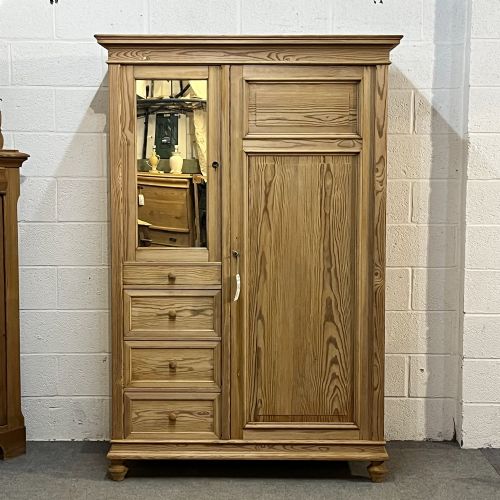
- A multi-functional wardrobe combining hanging space, shelving, and internal drawers within a single carcass. It often includes a mirrored door.
- Linen Press
- A tall cabinet featuring upper shelving for folded textiles and lower drawers for garments. These units predate modern fitted closets.
- Scumble
- A decorative paint technique applied over a base coat to imitate finer woods such as oak. Craftsmen dragged combs or brushes through wet glaze.
- Housekeeper's Cupboard
- A large kitchen storage unit designed for provisions, crockery, and household linens. They frequently feature deep lower drawers and upper shelved compartments.
Pine Wardrobe Cupboard: Frequently Asked Questions
How do I assemble a knockdown wardrobe?
Knockdown wardrobes dismantle into separate panels, cornices, and bases for transport. The sections slot together using integrated wooden pegs, wedges, or internal bolts.
Keep the original components marked and aligned during assembly to ensure the frame remains square and stable.
Can I paint a waxed pine cupboard?
Waxed pine requires thorough preparation before painting because residual wax prevents new coatings from adhering properly. Surfaces need cleaning with a suitable solvent and light sanding.
Applying a primer formulated for wood helps seal the timber before adding modern or traditional paint layers.
What is a compactum wardrobe?
A compactum is a multi-compartment wardrobe that integrates hanging space, linen shelves, and internal drawers into one unit. They frequently feature a mirrored door in the centre panel.
These pieces emerged in the late nineteenth and early twentieth centuries to maximise storage efficiency in smaller bedrooms.
How do I care for painted pine?
Painted pine surfaces benefit from gentle dusting with a dry cloth and protection from direct sunlight. Avoid harsh chemical cleaners that can lift historical or decorative paint layers.
Original scumble or folk art finishes require particular care to preserve the integrity of the surface glaze.