



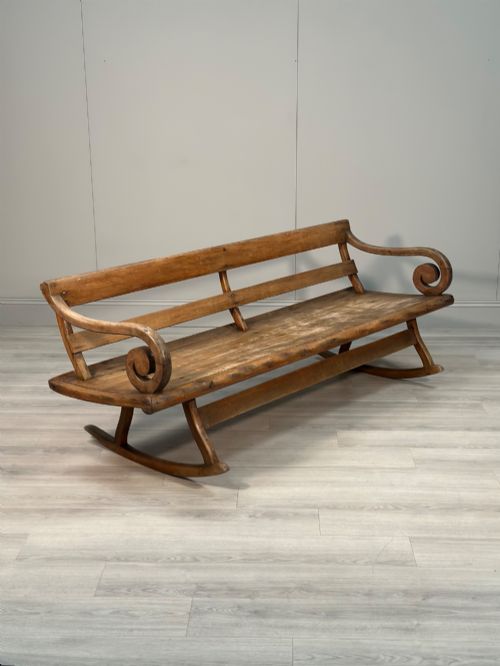
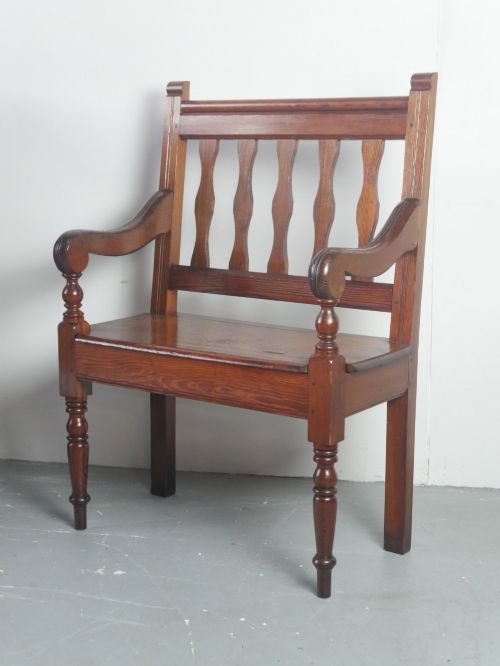
Pine Seating Bench
A pine seating bench brings honest utility and enduring character to a hallway, kitchen or boot room.
Pine Seating Bench
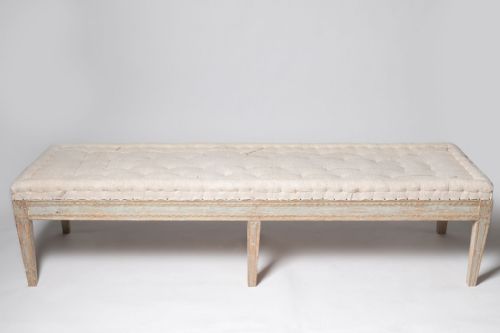
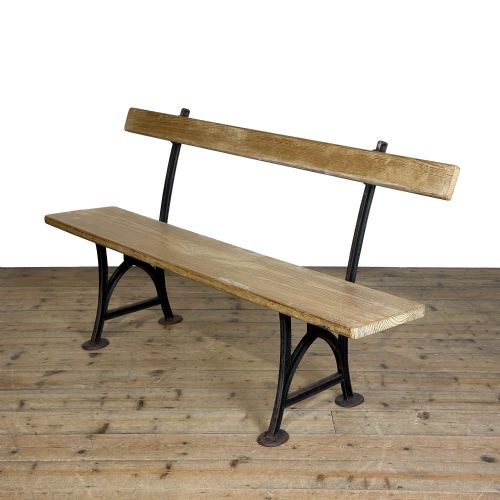
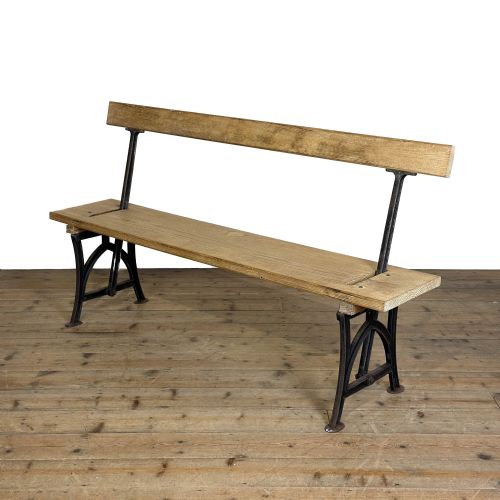
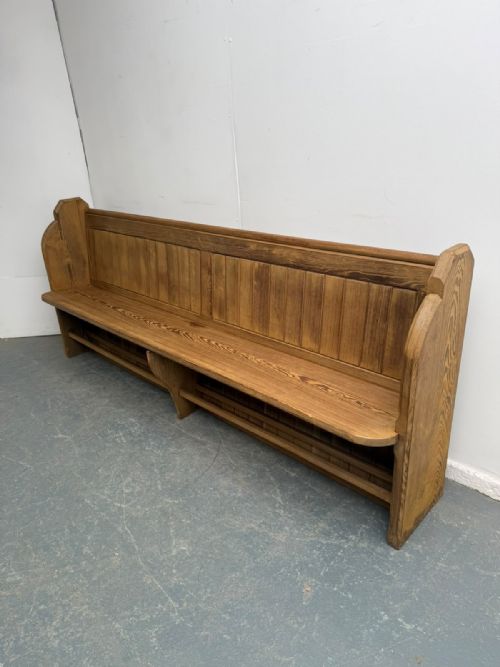
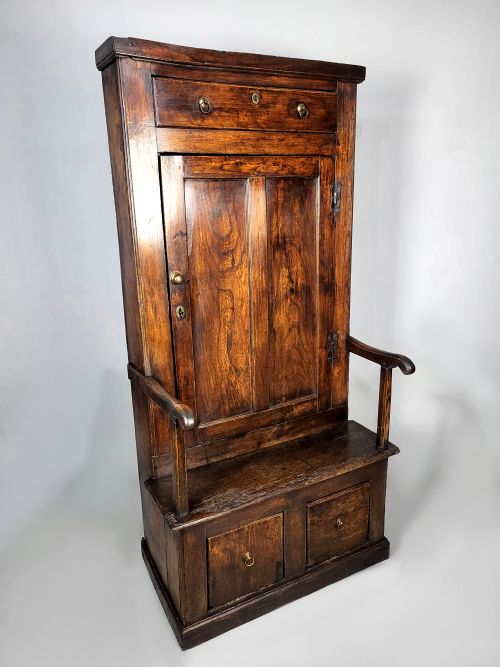
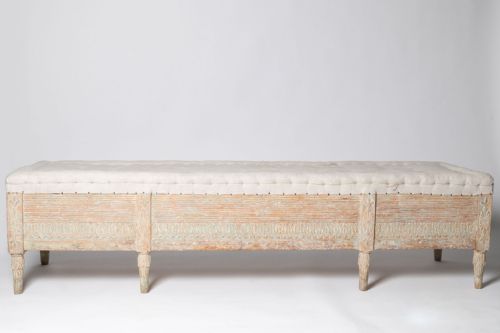
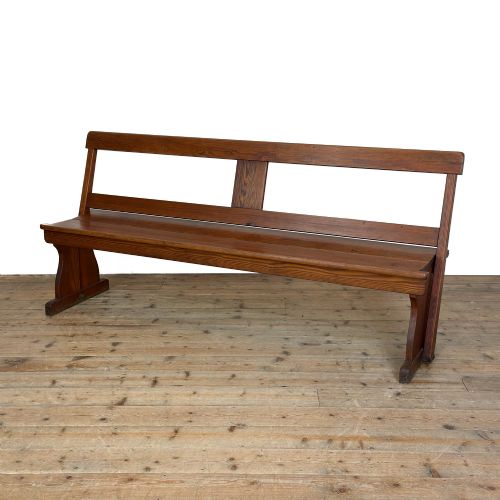
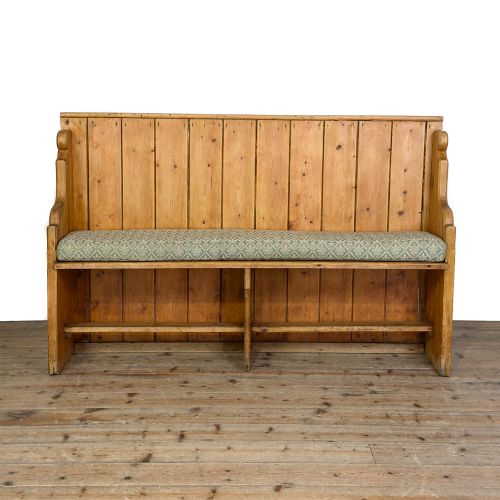
A pine seating bench encompasses various utilitarian forms designed for communal sitting, ranging from church pews and chapel benches to high-back settles and hallway seats. These pieces originate from domestic, ecclesiastical and rural settings across Britain, Europe and Scandinavia.
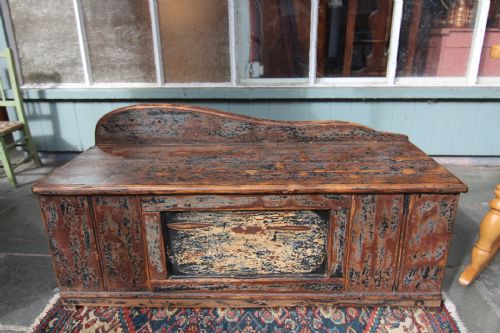
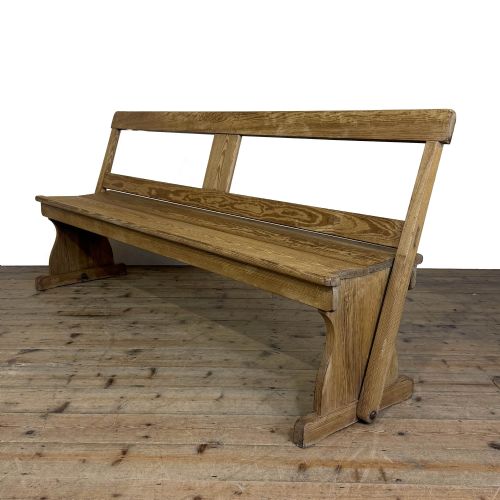
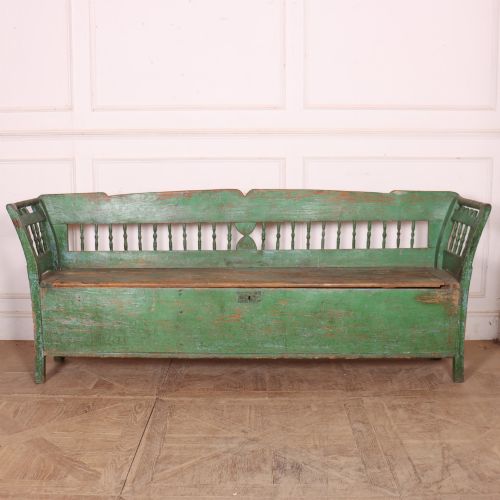
The version most commonly found here is the traditional church pew or long chapel bench, alongside regional variations such as Hungarian painted box settles and country hall benches. Their styles span Georgian vernacular, Victorian country and rustic farmhouse aesthetics.
Makers ranged from local village joiners producing simple elm and pine seating to institutional craftsmen building sturdy ecclesiastical pews in pitch pine. Their designs prioritize practical endurance over ornamental flourish.
Materials and Construction Methods
Joiners relied primarily on solid pine and pitch pine, frequently pairing them with elm for seats or iron for structural reinforcement and hardware. Timber was chosen for its local availability and ability to withstand heavy daily use.
Surfaces were either finished with a simple wax to develop a warm patina or coated in layers of paint, including polychrome schemes and original ochre, green, grey, black or blue pigments. Construction techniques involved pegged mortise and tenon joints to ensure rigidity.
Pine Seating Bench Retail Price Guide 2026
Typical asking prices for pine seating bench among the pieces listed under this phrase on Sellingantiques today, from the lower quarter to the upper quarter. They describe what is for sale here now, not the wider market.
Materials span plain pine, resinous pitch pine, elm, iron hardware, and original polychrome paint finishes.
Assessing Quality and Authenticity
Quality rests in the integrity of the timber, the depth of the natural wax patina, and the retention of original paint surfaces where applicable. Pieces showing honest wear from decades of institutional or domestic use possess greater visual weight than later adaptations.
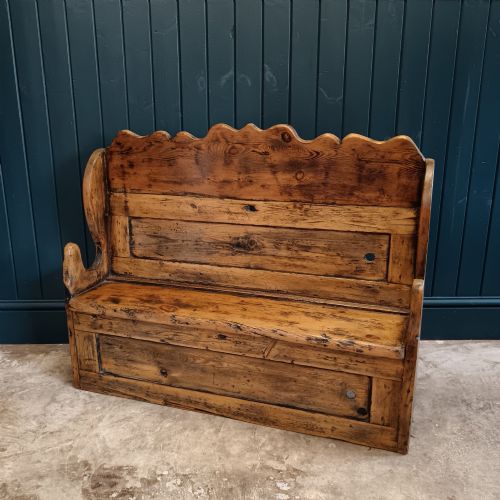
Construction details separate standard utility pieces from finer vernacular examples, such as shaped barrel backs on settles, integrated storage boxes, or clever flip-over mechanisms designed for dual-use seating.
The Pine Seating Bench Glossary
- Settle
- A wooden bench with a high back, solid arms and often a box seat compartment underneath. This design shielded occupants from drafts in older homes.
- Pew
- A long bench with a back and sometimes a book ledge, traditionally found in churches and chapels. They are typically constructed from straight-grained pine or pitch pine.
- Pitch pine
- A resinous North American pine species prized for its durability and prominent grain pattern. It appears frequently in nineteenth-century ecclesiastical seating.
- Vernacular
- Architecture and furniture built by local craftsmen using traditional methods and regional materials. These objects reflect local customs rather than academic design trends.
- Patina
- The surface sheen and colour acquired by wood through age, handling and polishing. A genuine honey-brown patina is valued by collectors.
Pine Seating Bench: Frequently Asked Questions
Where should I place a pine seating bench?
These benches suit narrow hallways, boot rooms, and farmhouse kitchens where robust seating is required. Their long profiles make them practical for positioning against plain walls or alongside dining tables.
Ensure you measure the available floor space and corridor clearance carefully before placement, as settle backs and arms add substantial depth to the footprint.
How do I care for a waxed pine bench?
Maintain the wood by applying a natural beeswax polish occasionally to nourish the grain and preserve the surface sheen. Avoid placing the timber near direct heat sources to prevent splitting.
Clean the surface simply with a dry or barely damp cloth, steering clear of harsh chemical sprays that strip the historic finish.
What is the difference between a pew and a settle?
A pew is an open bench originally made for ecclesiastical spaces, featuring a simple backrest and fixed ends. A settle includes solid wooden sides and armrests designed to block cold drafts.
Many settles also incorporate a hinged box seat underneath for storage, distinguishing them further from standard church pews.
How can I tell an older bench from a modern copy?
Examine the construction joints, timber fixings and surface wear for signs of genuine age and hand-tool marks. Older pine displays characteristic shrinkage cracks, dry textures, and deep patination around the primary touchpoints.
Inspect the undersides and internal framing to confirm that the timber matches the stated period rather than incorporating reclaimed wood of mixed eras.