


Pine Mule Chest with Drawers
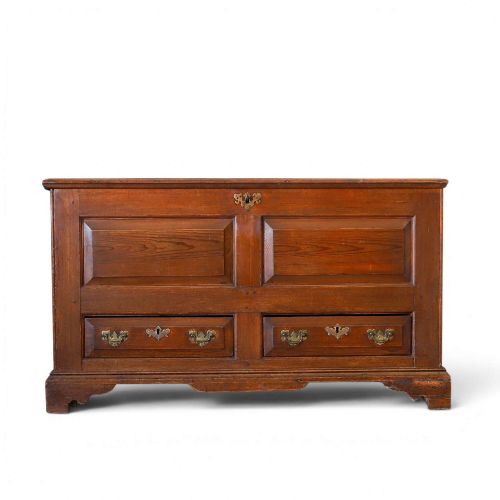
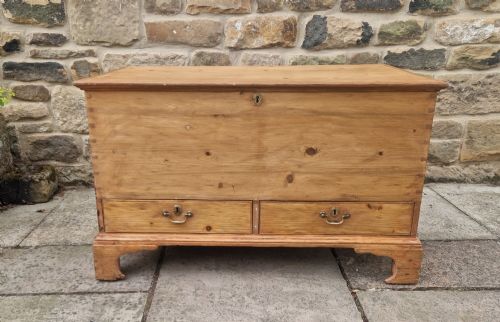
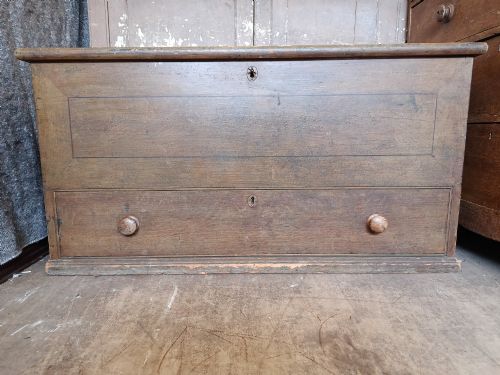
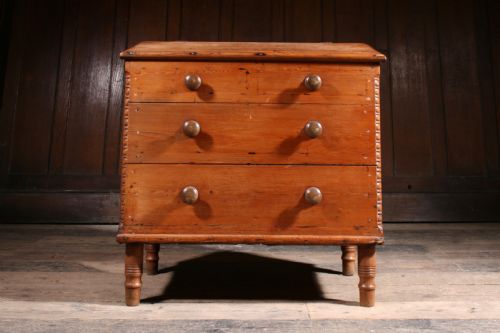
A pine mule chest with drawers is a practical storage piece combining a blanket box with base drawers, offering both character and utility.
Pine Mule Chest with Drawers
A pine mule chest with drawers serves as a traditional storage trunk with one or more drawers fitted beneath the main compartment. These items bridge the gap between a simple coffer and a chest of drawers, making them highly practical for household storage.
The examples seen on this page span the Georgian, 18th Century, 19th Century, and Victorian periods. Buyers will frequently encounter both waxed finishes and painted or scumbled surfaces across these eras.
Forms range from early Georgian pieces with a single long drawer to larger Victorian examples fitted with internal candle boxes. Regional country styles and folk art finishes appear regularly among the stock.
How they were made
Construction relies primarily on solid pine timbers, joined to form deep lidded boxes sitting above functional base drawers. Iron and brass hardware such as hinges, escutcheons, and drop handles secure the lids and operate the drawers.
Surface treatments vary between clear wax finishes that highlight the natural grain of the wood and traditional paint applications. Scumbled paint effects and folk art decoration appear on specific regional pieces from the 18th and 19th centuries.
Many mule chests still retain the faint aroma of beeswax and old timber inside their candle boxes after centuries of domestic service.
What varies in quality
Quality in a pine mule chest with drawers rests upon the thickness of the timber, the integrity of the original joints, and the retention of early or original hardware. Pieces constructed from dense old-growth pine with well-proportioned base drawers stand apart from simpler utility boxes.
The survival of an original painted, scumbled, or waxed surface significantly influences the character of a piece. Better examples retain their internal fittings, such as candle boxes, and display honest patination acquired through extended domestic use.
The Pine Mule Chest with Drawers Glossary
- Mule chest
- A storage chest featuring one or more drawers built into the base beneath the main lift-top compartment. This form developed during the 18th century as an evolution of the traditional coffer.
- Scumbled
- A decorative paint technique where a translucent top layer of glaze is manipulated over a lighter base coat to imitate finer woods or create textured patterns. This finish appears frequently on Victorian country pieces.
- Candle box
- A small internal lidded compartment fixed inside a chest to store candles away from linens and protect them from drafts. These compartments remain attached to the interior side walls.
- Escutcheon
- A protective plate surrounding a keyhole, usually fashioned from brass or iron. They prevent the surrounding wood from wearing around the lock.
- Cofer
- An archaic spelling of coffer, denoting a heavy wooden chest used for storing valuables or garments before the widespread use of wardrobes.
Pine Mule Chest with Drawers: Frequently Asked Questions
What is a pine mule chest with drawers?
A pine mule chest with drawers is a traditional storage item that combines a deep lift-top blanket box with one or more drawers fitted beneath. They emerged as a transitional form between simple chests and drawer-based furniture.
These pieces provide versatile storage for blankets and bulky items while offering accessible drawer space for smaller belongings.
How do I date an old pine mule chest?
Dating relies on construction methods, hardware types, and timber characteristics. Earlier 18th-century pieces often feature hand-cut dovetails and pegged joints, whereas Victorian examples tend to show standardised machine-sawn components.
Surface finishes also provide clues, with early wax patination differing from later scumbled or painted treatments characteristic of the 19th century.
What was an internal candle box used for?
The internal candle box served as a designated small compartment to keep tallow or beeswax candles separated from stored textiles. Tallow candles attracted pests, so enclosing them protected valuable linens.
These small boxes typically swing open or lift out and are fixed inside the main cavity near one end.
Where should I place a mule chest in my home?
Mule chests function well at the foot of a bed, in a hallway, or as a living room coffee table alternative. Their flat tops and generous internal volume make them practical surface areas as well as storage units.
Ensure placement avoids direct heat sources to protect the aged pine timber and historical wax or painted surfaces.