
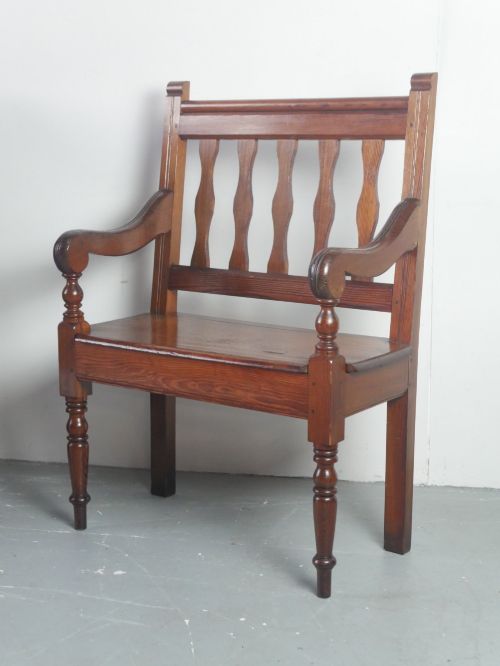
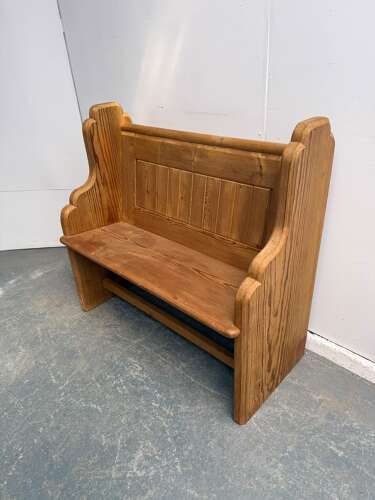


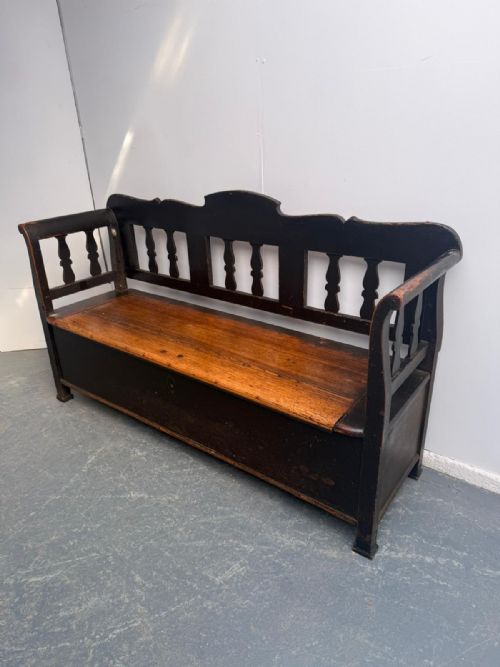


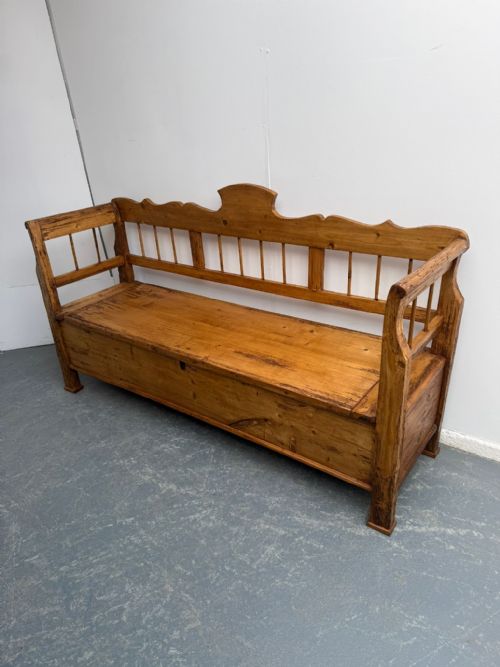


Pine Monk Bench
These pine monk bench examples are heavy timber seats that double as tables or storage, prized for country interiors and rustic hallways.
Pine Monk Bench
A pine monk bench combines a sturdy seat with storage compartments or convertible tabletops, serving practical functions in historic homes. You will frequently find pieces originating from country workshops, village houses, and vernacular European settings.
The selection ranges from compact single-seater church pews to large multi-seater settles and convertible chair tables. Victorian and Georgian periods dominate the available forms, often displaying regional characteristics such as Hungarian folk art influences.
How they were made
Solid pine and pitch pine form the structural core of these benches, chosen for accessibility and durability in domestic furniture. Iron fixings, ceramic elements, and leatherette padding appear alongside the primary timber construction.
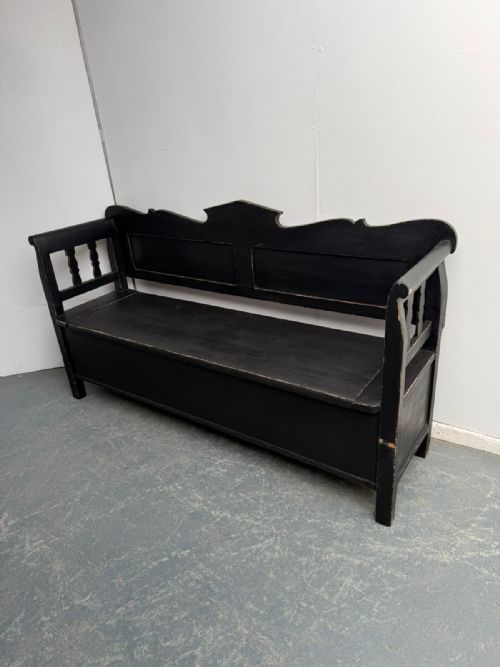
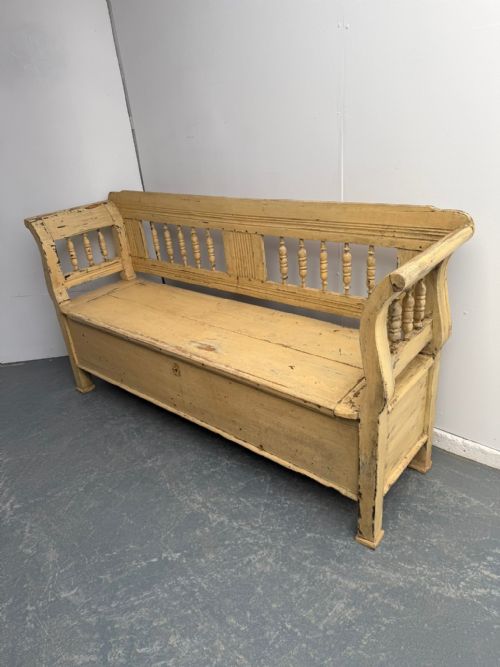
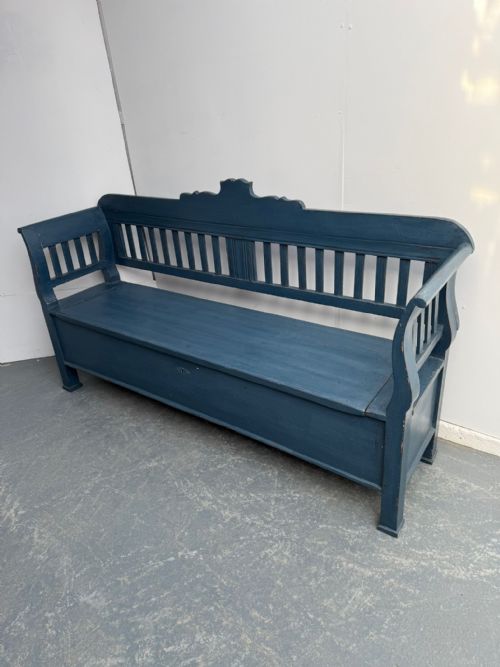
Surfaces receive different finishes depending on regional traditions and period preferences, including traditional wax treatments and original painted coatings in black, grey, cream, and blue.
Some Hungarian country examples double as clever chair tables where the backrest folds flat to become a dining surface.
What varies in quality
The integrity of the original timber and the retention of early paint surfaces dictate the standing of an individual bench. Pieces retaining their initial structural joinery and untouched surface coatings command greater interest among collectors.
Proportion and scale also influence worth, particularly when comparing simpler regional utility seating against more ambitious panelled settles or convertible table forms.
The Pine Monk Bench Glossary
- Settle
- A wooden bench with a high back, solid arms, and often a box base for storage. This form protected sitters from draughts in unheated rooms.
- Pitch pine
- A dense, resinous variety of pine timber used for robust furniture construction. It yields a distinctive grain pattern compared to standard softwoods.
- Vernacular
- Everyday furniture made by local craftsmen for regional use rather than high-style metropolitan workshops. These pieces reflect local domestic traditions and materials.
- Chair table
- A convertible piece of furniture where the back folds down over the seat to form a table. It maximised usable floor space in smaller dwellings.
Pine Monk Bench: Frequently Asked Questions
How do I use a monk bench today?
These pieces fit naturally into hallways or boot rooms where their lift-up seats provide hidden storage for shoes and household items. The flat surfaces also serve as casual seating alongside dining tables or desks.
Larger variants with high backs work well against hallway walls to create a defined entryway. Their durable pine construction handles daily domestic use comfortably.
Are these benches usually painted or waxed?
Surfaces vary significantly between natural waxed pine and historic painted finishes. Many Hungarian and English country pieces retain layers of original coloured paint.
Waxed finishes highlight the natural grain and knots of the softwood timber. Original paint layers offer evidence of regional decorative traditions.
How can I tell the period of a pine bench?
Construction methods, tool marks, and hardware provide clues to the age of the timber frame. Georgian and 18th-century examples often display hand-planed boards and simpler, heavier proportions.
Victorian and later 19th-century versions frequently incorporate machine-sawn elements or different upholstery materials like leatherette. Comparing the style to regional folk art traditions helps narrow down the origin.