


Pine Haberdashery Drawers
Pine haberdashery drawers are multi-drawer commercial storage units built for trade and retail, sought after for their modular practicality and rustic utility.
Pine Haberdashery Drawers
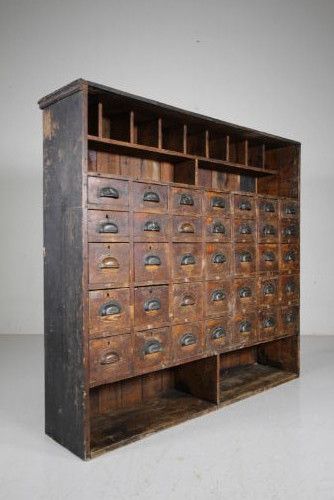
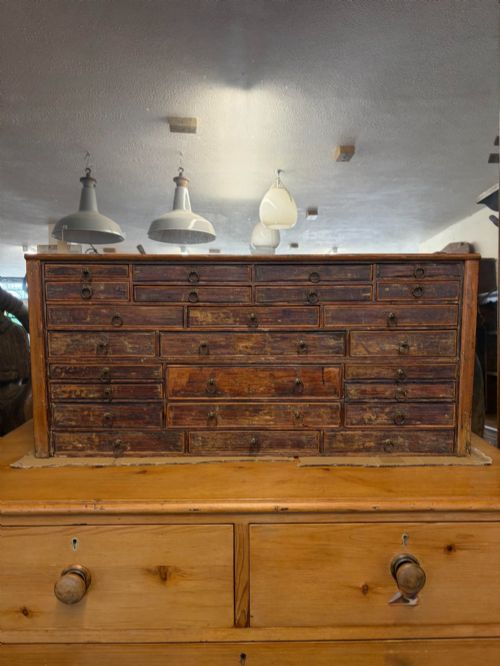
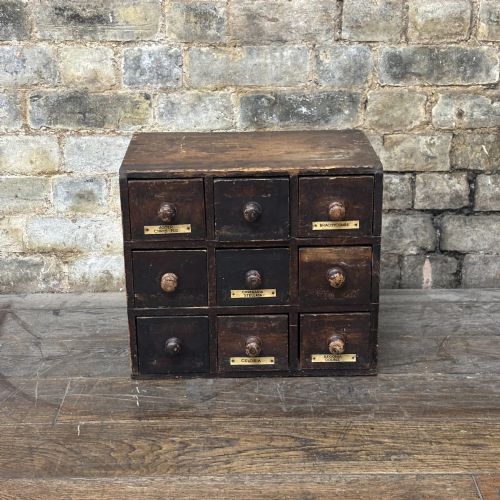
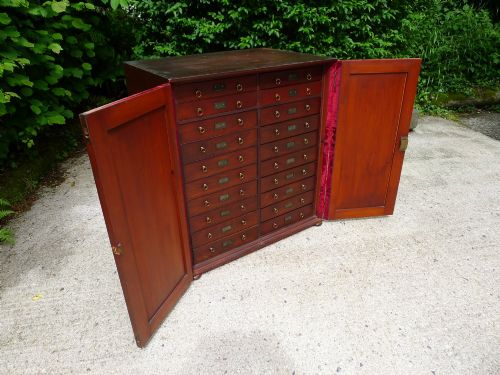
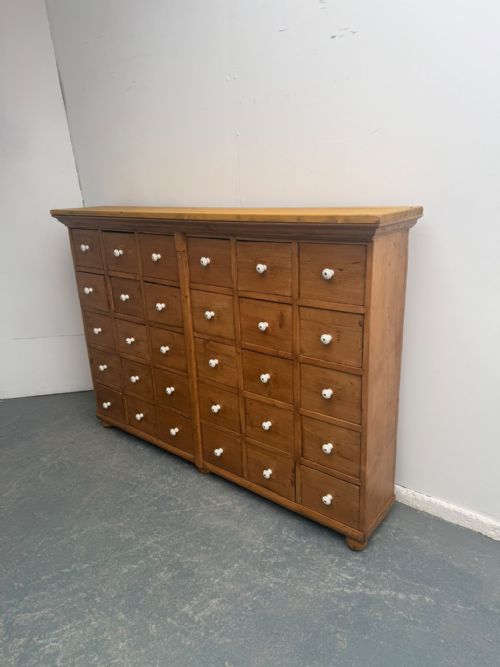
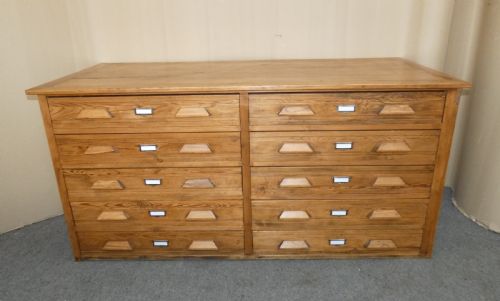
Pine haberdashery drawers take the form of banks of small drawers, shop fittings, and collectors cabinets designed for organising merchandise, seeds, or small goods. Buyers seeking pine haberdashery drawers will most commonly find Victorian and 19th-century commercial units, including large banks with numerous small compartments originating from English and continental shops.
These pieces function as banks of drawers, shop counters, and storage cabinets, often originating from specific trades such as ironmongers, drapers, watchmakers, and florists. The inventory spans English workshop pieces to painted Hungarian shop fittings and French shop counters, reflecting versatile commercial origins across the nineteenth and early twentieth centuries.
How they were made
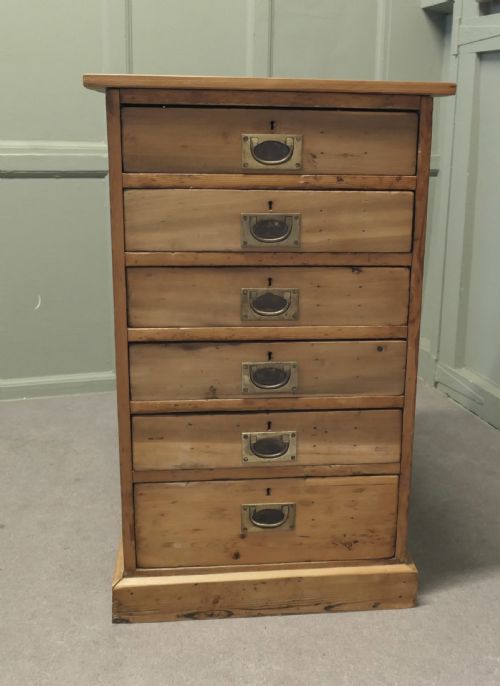
Construction relies primarily on pine and deal timber, assembled to withstand daily commercial use with numerous small drawer compartments. Iron and brass hardware, including pulls and handles, completes the functional structure of these trade cabinets.
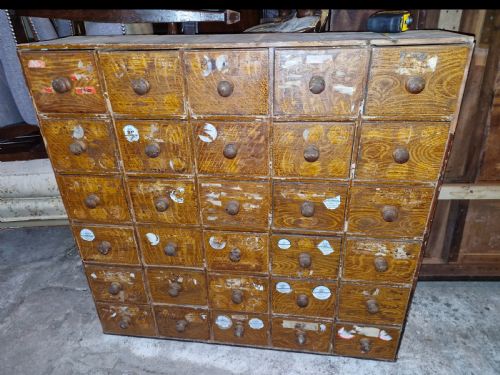
Surfaces frequently show original paint finishes in white, cream, light green, or applied stains alongside waxed and polished bare wood. Cabinet makers prioritized utility and durability, resulting in sturdy joinery suited to decades of retail service.
Listings feature pine, deal, and pitch pine cabinetry alongside metal, brass, and cast iron hardware.
What varies in quality
Quality rests upon the scale and complexity of the drawer configuration, ranging from compact twelve-drawer counters to substantial banks holding twenty-five, thirty, or fifty individual drawers. The integrity of original surface treatments, whether historic painted finishes or polished deal, distinguishes utilitarian workshop survivors from standard examples.
The precision of the original commercial joinery and the presence of period hardware, such as brass pulls and cast iron fittings, elevate the execution. Provenance to specific trades, such as drapers, watchmakers, or florists, adds distinct character to individual pieces.
Luxmore's of Ilfracombe
The Pine Haberdashery Drawers Glossary
- Bank of drawers
- A modular multi-drawer cabinet built to hold large quantities of small items or stock.
- Deal
- A traditional term for fir or pine timber commonly used in British furniture and commercial cabinet making.
- Shop fitting
- Built-in or freestanding furniture constructed specifically for retail premises and commercial display.
- Collectors cabinet
- A specialised storage unit featuring shallow drawers intended for specimens, coins, or small objects.
- Haberdashers drawers
- Multi-drawer units originally utilised in drapery and haberdashery shops to sort ribbons, threads, and small accessories.
Pine Haberdashery Drawers: Frequently Asked Questions
What were pine haberdashery drawers used for?
These multi-drawer units served commercial retail trades to sort small merchandise like ribbons, threads, buttons, and seeds behind the counter. Merchants relied on the numerous small compartments to keep stock organised and accessible to customers.
Over time, many of these utilitarian pieces transitioned from shops into domestic settings as practical storage for collections, craft supplies, and household items.
How do I date a bank of drawers?
Dating relies on construction methods, timber selection, and hardware styles associated with the nineteenth and early twentieth centuries. Pieces from the Victorian period and around nineteen hundred typically feature solid pine or deal construction with hand-cut joinery.
Commercial units often display trade characteristics specific to their era, such as ironmongers or drapers cabinets built with numerous shallow drawers and original brass or iron pulls.
Are these pieces English or continental?
The inventory includes both English workshop pieces and continental examples, particularly painted shop fittings originating from Hungary and France. English pieces frequently utilise pitch pine or stained deal, while continental examples often feature original painted finishes in white, cream, or light green.
Each regional tradition reflects local commercial storage needs and workshop practices from the nineteenth century.
How should I live with a shop counter?
Shop counters and banks of drawers integrate easily into modern interiors as kitchen islands, sideboards, or entryway storage units. Their numerous small compartments provide exceptional organisation for daily household items.
To maintain the piece, keep it away from direct heat sources to protect the aged pine timber and original painted or waxed surfaces.