
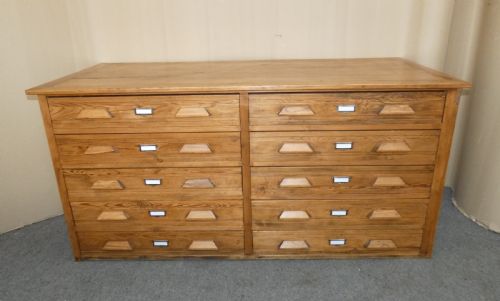


Pine Haberdashery Cabinet
A pine haberdashery cabinet is a utilitarian multi-drawer storage piece built for commercial trade, prized today for bringing industrial character and vast organisation into domestic spaces.
Pine Haberdashery Cabinet
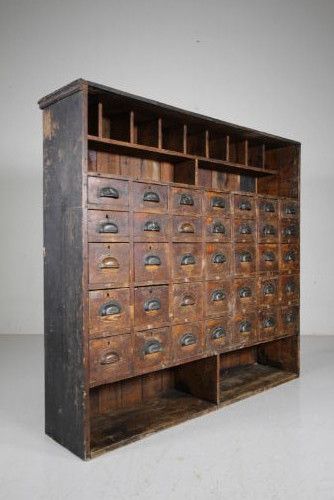
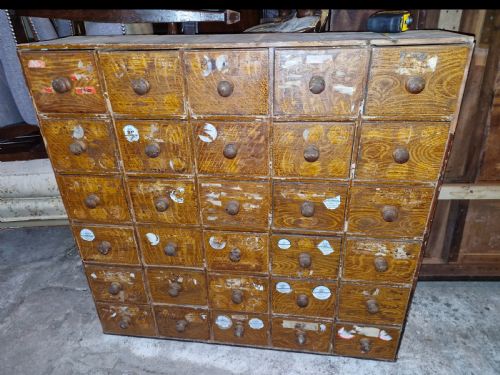
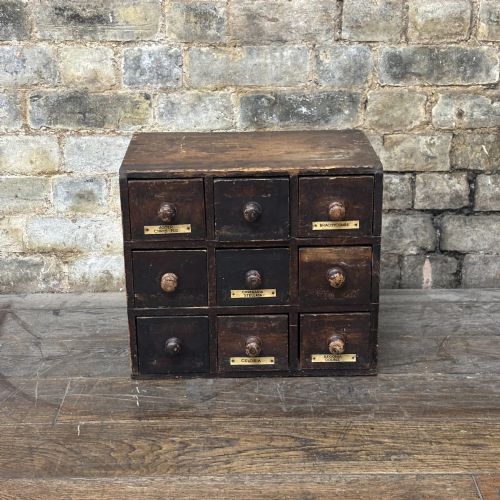
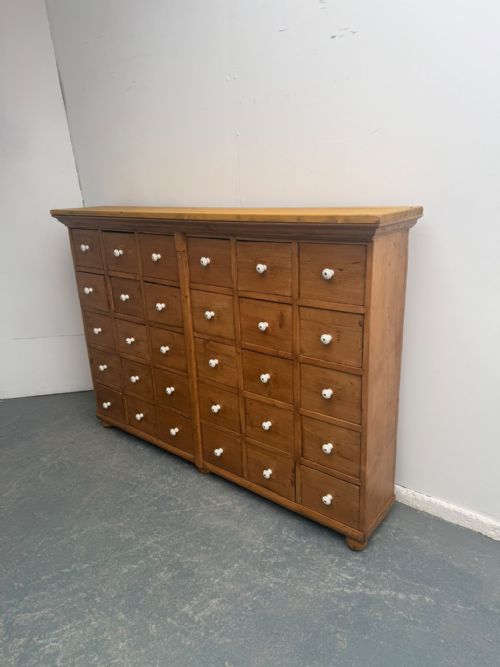
When you search for a pine haberdashery cabinet, you encounter hardworking commercial storage furniture built to display and sort small dry goods in nineteenth and early twentieth century shops. These pieces span Victorian, Edwardian, and industrial periods, taking the form of large banks of drawers, shop fittings, and specialised trade chests originating from England, France, and Hungary.
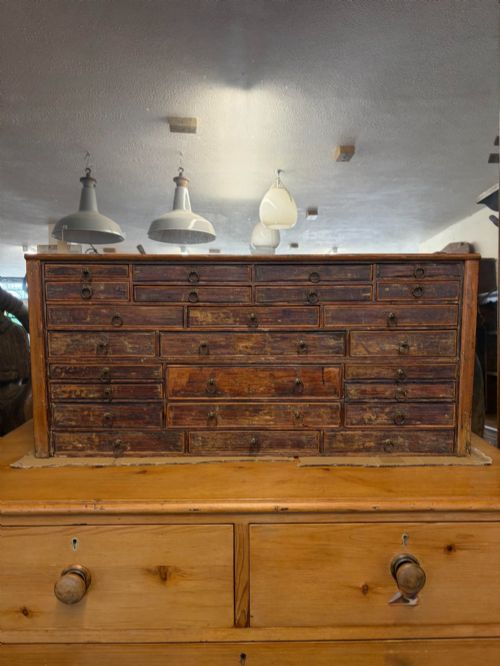
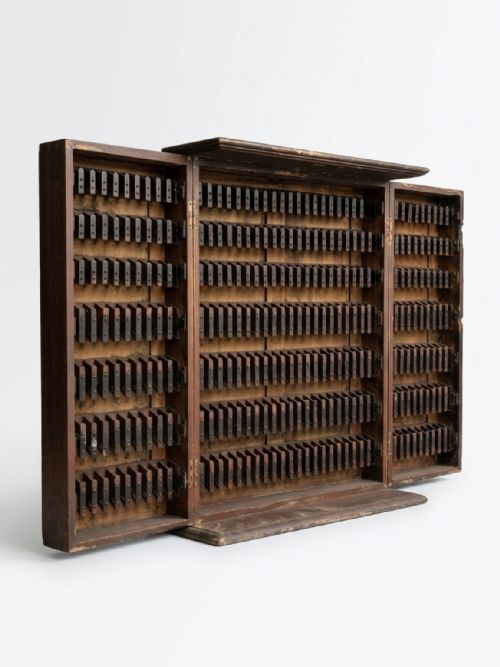
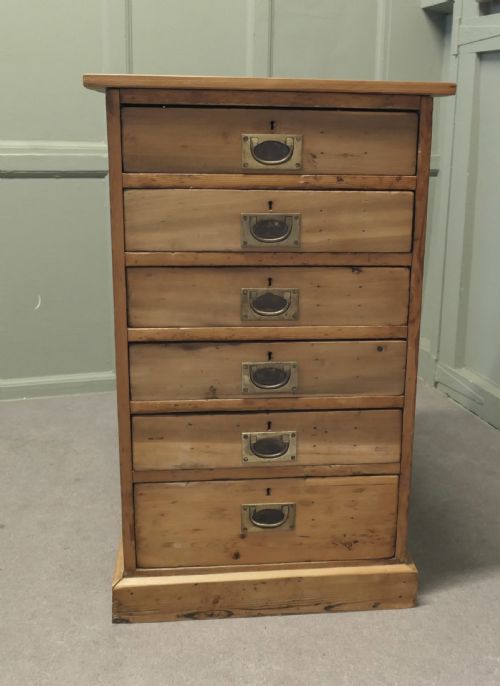
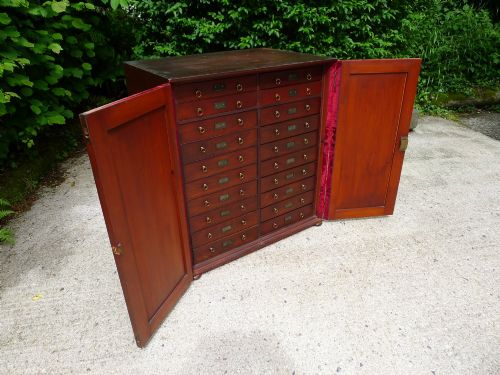
The versions you meet most frequently on this page feature numerous small drawers designed for merchants, haberdashers, florists, and ironmongers. Alongside multi-drawer shop fittings, the selection includes shallow filing drawers, railway ticket cupboards, pharmacy chests, and watchmakers cabinets constructed from sturdy softwood.
Commercial utility defines these items, meaning they were made for heavy daily use behind shop counters rather than for formal drawing rooms. Their survival through decades of trade gives them a practical honesty that appeals to modern interiors seeking authentic utilitarian storage.
Materials and construction methods
Construction relies primarily on pine and deal, often selected for its accessibility and resilience in busy retail environments. Workshops utilised solid timber carcases to house numerous small drawers, frequently enhanced with metal, brass, or iron pulls and label holders.
Surface treatments vary widely from natural waxed deals to painted finishes in white, cream, light green, or stained and polished surfaces. Many examples retain their original painted coats applied during their working lives in English and continental shops.
Some nineteenth-century shop fittings contain up to fifty tiny drawers once tasked with keeping a bustling Victorian merchant from losing his buttons.
What separates examples in quality
Quality in these commercial pieces rests on the scale of the drawer configuration and the integrity of the original hardware. Cabinets boasting twenty-five, thirty, or fifty individual drawers command attention for their visual impact and complex internal joinery compared to smaller or simpler banks.
Originality of surface finish and hardware dictates much of the distinction between working shop furniture and domestic storage. Retained factory paint, authentic brass or iron pulls, and legible label slots elevate an item above stripped or heavily altered carcases.
Luxmore's of Ilfracombe
The Pine Haberdashery Cabinet Glossary
- Haberdashery cabinet
- A multi-drawer storage unit originally used in retail shops to sort ribbons, threads, and small accessories. These pieces typically feature banks of shallow drawers.
- Shop fitting
- Permanent or semi-permanent commercial furniture built for retail interiors, including counters, display units, and large banks of drawers. They reflect the robust utilitarian standards of nineteenth-century trade.
- Deal
- An old term for fir or pine timber commonly used in British furniture and interior construction. It provides a dense, workable softwood base for painted or polished commercial pieces.
- Collectors cabinet
- A specialised small-drawer chest designed for organising specimens, coins, or small objects. These share similarities with trade drawers through their compartmentalized format.
- Bank of drawers
- A large assembly of numerous small drawers housed within a single upright carcase. They were essential for efficient stock management in nineteenth-century commerce.
Pine Haberdashery Cabinet: Frequently Asked Questions
What were pine haberdashery cabinets used for originally?
These cabinets served as functional shop furniture designed to hold small retail stock such as threads, buttons, seeds, and hardware. Shopkeepers relied on the numerous small drawers to keep varied inventory organised and accessible behind the counter.
Over time, these utilitarian pieces transitioned from active commercial environments into domestic interiors, where their high drawer counts continue to serve organising roles.
How do I date a Victorian pine multi-drawer cabinet?
Dating relies on observing construction details, timber preparation, and the style of the hardware fixed to the drawers. Pieces from the nineteenth century often feature hand-cut joints, heavy deal carcases, and iron or brass pulls suited to industrial use.
Evidence from this category points to periods spanning from the mid-nineteenth century through the Edwardian era and into the nineteen-twenties, incorporating both English workshop output and continental shop fittings.
Are painted finishes on shop fittings original?
Many shop fittings retain layers of paint applied during their working lives in retail environments. Colours such as white, cream, and light green frequently appear as surviving coats from commercial use.
Inspecting the wear patterns around drawer pulls helps determine whether a painted surface has endured decades of handling or represents a later decorative layer.
How can I integrate a large bank of drawers at home?
A substantial bank of drawers works well as a freestanding focal point in kitchens, studies, or living spaces where extensive small-item storage is required. The numerous compartments make them practical for sorting office supplies, collections, or tableware.
Allowing sufficient floor space for these deep, multi-drawer carcases ensures the furniture functions smoothly in a domestic room.