
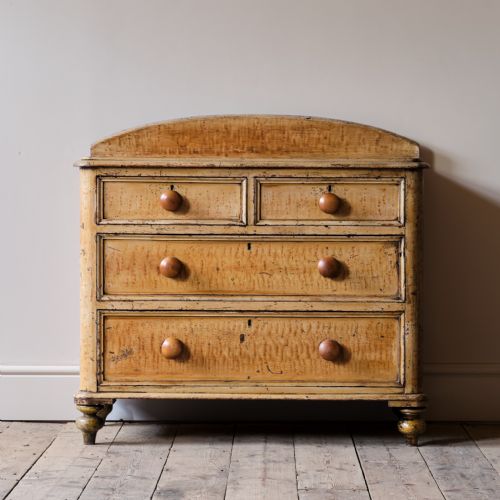



Pine Folk Art Dresser
These pine folk art dresser pieces are regional European painted storage and display furniture, offering immediate colour and rustic character.
Pine Folk Art Dresser
A pine folk art dresser combines utilitarian pine construction with decorative painted surfaces originating from various European regions. Buyers seeking a pine folk art dresser will encounter regional cupboards, chests of drawers, and kitchen dressers largely spanning the nineteenth century.
The aesthetic embraces Scandinavian country, Gustavian, Alpine, and Austro-Hungarian traditions. Pieces often display original paint, hand-painted floral motifs, or ragwork finishes rather than plain wood.
Forms range from tall kitchen dressers and multi-drawer chests to single-door cupboards and commodes. Hungarian and Swedish examples dominate the selection, bringing distinctive regional palettes to domestic interiors.
Materials and construction
Makers relied on native pine as the primary timber for carcasses, drawer linings, and shelving. Iron, brass, and ceramic hardware completed the functional elements of each cupboard and chest.
Surface decoration involved traditional hand painting using mineral paints and oil colours. Artisans applied scumble glazes, simulated graining such as birch, and intricate folk floral patterns directly onto the timber.
A simulated birch finish lets a humble pine chest pretend to be grander timber.
Assessing quality
Quality rests significantly on the survival and authenticity of the surface decoration. Untouched original paint finishes with natural patination command greater appreciation than later overpainting.
Construction methods and regional carpentry details distinguish finer regional pieces from standard utility items. Hand-carved flourishes and integrated structural joinery elevate the standing of individual dressers and cupboards.
Gemla Fabrikers
The Pine Folk Art Dresser Glossary
- Scumble
- A translucent layer of dark paint manipulated over a lighter base colour to create decorative grain effects. This technique mimics more expensive timbers like birch.
- Ragwork
- A decorative painting method using rags or cloths to texture wet paint on furniture surfaces. It produces distinctive mottled patterns common on nineteenth-century Scandinavian pieces.
- Gustavian
- The Swedish interpretation of French neoclassical style, characterised by restrained carving and pale painted finishes. These pieces offer a lighter, more formal country aesthetic.
- Commode
- A low chest of drawers or cabinet designed for domestic storage. Austrian and Hungarian examples frequently feature shaped fronts and bold polychrome paint.
- Polychrome
- The practice of decorating furniture with multiple colours. Folk art pieces use this to create vibrant floral and geometric compositions.
Pine Folk Art Dresser: Frequently Asked Questions
How do I identify original paint?
Original paint shows natural wear, craquelure, and integration with the underlying timber over decades. Subsequent overpainting often sits flat and lacks the authentic patination accumulated through age.
Examine edges and recesses for traces of earlier pigment layers. Genuine folk art surfaces display consistent ageing patterns that modern reproductions cannot replicate.
Where were these pieces made?
The pieces originate from various European regions including Sweden, Hungary, Austria, and the broader Alpine territories. Each area developed distinct painting traditions and cabinet-making forms.
Swedish items often lean toward Gustavian restraint or bright ragwork, whereas Hungarian and Austrian examples frequently showcase rich floral ornamentation.
How do I care for painted pine?
Keep painted furniture away from direct sunlight and steady heat sources to prevent the wood from splitting and the paint from flaking. Dust gently with a dry, soft cloth.
Avoid chemical polishes and harsh cleaning agents which can strip mineral or oil-based historic paint finishes. Maintain stable indoor humidity levels.
What is the difference between a dresser and a cupboard?
A dresser typically combines lower storage compartments like drawers or cupboards with upper open shelving for display. Cupboards and cabinets consist entirely of enclosed storage space behind doors.
Both forms served utilitarian purposes in rural European kitchens and living spaces before becoming decorative focal points.