


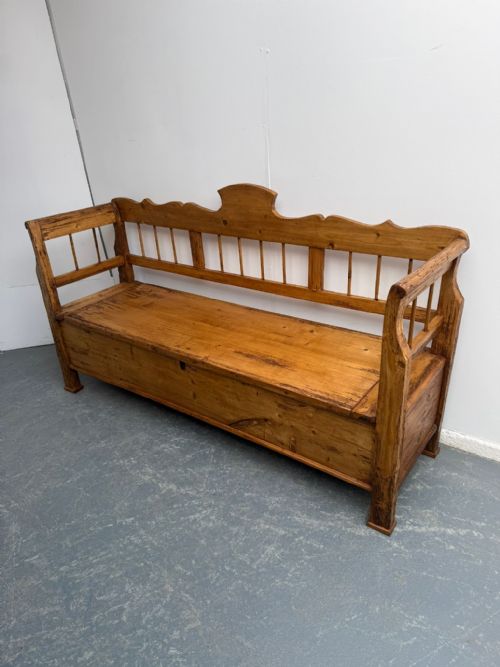


Pine Entryway Bench
A pine entryway bench brings honest utility and warmth to a hallway, offering practical seating built from solid timber.
Pine Entryway Bench
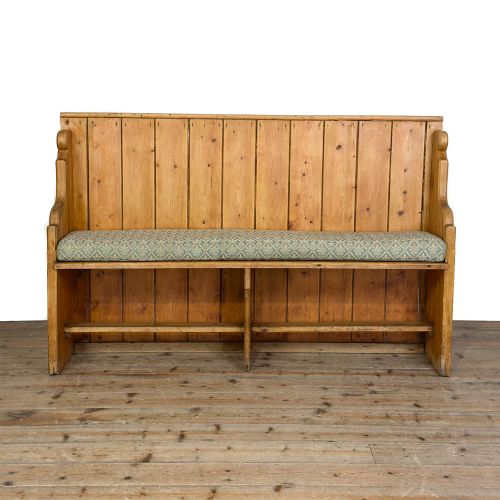
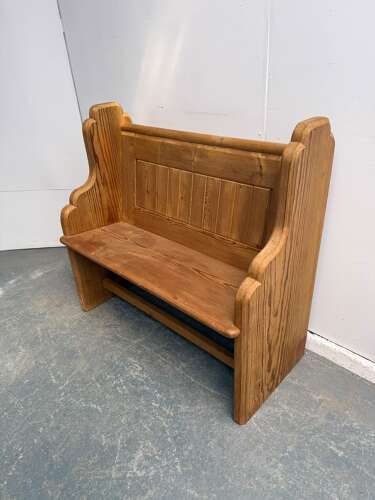
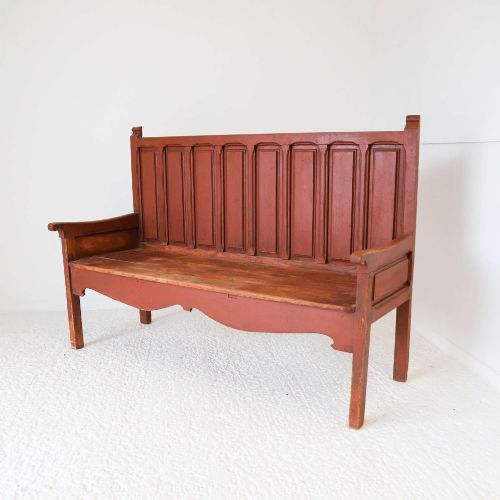
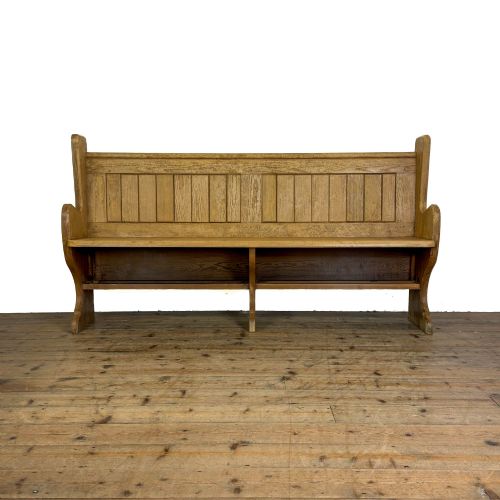
A pine entryway bench provides a sturdy seating solution for halls and passages, taking forms such as settles, church and chapel pews, hall seats, and hallstands. These pieces range from Georgian and 18th-century examples to Victorian, Edwardian, and 1920s versions.
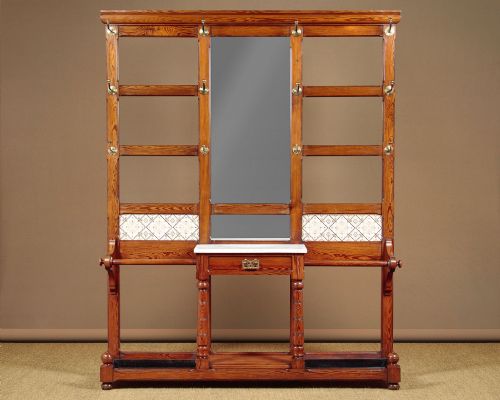
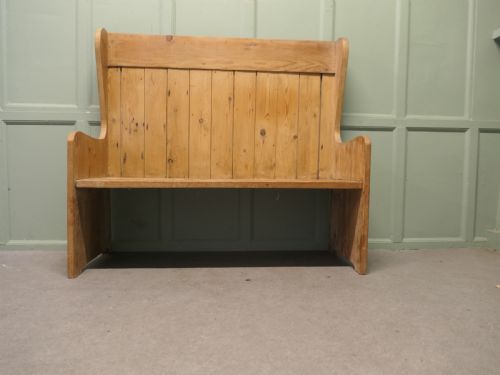
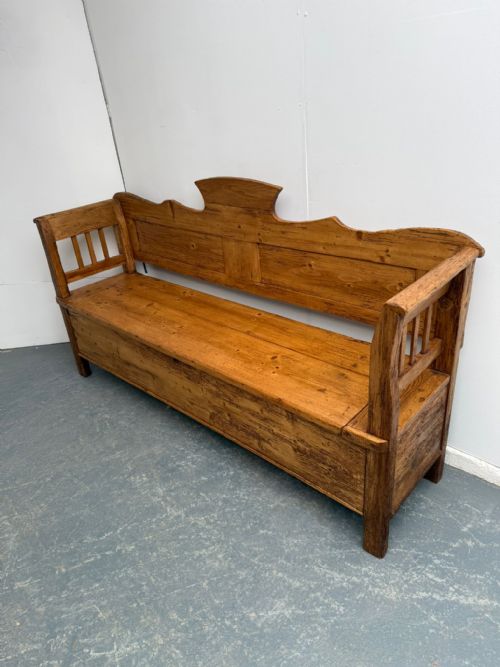
The selection includes rustic country houses, farmhouses, and tavern designs alongside English, Spanish, Hungarian, French, and Italian regional pieces. Buyers encounter everything from high-back fireside settles to box settles with drawers and combined mirror-glass hallstands.
Most items rely on simple rectangular proportions or barrel-back seating arrangements designed to block draughts in older corridors. The heavy timber construction makes them resilient additions to busy domestic thresholds.
How they were made
Makers built these pieces primarily using solid pine and timber, frequently applying wax finishes to protect the wood while retaining its grain. Some examples preserve their original paint or scumble glaze finishes.
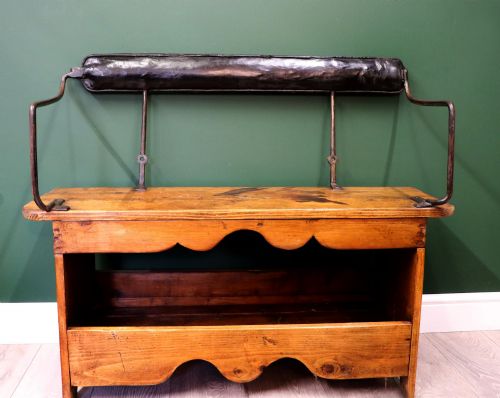
Structural reinforcement often involved iron and brass hardware, while specific regional pieces incorporated mirror glass into hallstands. Joinery techniques relied on traditional panelled construction and scratch-built assembly.
Some Edwardian hall seats boast a novel twist, combining coat storage with unexpected seating arrangements for the hallway.
What varies in quality
The distinction between standard utility items and finer examples rests upon originality of surface, such as untouched early paint or patinated wax finishes, and structural integrity. Regional idiosyncrasies, such as unusual proportions or integrated storage drawers, elevate specific forms.
Proportion and execution define the hierarchy of these seats, distinguishing basic workshop builds from carefully considered primitive pieces.
The Pine Entryway Bench Glossary
- Settle
- A wooden bench with a high back, solid arms, and often a closed base or box compartment underneath. This form was traditionally placed near hearths to shield occupants from draughts.
- Box settle
- A bench featuring a hinged seat lifting to reveal storage space inside the base. It combines seating utility with concealed domestic storage.
- Scumble
- A decorative painting technique involving a translucent top layer dragged or textured over a lighter base colour to simulate wood grain or add depth. It appears on regional country furniture.
- Hallstand
- A piece of hallway furniture combining a seat or bench with hooks for coats and frequently a mirror glass panel. These emerged strongly during the Victorian and Edwardian periods.
- Pew
- A long wooden bench originally designed for communal seating in churches, chapels, and meeting houses. Many found subsequent use in domestic hallways and country pubs.
Pine Entryway Bench: Frequently Asked Questions
What is a settle bench?
A settle is a traditional wooden bench characterised by a high back, solid arms, and a protective panelled construction.
They were designed to keep sitters warm by blocking cold air currents in hallways and fireside rooms.
How do I date an old pine bench?
Dating relies on observing construction methods, timber patination, and stylistic markers such as panel thickness and hardware.
Georgian and 18th-century pieces display different joinery habits compared to later Victorian, Edwardian, or 1920s examples.
Are these benches suitable for daily use?
Solid pine construction makes these benches exceptionally durable and practical for heavy daily seating.
Their robust timber frames easily withstand the traffic of busy hallways and boot rooms.
What is a box settle?
A box settle incorporates a hidden compartment beneath the seat accessed by lifting the top board.
Historically, this enclosed space stored household blankets, boots, and everyday items out of sight.
What is scumble paint?
Scumble is a decorative surface treatment where a translucent glaze is manipulated over a painted base.
This technique creates textured, faux-wood or aged finishes found on period country furniture.