

Pine Coffer Chest
These pine coffer chests offer honest, sturdy storage rooted in domestic utility, ranging from simple blanket boxes to fitted regional trunks.
Pine Coffer Chest
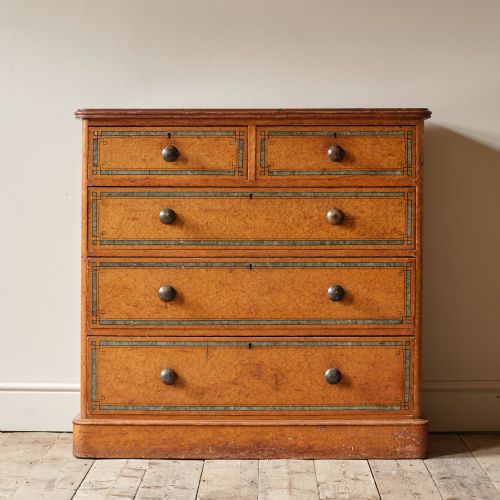
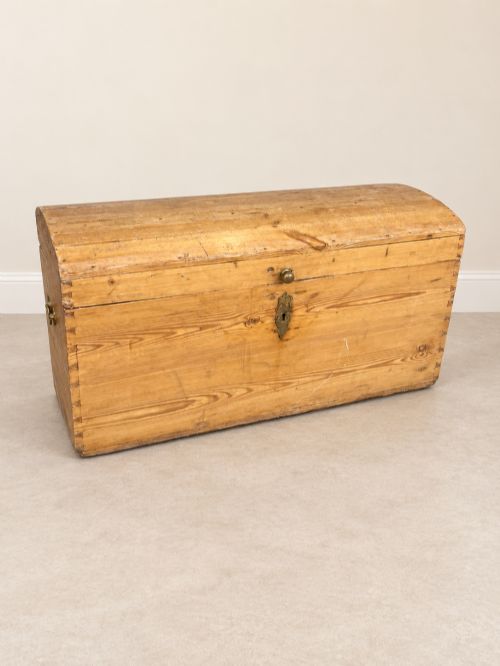
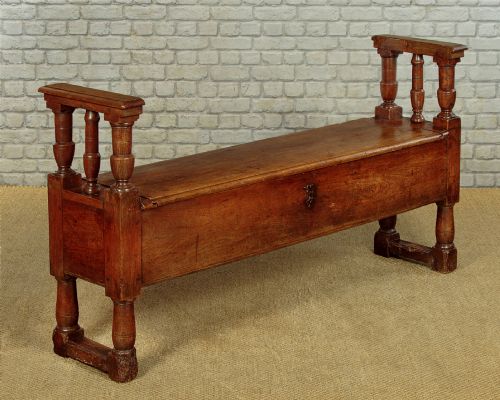
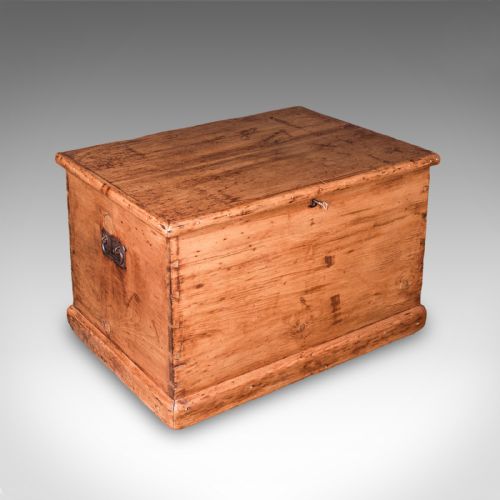
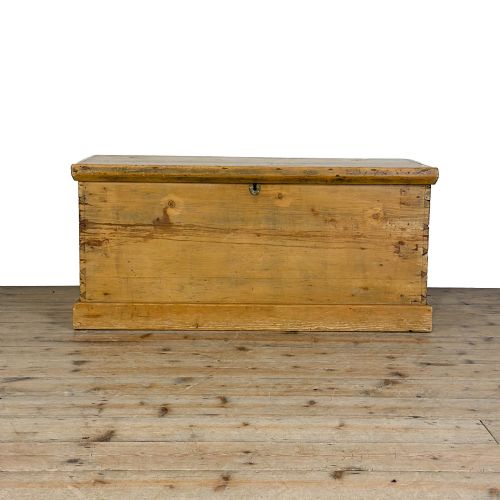
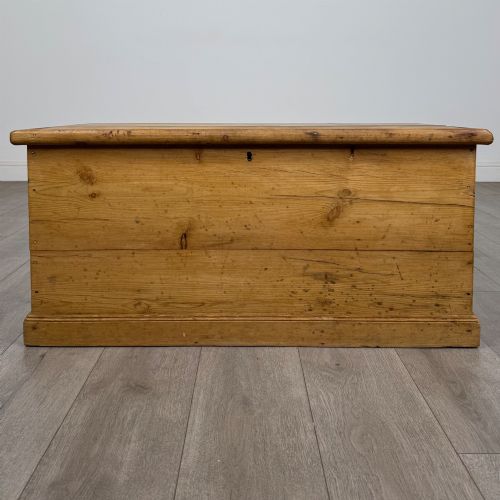
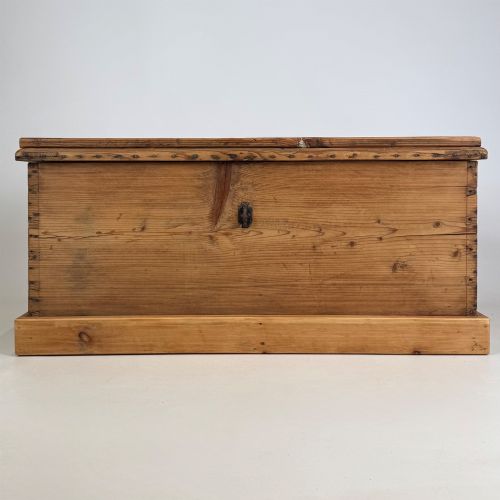
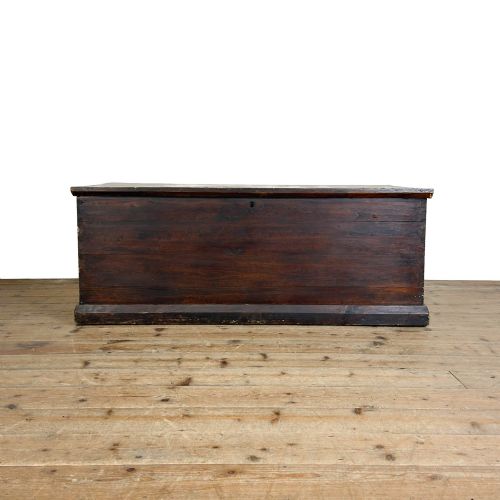
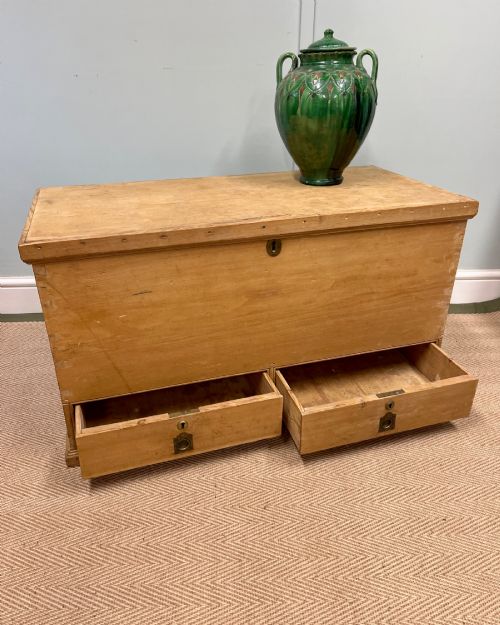
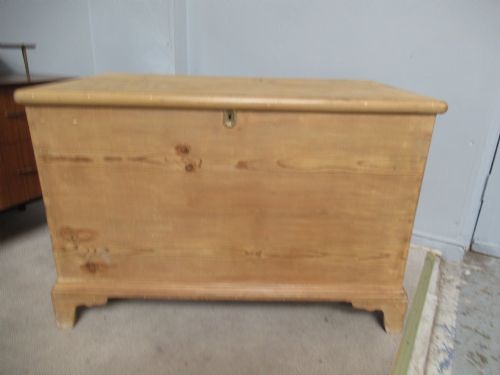
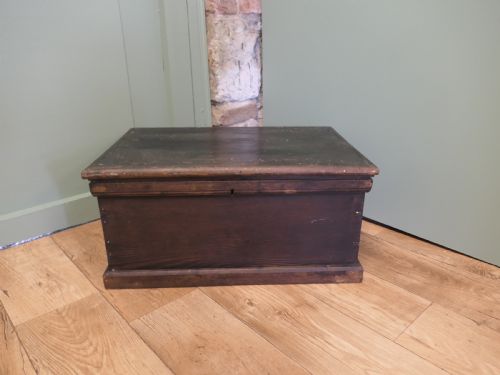
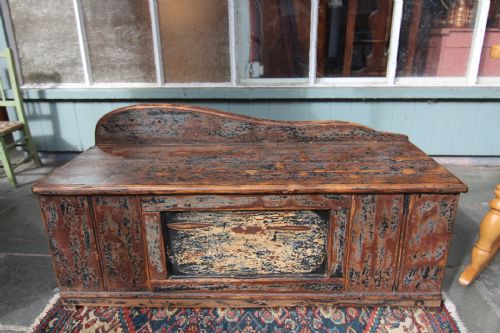
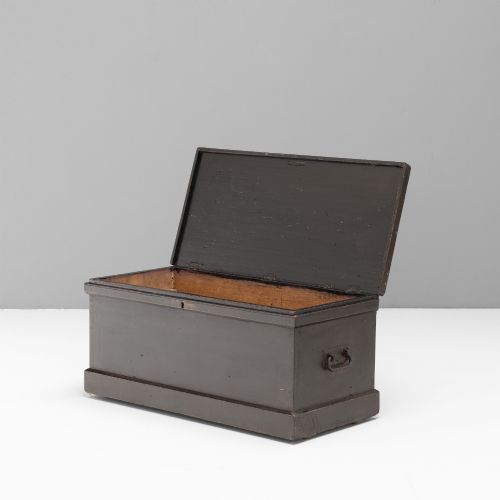
A pine coffer chest serves as a robust storage vessel for household textiles, garments, and personal belongings. These pieces take various forms, from simple six-plank boxes to elaborate mule chests fitted with internal or external drawers.
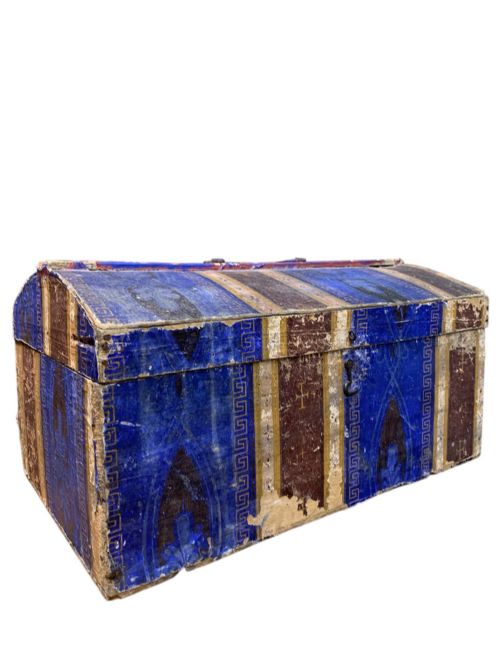
The selections span distinct eras and origins, featuring vernacular pieces from Georgian and Victorian Britain alongside continental European examples in painted or scrubbed pine. Most items encountered on this page date from the eighteenth and nineteenth centuries, reflecting long domestic use in farmhouses, country houses, and maritime settings.
How they were made
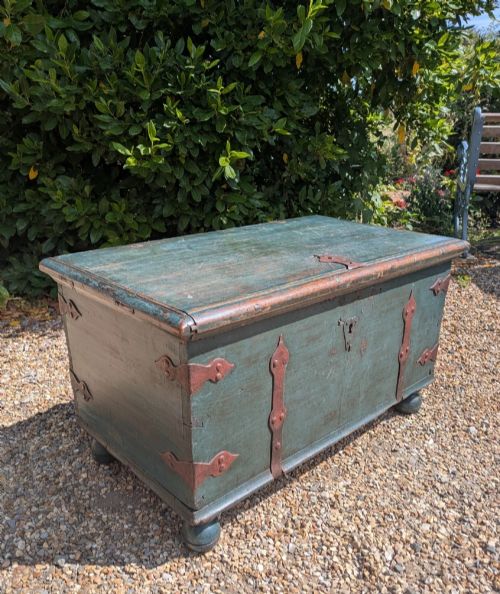
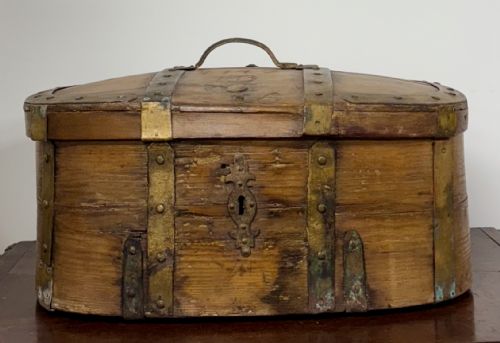
Makers constructed these chests primarily from native and pitch pine, sometimes combining softwood boards with denser hardwoods or utilising iron strapwork and brass bindings for structural reinforcement. Surfaces were frequently left untreated, waxed, or finished with decorative paint schemes including scumble effects and folk art motifs.
Joinery techniques varied according to the date and region, incorporating pegged joints, dovetailing, and sturdy panel construction to withstand heavy travel or daily domestic service. Hardware such as hand-forged iron hinges, strapwork, and carrying handles were applied directly to secure the lids and bodies.
Pine Coffer Chest Retail Price Guide 2026
Typical asking prices for pine coffer chest among the pieces listed under this phrase on Sellingantiques today, from the lower quarter to the upper quarter. They describe what is for sale here now, not the wider market.
Some nineteenth-century travellers clearly preferred heavy metal reinforcement, ensuring their blanket box doubled as an impromptu seat.
What varies in quality
Quality in these chests rests upon the integrity of the original construction, the thickness of the timber, and the retention of authentic hardware. Pieces featuring untouched original paint, fitted internal drawers, or specialised regional characteristics command greater interest than plain utility boxes.
Proportion and execution distinguish finer workshop pieces from simple vernacular items. Retaining original surfaces, such as early paintwork or deep historic wax, preserves the integrity of the piece against excessive modern restoration.
The Pine Coffer Chest Glossary
- Mule chest
- A traditional storage chest featuring one or more drawers beneath the main lift-top compartment. This form bridges the gap between the simple coffer and the chest of drawers.
- Six-plank
- A primitive construction method utilising six individual boards joined at the edges to form the box. This technique is frequently seen on earlier provincial and country pieces.
- Scumble
- A decorative painting technique involving layers of translucent colour dragged over a base coat to imitate more expensive grained woods. It was widely used on Victorian and country furniture.
- Strapwork
- Applied metal bands or ornamental iron reinforcement fixed across the exterior of a chest for strength and decoration. Hand-forged examples indicate earlier provincial craftsmanship.
Pine Coffer Chest: Frequently Asked Questions
What is a mule chest?
A mule chest combines a traditional lift-top storage compartment with one or more lower drawers for smaller items.
This hybrid form evolved during the Georgian period to offer easier access to stored textiles without disturbing the entire contents.
How are these chests dated?
Dating relies on construction methods, timber selection, and hardware types like hand-forged iron or brass bindings.
Earlier eighteenth-century pieces often use simpler plank construction, while Victorian examples frequently incorporate internal drawers and factory-made hinges.
Where were they used?
These chests served practical storage roles in domestic interiors, country farmhouses, and aboard ships for personal travel.
Their robust construction made them suitable for moving heavy belongings across regions or storing blankets at the foot of a bed.
How do I care for waxed pine?
Waxed pine requires occasional gentle cleaning with a soft cloth and the application of traditional beeswax to nourish the timber.
Avoid placing these chests near direct heat sources or strong sunlight to prevent the softwood from drying and splitting.