

Pierced Sterling Dish
A pierced sterling dish brings intricate metalwork and utility to the table, spanning Victorian delicacy to Art Deco geometry.
Pierced Sterling Dish
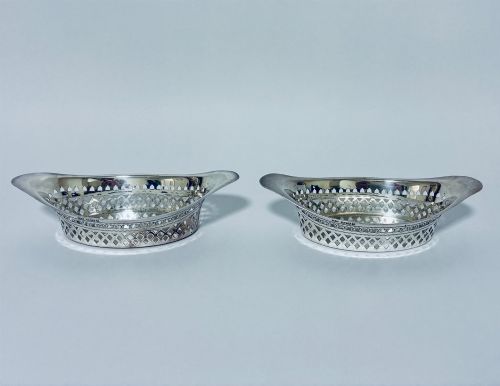
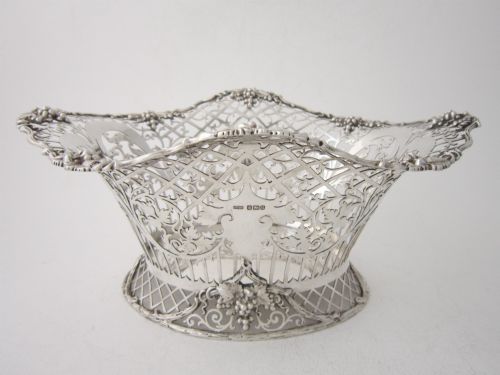
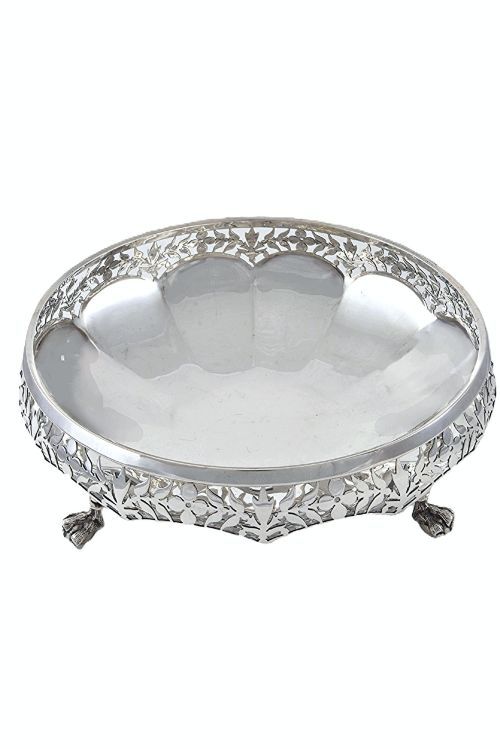
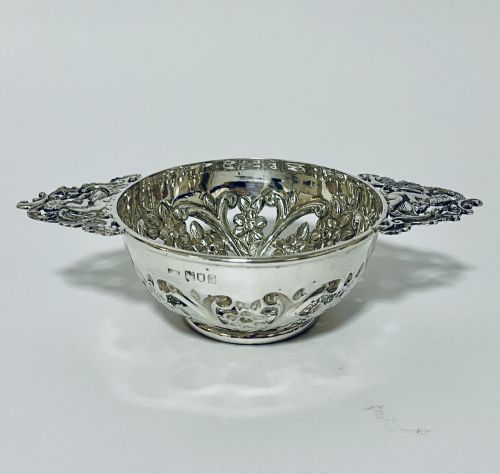
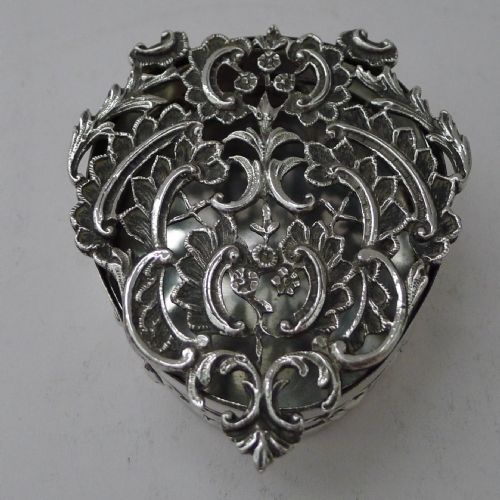
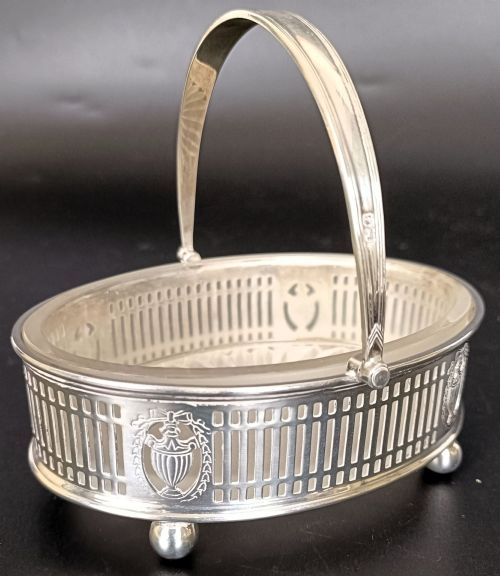
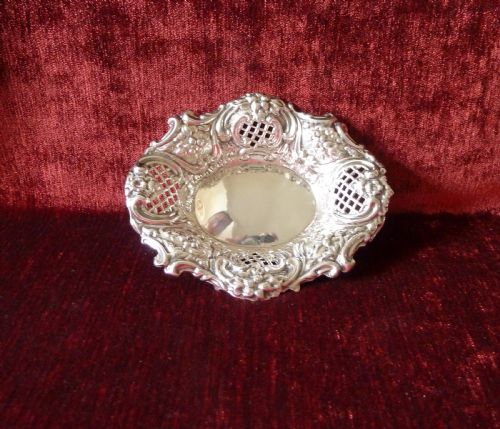
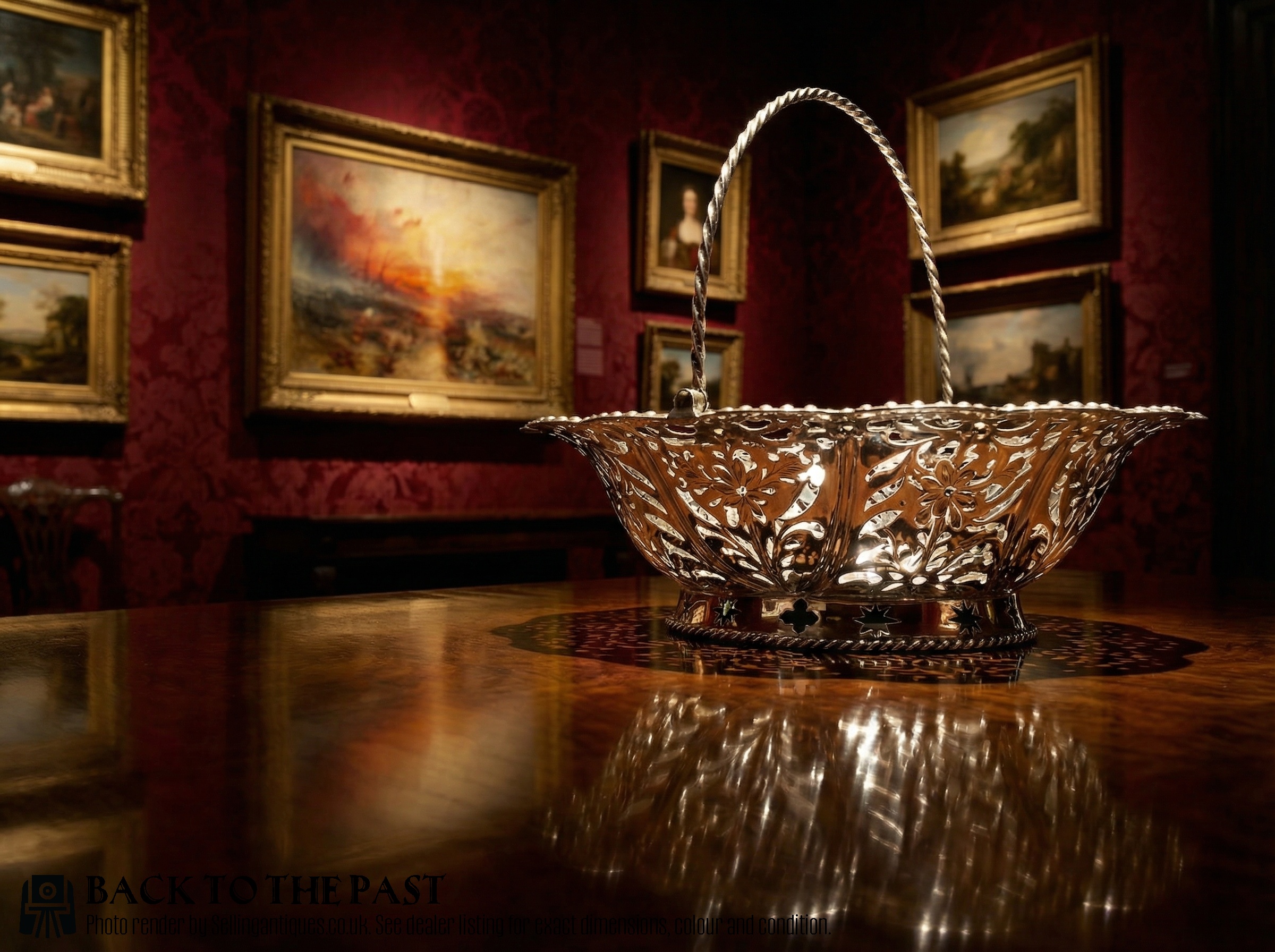
A pierced sterling dish encompasses a broad variety of tableware designed for serving, holding, or display, ranging from small bonbon dishes and pin trays to large fruit bowls, bread baskets, and sweetmeat servers. Many examples feature reticulated lattice work, openwork scrolls, or pierced floral motifs executed by silversmiths working during the Victorian, Edwardian, and George V periods.
Origins span English provincial and metropolitan assay offices such as London, Birmingham, Sheffield, and Chester, alongside occasional Scottish, Irish, American, and Chinese export pieces. Dating typically centres around the late nineteenth and early twentieth centuries, reflecting the high output of decorative domestic silver during the Edwardian era and the late Victorian period.
How they were made
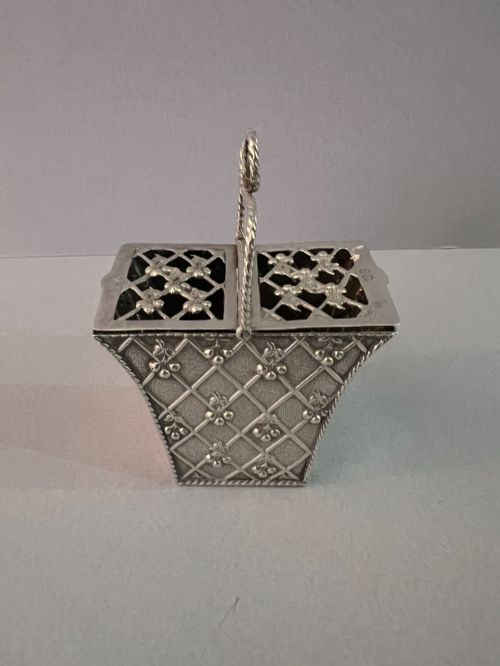
Silversmiths produced pierced sterling dishes primarily by piercing flat sheets of silver with fine saws or punching geometric, lattice, and floral patterns through the metal before shaping, folding, or raising the body into bowls, baskets, and trays. Many heavier baskets and centrepieces incorporate cast elements, such as cast floral handles, cast rims, or applied feet, soldered securely to the pierced body.
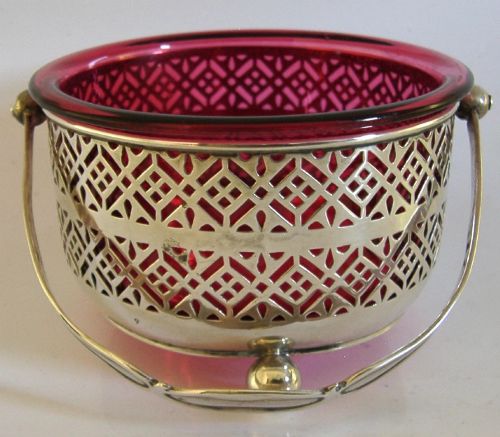
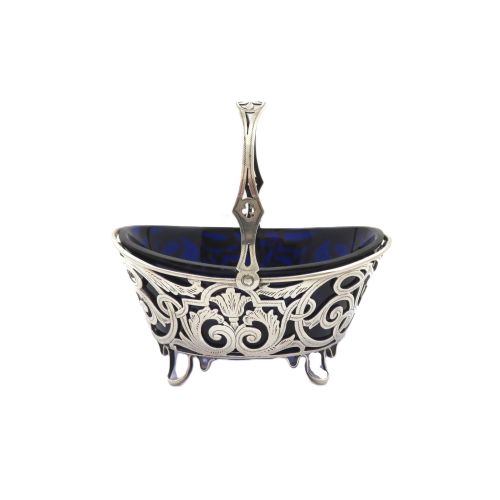
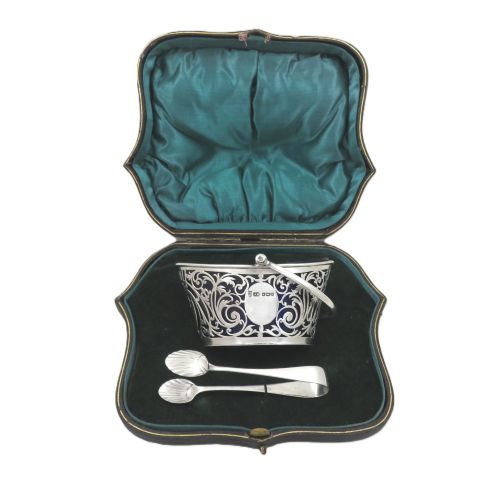
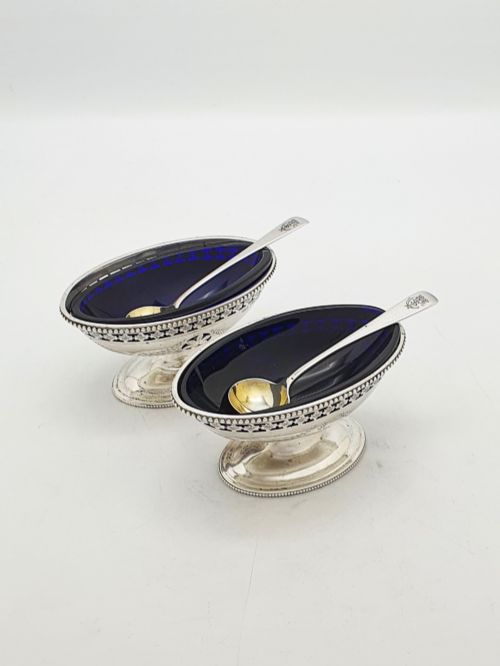
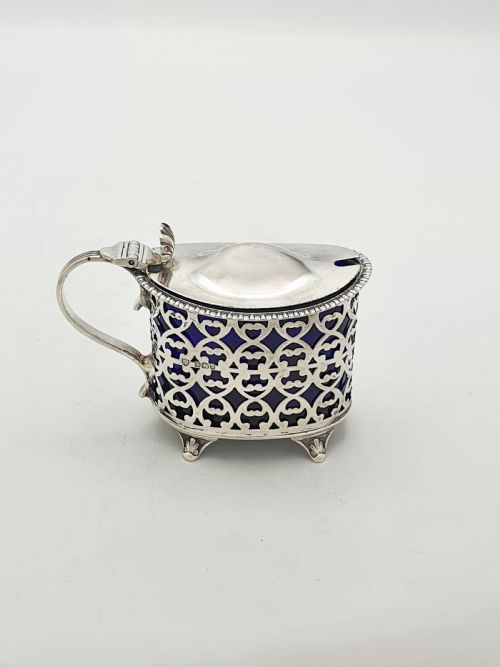
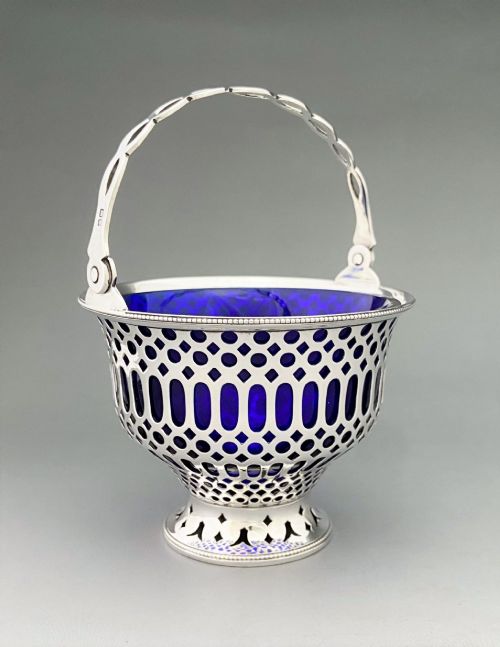
Vessels designed to hold liquids or small items frequently incorporate removable glass liners, including cobalt blue, ruby, and cranberry glass inserts blown or moulded to fit the contours of salt cellars, mustard pots, butter dishes, and sweetmeat baskets.
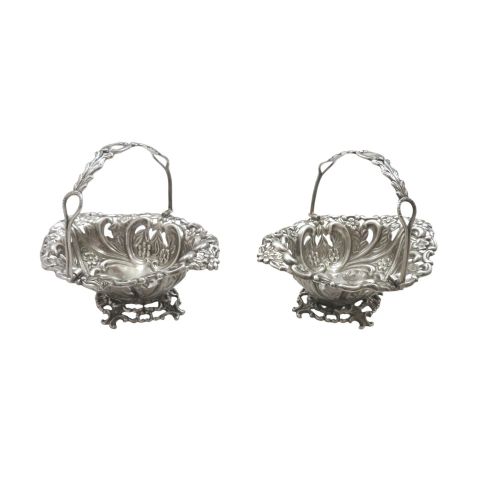
Several Victorian sweetmeat baskets hide tiny cherubs amidst their pierced floral foliage, watching over the bonbons.
What varies in quality
Quality in a pierced sterling dish depends heavily on the crispness and complexity of the piercing work, where hand-sawn apertures and delicate reticulation display superior craftsmanship compared to simpler stamped or machine-pierced patterns. The gauge of the silver also dictates the structural integrity of the piece, with heavier walls preventing warping and maintaining the intended shape of large bread baskets and centrepieces.
The inclusion of original coloured glass liners - such as cobalt, cranberry, or ruby glass - substantially enhances the integrity of salt cellars, mustard pots, and sugar baskets. Furthermore, the presence of clear, well-struck hallmarks identifying notable makers like William Comyns, Fenton Brothers, Martin Hall, or Walker & Hall adds historical weight to the item.
William Comyns·Fenton Brothers·Martin Hall·Walker & Hall·Viners·John Hunt·William Bond·Woodside Sterling Co
The Pierced Sterling Dish Glossary
- Piercing
- The technique of cutting or piercing decorative patterns into sheet metal to create openwork designs like lattices, scrolls, and floral motifs. This method lightened the object while maintaining structural strength.
- Bonbon dish
- A small decorative vessel traditionally used for serving sweets, nuts, or small confections. These pieces frequently feature pierced borders and small pedestal bases.
- Quaich
- A traditional two-handled drinking vessel originating in Scotland, occasionally rendered in solid silver with shallow bowls. It serves as a distinct regional form within British silver.
- Swing handle
- A movable, hinged handle attached to the rim of baskets and dishes, allowing the handle to fold down flat. These are commonly found on Edwardian sugar baskets and bread dishes.
- Assay office
- An official body responsible for testing the purity of precious metals and stamping them with hallmark symbols. British offices include London, Birmingham, Sheffield, and Chester.
Pierced Sterling Dish: Frequently Asked Questions
What were pierced silver dishes used for?
These vessels served various domestic functions at the dining table and in the drawing room, holding fruits, bread, bonbons, sugar, and small foodstuffs. Versions with glass liners additionally functioned as salt cellars, mustard pots, and butter dishes.
In polite society, openwork baskets and footed bowls acted as decorative centrepieces or receptacles for potpourri and visiting cards. Their pierced walls allowed airflow or simply showcased coloured glass liners placed within them.
How do I care for a sterling silver dish?
Cleaning requires warm water, mild soap, and a soft cloth to remove dust and tarnish without scratching the delicate pierced lattice work. Avoid harsh abrasive dips that can strip away the original patina accumulated over decades.
Store the dish in a dry environment away from direct sunlight and rubber materials, which accelerate tarnish. If the piece includes a removable glass liner, wash and dry the glass separately before returning it to the silver mount.
Are glass liners original to the dishes?
Original glass liners fit snugly into the contours of salt cellars, mustard pots, and baskets without excessive movement or gaps. The colour of the glass - frequently cobalt blue, cranberry, or ruby - often matches the manufacturing period of the silver mount.
Replacements remain common due to the fragile nature of old glass, but period-correct replacements still complement antique silver effectively. Examining the base of the glass for pontil marks or period manufacturing traits helps determine its age.