
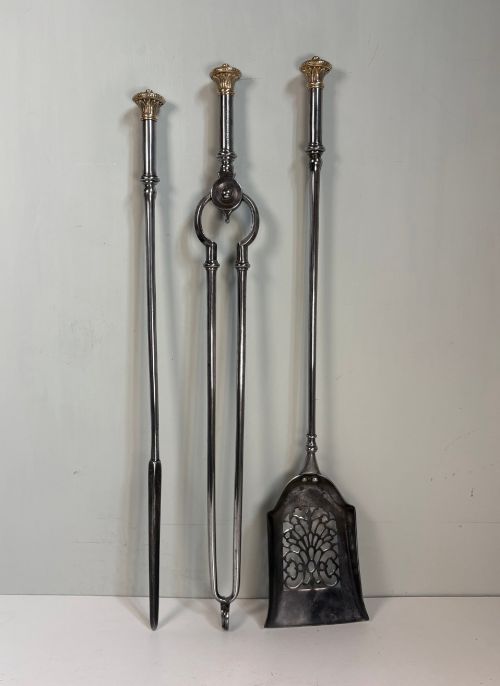
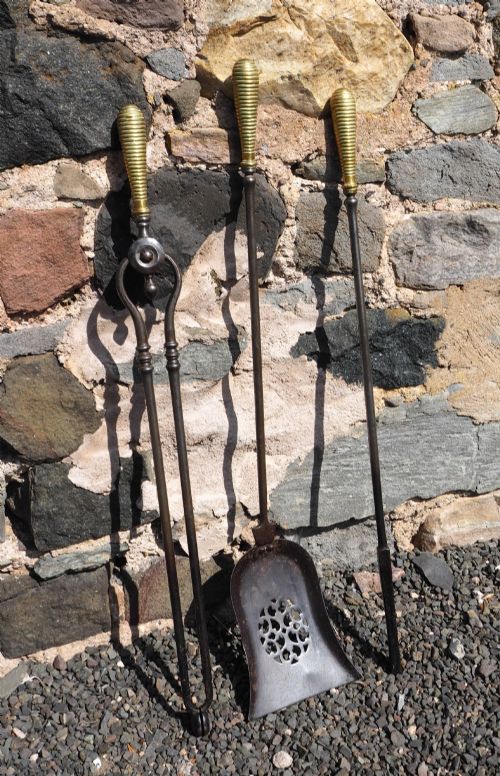
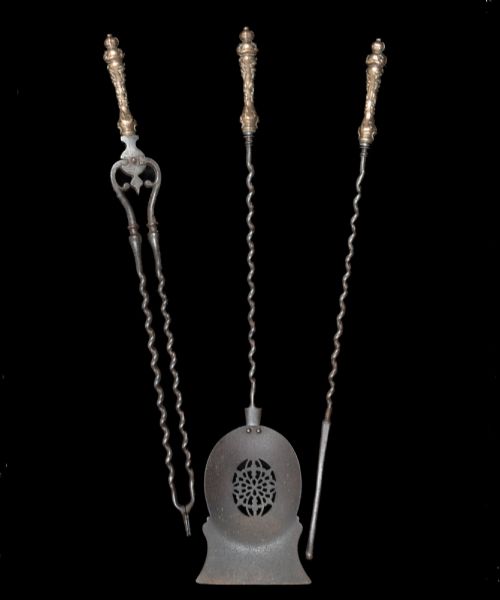
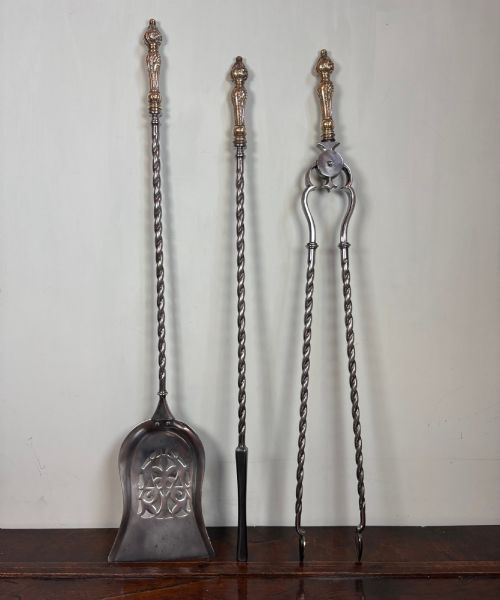
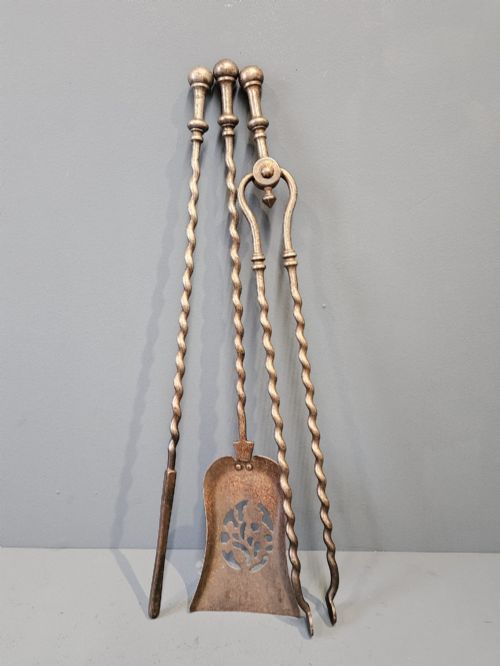
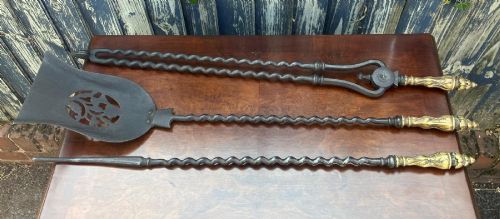


Pierced Steel Shovel
These pierced steel shovel pieces form part of nineteenth-century and eighteenth-century fireside sets used to manage hearth fires.
Pierced Steel Shovel
A pierced steel shovel is a hearth implement designed to sift coal or ash while tending a fireplace. These items appear primarily within sets of fire irons, fire tools, and fireplace accessories spanning the eighteenth century, the nineteenth century, the Regency period, and the George IV era. Buyers searching for a pierced steel shovel will most frequently encounter them as components of matched or assembled steel and brass fire tool sets.
The physical forms range from plain nineteenth-century steel shovels to polished steel and burnished steel versions equipped with brass details. They function alongside other fireplace tools such as pokers and tongs to maintain a domestic fire. The selection runs from Georgian examples through to later nineteenth-century pieces dated around 1880 and 1920.
How they were made
Makers shaped these implements from ferrous metals, predominantly utilising steel, iron, gunmetal, and polished or burnished steel. Many examples incorporate contrasting brass elements within the design, combining different metals in a single tool set. The surfaces receive high polishing or burnishing treatment to create a reflective finish.
The piercing work on the shovel blade involves cutting precise patterns through the steel plate to allow ash to fall through while retaining larger cinders. Craftsmen forged and shaped the metal by hand, attaching handles and stems using traditional joining methods suitable for heavy hearth use.
Current listings feature items from the 18th Century, 19th Century, Georgian, Regency, 1880, and 1920 periods.
What varies in quality
Quality in a pierced steel shovel rests upon the crispness of the pierced pattern and the grade of the metal finish. Burnished and polished steel examples demonstrate superior surface refinement compared to basic utility items. The integration of brass components also influences the overall standard of the piece.
The weight and balance of the tool indicate the level of craftsmanship involved in its production. Better examples maintain rigidity in the blade and a secure connection to the handle, reflecting the standards of Georgian and Regency metalworking.
The Pierced Steel Shovel Glossary
- Pierced steel
- Steel plate that has been cut or punched with decorative or functional holes. This technique permits fine detail work on hearth shovels.
- Burnished steel
- Metal that has been polished by friction to a bright, reflective surface. It provides both aesthetic appeal and resistance to minor corrosion.
- Fire irons
- A collective term for the matching pokers, tongs, and shovels used around a fireplace. They are frequently displayed together in companion stands.
- Gunmetal
- An alloy of copper, tin, and zinc sometimes utilised in fireplace accessories for its distinct dark grey-bronze tone.
- Regency
- A British design period spanning the early nineteenth century known for classical restraint and refined metalwork finishes.
Pierced Steel Shovel: Frequently Asked Questions
What is a pierced steel shovel used for?
A pierced steel shovel serves to lift coal onto a fire while letting fine ash sift through the pierced blade. This allows the user to separate unburnt fuel from waste material.
They formed part of standard hearth equipment in prosperous households during the eighteenth and nineteenth centuries.
Are these shovels sold individually?
These shovels typically appear as part of sets rather than as standalone items. They are grouped with fire irons, fireplace accessories, and companion sets.
Listings commonly present them alongside matching pokers and tongs from the same period.
How do I date a steel fire tool?
Dating relies on stylistic markers associated with periods like the Georgian era, Regency period, or late nineteenth century. Details in the handle turning and metal finishing offer clues to the decade of manufacture.
Matching sets often exhibit construction techniques characteristic of their specific historical era.
How do I care for polished steel?
Polished and burnished steel requires a dry environment to prevent tarnishing and surface rust. Regular gentle wiping maintains the reflective quality of the metal.
Avoid abrasive cleaners that can damage the historical surface finish of antique metalwork.