
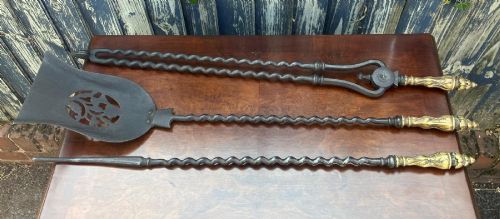


Georgian Fireplace Shovel
These Georgian fireplace shovel pieces are practical hearth implements that bring period character and robust metalwork to a traditional fireplace.
Georgian Fireplace Shovel
The form ranges from standalone tools to components of larger fireplace suites, sometimes paired with coal scuttles or brush sets. These implements reflect the domestic requirements of period parlours and drawing rooms, where maintaining an open coal or wood fire demanded dedicated metal utensils.
Materials and construction
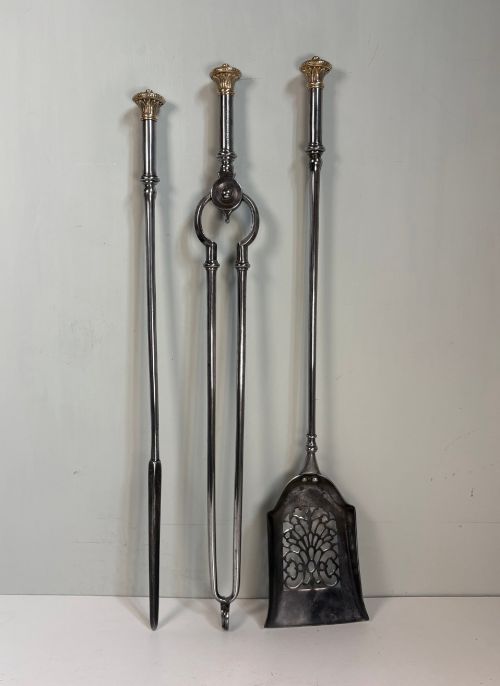
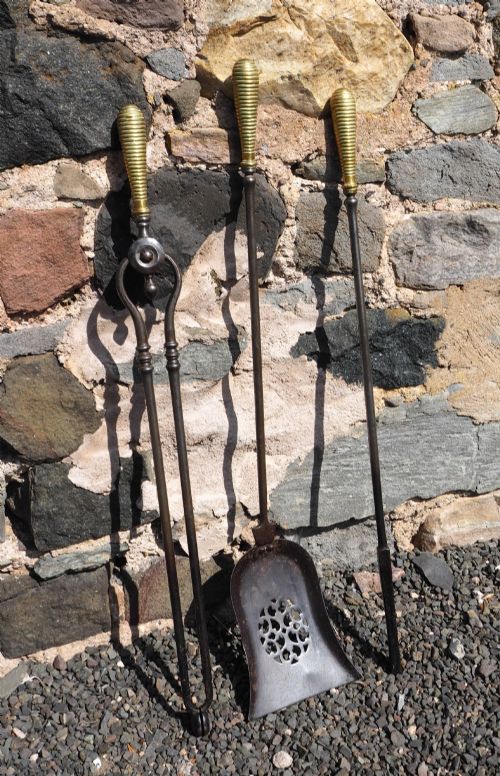
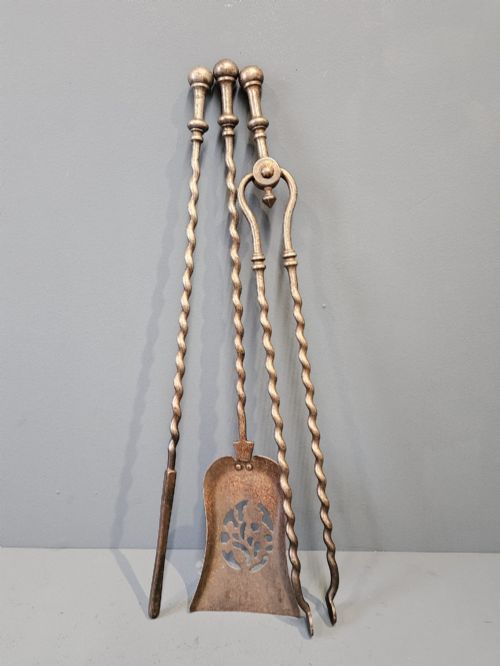
Makers utilised resilient metals such as steel, iron, and brass, often combining burnished or polished steel with cast brass elements for decorative contrast. Handles frequently feature distinctive detailing like door knocker ring designs or claw and ball motifs.
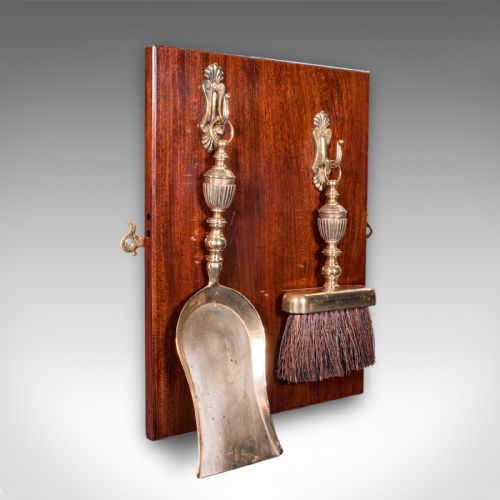
The construction relies on traditional blacksmithing and foundry techniques, producing rigid shafts and shaped shovel blades designed for heavy daily hearth use. Wooden elements such as mahogany occasionally appear in associated companion pieces or handles.
Materials recorded across the current inventory include brass, steel, iron, polished steel, mahogany, and gilt brass.
Assessing quality and finish
Quality reveals itself in the weight and balance of the metalwork, alongside the crispness of decorative casting on handles and grips. Superior examples display careful hand-polishing and integrated design coherence across the entire set of fire tools.
Lesser items show simpler turned details and standard stamped sheet metal components rather than substantial forged steel or heavy cast brass. The preservation of original surface finishes, particularly on burnished and polished steel pieces, strongly influences the character of the implement.
The Georgian Fireplace Shovel Glossary
- Georgian
- A period spanning the reigns of the Hanoverian kings from seventeen fourteen to eighteen thirty. This era produced distinctive domestic metalwork and hearth furniture.
- Regency
- The stylistic period covering the early nineteenth century up to eighteen thirty. Designs from this time often incorporate classical revival motifs and refined metal finishes.
- Fire irons
- A collective term for the matching set of poker, tongs, and shovel used to tend a hearth. These tools were frequently stored together in a fender or stand.
- Burnished steel
- Steel that has been mechanically polished to a bright, reflective surface finish. This treatment was common on higher quality nineteenth century fireplace accessories.
- Coal scuttle
- A container designed to hold fuel near the fireplace, sometimes accompanied by its own dedicated shovel. Examples from the period often use brass construction.
Georgian Fireplace Shovel: Frequently Asked Questions
How are these shovels usually sold?
They are most commonly encountered as part of a matched set of three fire irons, alongside a poker and tongs.
Occasionally, a shovel appears individually or as part of a larger maintenance set that includes a brush or a coal scuttle.
What metals were used for these tools?
Hearth implements from this era were primarily forged from steel and iron, or cast in brass.
Many better quality examples combine polished steel shafts with decorative brass handles and mounts for visual contrast.
How do I date a fireplace shovel?
Dating relies on stylistic clues in the handle design, manufacturing techniques, and the overall proportions of the piece.
Items from the Georgian and Regency periods generally display distinct classical detailing compared to later Victorian revivals.
Can I use these items with a modern fire?
These historical metal tools remain robustly constructed and are fully functional for tending an open fire.
Careful cleaning and appropriate maintenance will preserve the historic surfaces during regular domestic use.