


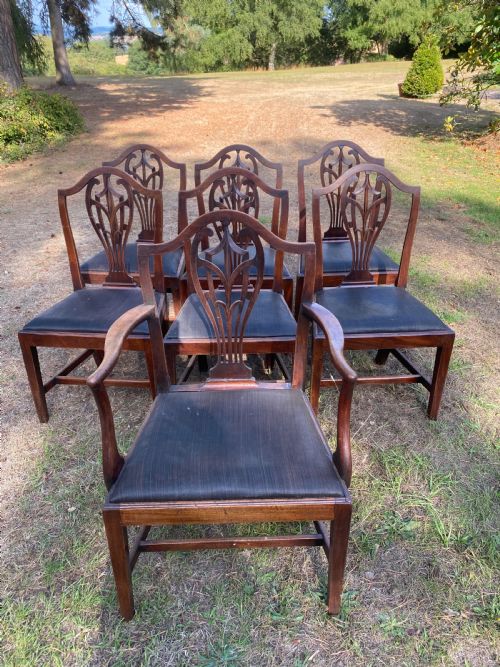
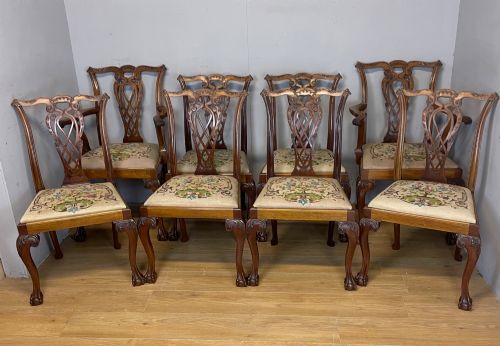
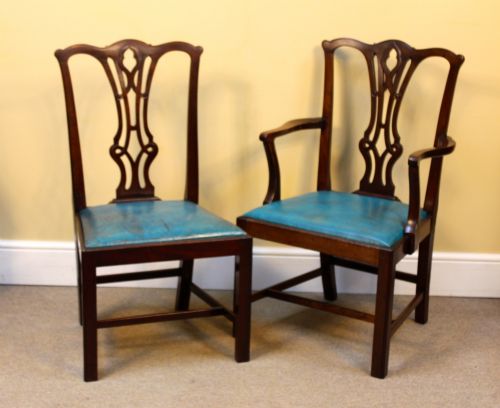
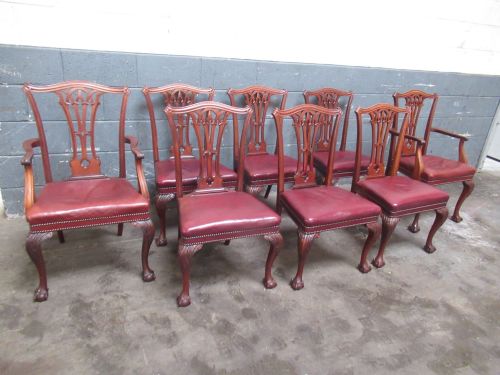
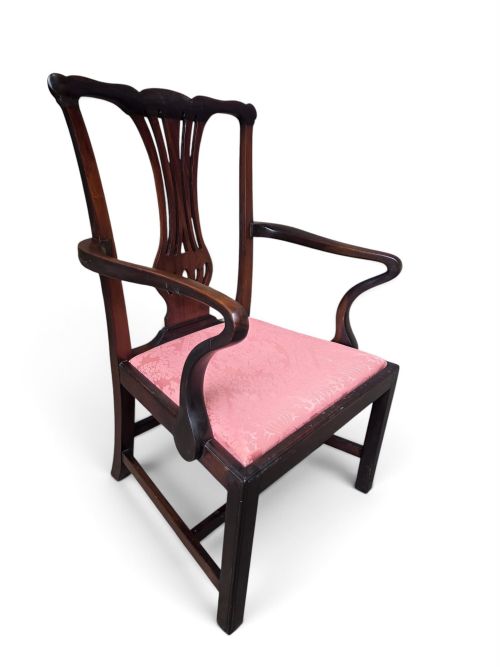
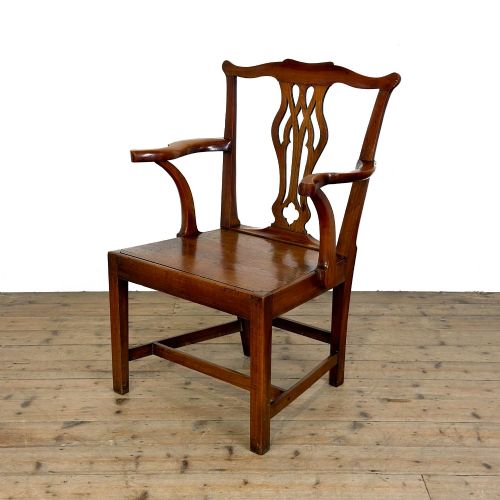
Pierced Splat Carver
A pierced splat carver brings classical mahogany joinery or robust country vernacular timber to the head of a dining table.
Pierced Splat Carver
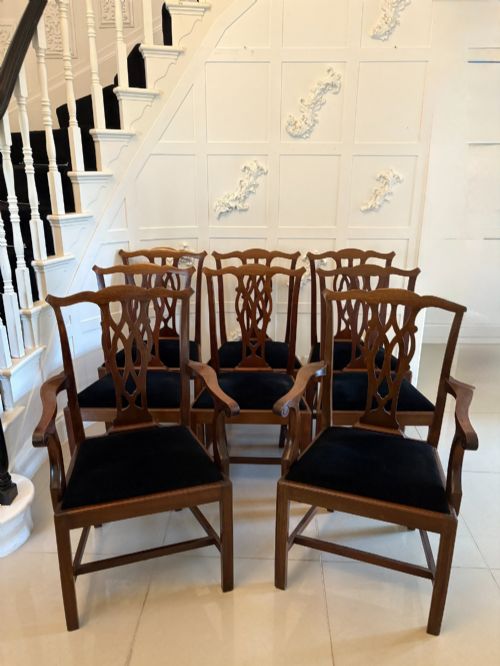
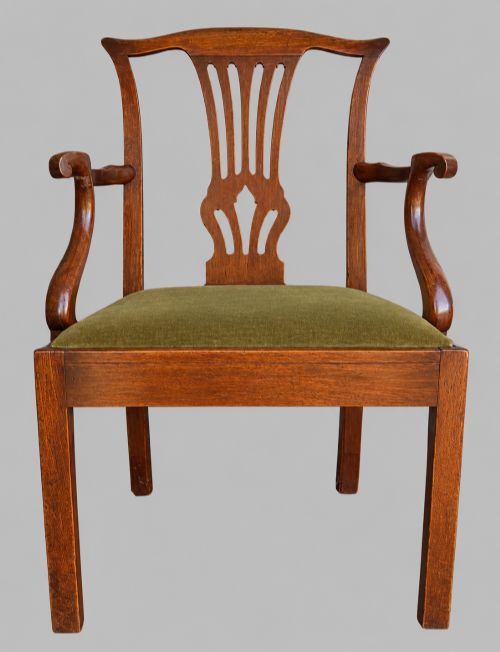
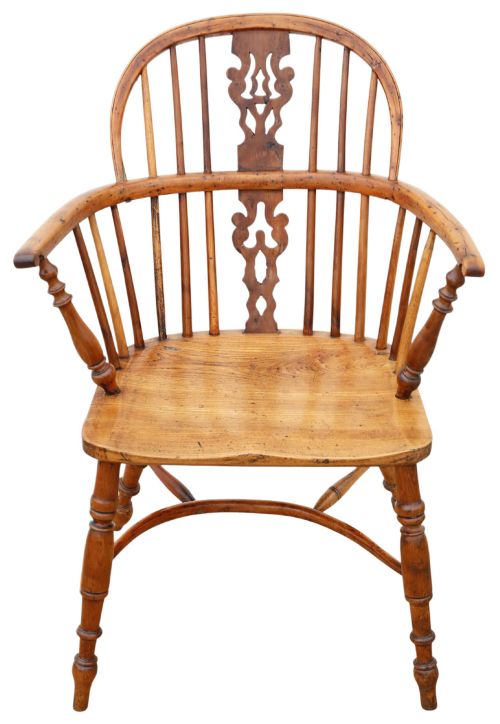
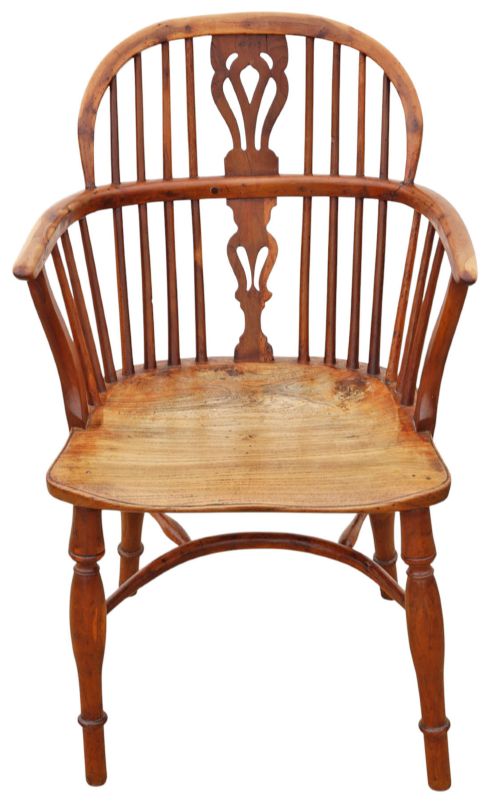
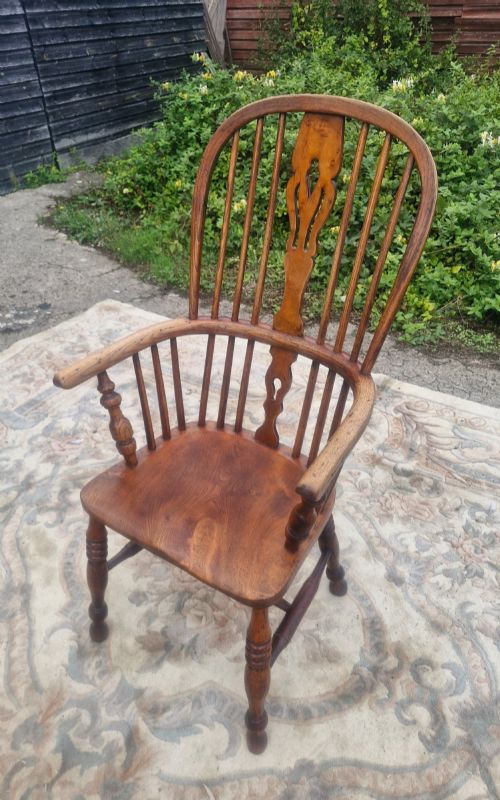
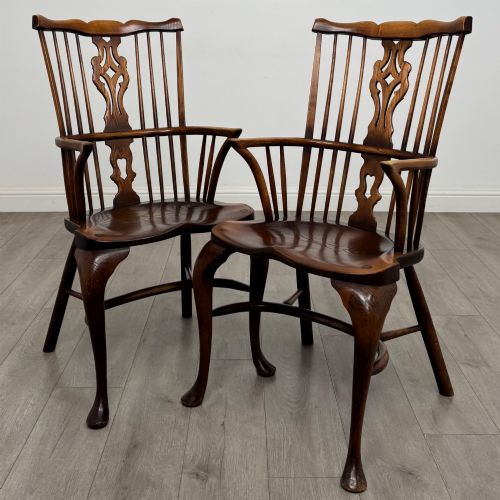
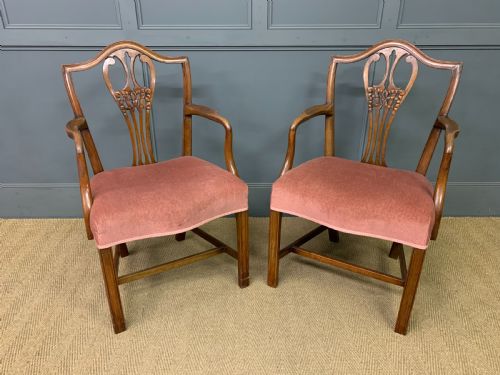
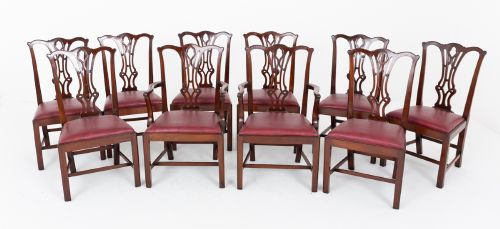
A pierced splat carver is an armchair designed for the head of a dining table, featuring a central vertical slat carved or pierced into intricate ribbons and knots. The examples you encounter on this page span formal mahogany Chippendale pieces from the eighteenth and nineteenth centuries alongside sturdy country vernacular Windsor armchairs.
Makers produced these dining and desk armchairs in sets or as individual elbow chairs for the morning room or library. You will find them constructed from native English timbers like yew, elm, oak, and fruitwood, as well as imported mahogany shaped into open arms.
The form bridges formal Georgian dining rooms and provincial farmhouse interiors, offering a supportive seat with scroll arms or hoop backs. Buyers choose them to anchor a dining set or to serve as a singular desk chair.
Materials and construction
Cabinetmakers and rural joiners relied heavily on native hardwoods such as elm, ash, and yew for country Windsor armchairs, steam-bending spindles and turning legs. Mahogany dominated formal urban workshops, allowing carvers to execute deep piercing and ribbon backs.
Joinery methods combined mortise and tenon joints for rigid frame stability, while Windsor designs utilised socketed spindles into solid saddle seats. Seat platforms were frequently carved from a single thick slab of elm or hollowed out for comfort.
Listings span the eighteenth, nineteenth, and twentieth centuries, uniting formal Georgian mahogany with rustic Victorian and Edwardian elm windsors.
Assessing quality and craftsmanship
The sophistication of the carved splat dictates the upper tier of formal dining chairs, where crisp ribbon folds and undercut foliage separate master workshops from later revivals. Timber selection also drives distinction, particularly heavily figured mahogany grains or richly patinated yew wood with natural burrs.
Structural integrity relies on the retention of original joining methods, undisturbed timber surfaces, and minimal replacement parts in the arms and stretchers. Subtle refinements in arm scrollwork and the proportion of the rake in the back legs elevate regional variants.
Warings
The Pierced Splat Carver Glossary
- Carver
- An armchair designed to match a set of dining chairs, usually placed at the head of the table. These seats feature open arms to accommodate wider garments.
- Splat
- The vertical wooden strip running from the centre of the seat up to the top rail of a chair back. Pierced examples feature decorative cut-out patterns inspired by Thomas Chippendale.
- Windsor
- A traditional wooden chair constructed with a solid sculpted seat into which the legs and back spindles are independently jointed. Regional varieties include hoop backs, low backs, and comb backs.
- Elbow chair
- An alternative historical term for an armchair with low supports for the arms. They frequently served in bedrooms, libraries, or writing desks.
- Crinoline
- A curved structural stretcher fitted between the legs of certain country chairs for extra rigidity. This metal or wooden brace often forms a loop beneath the seat.
Pierced Splat Carver: Frequently Asked Questions
How do I date an antique carver?
Dating relies on timber species, tool marks, and stylistic shifts between Georgian periods and later Victorian revivals. Eighteenth-century pieces display hand-carved details and period joinery.
Nineteenth-century revival pieces often copy these forms using heavier machinery marks or denser mahogany. Regional country chairs retain local turning characteristics tied to specific shires.
Where should I place a carver chair?
Carvers traditionally anchor the two ends of a dining table to frame the seating arrangement. They also function independently as writing chairs or corner accents.
Their open arms require adequate space around a desk or dining setup to pull out comfortably. Placing them in a hallway or bedroom highlights their sculptural backsplats.
Are Windsor carvers comfortable?
Windsor carvers offer ergonomic support through steam-bent back hoops and sculpted wooden saddle seats. Many owners add loose squab cushions for extended seating.
The absence of upholstery allows the shaped timber to conform naturally to the body. Their sturdy spindle backs distribute weight evenly across the frame.