




Pierced Rim Tray
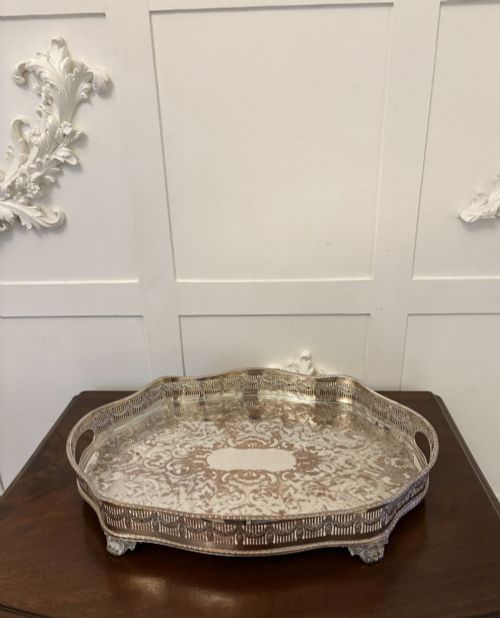
A pierced rim tray offers a delicate, openwork border that frames everything from tea services to bonbons, bringing traditional craftsmanship straight to the table.
Pierced Rim Tray
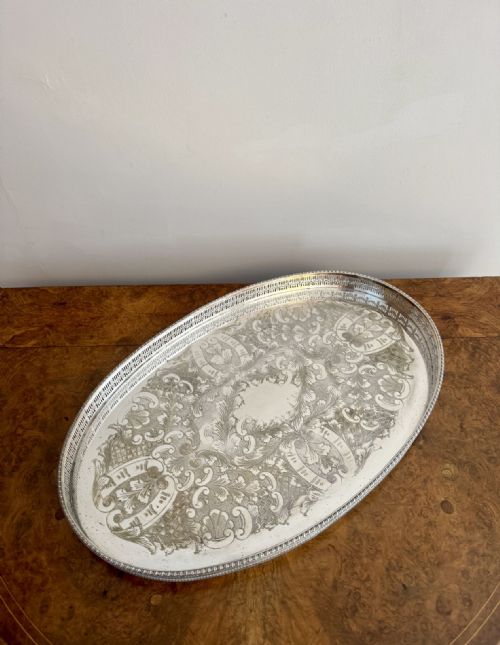
When you search for a pierced rim tray, you encounter functional serving vessels shaped with openwork galleries or reticulated borders. These pieces appear across various periods, from the nineteenth century through the interwar years, taking forms such as tea trays, cocktail trays, and serving dishes.
The versions most frequently met on this page include silver-plated serving trays and platters from the Edwardian and Victorian eras. Alongside these metal items, pottery serving dishes emerge in blue and white patterns, demonstrating the broad scope of pierced and reticulated designs.
Makers utilised different materials to achieve these forms, ranging from silver plate and electroplated nickel silver to copper, bronze, oak, and pearlware. Each object serves both a decorative and practical purpose, functioning as a centrepiece or a server for daily entertaining.
How they were made
Makers fashioned these trays using metals like silver plate, electroplated nickel silver, copper, and bronze, often applying silver plating over a base metal. Some examples incorporate oak bases alongside metal mounts, combining timber durability with metallic sheen.
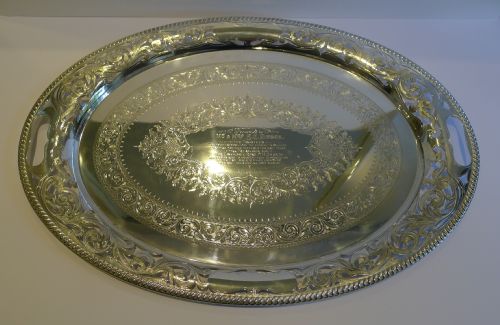
Pottery alternatives utilised earthenware bodies finished with glaze and cobalt pigment, capturing intricate patterns like the net design. Artisans employed embossing and engraving techniques to decorate the metal surfaces with scrolls and figural scenes.
Pierced Rim Tray Retail Price Guide 2026
Typical asking prices for pierced rim tray among the pieces listed under this phrase on Sellingantiques today, from the lower quarter to the upper quarter. They describe what is for sale here now, not the wider market.
Listings span the nineteenth century, Victorian, Edwardian, and interwar periods, utilising silver plate, copper, bronze, and pearlware.
What varies in quality
The distinction between standard and superior examples lies in the crispness of the openwork piercing and the depth of the embossed scrolls. Finer specimens display precise cutting along the rim and well-defined engraved details that remain sharp across the surface.
Material selection also dictates the character of the piece, with substantial weight in bronze or silver plate indicating robust construction. The integration of materials, such as combining oak with silver-plated mounts, reflects the ambition of the original workshop.
J.H. Potter
The Pierced Rim Tray Glossary
- Pierced rim
- An outer border cut through with decorative openwork patterns. This design lightens the visual weight of the serving tray.
- Silver plate
- A thin layer of silver applied over a base metal such as copper or nickel silver. It provides the appearance of solid silver at a different scale of production.
- Electroplated nickel silver
- A nickel alloy coated with silver through an electrical process. This material became standard for durable nineteenth-century serving wares.
- Pearlware
- A refined earthenware developed during the Georgian period featuring a pale glaze. It serves as the ceramic base for blue and white transfer-printed dishes.
- Reticulated
- Net-like or webbed openwork ornamentation applied to ceramics or metalwork. Artisans utilise this technique to create delicate borders on platters.
Pierced Rim Tray: Frequently Asked Questions
What is a pierced rim tray used for?
These trays function primarily as serving vessels for tea, cocktails, and food platters, or simply as decorative chargers and centrepieces on a table.
The openwork rim helps secure items while carrying, though many buyers choose to display them flat on sideboards to showcase the metalwork or pottery patterns.
How do I identify a Victorian tray?
Victorian pieces often display heavy silver plating, intricate embossed scrolls, or specific registry marks associated with nineteenth-century manufacturing.
Comparing the weight, material composition, and decorative style against dated examples helps place an item within the reign.
Are these trays made of solid silver?
Most items listed are constructed from silver plate, electroplated nickel silver, or copper rather than solid silver. Manufacturers used these base metals to achieve large, durable serving trays at a practical weight and cost.
Checking the metal properties and underlying base through wear points reveals the true composition of the piece.
How do I care for a silver-plated tray?
Silver plate requires gentle cleaning with appropriate metal polishes to maintain the shine without wearing through the thin silver layer to the base metal. Avoiding abrasive cloths preserves the engraved scrolls and embossed details.
Store the tray in a dry environment to prevent tarnishing and moisture damage, particularly for examples that combine metal with oak.