



Pierced Metal Fender
These pierced metal fender designs anchor a hearth with functional presence and decorative weight, spanning Georgian through Victorian periods.
Pierced Metal Fender
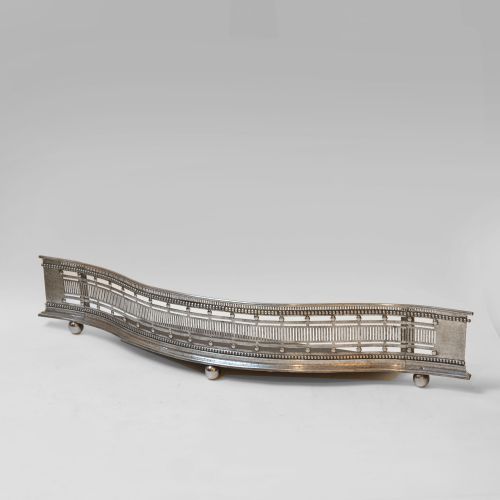
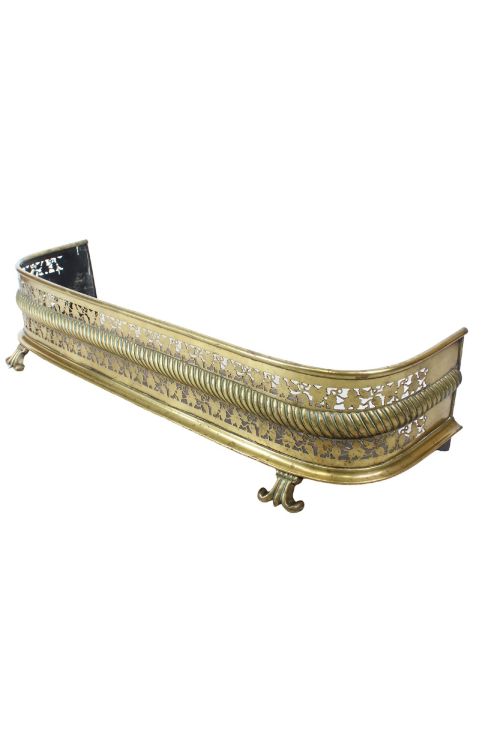
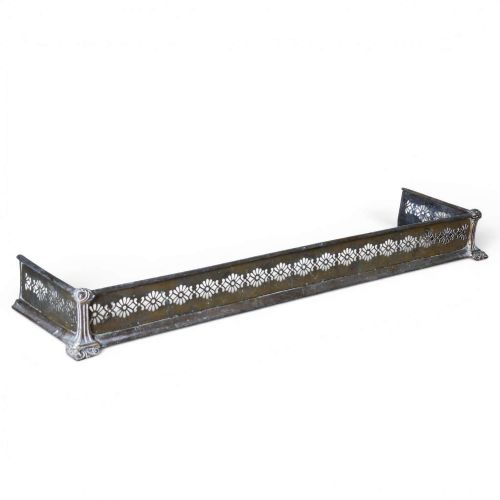
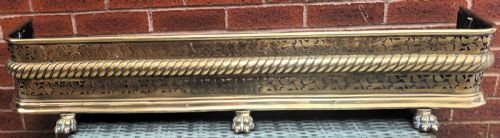
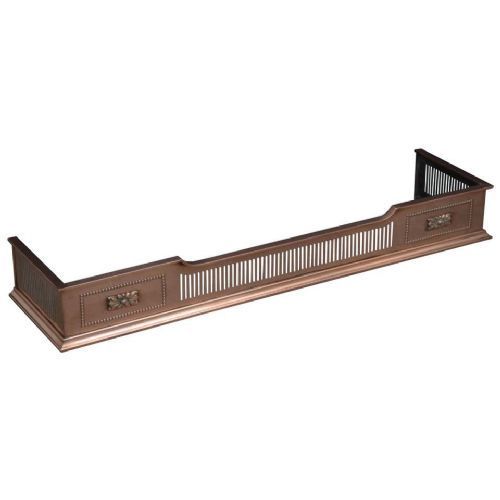
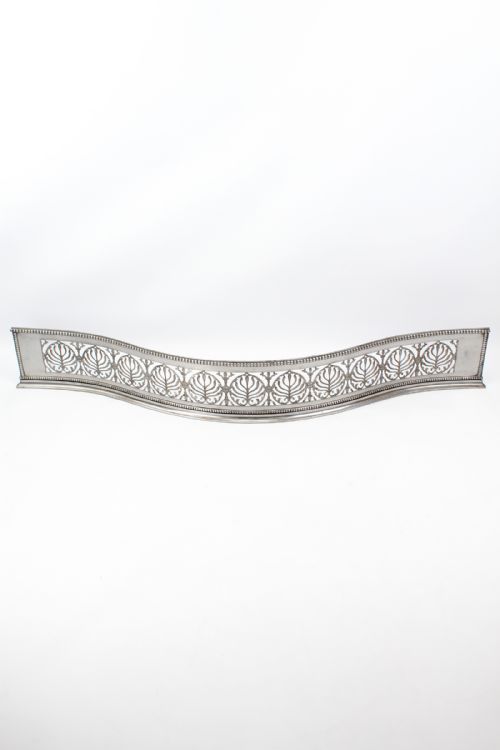
A pierced metal fender is a hearth accessory designed to contain ash and protect the room from stray embers while framing the fireplace opening. The examples seen here range across Georgian, Regency, and Victorian styles, appearing in forms such as bowfront, serpentine, and straight curbs.
Buyers encountering this page will most frequently meet Victorian and Georgian pieces fashioned from brass or steel. These items serve as structural boundaries for the hearth, combining utilitarian fire safety with period craftsmanship.
Materials and construction
These pieces rely primarily on brass, steel, polished steel, iron, and copper, often paired in a single construction to contrast bright metal highlights against dark iron bodies. Smiths and metalworkers shaped the heavy metal plates using cold-working techniques, hand-piercing the grilles with geometric, floral, or abstract patterns.
Decoration was achieved through piercing, engraving, and the application of cast details such as flower patera or beaded borders. Surfaces were finished to a high polish on brass and polished steel, or left with the textured dark finish characteristic of nineteenth-century ironwork.
Pierced Metal Fender Retail Price Guide 2026
Typical asking prices for pierced metal fender among the pieces listed under this phrase on Sellingantiques today, from the lower quarter to the upper quarter. They describe what is for sale here now, not the wider market.
Materials span brass, steel, iron, polished steel, and copper, with Victorian and Georgian periods dominating the selection.
Distinguishing quality across the range
Quality in a pierced metal fender lies in the crispness of the pierced metalwork and the structural integrity of the heavy gauge metal used. Finer examples display clean, evenly spaced piercing and substantial weight, whereas lesser pieces show uneven hand-cutting or distortion from heat and heavy use.
The refinement of decorative motifs, such as engraved serpentine fronts and applied brass floral details, separates standard utilitarian hearth curbs from more ambitious domestic metalwork. Original surfaces retaining deep patination also elevate the standing of an individual piece.
The Pierced Metal Fender Glossary
- Serpentine front
- A curved shape curving outward in the centre and inward at the ends, frequently seen on Georgian steel fenders. This silhouette demands precise smithing to maintain clean lines along the hearth.
- Patera
- A circular ornamental motif resembling a flattened disc, often carved or cast with floral patterns. These elements are frequently applied to the corners or central plaques of nineteenth-century copper and brass fenders.
- Curb
- An alternative term for a fireplace fender, denoting the low metal barrier enclosing the hearth. The curb keeps stray wood or coal within the fireplace zone.
- Polished steel
- Iron alloy treated to achieve a bright, reflective surface finish. This material was favoured in eighteenth and nineteenth-century formal rooms for its brilliant sheen.
Pierced Metal Fender: Frequently Asked Questions
How do I measure for a fender?
Measure the width and depth of your fireplace opening and hearth stone to ensure the fender sits correctly around the perimeter. Allow sufficient clearance for fire irons and hearth accessories if they sit within the boundary.
Take measurements from the outer edges where the metal curb will rest against the floor. Note whether your hearth has a bowfront or serpentine shape that requires a matching curved profile.
Were these used with coal or wood?
These metal curbs were utilised with both coal grates and wood-burning hearths in period domestic settings. Their primary role was containing rolling embers and supporting fire tools.
Heavier steel and iron variants often accompanied coal grates which burned at higher temperatures. Lighter brass versions frequently appeared in formal reception rooms alongside decorative fire furniture.
How should I clean polished steel?
Maintain polished steel surfaces with a dry cloth and specialised metal care products suited for historic ironwork. Avoid abrasive cleaners that strip the historic finish or scratch the bright metal.
Keep the metal dry to prevent rust formation in damp environments. Regular light dusting preserves the reflective quality without damaging the original surface.
How do I date a brass fender?
Examine the construction methods, screw types, and decorative styles to determine whether a piece originates from the Georgian or Victorian era. Georgian examples often feature hand-engraved steel and linear serpentine fronts, while Victorian pieces frequently incorporate heavy cast brass and industrial detailing.
Look at the thickness of the metal and the precision of the piercing work. Machine-assisted uniformity generally points toward later nineteenth-century production.