
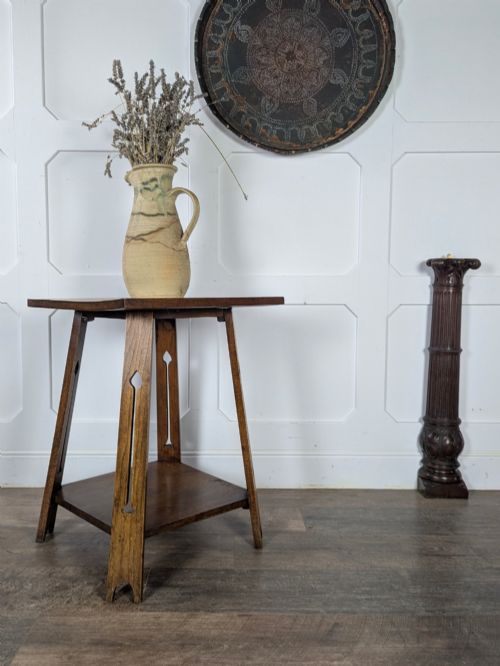
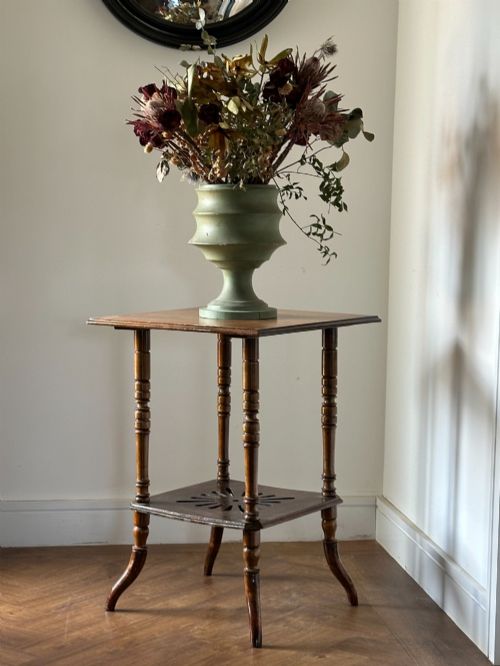


Pierced Leg Side Table
These pieces known as pierced leg side table offer sturdy surfaces and fine joinery, combining practical utility with period character.
Pierced Leg Side Table
A pierced leg side table encompasses side tables, occasional tables, writing tables, and console tables from periods such as the Georgian, Regency, Victorian, and Edwardian eras. Buyers looking for this search phrase will find forms ranging from Chippendale revival designs to Arts and Crafts creations.
The materials span mahogany, oak, walnut, teak, and kingwood, reflecting diverse regional workshops and design movements like the Aesthetic Movement and French Rococo Revival. These tables function well in living spaces as lamp tables, display tables, or serving tables.
Most examples hail from the nineteenth and early twentieth centuries, capturing historical revivals and vernacular furniture making. One meets forms with gallery tops, octagonal shapes, and inlaid surfaces across the current selection.
What varies in quality
Quality rests in the selection of timber, where figured grain and solid construction distinguish finer tables from simpler utilitarian pieces. The crispness of carved fretwork and inlaid motifs marks the hand of a more skilled cabinetmaker.
Proportion and structural integrity define the upper tier of these tables, ensuring stability alongside decorative appeal. Finer examples retain original hardware, harmonious patination, and careful attention to secondary timbers.
Listings feature woods spanning mahogany, oak, teak, walnut, kingwood, and satinwood across the nineteenth and early twentieth centuries.
E.W Godwin·Liberty
The Pierced Leg Side Table Glossary
- Occasional Table
- A small, movable table designed for a specific, intermittent use in a principal room. These include lamp tables and wine tables.
- Pietra Dura
- An inlay technique using cut and fitted polished coloured stones to create geometric or pictorial designs. It appears on tabletop surfaces of the nineteenth century.
- Etagere
- A piece of furniture consisting of a set of open shelves for displaying small objects. French examples often utilise mahogany and marquetry.
- Gallery
- A raised ornamental border surrounding the edge of a tabletop. Edwardian tables frequently incorporate wooden or brass galleries.
- Horsable
- A descriptor associated with specific Arts and Crafts production, linked to workshops like Liberty. These pieces emphasise solid oak construction.
Pierced Leg Side Table: Frequently Asked Questions
What is a pierced leg side table used for?
These tables serve as versatile surfaces for lamps, display items, and writing across living rooms, halls, and studies. Their varied heights and tabletop shapes allow placement beside seating or against walls.
Historically, forms like wine tables and occasional tables accommodated domestic rituals and hospitality. Today, they function equally well as accent furniture in contemporary interiors.
How do I date an antique side table?
Dating relies on observing timber choices, construction techniques, and stylistic markers associated with specific periods like the Georgian or Edwardian eras. Secondary woods and fastener types provide further clues to the decade of manufacture.
Revival styles often borrow motifs from earlier centuries, so examining joinery alongside surface wear helps distinguish nineteenth-century interpretations from original pieces.
Are these tables suitable for daily use?
Solid timber construction and sturdy leg configurations make these tables durable for everyday placement in a home. Proper care preserves the polished finishes and inlaid surfaces over time.
Placing them away from direct heat sources and consistent moisture protects the wood and decorative veneers from splitting or warping.
What distinguishes Arts and Crafts tables?
Arts and Crafts pieces emphasise visible construction, honest materials like solid oak, and functional utility over excessive ornament. Workshops of this movement favoured simplicity and hand-finished details.
Details such as copper tops, octagonal forms, and exposed joinery set these tables apart from heavily carved revival furniture of the same era.