




Pierced Gallery Stand
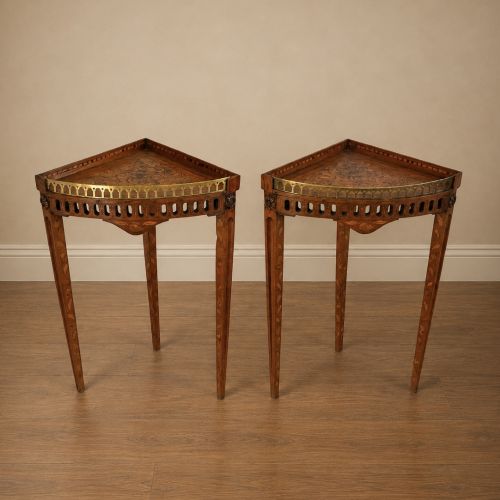
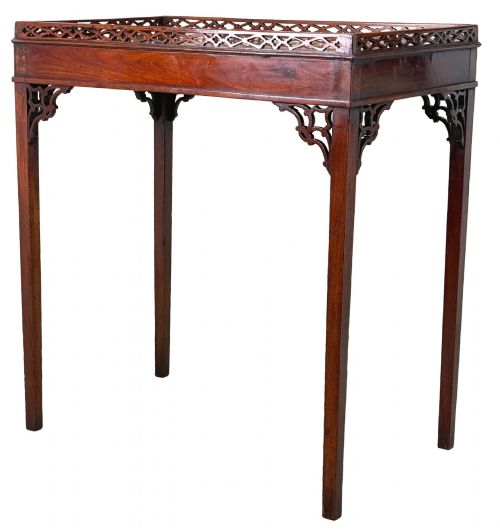
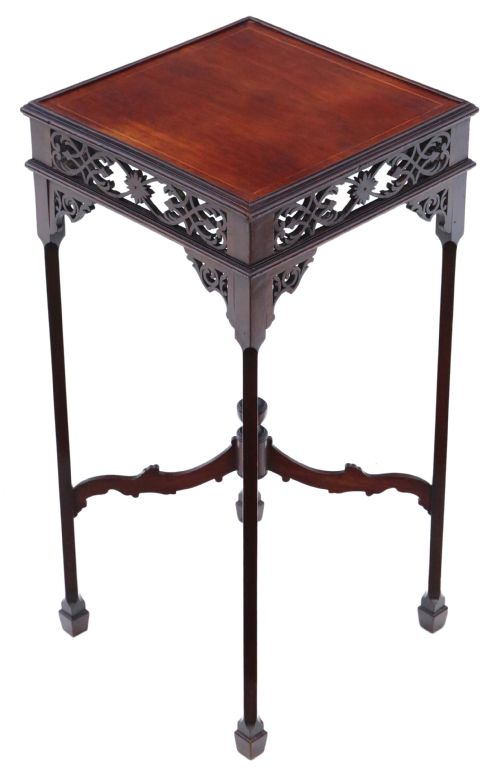
These pieces known as a pierced gallery stand combine utilitarian function with delicate fretwork borders.
Pierced Gallery Stand
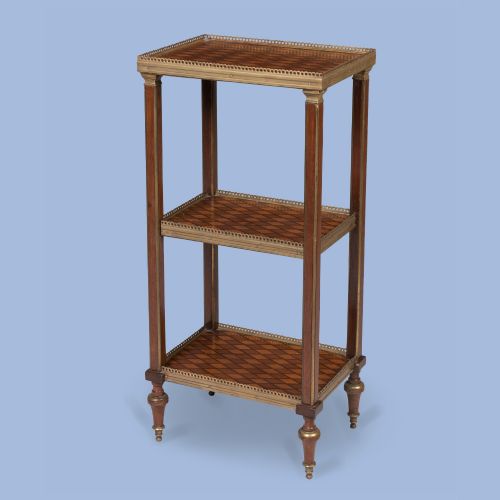
A pierced gallery stand encompasses a variety of small tables, trays, and desk accessories featuring an openwork railing around the edge. The selection includes occasional tables, wine coasters, etageres, and desk stands originating from the eighteenth century to the early twentieth century.
Buyers will encounter forms ranging from Georgian tripod tables with carved wooden galleries to Victorian and Edwardian examples utilising brass or silver plate. These items served diverse domestic purposes, from holding wine bottles and glasses to displaying books and small ornaments in reception rooms.
How they were made
Cabinet makers utilised dense hardwoods such as mahogany, walnut, and oak as the structural foundation for these stands. Artisans often incorporated satinwood and rosewood for marquetry inlay or utilised ormolu and brass fittings to accent the woodwork.
The distinctive pierced galleries required precise fretwork or metal casting techniques to achieve open patterns. Joinery methods varied from traditional birdcage mechanisms on tripod tables to mortise and tenon construction on larger cabinets and stands.
The listings show pierced gallery stands spanning the eighteenth, nineteenth, and early twentieth centuries in mahogany, oak, walnut, and silver plate.
What varies in quality
The distinction between standard and superior pieces rests on the crispness of the pierced fretwork and the selection of timber veneers. Hand-carved wooden galleries and detailed marquetry inlay demonstrate greater artisan skill than cast metal substitutes or plain surfaces.
Proportion and stability also dictate the calibre of a piece, particularly in tall or narrow forms like etageres and tripod tables. Original mounts, intact galleries, and harmonious patination across the wood distinguish finer examples from altered items.
Elkington & Co
The Pierced Gallery Stand Glossary
- Pierced gallery
- An openwork railing or border fitted to the edge of a table, tray, or stand to prevent items from sliding off. This feature is typically executed in carved wood, brass, or silver plate.
- Tripod table
- A small freestanding table supported by a central pillar and three legs. Many eighteenth-century examples incorporate a tilting top or a birdcage mechanism beneath the surface.
- Etagere
- A set of open shelves for displaying small objects, prominent in nineteenth-century French and English interiors. They are constructed in woods such as mahogany and walnut.
- Wine coaster
- A small circular tray, often with a wooden base and a metal gallery, designed to hold a decanter or bottle on the dining table. Some versions accommodate multiple bottles.
- Marquetry
- Decorative inlay work using various coloured woods to create pictorial or geometric patterns on furniture surfaces. It appears on Georgian and later table tops.
Pierced Gallery Stand: Frequently Asked Questions
What is a pierced gallery stand used for?
These stands functioned primarily as small movable tables for serving drinks, holding desk accessories, or displaying decorative objects in principal rooms.
The raised border kept items secure when the furniture was shifted between locations within a house.
How do I date a pierced gallery stand?
Dating relies on timber selection, construction methods, and stylistic cues such as Chippendale revival details or Louis XVI motifs.
Eighteenth-century pieces typically feature solid mahogany and traditional joinery, while later Victorian and Edwardian versions incorporate brass galleries or machine-cut veneers.
Where should I place a pierced gallery stand?
These compact pieces fit easily beside seating as lamp or occasional tables, or function as display surfaces in corners and hallways.
Their open galleries make them suitable for holding items that benefit from side visibility, such as glassware or desk stands.
Are brass galleries original to the furniture?
Many nineteenth and twentieth-century stands were manufactured with cast or pierced brass galleries integrated into the design from the outset.
Inspect the fixings where the railing meets the wood to understand how the metal component was secured.