



Chippendale Fretwork Table
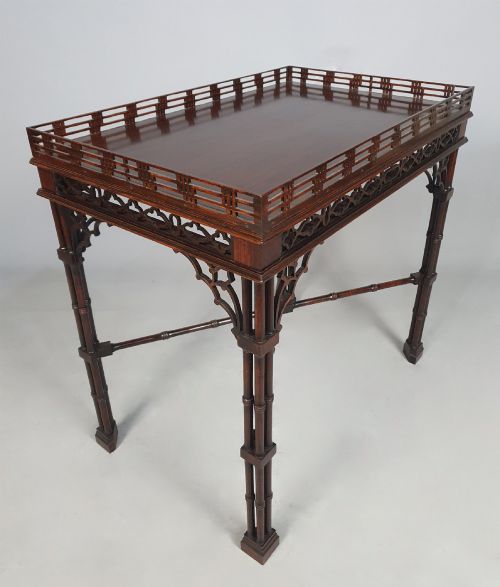
A chippendale fretwork table brings unmistakable architectural precision to a room through pierced fretwork and rich timber.
Chippendale Fretwork Table
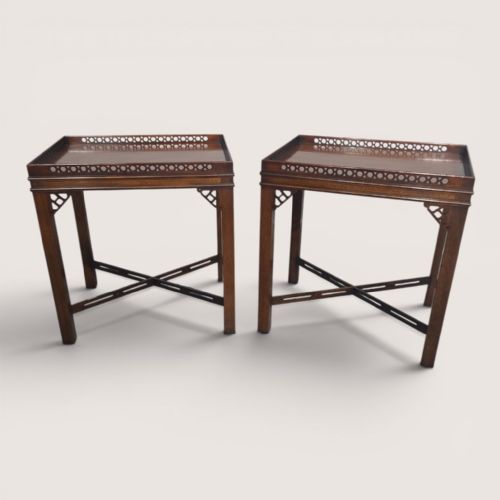
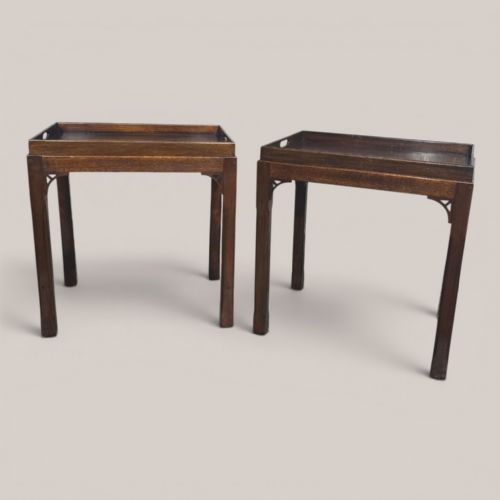
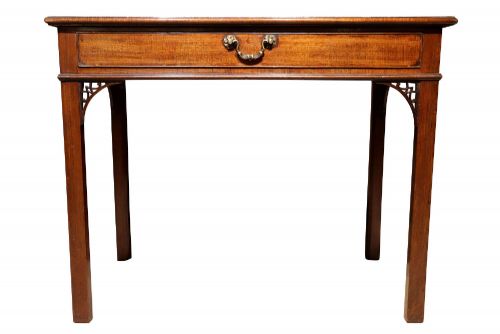
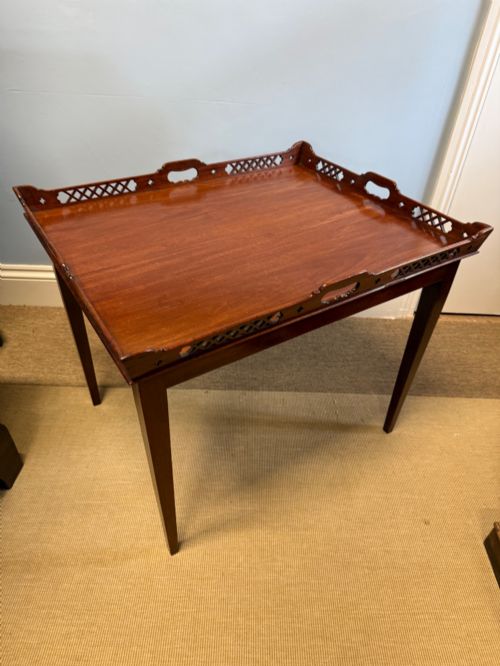
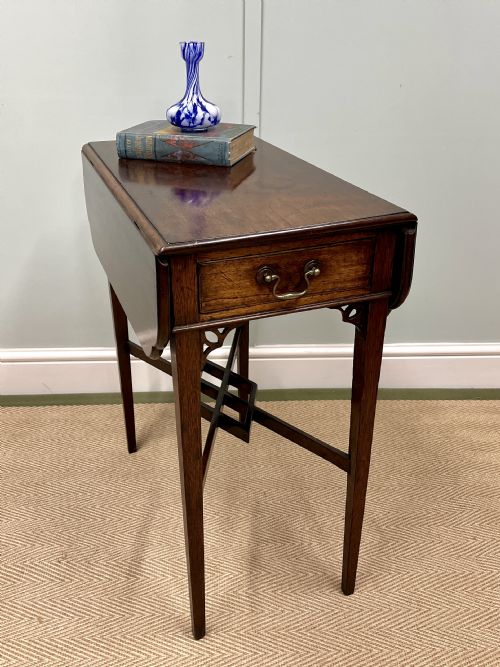
When you search for a chippendale fretwork table, you encounter pieces designed with intricate pierced wooden galleries, brackets, and leg stretchers. The forms span side tables, silver tables, and occasional tables, drawing directly from eighteenth-century design books.
The selection ranges from genuine Georgian period examples to later revivals from the nineteenth and twentieth centuries. Mahogany forms the backbone of these offerings, supplemented by padauk and oak.
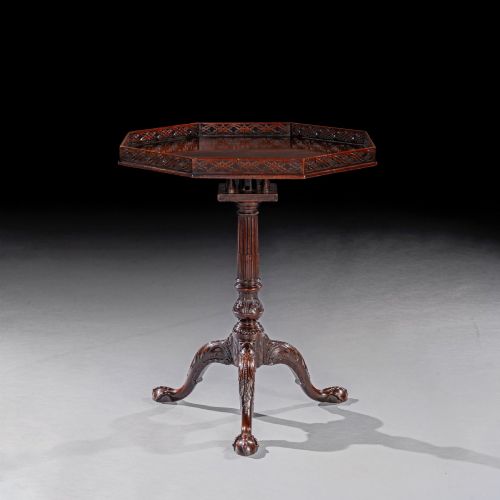
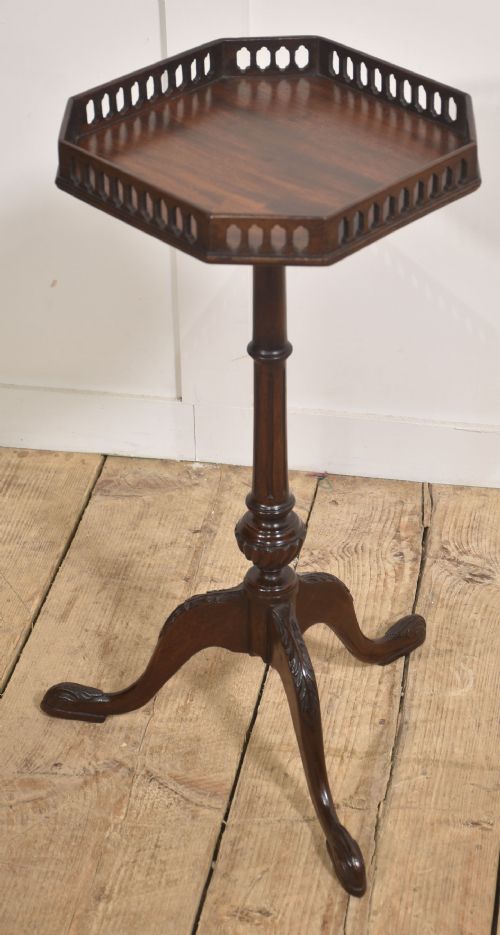
You will notice variations spanning Chinese Chippendale motifs, Gothic Revival arches, and simple tripod designs. Side tables and lamp tables dominate the current selection, giving numerous ways to introduce this aesthetic.
Materials and Construction Techniques
Makers relied heavily on figured mahogany, prized for its dense grain and capacity to hold sharp carved details. Padauk and oak appear alongside mahogany, while brass handles, glass tops, and leather inserts provide functional contrast.
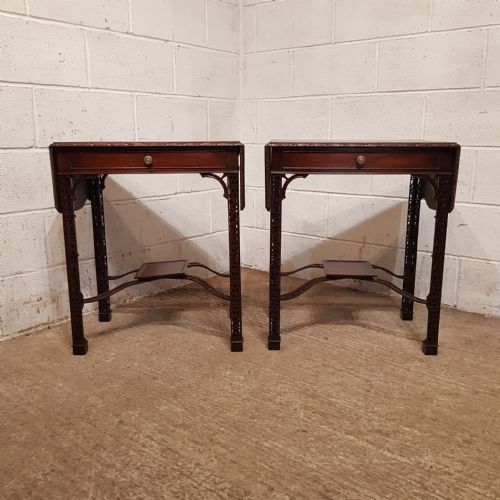
Pierced fretwork requires meticulous hand-sawing and joinery to create open geometric patterns without weakening the structural frame. Drop-leaf actions, concertina mechanisms for card tables, and tripod bases demonstrate advanced cabinet-making skills.
Several tables include clever folding mechanisms designed to conceal card games or tea services when not in active use.
Assessing Quality and Execution
The depth and crispness of the pierced fretwork separate ordinary production from superior examples. Cabinets with cleanly carved brackets and unaltered timber surfaces command greater appreciation.
Period authenticity and structural integrity dictate the standing of each piece. Later revivals vary according to the fidelity of their proportions and the quality of the primary timber.
Edwards and Roberts
The Chippendale Fretwork Table Glossary
- Fretwork
- Ornamental perforated wood carving resembling lace or lattice. This technique defines the visual lightness of the style.
- Silver table
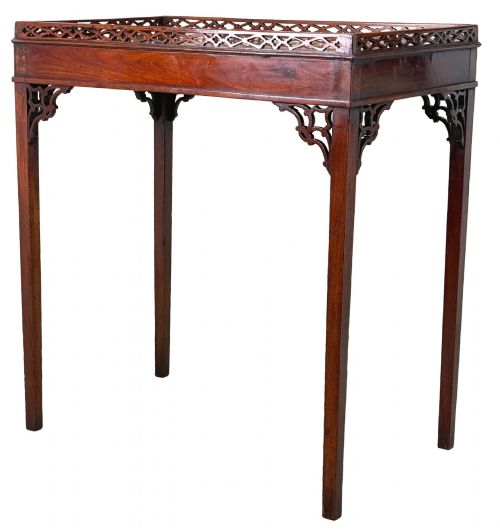
- A high-sided occasional table designed for displaying tea or silver services. These often feature raised gallery edges.
- Concertina action
- An expanding frame mechanism used on card tables. It supports folding tabletops evenly when opened.
- Padauk
- A heavy exotic hardwood with a reddish hue. It offers exceptional durability for intricate carved elements.
- Torchere
- A tall, slender stand meant to hold a candle or lamp. These frequently incorporate tripod bases and carved stems.
Chippendale Fretwork Table: Frequently Asked Questions
What is a chippendale fretwork table?
A chippendale fretwork table is a wooden table featuring pierced, lattice-like patterns inspired by eighteenth-century cabinet maker Thomas Chippendale and his contemporaries. These pieces utilise styles ranging from Chinese Chippendale to Gothic Revival.
They serve functional roles as side tables, games tables, or desks while acting as distinct decorative statements through their carved brackets and openwork galleries.
How do I date an antique table?
Dating involves examining the timber species, construction methods, and tool marks visible on secondary woods. Eighteenth-century examples display hand-cut joinery and period-specific patination.
Revival pieces from the Victorian and Edwardian eras often utilise machine-sawn components and different finishing techniques that distinguish them from original Georgian items.
Where should I place a silver table?
Silver tables work well as central display surfaces in reception rooms or hallways where their detailed fretwork can be admired from multiple angles. Their raised edges make them suitable for holding smaller decorative objects.
Ensure placement avoids direct heat sources to protect the polished mahogany or padauk timber surfaces from drying out.
What is Chinese Chippendale style?
Chinese Chippendale incorporates Asian-inspired motifs such as pagoda silhouettes, lattice fretwork, and square-chamfered legs. This style became popular during the Georgian period through pattern books.
Revival makers later revived these ornate geometric designs during the late nineteenth and early twentieth centuries.