




Pierced Carved Pedestal Table
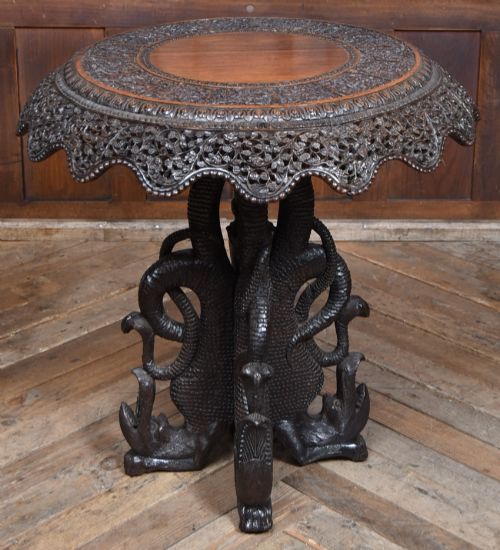
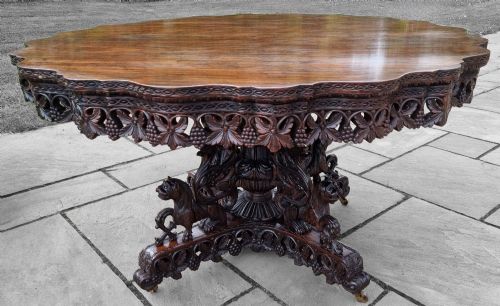
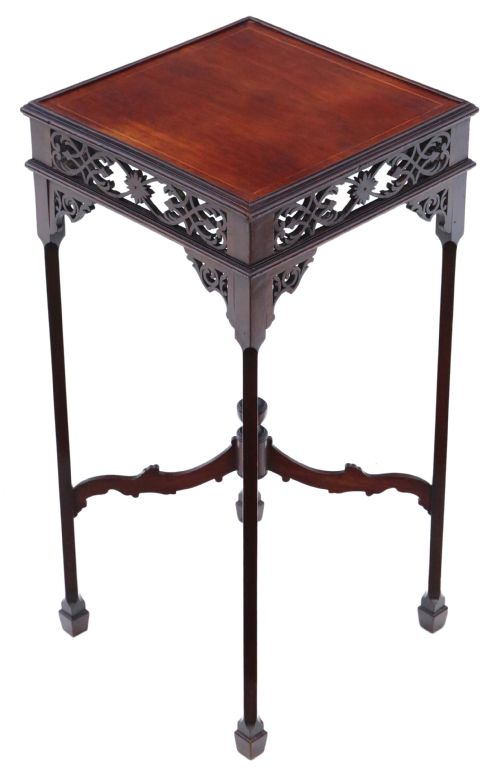
A pierced carved pedestal table brings intricate historic craftsmanship and rich timber into a room, offering both display space and strong decorative presence.
Pierced Carved Pedestal Table
When you search for a pierced carved pedestal table, you look at items designed for display, occasional use, and centre placement within a room. These pieces range from compact plant stands and wine tables to larger centre tables, side tables, and jardiniere stands.
You are most likely to meet Victorian and Edwardian examples on this page, alongside pieces dating through the nineteenth century. They draw upon Anglo-Burmese, Anglo-Indian, Chinese, and Chippendale revival styles, expressing diverse regional woodworking traditions.
The forms vary from tip-top and tilt-top occasional tables to fixed stands with intricate cut-outs and pedestals. Each piece serves to elevate objects or anchor a space with distinct sculptural detail.
What varies in quality
Quality rests in the depth, crispness, and control of the carving across the timber. Superior pieces exhibit confident undercut foliage and geometric piercings that maintain structural integrity without splintering the wood.
The choice of material and stability of the pedestal construction also distinguish finer examples. Heavier, dense timbers like padauk and rosewood support more ambitious openwork than softer or more brittle alternatives.
The listings here include nineteenth-century pieces alongside Edwardian examples, spanning materials from teak and padauk to marble and burr oak.
The Pierced Carved Pedestal Table Glossary
- Pedestal table
- A table supported by a single central pillar or column resting on a base. This design maximises legroom and provides a distinct focal point in a room.
- Tip-top table
- A table with a hinged top that tilts into a vertical position when not in use. It allowed people to store the furniture against a wall to save floor space.
- Jardiniere stand
- A tall piece of furniture designed specifically to hold a plant container or flower pot. They often feature elevated platforms and decorated surfaces to display horticulture.
- Padauk
- A heavy, durable tropical hardwood known for its deep reddish-brown colour and fine grain. Makers utilised it extensively for carved colonial and oriental furniture.
- Anglo-Indian
- Furniture made in India during the British period, combining local artisan techniques with European forms. These pieces frequently incorporate dense carving and native hardwoods.
Pierced Carved Pedestal Table: Frequently Asked Questions
What is a pierced carved pedestal table?
It is a decorative stand or table featuring openwork carving through the wood, supported by a central pillar or base. These items were traditionally used to display ornaments, plants, or serve drinks.
They combine practical surfaces with elaborate regional woodwork, drawing on Victorian, Edwardian, and colonial design traditions.
How were these tables used originally?
They served as occasional furniture for holding lamps, vases, plants, or small display items in principal rooms. Tilt-top versions were also tipped out of the way against walls when extra floor space was needed.
Their varied heights and forms allowed them to function as side tables, centre tables, or dedicated stands for decorative arts.
What timbers should I expect to find?
The selection includes dense tropical hardwoods such as teak, padauk, and rosewood, alongside traditional European cabinet timbers like mahogany and burr oak. Marble inserts also appear on certain table tops.
Each material dictates the weight and colour of the piece, influencing how the carved ornamentation catches the light.
How do I identify different styles?
Styles range from Anglo-Burmese and Anglo-Indian colonial work to Chinese Qing Dynasty stands and British Chippendale revival designs. Look at the motifs, such as foliate carving, dragons, or classical fretwork, to understand the origin.
The combination of wood type and carving technique usually points to the regional workshop tradition behind the object.
Can I use these tables in modern interiors?
Their compact footprints make them suitable as lamp tables, plant stands, or side tables in contemporary living spaces. They introduce texture and historic character to a room without overwhelming the floor area.
Placing objects upon them safely helps preserve the historic timber surfaces during daily use.