

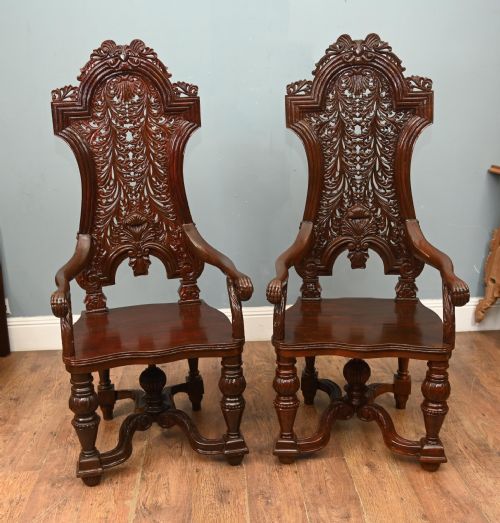
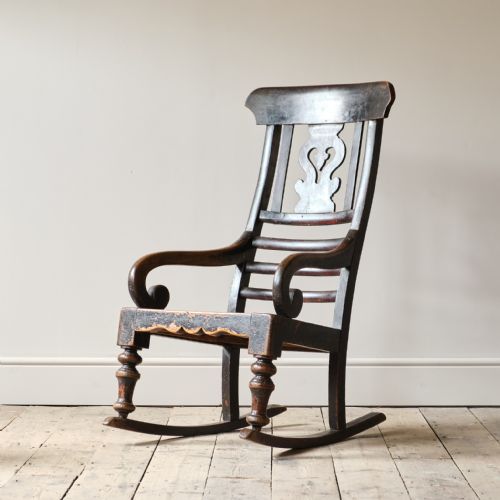


Pierced Carved Oak Chairs
These pierced carved oak chairs bring solid timber, intricate openwork, and centuries of domestic history straight into a room.
Pierced Carved Oak Chairs
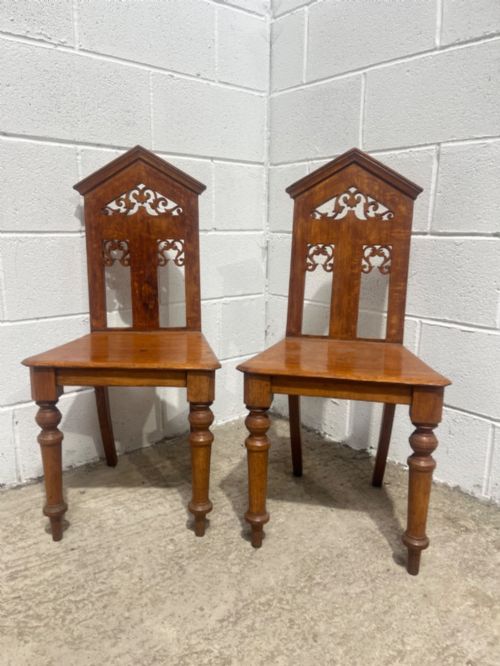
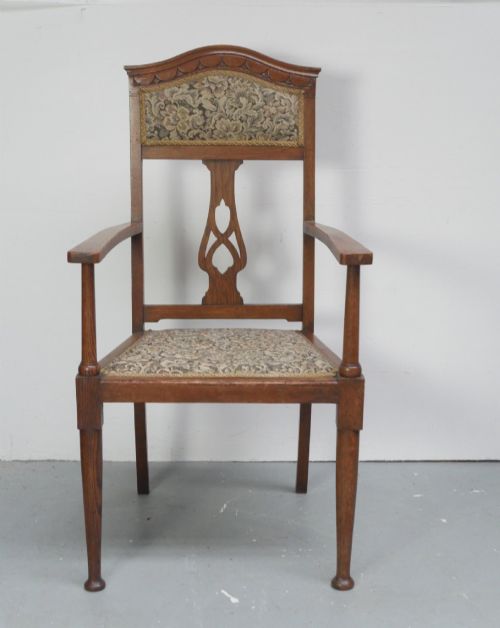
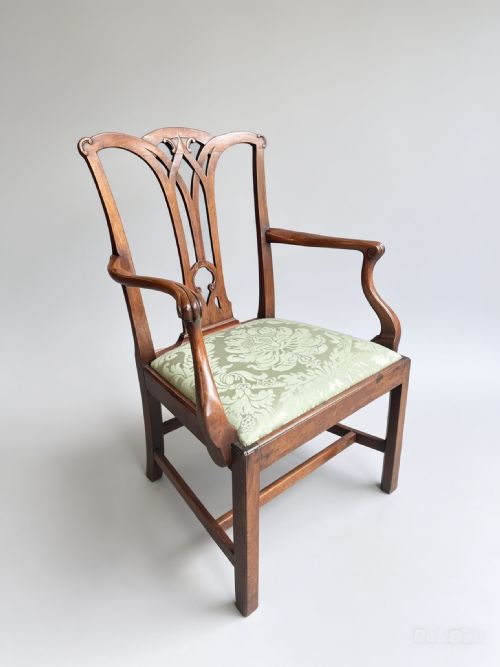
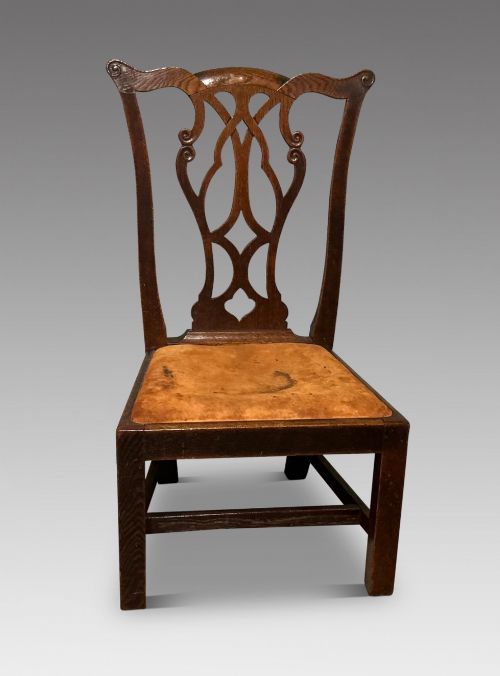
Pierced carved oak chairs encompass a diverse group of seating furniture spanning from the seventeenth century through to the Edwardian period and the nineteen-thirties. The selection includes dining chairs, hall chairs, armchairs, and corner chairs that feature openwork carving in their wooden backs.
Buyers will most frequently encounter nineteenth-century pieces alongside revival designs from around nineteen-hundred, such as Chippendale style dining sets and Victorian hall chairs. Regional British country pieces, including Windsor armchairs and rustic farmhouse seating, also appear alongside continental examples like French revival hall chairs and Black Forest prayer chairs.
The forms range from highback dining chairs with central splats to sturdy armchairs, rocking chairs, and small child's seats. Each piece utilises solid timber construction, often displaying specific regional characteristics from English country workshops or later revivalist manufacturing.
Materials and Construction
The primary material across these pieces is solid oak, occasionally supplemented by secondary timbers such as elm or mahogany in specific regional or revival constructions. Craftsmen shaped and joined the heavy timber frames using traditional methods appropriate to each period, ranging from seventeenth-century joinery to nineteenth-century revival techniques.
Carving and piercing define the backs of these chairs, executed directly into the solid wood to create intricate fretwork, splats, and open patterns. Upholstered variants incorporate materials such as fabric, leather, suede, and damask upholstery fixed to the seats.
Pierced Carved Oak Chairs Retail Price Guide 2026
Typical asking prices for pierced carved oak chairs among the pieces listed under this phrase on Sellingantiques today, from the lower quarter to the upper quarter. They describe what is for sale here now, not the wider market.
The listings span from the seventeenth century through to the nineteen-thirties, featuring oak, elm, mahogany, and various upholstery types.
Quality and Craftsmanship
The distinction between ordinary and superior pieces rests on the crispness and depth of the timber carving and the precision of the pierced openwork in the back splats. Finer examples display masterly hand-tooling that retains sharp definition, whereas lesser pieces show softer, shallower execution.
Structural integrity and timber selection further separate the range, with denser oak grain and tight traditional joinery marking the better items. The balance of proportions and the fidelity of revival styles to their earlier precedents also dictate the standing of an individual chair.
Goodyers of London·Waring
The Pierced Carved Oak Chairs Glossary
- Pierced
- Timber work cut right through to create an open pattern or design. This technique defines the pierced backs characteristic of these chairs.
- Splat
- The vertical central strip of wood in the middle of a chair back. Many pieces feature an attractive central splat with carved decoration.
- Windsor chair
- A wooden chair built with a solid saddle-shaped seat into which the legs and back spindles are dowelled directly. Several listings include sturdy farmhouse and rocking variants.
- Corner chair
- A chair designed to fit into the corner of a room, featuring a continuous curved armrest supported by turned posts. These often date to the eighteenth or nineteenth century.
- Fret back
- A chair back incorporating flat woodwork decorated with pierced geometric or interlaced patterns. This style appears frequently in Victorian occasional chairs.
- Glastonbury chair
- A low, folding-type wooden chair with X-shaped underframe and sloping panel back. Nineteenth-century interpretations of this medieval form appear in the selection.
Pierced Carved Oak Chairs: Frequently Asked Questions
How do I date an oak chair?
Dating relies on observing construction marks, joint types, timber patination, and stylistic cues that align with specific centuries. Seventeenth-century pieces display heavier joinery, while later revival items often adopt eighteenth-century design vocabulary with nineteenth-century manufacturing methods.
Examining the wear patterns on the oak and the method used to cut the pierced back panels also helps establish the era of production.
Where were hall chairs used?
Hall chairs stood in the entrance halls or corridors of large houses rather than primary living spaces. They served as formal seating for visitors waiting briefly.
Because of this specific placement, their wooden seats were typically left un-upholstered, and their backs received elaborate carving and piercing to impress guests upon arrival.
How do I care for antique oak?
Antique oak benefits from stable indoor humidity and protection from direct heat sources that can dry out the timber. Regular dusting with a dry cloth keeps the surface clean without chemical buildup.
Applying a traditional beeswax occasionally helps nourish the wood and maintain its natural finish over time.
What is a Chippendale revival chair?
A Chippendale revival chair is a later piece, often made around nineteen-hundred, that copies the eighteenth-century designs associated with Thomas Chippendale. These chairs typically feature intricate fretwork and pierced splats in mahogany or oak.
They offer the aesthetic of the Georgian period combined with the sturdiness of later Victorian or Edwardian manufacturing.
Can I use antique dining chairs daily?
Solid oak dining chairs are generally robust enough for everyday use provided the frame joints remain secure. Checking the stability of the timber construction ensures they can handle regular weight.
Lighter occasional or gossip chairs, however, suit low-traffic placement better than heavy daily dining service.