




Pierced Brass Hearth Guard
These pierced brass hearth guard selections bring authentic period warmth and intricate metalwork to the fireplace, offering both practical safety and decorative focus.
Pierced Brass Hearth Guard
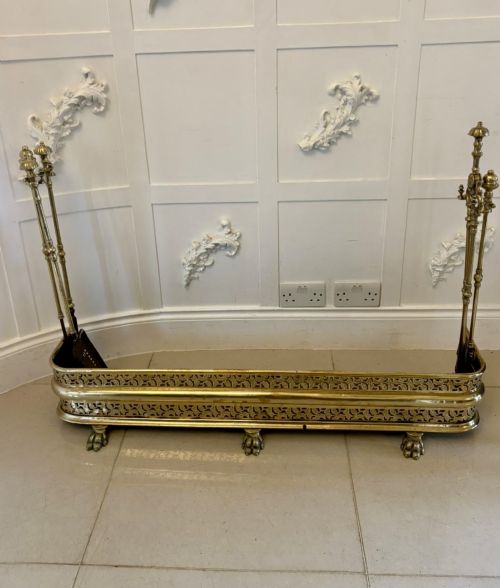
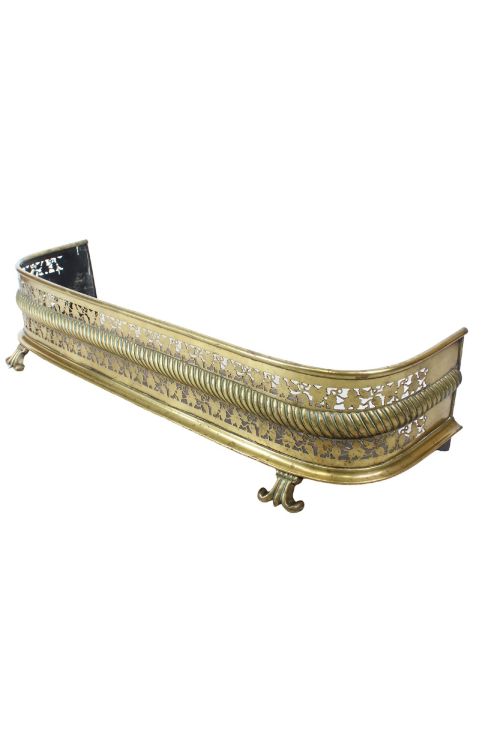
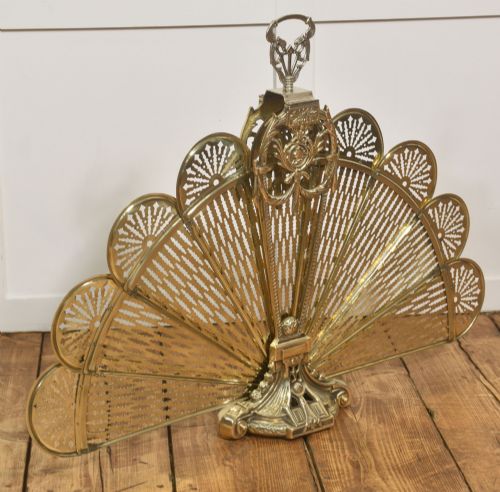
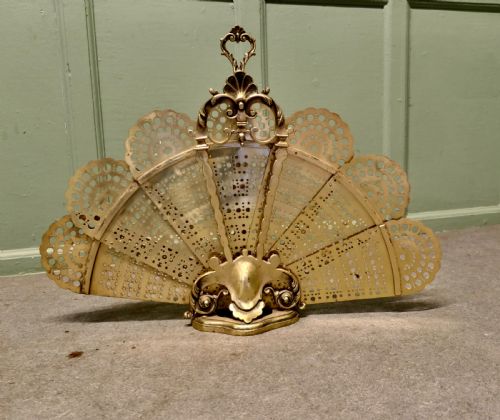
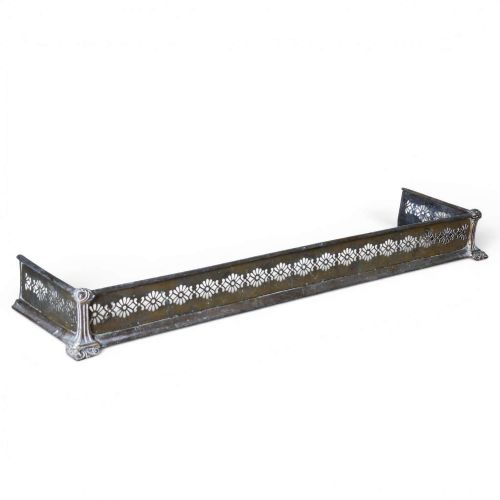
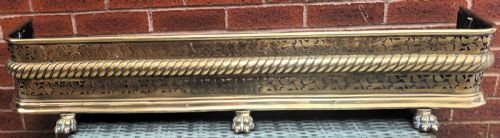
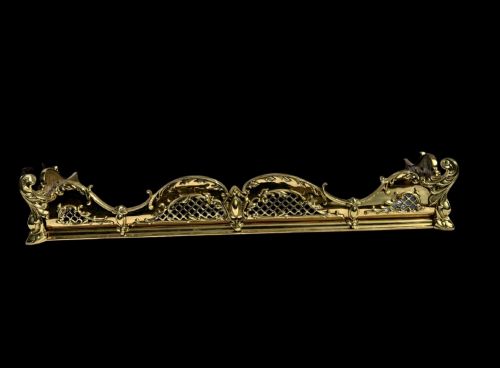
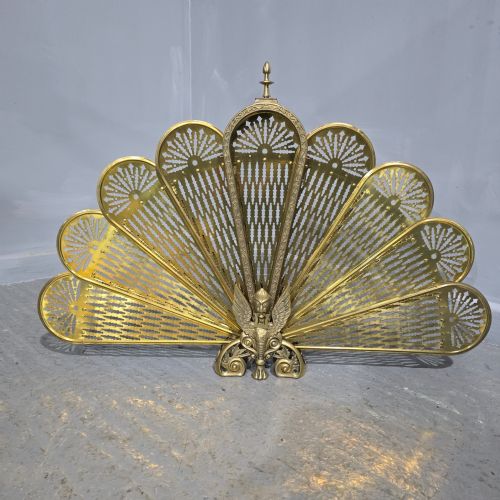
A pierced brass hearth guard is primarily encountered here as a nineteenth century fire fender, kerb, or screen designed to contain embers and protect the room. The selection spans Georgian, Regency, William IV, and Victorian periods, alongside later twentieth century examples like folding peacock fan screens.
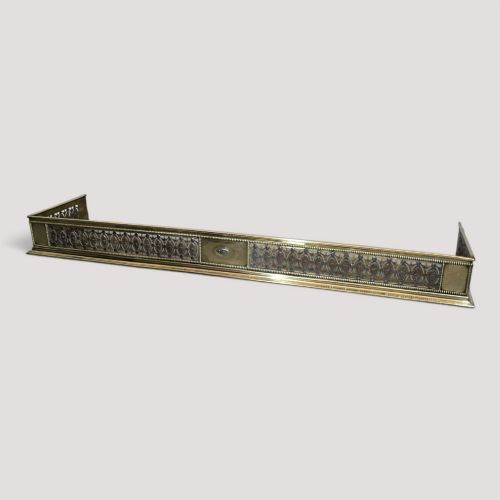
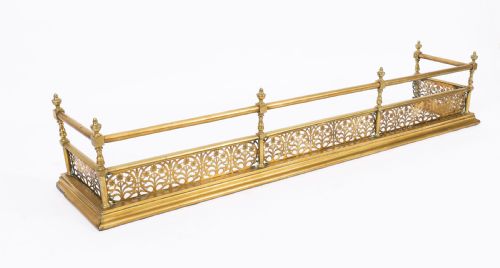
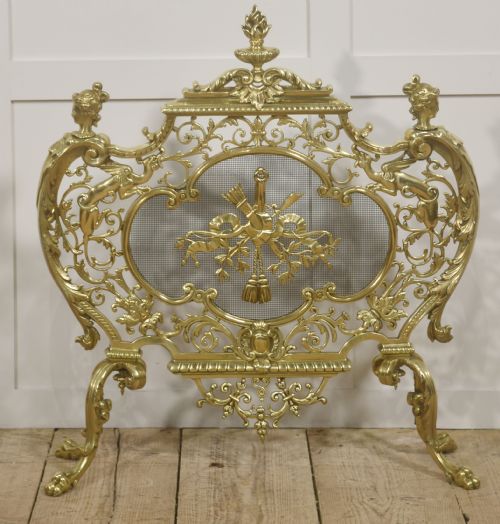
Most pieces combine brass frames with iron or steel components, taking the form of low kerbs placed around the hearth or vertical screens that unfold before the opening. Styles range from restrained geometric piercings to ornate French Rococo Revival and flowing Art Nouveau motifs.
The form functions equally as a structural barrier for open fires and as a central decorative anchor for period fireplaces. Whether configured as a curved kerb or a folding fan guard, each piece reflects the domestic ironmongery and metalworking standards of its era.
How they were made
The construction relies heavily on sheet brass and cast brass, frequently paired with iron, steel, and cut steel to provide structural rigidity around the hearth. Metalworkers utilised piercing, punching, and casting techniques to create intricate patterns of flowers, geometric cut-outs, and openwork galleries.
Many fenders incorporate weighted iron bases and polished steel accents, combining durability with decorative brightwork designed to reflect firelight. Folding screens employ articulated brass blades or fine wire mesh secured within rigid metal frames to allow adjustable placement.
Listings feature periods spanning the Georgian, Regency, and Victorian eras, alongside early twentieth century folding screens made from brass, iron, and wire mesh.
What varies in quality
Quality separates through the crispness of the metal piercing, the gauge of the brass used, and the presence of integrated components like original fire irons or heavy cast frames. Superior examples display precise, hand-finished detailing in the openwork rather than repetitive stamped impressions.
The choice of secondary metals also dictates standard, with high grade pieces featuring polished steel elements, substantial weight, and well-executed joinery that maintains structural integrity across curved or straight kerb formats.
The Pierced Brass Hearth Guard Glossary
- Pierced brass
- Metalwork decorated by punching or cutting patterns directly through the sheet brass. This technique allows both light and heat to pass through while containing stray embers.
- Hearth guard
- A general term encompassing low metal fenders placed around the hearth and vertical folding screens positioned in front of the fire opening. They serve to protect the surrounding flooring from sparks.
- Kerb fender
- A low metal barrier that defines the perimeter of the fireplace hearth. These pieces are frequently curved or cornered to fit neatly against the chimney breast.
- Cut steel
- Faceted steel studs riveted individually to a steel backing plate to catch and reflect firelight. This material appears on finer period hearth accessories.
- Peacock fan screen
- A folding fireplace screen composed of overlapping metal blades that fan outward into a semicircular display. They originated in various forms throughout the nineteenth and early twentieth centuries.
Pierced Brass Hearth Guard: Frequently Asked Questions
What is a pierced brass hearth guard used for?
These pieces serve as a physical barrier around an open fireplace to contain falling embers and protect the surrounding floor coverings. They also provide a finished decorative boundary that frames the hearth.
Beyond practical safety, they act as period ornaments that reflect the design styles of their respective eras, from geometric Georgian layouts to flowing Art Nouveau curves.
How do I distinguish between Regency and Victorian fenders?
Regency and William IV pieces typically exhibit cleaner architectural lines, classical proportions, and restrained brass work, often dating from the early nineteenth century. Victorian examples frequently feature heavier castings, more elaborate flower piercing, and sometimes industrial or Gothic influences.
Examining the weight, joinery methods, and specific decorative motifs helps clarify the manufacturing period of each individual guard.
Are folding peacock screens historically correct for earlier periods?
Folding peacock fan screens listed here generally date from the later periods, specifically around nineteen ten to nineteen twenty, rather than the Georgian or Regency eras. They offer a collapsible design that expands to cover the fireplace opening when the fire is unlit.
Their distinct fan shape provides a decorative metal display that contrasts with the rigid structure of traditional floor kerbs.
How should I clean polished brass and steel hearth guards?
Maintenance involves gentle dusting and the occasional use of appropriate metal cleaners formulated for brass and steel to preserve the surface without removing historic patination. Harsh abrasives should be avoided to protect fine pierced details and cut steel studwork.
Regular care ensures the metal retains its reflective quality and structural stability within a working or decorative fireplace setting.