



Georgian Hearth Guard
A georgian hearth guard provides a practical barrier against stray embers while anchoring the fireplace in period style.
Georgian Hearth Guard
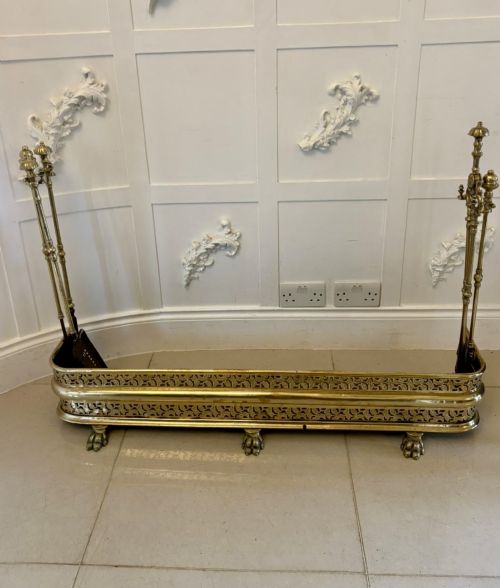
A georgian hearth guard encompasses various protective items used around domestic fireplaces, including low metal curbs and freestanding screens. When searching this phrase, a buyer encounters pieces originating from the Georgian, Regency, and Victorian periods.
Makers and craftsmen utilised distinct stylistic idioms, from simple pierced metalwork to elaborate neoclassical motifs. The forms vary from low floor-level boundaries to tall adjustable screens designed to deflect radiant heat.
Materials and construction
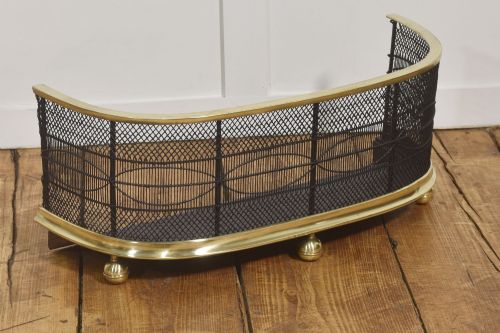
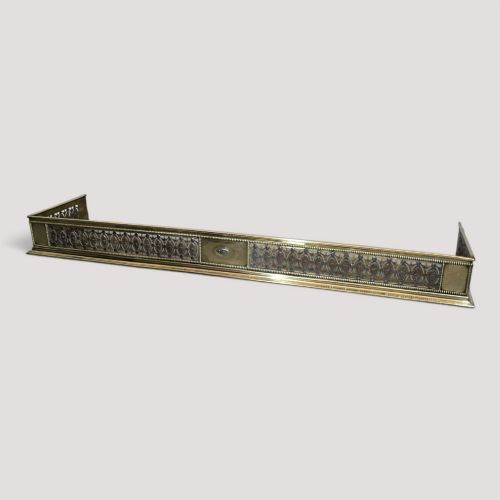
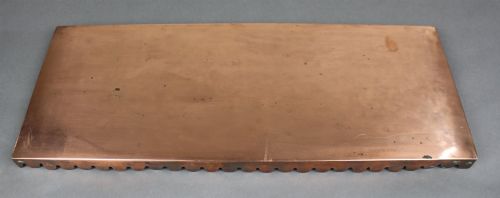
Makers constructed these items primarily in metals such as brass, steel, iron, and copper, often combining polished steel with cast or sheet brass details. Metalwork techniques included piercing, engraving, and wrought iron assembly to achieve decorative patterns.
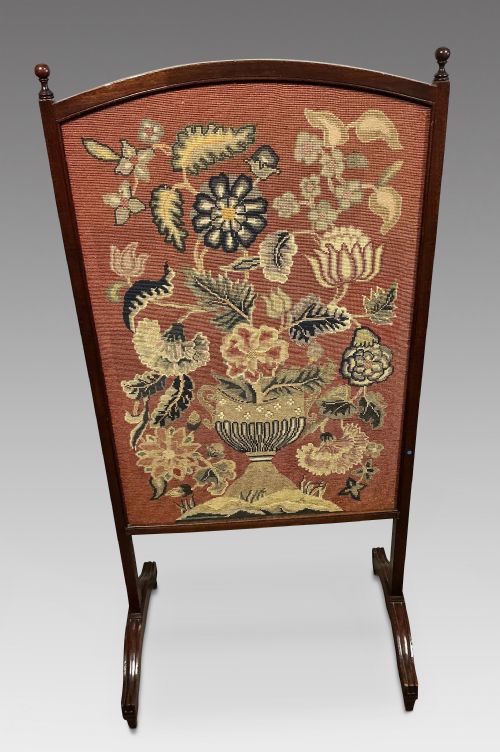
Wooden examples incorporate dense timbers like mahogany, rosewood, and giltwood for the frames of freestanding screens. Textile elements frequently feature wool needlework and embroidered panels mounted within adjustable wooden frames.
Listings on this page span the Georgian, Regency, and Victorian periods, utilising brass, steel, iron, mahogany, rosewood, and wool textiles.
Distinctions in quality
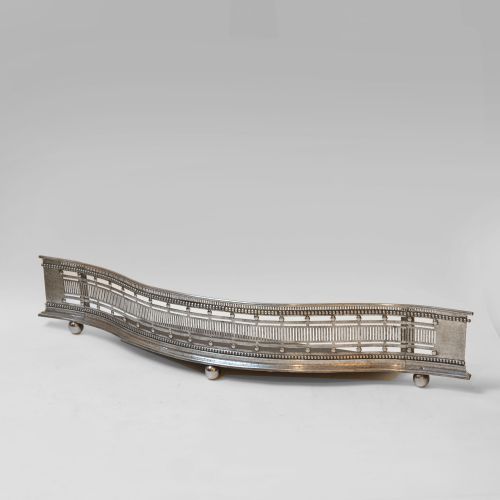
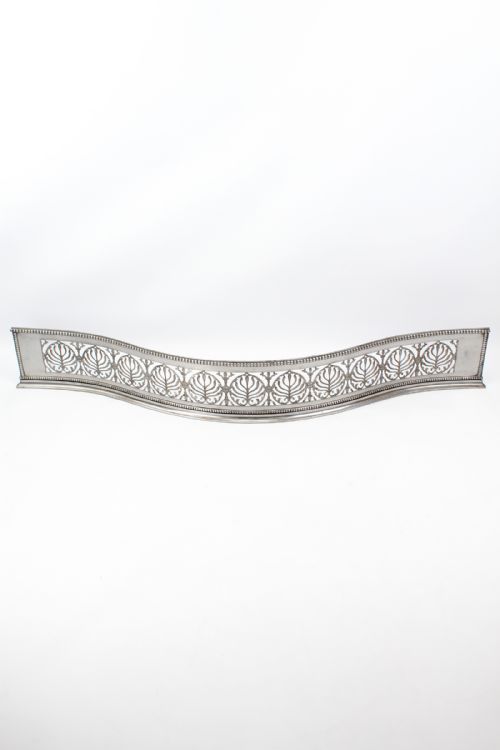
Quality rests upon the crispness of the metalwork, such as deep piercing and finely engraved serpentine fronts on steel and brass fenders. Heavy gauge materials and the presence of original components like integrated fire irons elevate a piece.
For screens and guards, the fineness of the needlework panel and the sturdiness of the adjustable mechanisms determine excellence. Superior examples exhibit harmonious proportions and skilled assembly across both timber and metal elements.
The Georgian Hearth Guard Glossary
- Fender
- A low metal guard placed on the hearth around the base of a fireplace to contain burning embers. They are typically formed from brass, steel, or iron.
- Pole screen
- A freestanding screen with an adjustable panel mounted on a vertical wooden pole, used to shield the face from fireplace heat. The panel often contains embroidery or needlework.
- Serpentine
- A curved shape featuring a convex centre flanked by concave curves, commonly seen on the front edges of eighteenth-century steel and brass fenders.
- Kerb fender
- A low enclosing barrier that sits directly on the hearth floor, often incorporating corner brackets or decorative pierced galleries.
- Needlework panel
- A textile design worked in wool or silk yarn, stretched and displayed within the frame of a fire screen.
Georgian Hearth Guard: Frequently Asked Questions
What is a hearth fender used for?
A hearth fender serves as a physical barrier placed around the fireplace opening to stop rolling logs and hot embers from reaching the room's flooring. It also defines the hearth area cleanly.
Historically, these metal guards helped protect long dresses and floor coverings from stray sparks while organising the hearth space.
How do I choose the right size?
Measure the width and depth of your fireplace hearth carefully before selecting any guard or fender. Ensure the dimensions match the floor space available in front of the fire surround.
Consider whether you need a low curb fender that sits tightly against the stone or a taller freestanding screen placed further back.
How do I date a piece?
Dating relies on identifying stylistic markers such as neoclassical motifs, serpentine silhouettes, and specific metalworking techniques. Regency and Georgian examples often display refined piercing and meticulous engraving.
Later nineteenth-century variations introduce heavier cast elements, wirework, and distinct club fender proportions.
Can these be used with modern fires?
These pieces function effectively with modern hearths, provided the dimensions accommodate your specific fireplace setup. Metal fenders sit on the floor around gas, electric, or solid fuel installations.
Care should be taken with antique textiles on pole screens, keeping them at a safe distance from intense heat sources.