
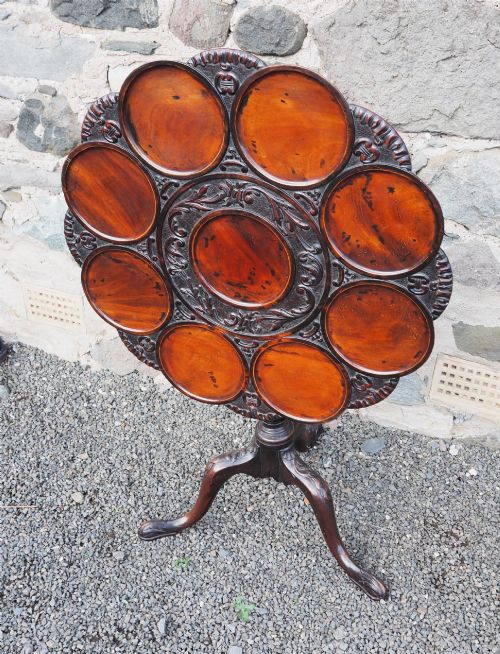
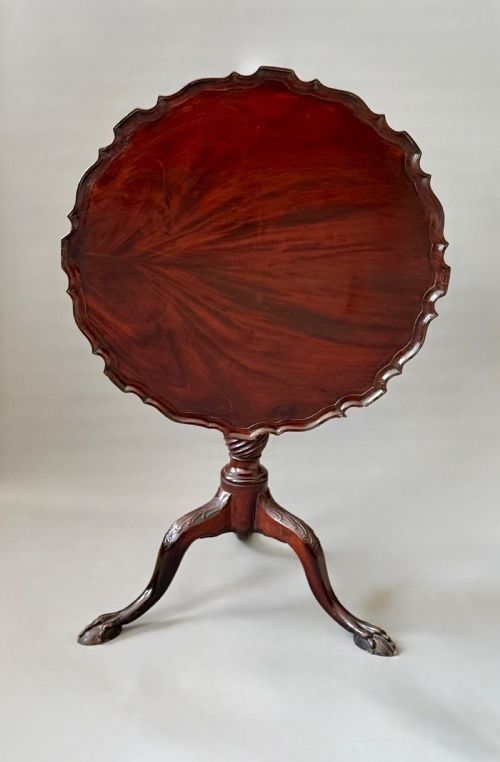
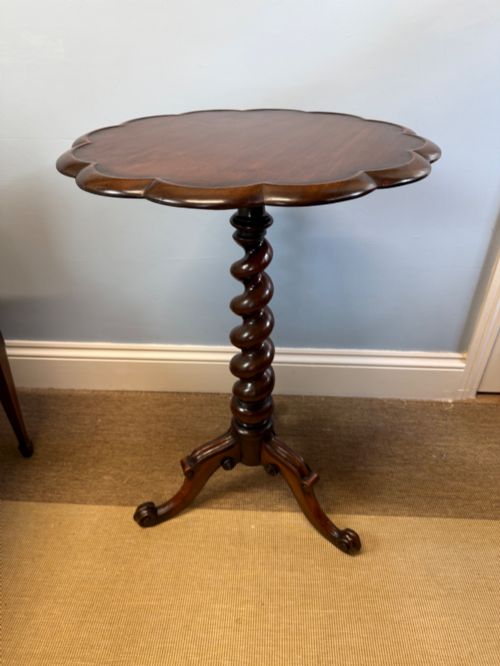
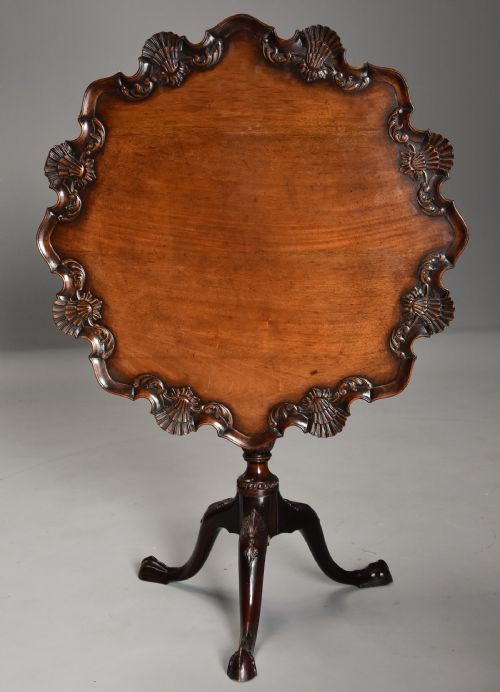

Piecrust Top Tripod Table
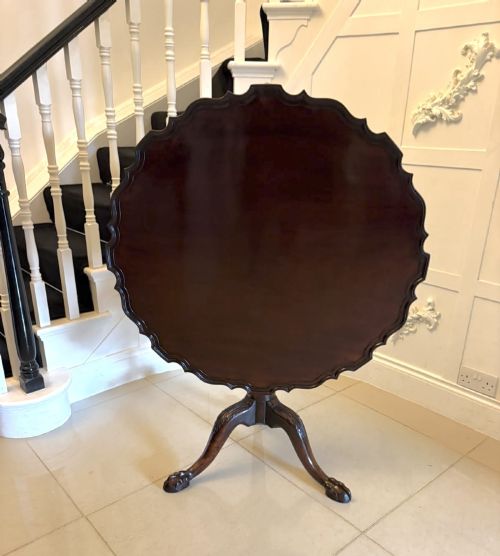
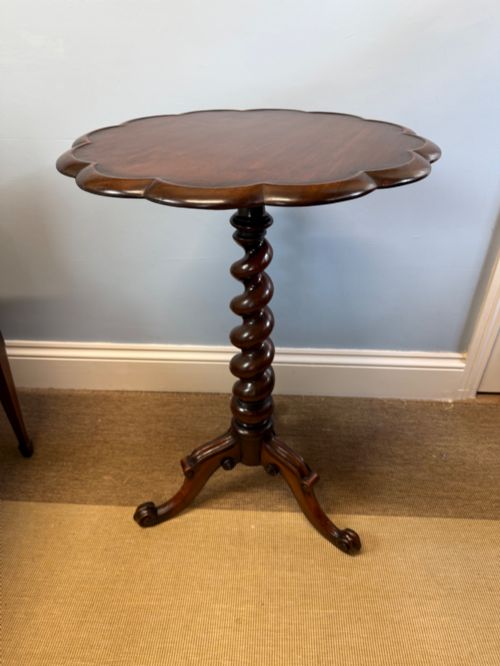
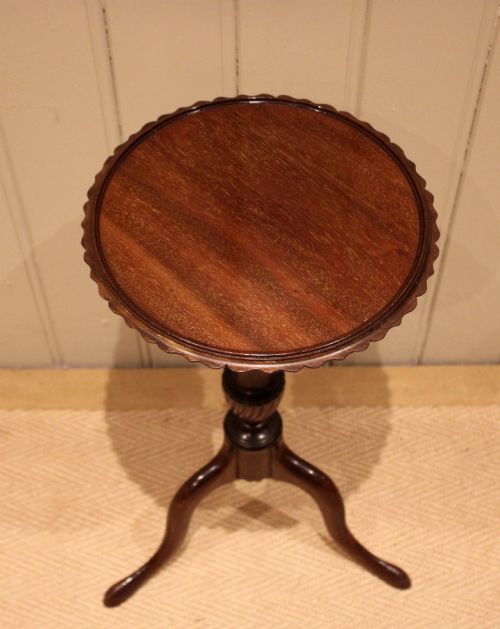
A piecrust top tripod table offers a raised scalloped edge and a central column, combining practical service with notable carving.
Piecrust Top Tripod Table
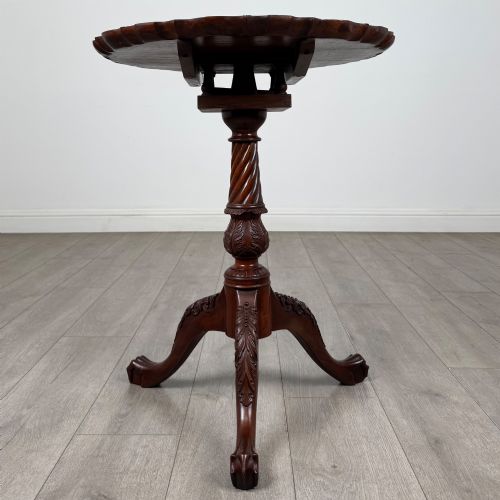
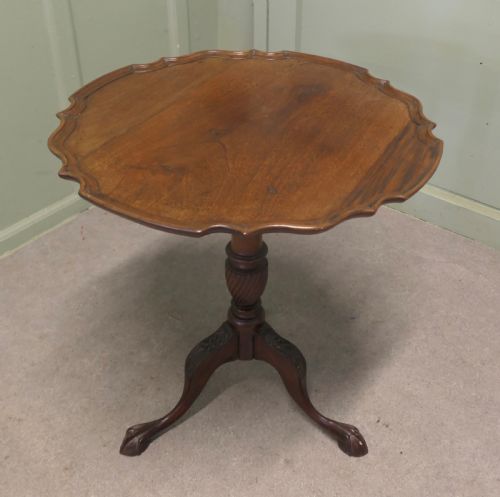
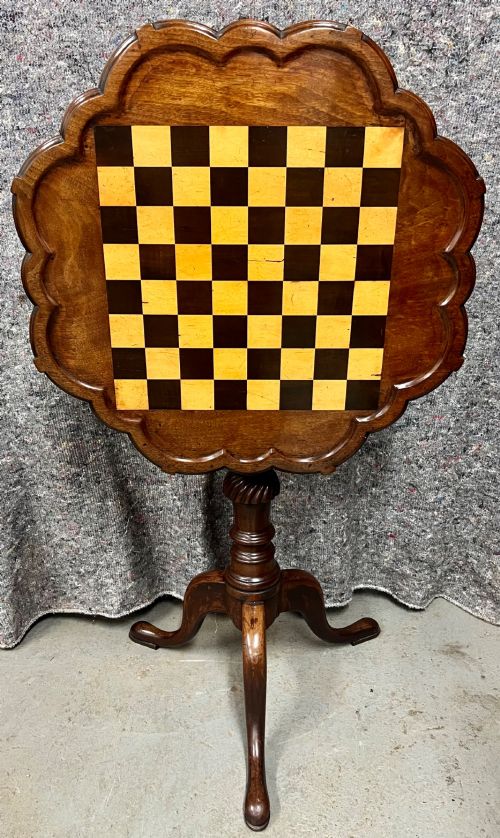
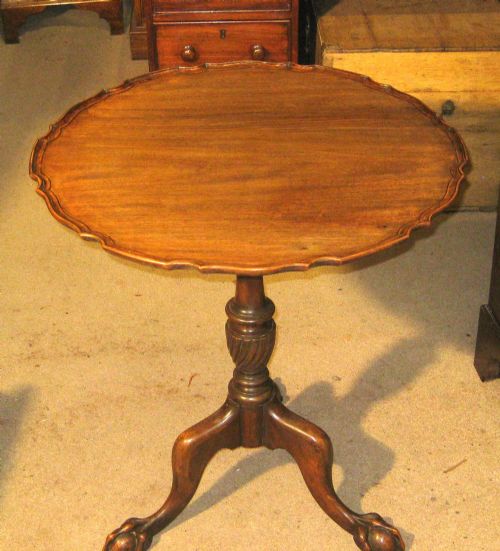
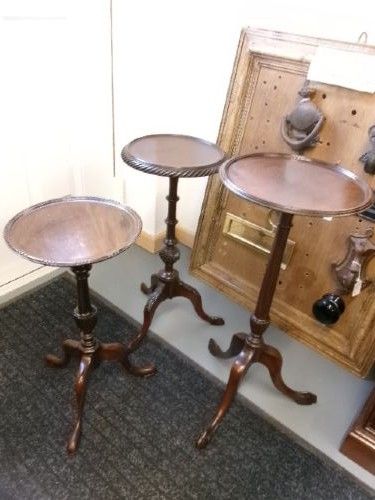
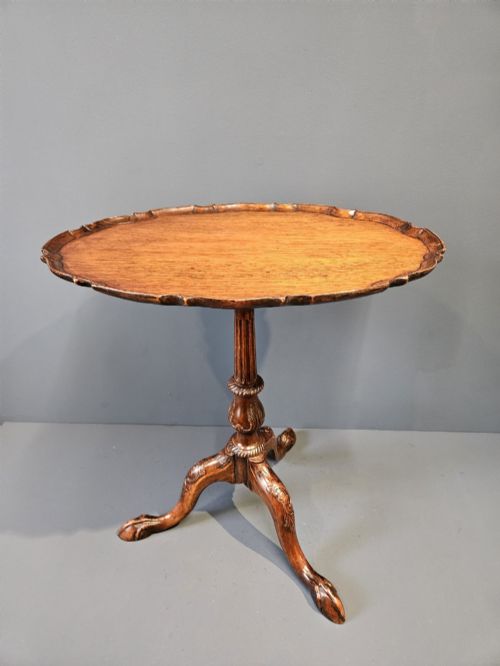
A piecrust top tripod table is a compact form designed with a circular top featuring a raised, carved rim resembling pastry crust, supported by a central pillar and three legs. These items served historically for tea, wine, or general display in reception rooms.
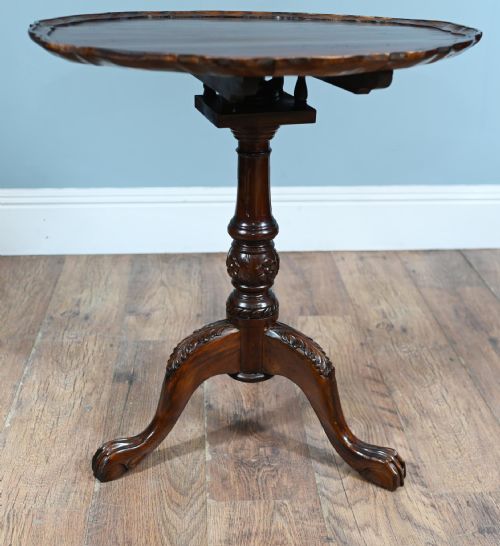
You are most likely to meet mahogany examples from the eighteenth and nineteenth centuries, often built with a tilt-top mechanism that allowed the surface to fold flat against the pillar when not in use. Some pieces incorporate a birdcage mechanism beneath the top, permitting the surface to rotate as well as tilt.
How they were made
Makers constructed the distinctive raised edge by carving the sculpted profile directly from a thick solid timber board rather than applying a separate moulding. Mahogany was the primary material utilised for its strength and suitability for intricate carving along the rim and the cabriole legs.
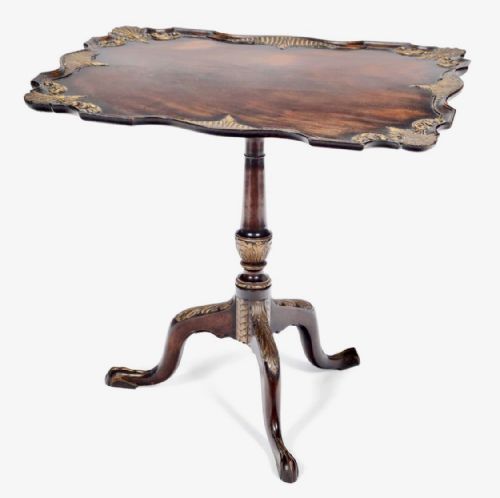
Joinery involved turning the central column on a lathe and fitting the legs into the base using dovetail or tenon joints. Secondary elements occasionally include brass fittings or parcel gilt highlights to enhance the decorative scheme.
Listings for the piecrust top tripod table span the eighteenth century to the twentieth century, with mahogany appearing as the primary material alongside occasional brass, oak, and walnut.
What varies in quality
The standard of carving along the piecrust rim and the knees of the tripod base dictates the refinement of the piece. Crisp, deep relief work executed with sharp chisels separates superior examples from softer, shallower interpretations.
Proportion and timber selection also govern quality, with well-figured mahogany grain and harmonious balance between the top diameter and column height marking the better specimens.
The Piecrust Top Tripod Table Glossary
- Piecrust edge
- A raised, carved moulding around the circumference of a circular table top, shaped to resemble pastry work. This decorative edge requires considerable skill from the woodcarver.
- Tripod table
- A small freestanding table supported by a central pillar resting on three legs. The three-legged format ensures the table remains stable on uneven floorboards.
- Tilt-top
- A hinged mechanism allowing the table top to pivot to a vertical position. This function enabled historic owners to store the furniture flat against a wall when floor space was required.
- Birdcage
- A rotating wooden frame situated beneath the table top that permits the surface to turn in a circle. It sits atop the central column to accommodate the tilting action.
- Cabriole leg
- A furniture leg that curves outward at the knee and tapers inward toward the ankle, ending in a pad or claw foot. This profile is frequently seen on eighteenth-century tripod bases.
Piecrust Top Tripod Table: Frequently Asked Questions
What is a piecrust top tripod table?
A piecrust top tripod table is a small circular table featuring a raised scalloped edge carved from solid wood, supported by a central column and three legs.
These pieces typically date from the Georgian period onward and were used for serving tea or displaying small objects.
How do tilt-top mechanisms work?
A tilt-top mechanism uses a hinged block beneath the table surface allowing the top to pivot upright against the central pillar.
This allowed historic households to clear floor space quickly by storing the furniture against the wall.
What is a birdcage mechanism?
A birdcage mechanism is a square wooden frame fitted between the table top and the central column.
It allows the table surface both to rotate horizontally and to tilt vertically.
Which woods are used for these tables?
Mahogany is the predominant wood found in these listings, chosen for its durability and fine grain.
Occasional examples also utilise walnut, satinwood, or burr walnut with brass details.