






Piecrust Top Stand
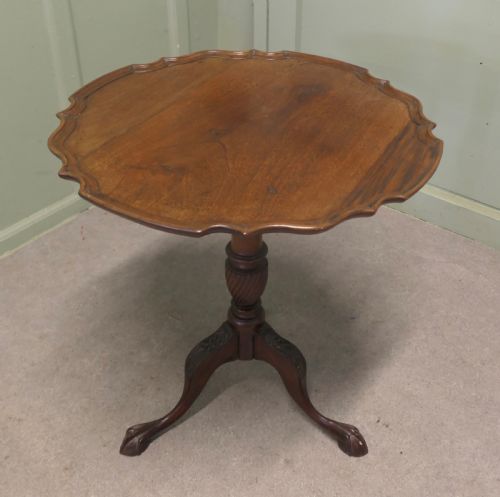
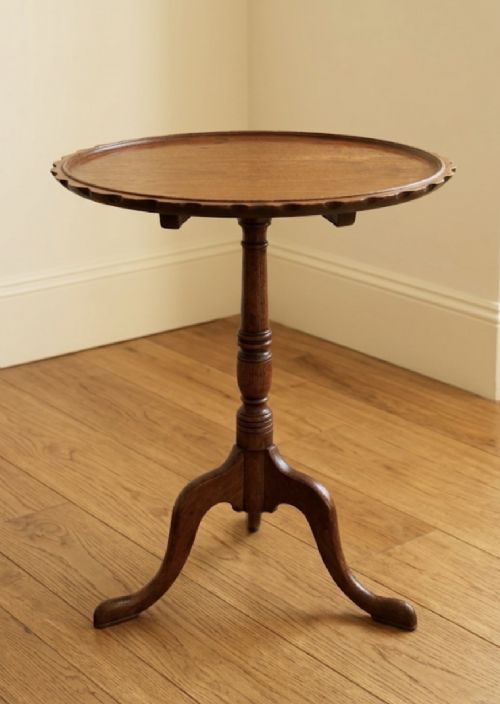
A piecrust top stand delivers compact surface space supported by a turned column and three legs, bringing traditional joinery to small rooms.
Piecrust Top Stand
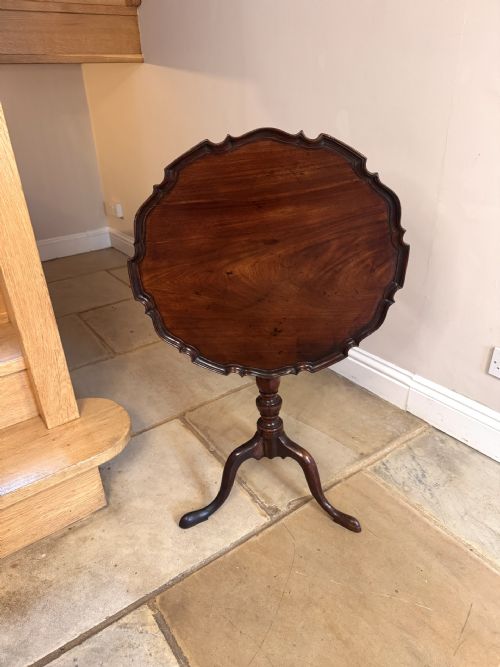
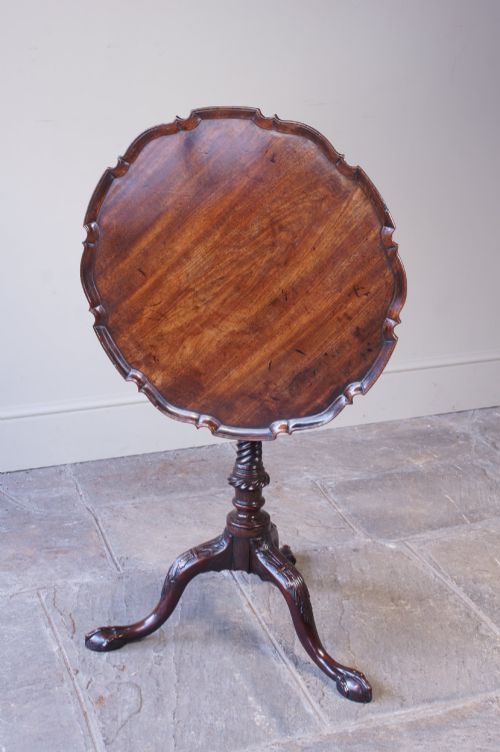
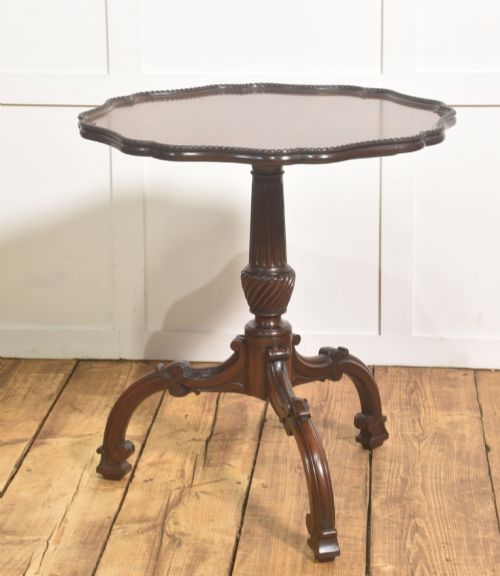
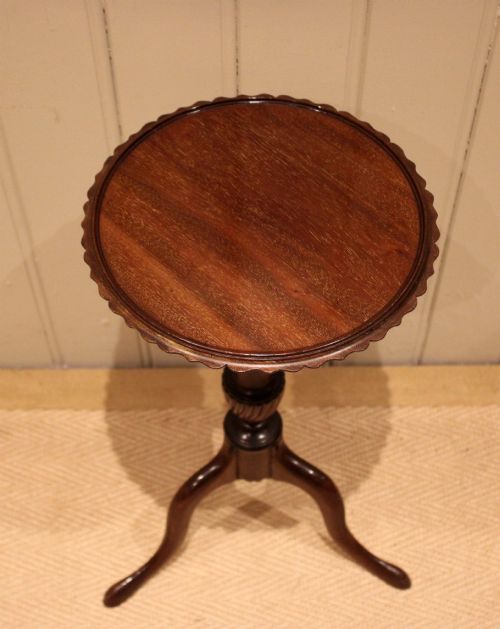
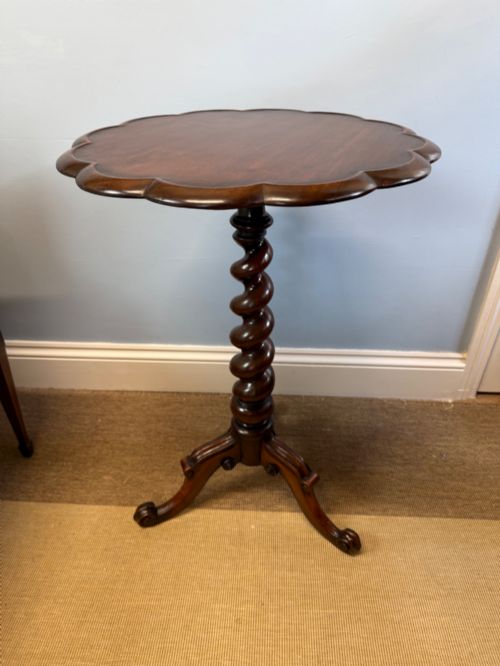
A piecrust top stand sits on a central pillar with a tripod base, designed as a stable small table for holding drinks, lamps, or kettles.
Most examples found here date from the 18th century, particularly the George III period, through to Edwardian reproductions and later 19th-century variants.
The defining characteristic is the raised, carved rim around the circular top, which resembles pastry work and prevents items from rolling off.
Materials and Construction
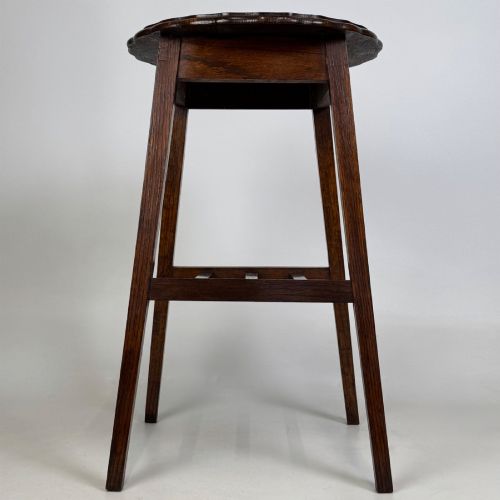
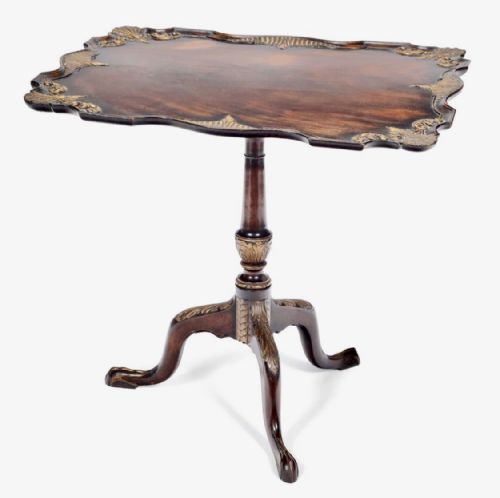
Mahogany serves as the primary timber, occasionally complemented by satinwood, oak, or parcel gilt highlights, joined with traditional mortise and tenon methods.
The distinctive raised edge is typically shaped directly from a solid piece of timber rather than applied separately, requiring careful hand carving.
Many versions incorporate a birdcage mechanism or a tilting mechanism, allowing the top to pivot upright when not in use.
Piecrust Top Stand Retail Price Guide 2026
Typical asking prices for piecrust top stand among the pieces listed under this phrase on Sellingantiques today, from the lower quarter to the upper quarter. They describe what is for sale here now, not the wider market.
Listings span from the 18th century to the 1930s, featuring mahogany, oak, satinwood, and brass components across various occasional and wine table forms.
Assessing Quality and Execution
Quality rests on the crispness of the carved piecrust moulding and the proportions of the turned pedestal column supporting the top.
Earlier 18th-century pieces often display finer carving on the knees of the cabriole legs and more refined pad or claw-and-ball feet.
The Piecrust Top Stand Glossary
- Piecrust top
- A circular tabletop edged with a raised, undulating carved moulding. This feature requires skilled carving from a solid board.
- Tripod base
- A support structure comprising three legs radiating from a central pillar. This design ensures stability on uneven floors.
- Tilt-top
- A hinged tabletop mechanism that allows the surface to fold vertical. It enables the stand to be stored flat against a wall.
- Birdcage
- A wooden framework beneath the tabletop that allows the surface to both rotate and tilt. It represents a more complex piece of joinery.
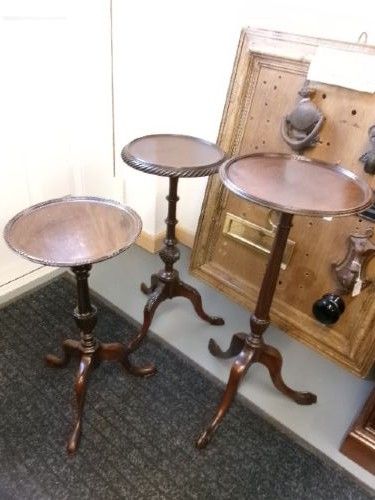
- Torchere
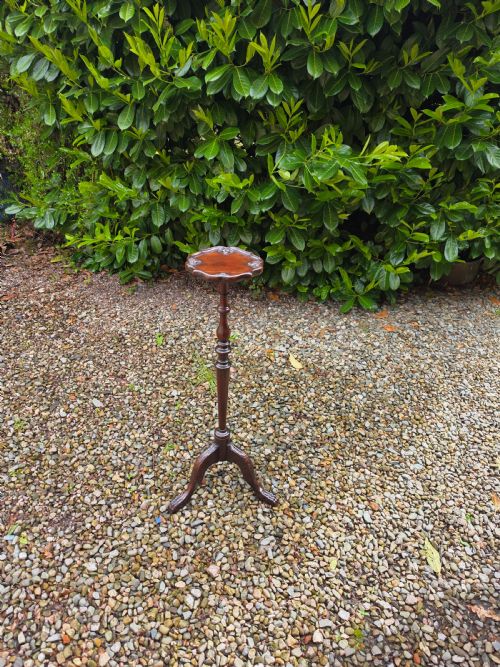
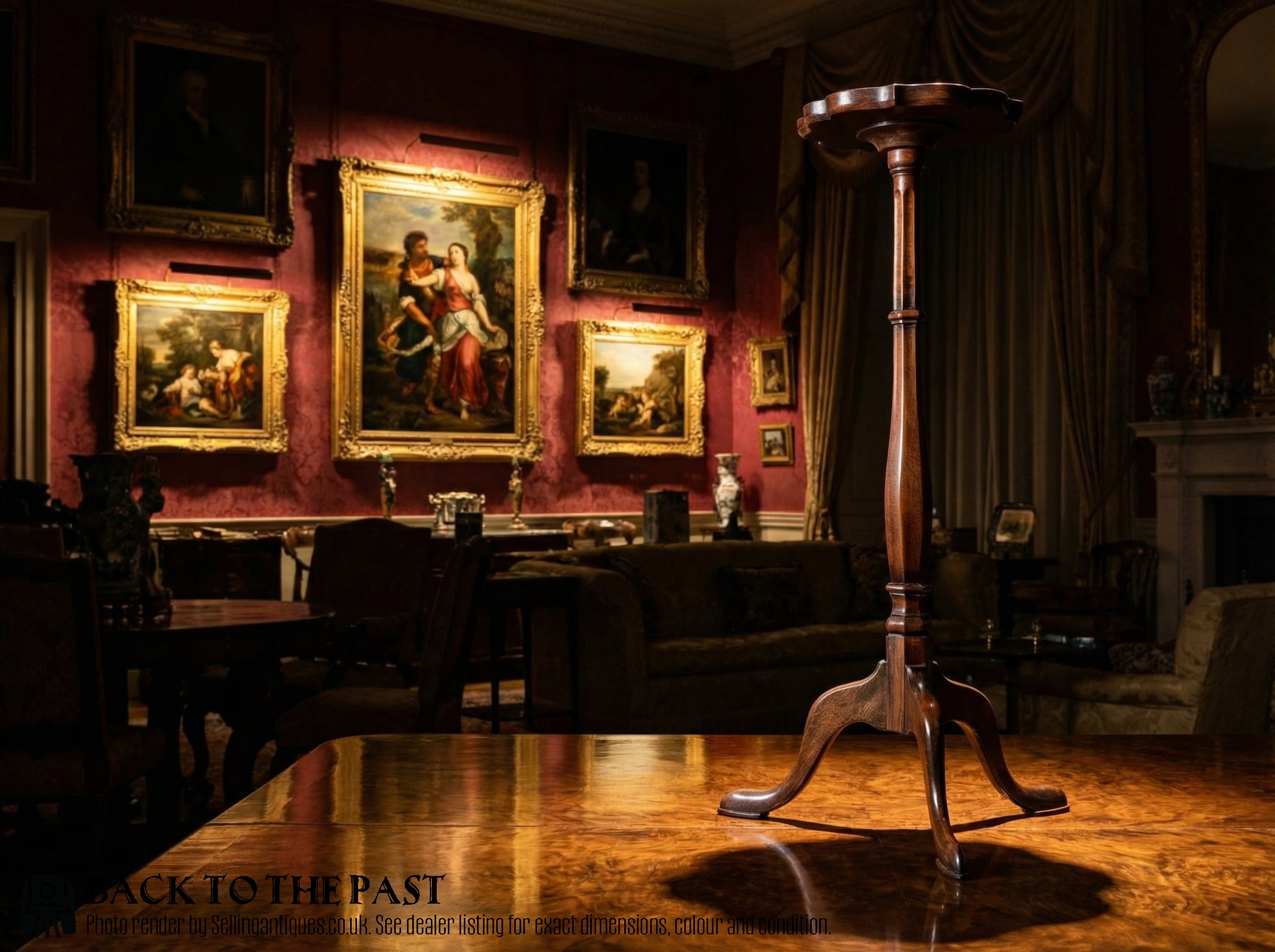
- A tall, slender stand designed to hold a light source or a plant. These pieces generally feature smaller surfaces than standard tables.
Piecrust Top Stand: Frequently Asked Questions
What was a piecrust top stand used for?
These stands served various functions in Georgian and later interiors, often holding tea kettles, lamps, or small decorative items.
Because of their compact size and stable tripod base, they moved easily around a room to wherever surface space was needed.
How do I tell an 18th-century stand from a later copy?
Examination of the timber, tool marks beneath the top, and the wear patterns on the feet help distinguish period examples from later revivals.
18th-century pieces frequently show hand-cut joinery and timber shrinkage consistent with age.
Can I use a tilt-top stand everyday?
Tilt-top stands function well for daily use provided the mechanism and catch remain secure and undamaged.
Care should be taken when operating the pivot to avoid stressing the hinge joint under the top.
Where does the name piecrust come from?
The term describes the decorative, scalloped edge carved into the solid timber top of the table.
Cabinetmakers drew inspiration from pastry crimping when shaping the raised perimeter of the board.