

Piecrust Occasional Table
A piecrust occasional table brings historic timber and carved raised edges together to serve drinks or hold lamps with elegance.
Piecrust Occasional Table
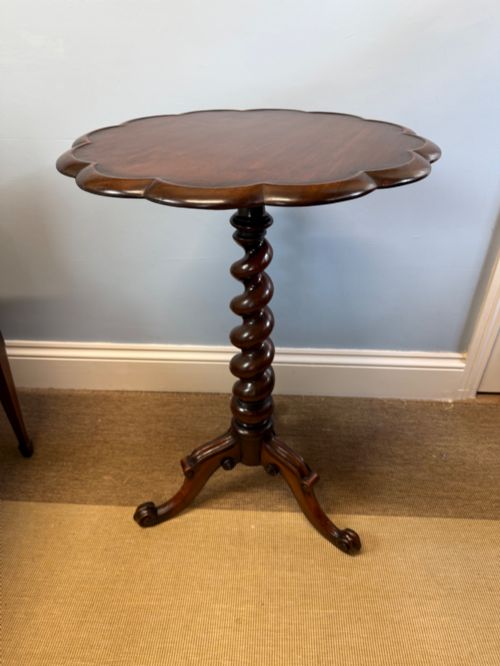
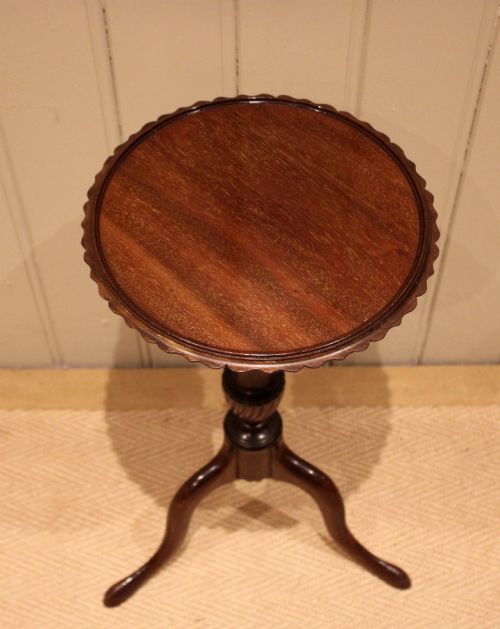
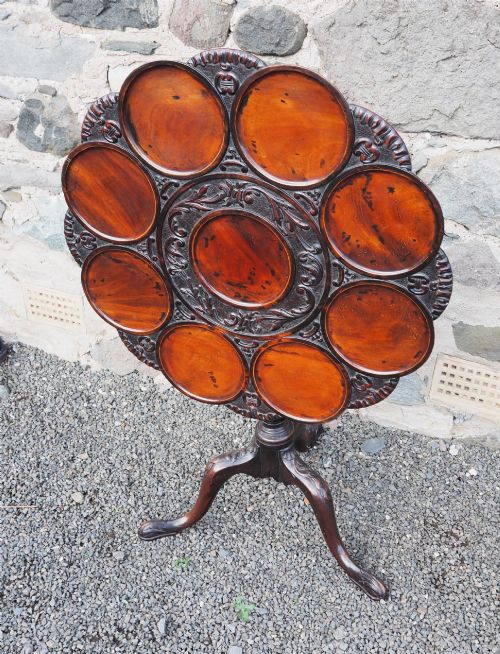
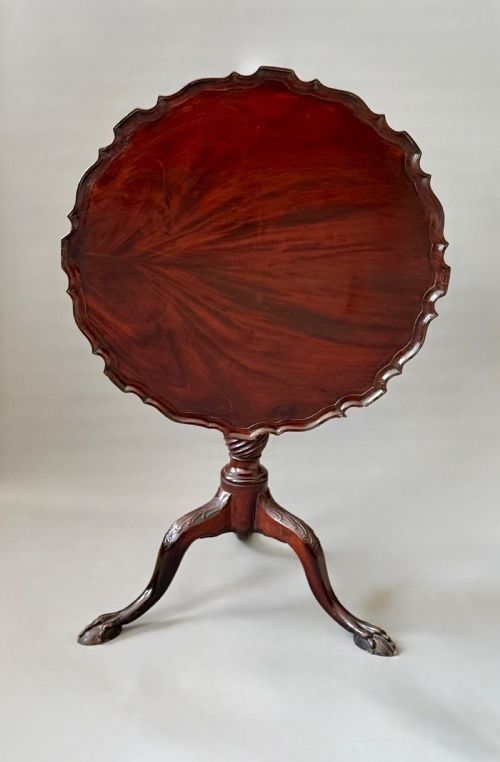
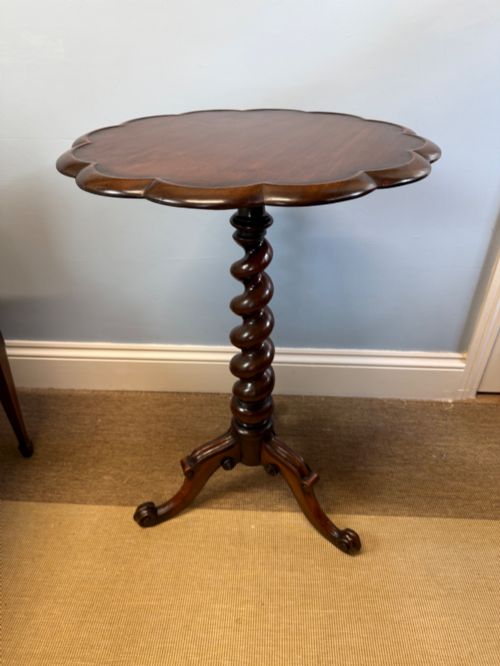
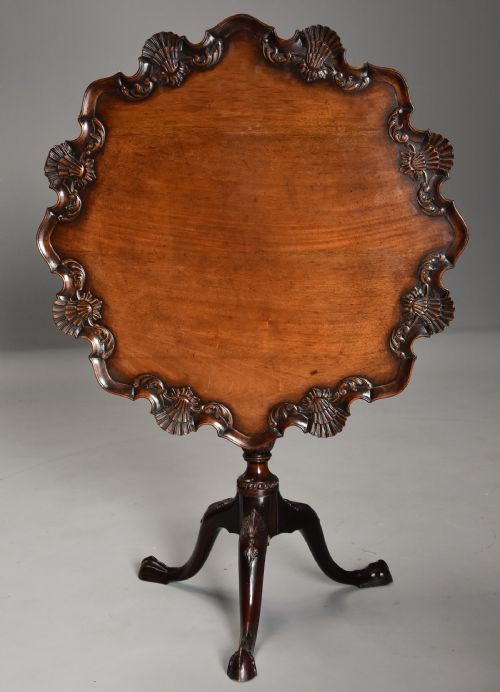
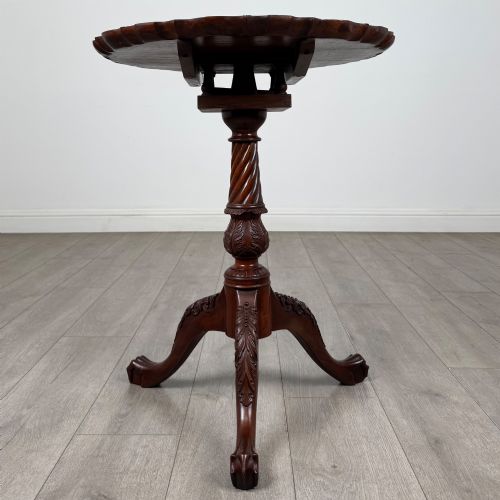
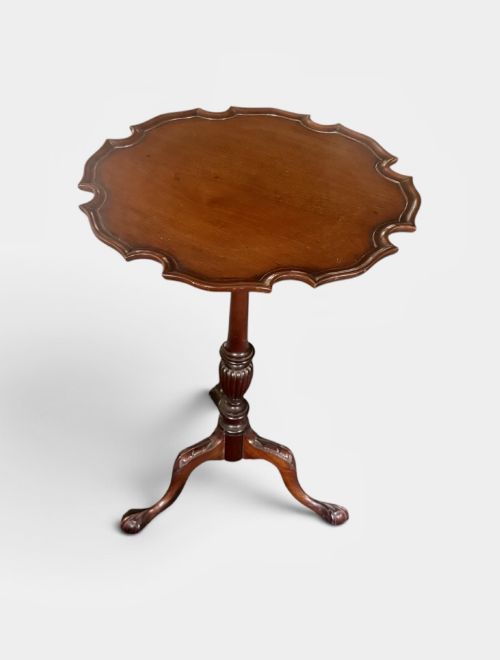
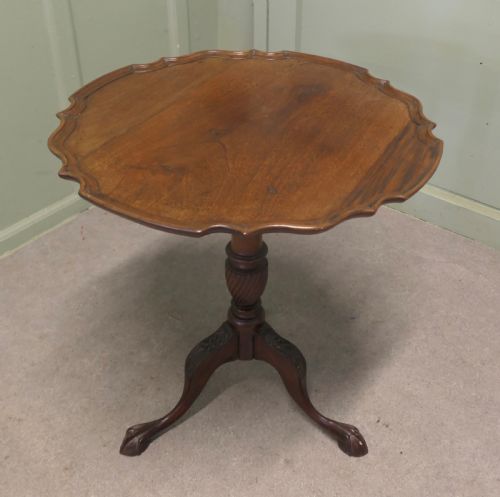
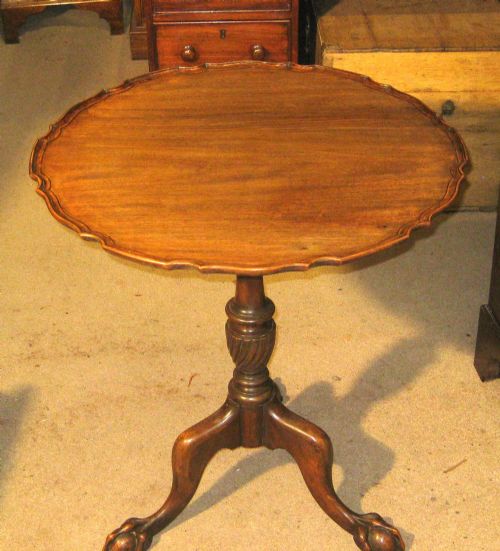
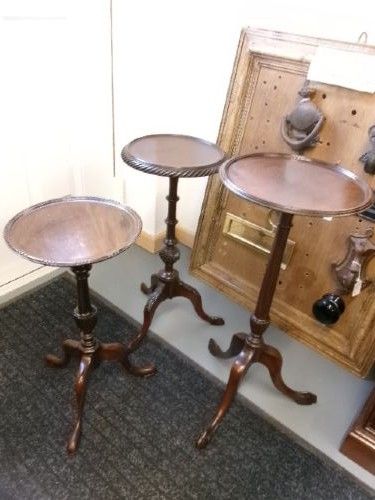
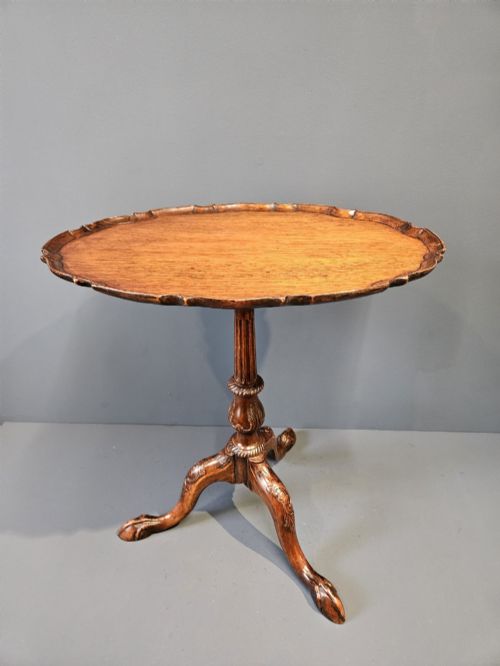
A piecrust occasional table is a compact surface defined by its distinctive raised, scalloped rim, which resembles pastry work. These pieces function primarily as wine tables, small lamp stands, or tripod tables in period and revival interiors.
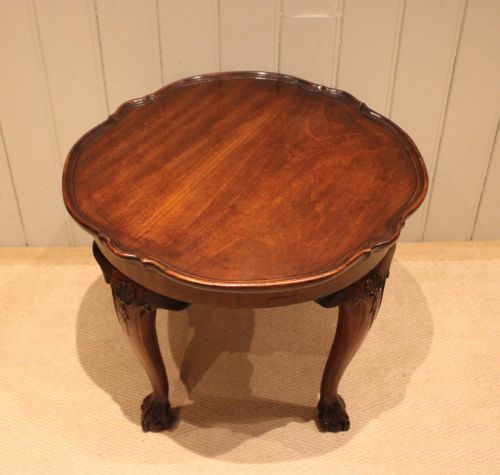
The examples gathered here span from the 18th century through the Victorian era and into the Edwardian and 1920s revivals. You will encounter forms featuring tilt-top mechanisms, birdcage supports, and solid timber tripod bases.
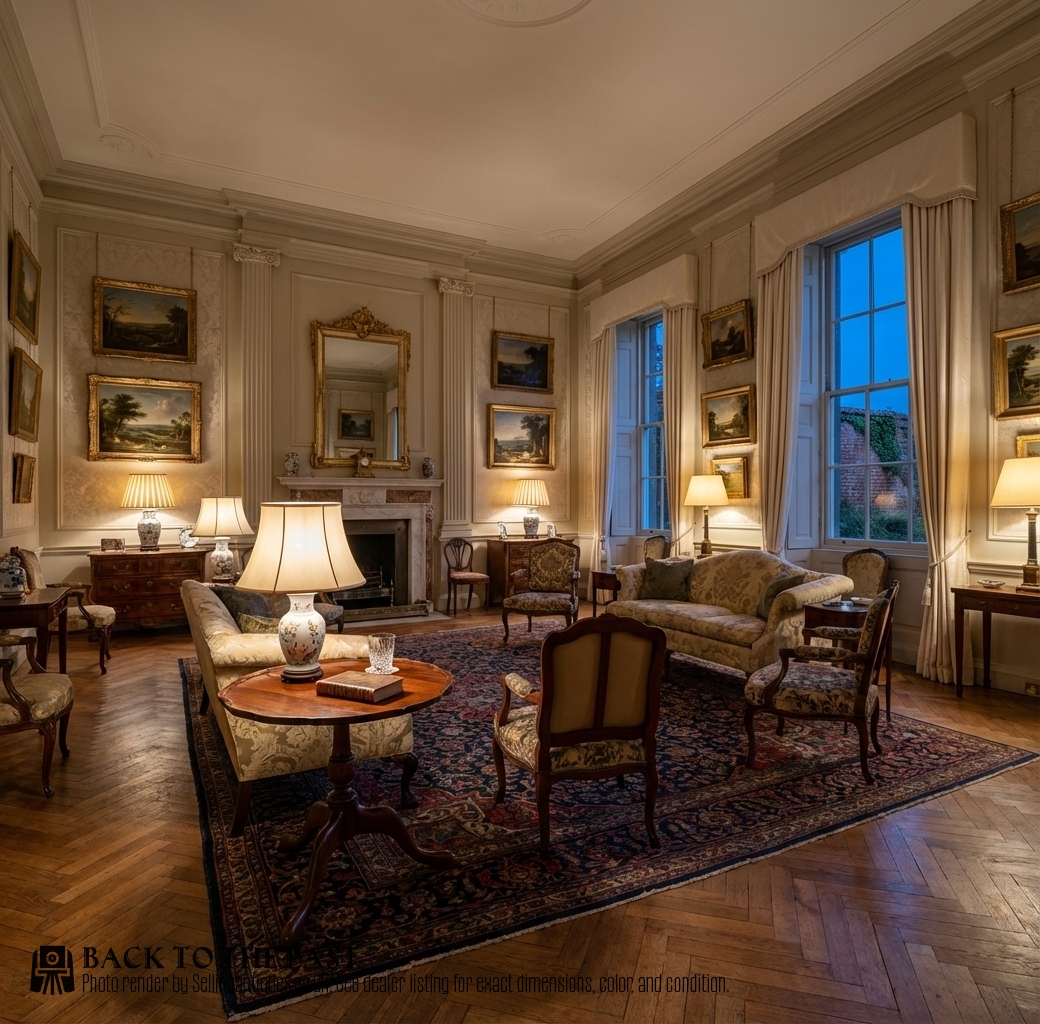
Materials and construction
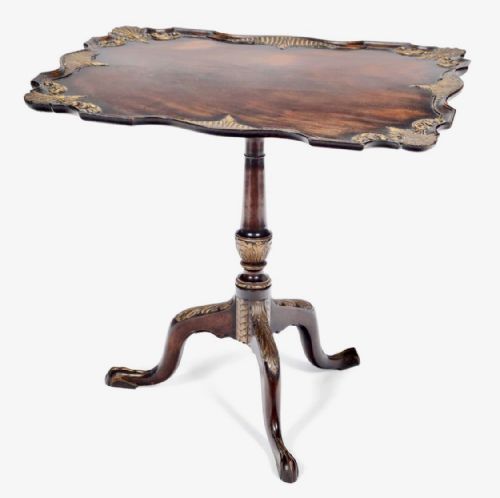
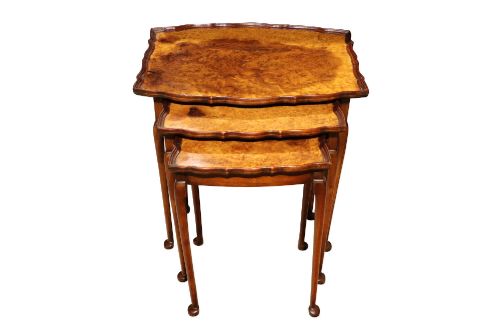
Makers relied heavily on solid mahogany and burr walnut, often utilising wood veneer over secondary timbers for decorative surfaces. Parcel gilt highlights and brass fittings appear on select examples to accent the carved details.
The signature rim was painstakingly carved by hand from a solid timber blank rather than applied separately, requiring considerable skill to shape the curved mouldings. Tripod bases were joined to central pillars using robust dovetail or tenon joints, frequently incorporating tilt-top or birdcage mechanisms for practical storage.
Listings feature mahogany and burr walnut as the predominant timbers, spanning the Georgian, Victorian, and Edwardian eras.
Assessing quality and execution
The distinction between ordinary and exceptional work lies in the crispness of the carved rim and the depth of the timber's grain. Superior pieces display lively figuring in the mahogany or burr walnut, whereas lesser examples show flat or plain grain surfaces.
Construction fidelity dictates long-term stability, particularly in the delicate movement of tilt-top mechanisms and the alignment of tripod legs. Hand-carved mouldings that retain sharp, defined profiles demonstrate superior workshop standards compared to softer, machine-rounded edges.
Shapland and Petter
The Piecrust Occasional Table Glossary
- Piecrust edge
- A raised, carved border shaped into curves and lobes resembling the pastry crust of a pie. This decorative rim prevents items from sliding off the small circular surface.
- Tilt-top mechanism
- A hinge arrangement beneath the tabletop that allows the surface to fold vertical when not in use. It enabled these compact tables to stand flat against a wall.
- Tripod base
- A support structure comprising three legs radiating from a central pillar. This design ensures stability on uneven historic floorboards.
- Birdcage
- A wooden frame beneath the tabletop that permits both rotation and tilting of the surface. It represents a more complex piece of engineering found on finer examples.
- Burr walnut
- Timber taken from a tree growth that produces intricate, swirling grain patterns. Cabinetmakers prized this veneer for high-status occasional furniture.
Piecrust Occasional Table: Frequently Asked Questions
What is a piecrust occasional table used for?
These small tables were historically utilised for serving tea, holding wine glasses, or supporting bedside and parlour lamps. Their compact proportions made them easy to move around a room as needed.
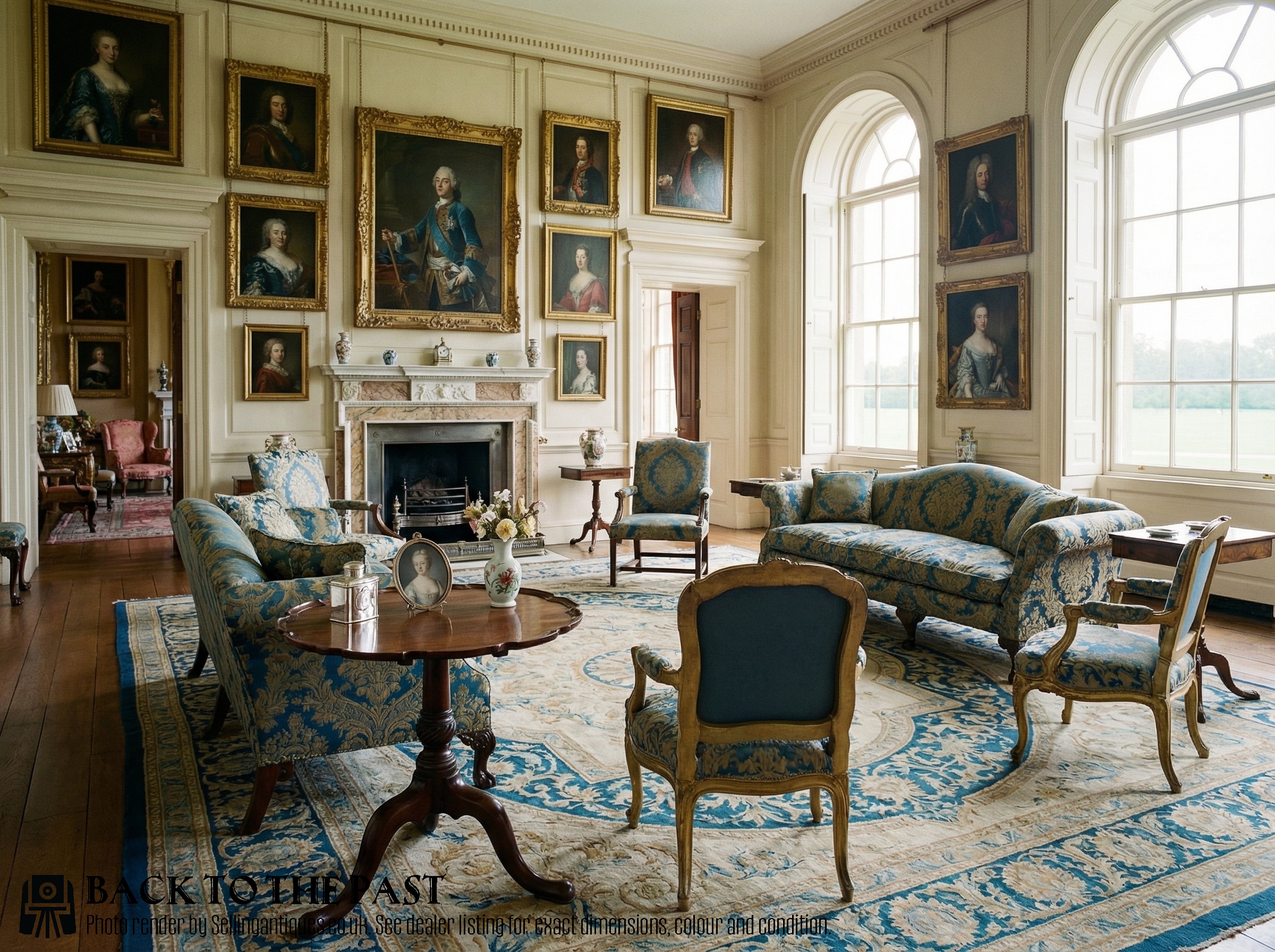
Today, they function well beside armchairs or sofas as display surfaces for small decorative objects or books, bringing period character to modern spaces.
How do I tell an 18th century table from a 19th century revival?
Eighteenth-century originals generally exhibit deeper patination, hand-cut joinery marks, and timber density consistent with the Georgian period. The carving on the rim tends to show subtle hand tool irregularities.
Revival pieces from the Edwardian era or the 1920s often feature cleaner, more uniform machinery execution and different secondary woods beneath the veneer. Examining the underside and the central pillar fixings reveals clues about the period of manufacture.
Why do some tables have tilt tops?
The tilting mechanism allowed servants to store the tables flat against the walls of grand reception rooms when entertaining ended. This space-saving innovation was standard for occasional and tea tables of the Georgian era.
In modern homes, this feature remains a mark of traditional construction and allows for easier transport or repositioning around the room.
Are these tables sturdy enough for daily use?
Tripod tables are remarkably stable on three points, though their light construction means they are not designed to support heavy weights or children climbing. Normal placement for lamps and cups presents no structural concern.
Placing them away from heavy foot traffic protects the slender legs and delicate tilt mechanisms from accidental knocks.