



Pictorial Carpet
A pictorial carpet brings narrative and portraiture directly to the floor, uniting traditional textile weaving with figurative art.
Pictorial Carpet
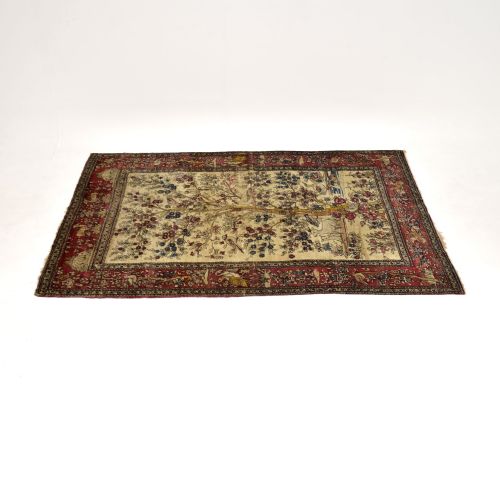
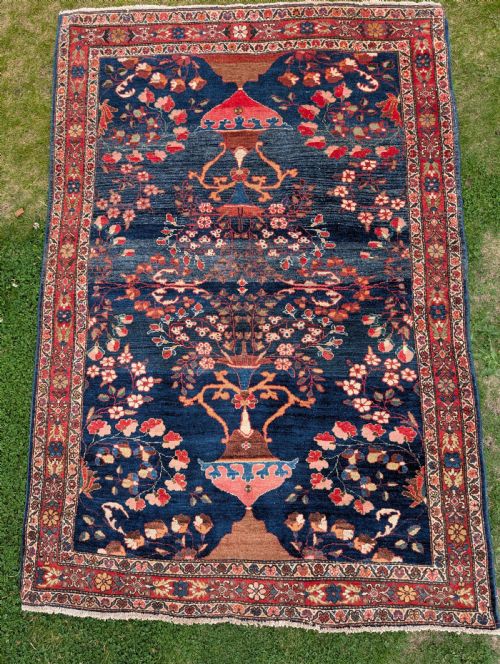
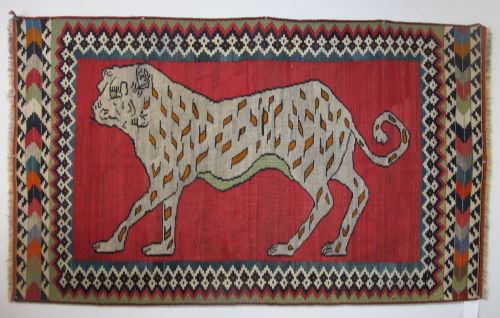
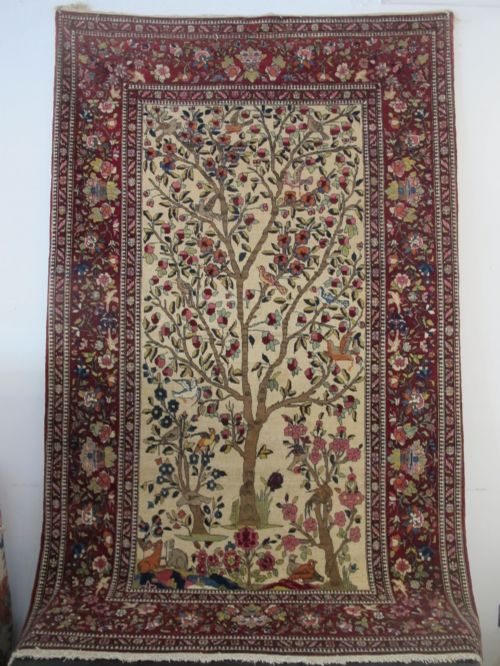
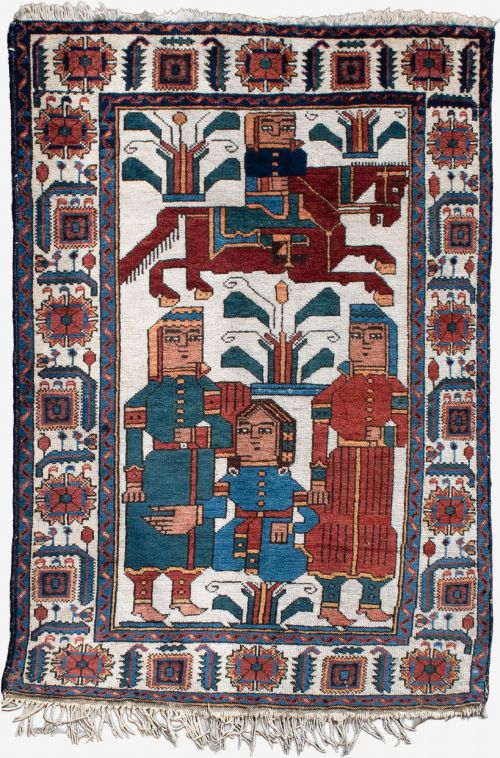
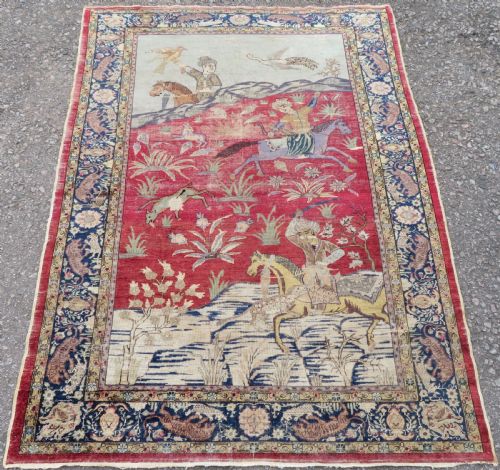
A pictorial carpet acts as a narrative textiles canvas, weaving human figures, animals, and historical portraits into the fabric of the floor covering. When exploring a pictorial carpet, buyers encounter regional expressions ranging from Persian workshops to Turkish and Caucasian centres.
The pieces appearing here span dates from the late nineteenth century through to the 1930s. They incorporate formats like area rugs, mats, and larger carpets displaying specific scenes such as hunting episodes or royal portraits.
Origin variations include Persian Kashan, Isfahan, Tabriz, and Kirman examples alongside Afghan Baluch and Turkish Kayseri weaves. These diverse origins bring distinct regional palettes and knotting densities to the pictorial format.
How they were made
Makers constructed these textiles using hand-knotted techniques primarily on cotton or wool foundations, frequently incorporating silk for finer detail work. Natural dyes provided the deep reds, blues, and earth tones observed across nineteenth and early twentieth-century examples.
The integration of figurative elements required precise control over the pile to delineate faces, animals, and inscriptions clearly. Weavers utilised specialised knotting to achieve the complex curves necessary for realistic pictorial representation.
Pictorial Carpet Retail Price Guide 2026
Typical asking prices for pictorial carpet among the pieces listed under this phrase on Sellingantiques today, from the lower quarter to the upper quarter. They describe what is for sale here now, not the wider market.
Weavers occasionally immortalised visiting monarchs and emperors, resulting in unexpected portraits of European royalty gazing out from Persian wool.
What varies in quality
Material choice also dictates the tier of the piece, particularly where fine silk is employed alongside wool to highlight specific pictorial details. The clarity of the natural dyes and the crispness of the border designs further separate standard output from master workshop productions.
Mohtasham Kashan·Ahmadi Isfahan
The Pictorial Carpet Glossary
- Pictorial carpet
- A woven textile incorporating figurative scenes, portraits, or animal motifs rather than purely geometric or floral patterns. These pieces often record historical personages or hunting scenes.
- Pile
- The upright yarn loops forming the usable surface of the rug. In pictorial pieces, the pile is often clipped closely to maintain the sharpness of the woven image.
- Natural dye
- Colouring derived from plant, insect, or mineral sources rather than synthetic compounds. These dyes produce the rich, nuanced tones seen in antique Persian and Caucasian rugs.
- Kilim
- A flatweave textile produced without a raised pile. Some regional examples incorporate pictorial or animal symbols directly into this flatter structure.
- Dhurrie
- A traditional Indian flat-woven rug or carpet. These pieces utilise cotton or wool without a knotted pile.
Pictorial Carpet: Frequently Asked Questions
What is a pictorial carpet?
A pictorial carpet is a hand-knotted floor covering that depicts human figures, animals, historical scenes, or portraits rather than conventional geometric or floral patterns. These textiles combine traditional regional weaving techniques with narrative or figurative art.
Such pieces range from small mats to large carpets originating in Persian, Turkish, and Caucasian weaving centres. They serve as both functional floor coverings and pictorial tapestries.
How do I identify the period of a pictorial carpet?
Dating relies on examining the materials, structural characteristics, and stylistic conventions recorded in late nineteenth and early twentieth-century examples. Natural dyes and specific wool or silk foundations help narrow the era of production.
Inscriptions or portraits depicting known historical figures, such as monarchs from the Qajar dynasty or the early twentieth century, provide reliable chronological markers for these textiles.
Where were pictorial carpets made?
These textiles were produced across various weaving regions, most notably in Persian centres such as Kashan, Isfahan, Tabriz, Kirman, and Veramin. Other examples originate in Turkish workshops like Kayseri and West Anatolia, as well as Caucasian and Afghan regions.
Each area imparted distinct structural traits, knot counts, and regional colour palettes to the pictorial format.
How should I live with a pictorial carpet?
Pictorial carpets function well in living spaces as area rugs or wall hangings, where their detailed narratives can be viewed clearly. Placing them away from direct, harsh sunlight protects the natural dyes used in the wool and silk pile.
Regular gentle vacuuming without a rotating brush helps maintain the integrity of the hand-knotted surface without disturbing the fibres.