



Pewter Measure Jug
These pewter measure jug examples are heavy, honest tavern vessels designed for service, offering a tangible link to historic hospitality.
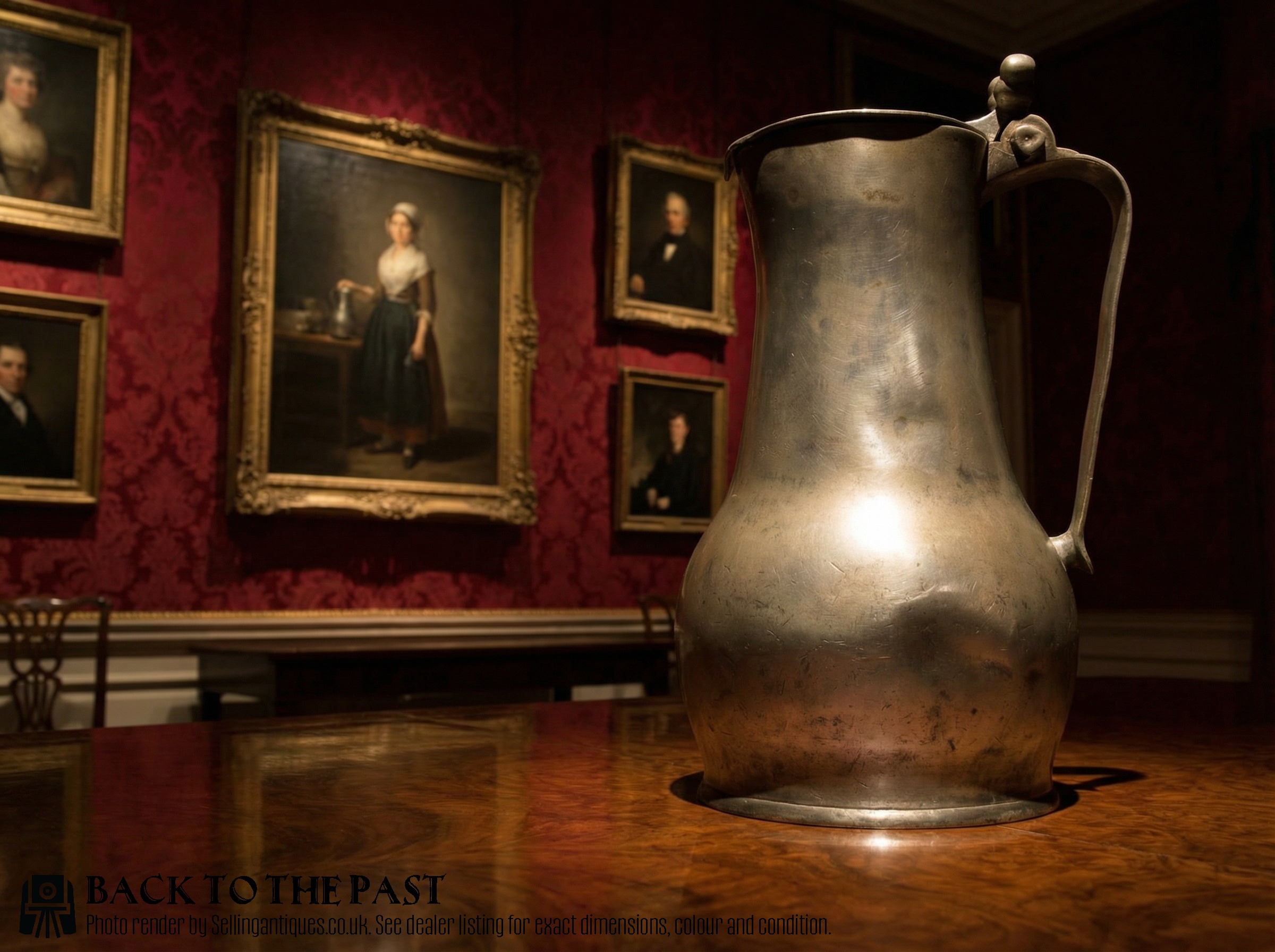
Pewter Measure Jug
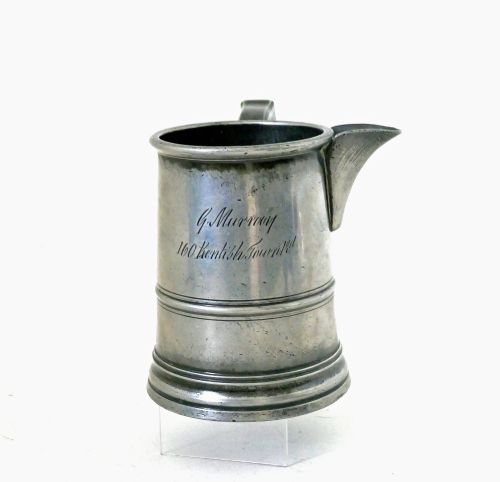
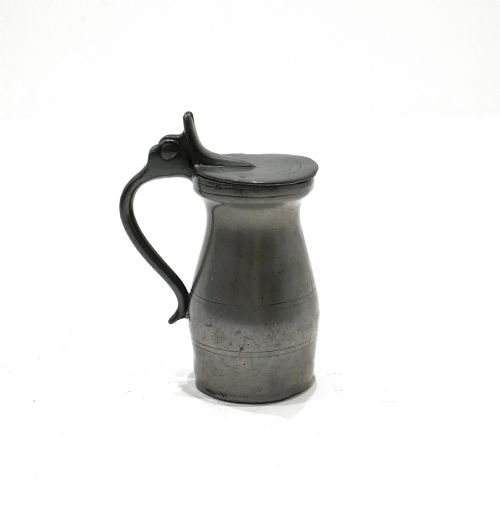
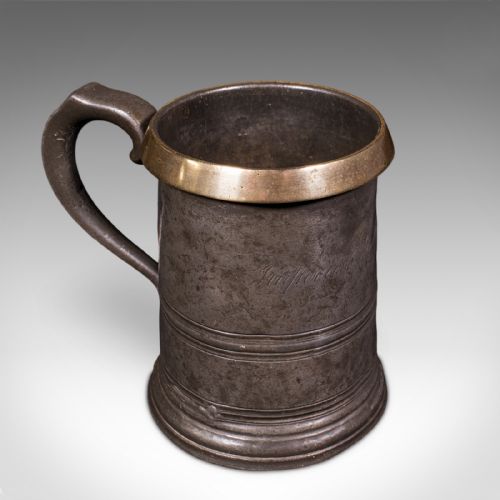
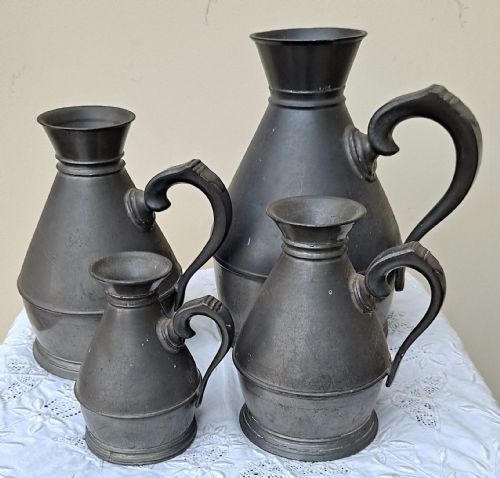
A pewter measure jug represents the practical drinking vessels and capacity standards utilised in British and Channel Islands public houses during the eighteenth and nineteenth centuries. Buyers searching for a pewter measure jug encounter forms ranging from flat lidded spirit measures and public house tankards to tall spire flagons, ale jugs, and regional haystack types.
The selection encompasses English, Scottish, Irish, and Channel Islands origins, including Guernsey and Jersey styles. Pieces span the Georgian and Victorian eras, taking the form of lidless measures, lidded flagons, and graduated sets designed for precise liquid capacity.
Distinctions in Quality
Quality rests in the crispness of touchmarks, the originality of lids and hinges, and the preservation of intended form without excessive denting or modern repairs. Pieces retaining clear regional characteristics, such as specific Scottish tappit hen shapes or Channel Islands markers, demonstrate higher collector interest.
The presence of legible capacity inscriptions, maker stamps like those from Jersey workshops, and untouched patination elevate certain examples above standard utilitarian survivals.
Pewter Measure Jug Retail Price Guide 2026
Typical asking prices for pewter measure jug among the pieces listed under this phrase on Sellingantiques today, from the lower quarter to the upper quarter. They describe what is for sale here now, not the wider market.
Current listings span the Georgian and Victorian periods, featuring English, Scottish, Irish, and Channel Islands origins in pewter and brass.
John De St Croix
The Pewter Measure Jug Glossary
- Pewter
- A malleable metal alloy composed principally of tin, used historically for tableware and drinking vessels. It develops a dull grey patination with age.
- Tappit Hen
- A traditional Scottish form of pewter measure featuring a lid with a characteristic finial. These vessels held specific capacities for ale and spirits.
- Haystack Measure
- An Irish style of pewter measure recognisable by its bulging, bell-like body shape resembling a stacked haystack. They are frequently found in graduated sets.
- Spire Flagon
- A tall, tapered vessel with a conical lid configuration, often associated with larger capacity church or tavern service. They display distinct vertical presence.
- Touchmark
- An official stamp impressed into the metal by a maker or guild to certify the quality and origin of the pewter. These marks help identify the workshop and date.
Pewter Measure Jug: Frequently Asked Questions
What are pewter measure jugs?
Pewter measure jugs are historic vessels cast to hold exact legal quantities of ale, wine, or spirits in public houses and homes.
They served both commercial and domestic functions before standardised glass bottles and modern metrology took over tavern service.
How do I date a pewter measure?
Dating relies on stylistic forms, touchmarks, capacity standards like pre-imperial or imperial measurements, and verification stamps.
Georgian examples often display simpler, heavier profiles while Victorian pieces introduce standard verification ciphers like VR.
Were these used for drinking?
Most measures were utilised for storing, measuring, and transferring liquids rather than direct drinking at the table.
Tavern staff used them to fill smaller mugs and glasses for patrons.
How should I clean pewter?
Pewter requires minimal intervention to preserve its historic dark or satin-grey patination.
Washing with mild soap and warm water followed by thorough drying is sufficient.