





Persian Ziegler Rug
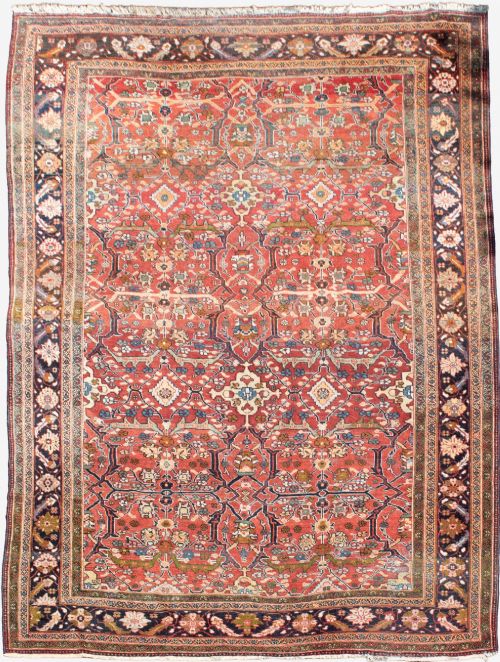
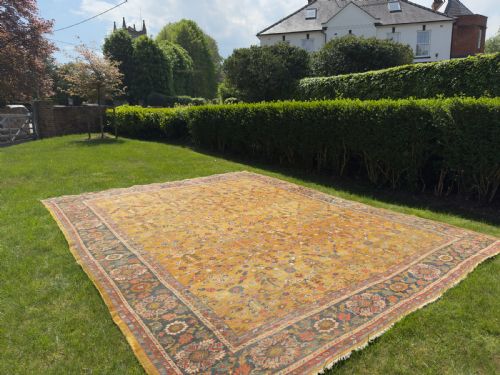
These persian ziegler rug examples bring nineteenth-century west Persian weaving into a room, offering large-scale floral designs created for Western tastes.
Persian Ziegler Rug
A persian ziegler rug represents a distinct category of nineteenth-century weaving produced in west Persia, frequently associated with Sultanabad and Mahal workshops. Buyers seeking these pieces generally encounter large carpets and rugs dating from the 1880s, 1890s, and around 1900, designed specifically to suit Western decorative preferences of the period.
The aesthetic of a persian ziegler rug relies on muted palettes and generous floral motifs that differ from denser traditional village designs. Most examples found on this page span the late nineteenth century, encompassing works produced by Ziegler and Co alongside related regional carpets from Sultanabad and Mahal.
What varies in quality
The quality of a persian ziegler rug depends upon the fineness of the knotting and the subtlety of the dye modulation across the field. Superior examples display harmonious colour transitions and intricate drawing within the large-scale floral motifs.
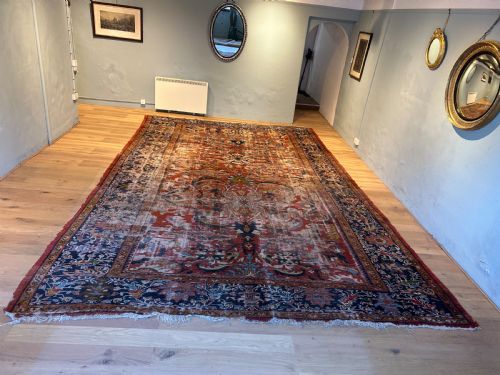
Proportion and scale dictate the distinction between standard room carpets and exceptional grand-scale pieces. The handling of the wool pile and the precision of the curvilinear patterns establish the visual depth of each individual weaving.
Persian Ziegler Rug Retail Price Guide 2026
Typical asking prices for persian ziegler rug among the pieces listed under this phrase on Sellingantiques today, from the lower quarter to the upper quarter. They describe what is for sale here now, not the wider market.
Listings span the period from 1880 to 1900, with wool and cotton forming the materials of every piece.
Ziegler and Co
The Persian Ziegler Rug Glossary
- Sultanabad
- A regional designation for nineteenth-century carpets woven in west Persia, known for large-scale patterns. These pieces share stylistic ties with commercial Ziegler production.
- Mahal
- A term describing carpets originating from the district surrounding Sultanabad, featuring open floral designs. They typically exhibit slightly coarser weave structures than city workshop carpets.
- Fereghan
- A style associated with west Persian weaving districts, often noted for balanced compositional layouts. Such pieces frequently appear in tandem with Ziegler and Sultanabad designations.
- Pile
- The upright yarn surface of the rug formed by individual knots tied to the foundation. The condition and height of this wool surface define the texture of the carpet.
Persian Ziegler Rug: Frequently Asked Questions
What defines a persian ziegler rug?
A persian ziegler rug is a nineteenth-century carpet produced in west Persia, typically featuring expansive floral patterns and softened colour palettes designed for European and American markets.
These pieces bridge traditional Persian motifs with Western interior requirements, resulting in grand room-sized carpets and smaller rugs.
Where were these rugs made?
These floor coverings originated in west Persia, specifically within workshop centres such as Sultanabad and Mahal.
The production involved regional weavers working under commercial direction to supply international houses like Ziegler and Co during the late nineteenth century.
How do I care for an old rug?
Living with a nineteenth-century wool and cotton carpet requires gentle maintenance, including regular vacuuming without beater bars and professional cleaning when necessary.
Positioning the rug out of direct sunlight helps preserve the natural dyes used in these historic west Persian pieces.
How do I tell Sultanabad and Ziegler apart?
Distinguishing between Sultanabad and Ziegler pieces involves looking at workshop attribution and commercial provenance rather than fundamental material differences, as both utilise wool and cotton.
Many listings combine these terms to reflect the shared west Persian origin and large-scale floral aesthetic of the period.