






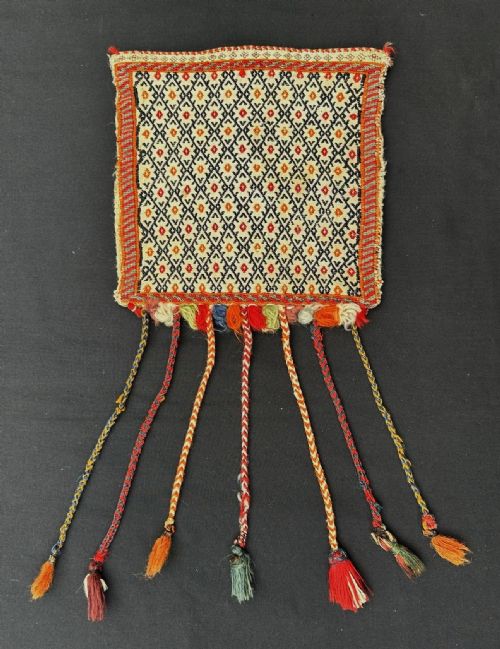
Persian Wool Pouch
A persian wool pouch brings tribal textile art into daily life through utility, woven by nomadic groups across Persia.
Persian Wool Pouch
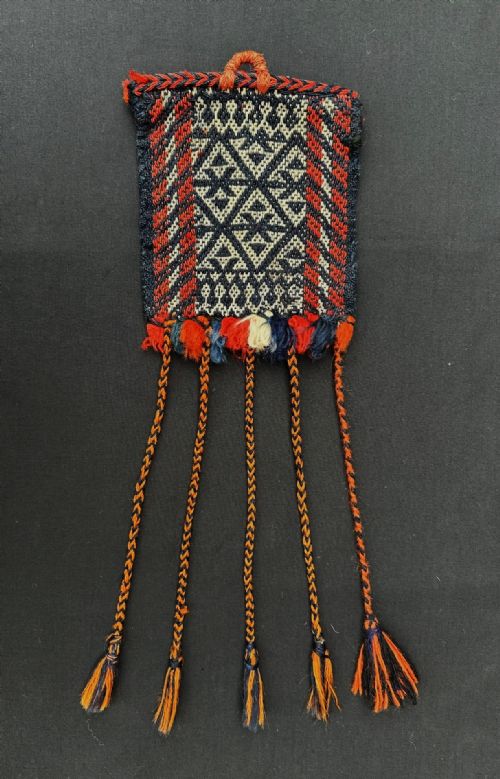
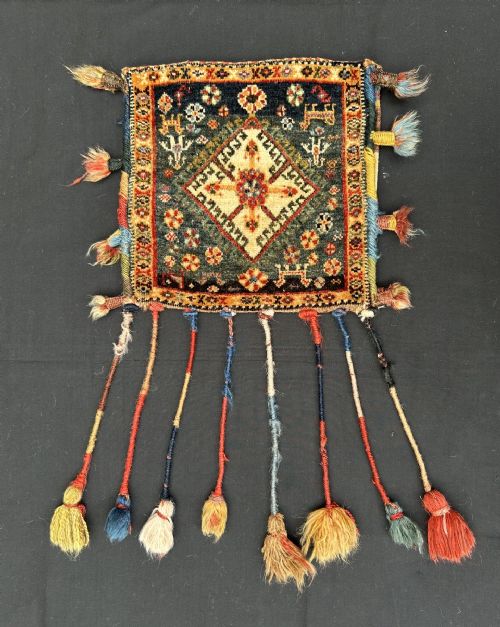
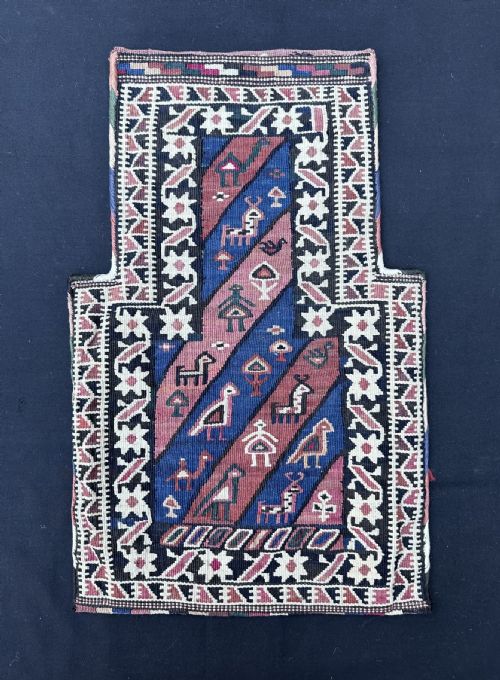
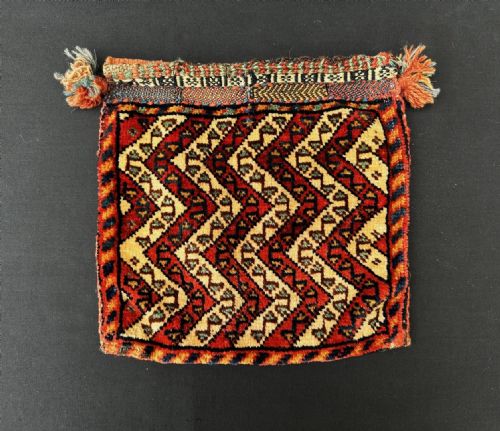
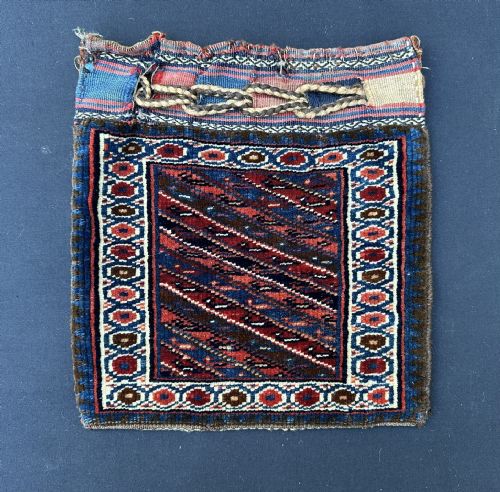
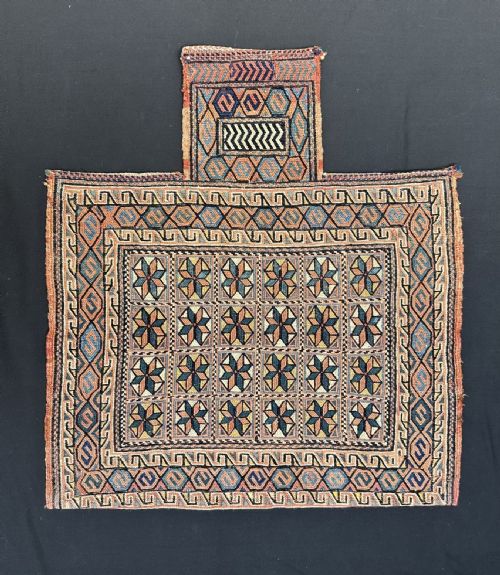
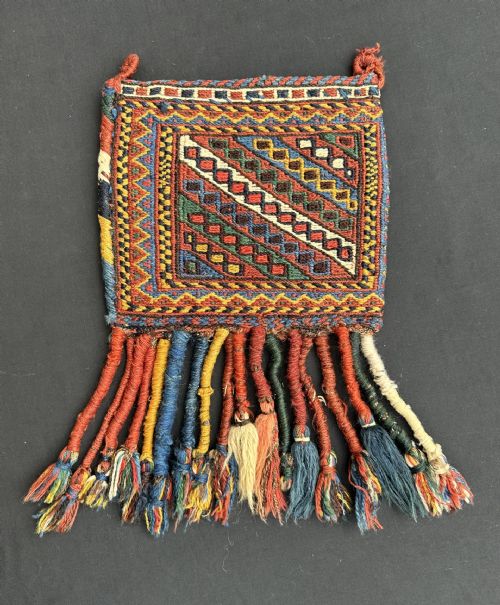
A persian wool pouch encompasses utilitarian tribal bags such as salt-bags, vanity-bags, and chantehs produced by nomadic confederacies and regional tribes. These textiles served specific domestic functions within nomadic camps, ranging from personal storage to holding salt or tobacco.
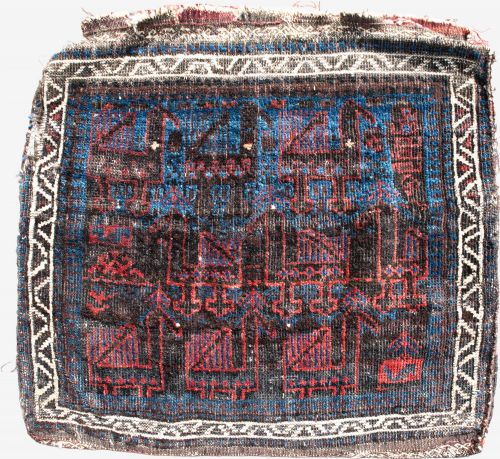
The pieces available originate from distinct tribal groups including the Qashqa'i Confederacy, Afshar nomads, Baluch tribes, and Kurdish weavers. Dating spans the latter half of the nineteenth century into the early twentieth century.
Vanity-bags and salt-bags dominate the selections, alongside saddle-bags and smaller personal containers. Each item reflects the specific weaving traditions of its geographic region, from Fars Province to Khorassan.
Materials and Construction
Construction relies upon wool and cotton foundations worked with natural dyes to create durable surfaces. Certain examples incorporate soumak work or banded weft designs alongside the primary weave.
Nomadic weavers utilised locally sourced materials, sometimes incorporating cowrie shells for ornamentation on specific storage bags and vanity containers. The resulting textiles balance structural rigidity with intricate geometric patterns.
Nomads wove tiny salt-bags with narrow necks so livestock could not easily lick the contents while camp moved.
Assessing Quality and Execution
Quality rests in the tightness of the weave, the clarity of the natural dye palette, and the integrity of the original structure including backs and hanging loops. Finer knotting and sophisticated tribal iconography distinguish superior examples from standard utility items.
The preservation of original elements, such as backing materials and structural bindings, marks the distinction between heavily worn utilitarian objects and well-maintained examples of tribal weaving.
The Persian Wool Pouch Glossary
- Chanteh
- A small tribal vanity or personal bag woven by nomadic groups in Persia. These pieces often served decorative as well as practical storage functions.
- Namakdan
- A traditional tribal salt-bag designed with a narrow neck and wide body. Weavers utilised these specific forms to store rock salt for livestock.
- Soumak
- A flat-weave technique where coloured weft threads wrap around the warp threads in a continuous motion. This method creates a sturdy textured surface without a piled knot.
- Tubreh
- A general term for a nomadic bag or sack used for transport or storage. They appear across various tribal groups with region-specific designs.
- Kilim
- A flat-woven textile produced without a pile. Shahsavan examples often utilise this technique for durable double bags.
Persian Wool Pouch: Frequently Asked Questions
What were these bags used for?
Nomadic groups utilised these pouches for storing salt, tobacco, pipes, or personal items during daily camp life and travel.
Specific forms like the namakdan held salt, while smaller chantehs functioned as personal vanity containers.
How do I care for a wool pouch?
Keep the textile away from direct sunlight to protect natural dyes from fading over time. Gentle vacuuming through a mesh screen helps remove dust without damaging the fibres.
Avoid hanging heavy items inside antique pouches, as the aged wool and cotton threads require support.
How do I identify different tribal origins?
Tribal attribution relies on distinctive structural patterns, colour palettes, and specific motifs associated with groups like the Qashqa'i or Afshar.
Regional variations in Fars or Khorassan produce recognizable differences in the weave and decorative layout.
Are these bags complete with backs?
Many listings specify the presence of original backs and hanging loops, which survive on well-preserved examples. Complete pairs or items retaining their reverse side offer a fuller picture of nomadic utility.
Descriptions note whether a piece is single-sided or retains its original construction.