



Persian Tribal Rug Face
When you examine a Persian tribal rug face, you hold a fragment of nomadic heritage woven for practical daily utility.
Persian Tribal Rug Face
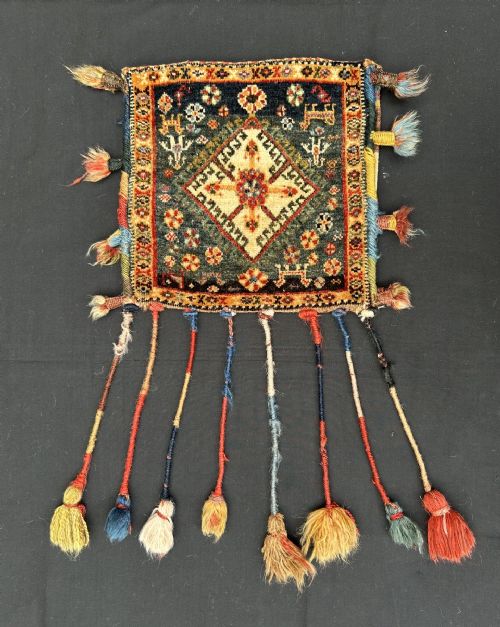
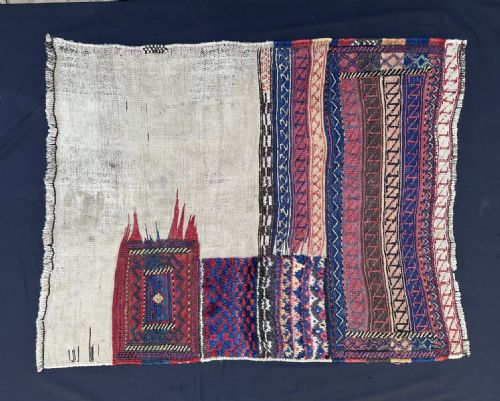
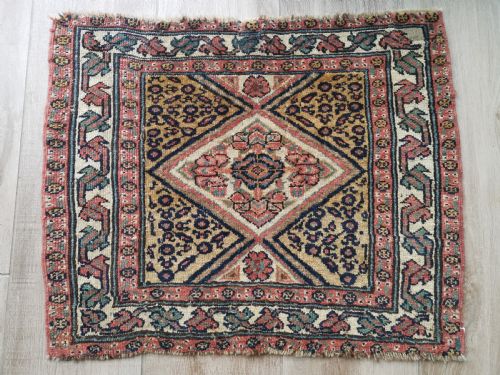
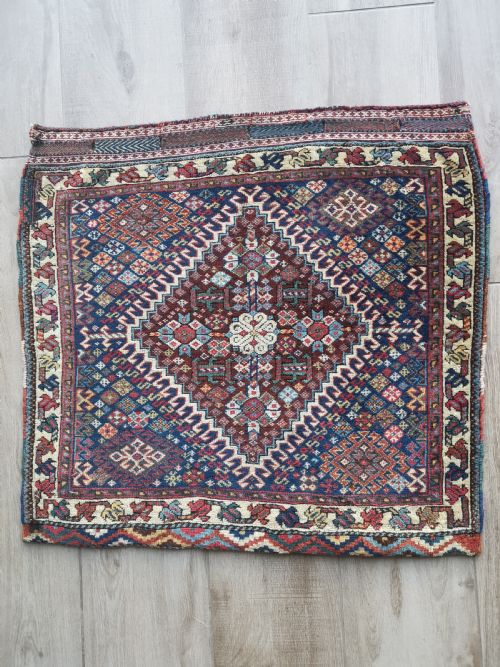
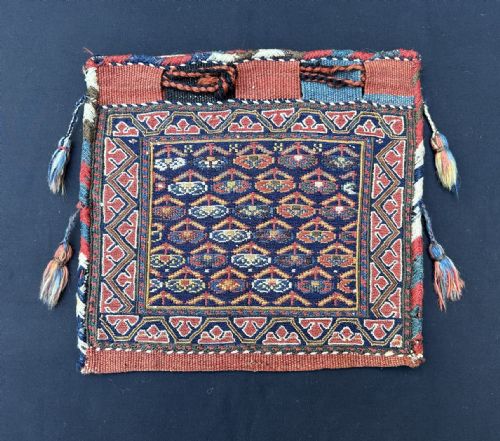
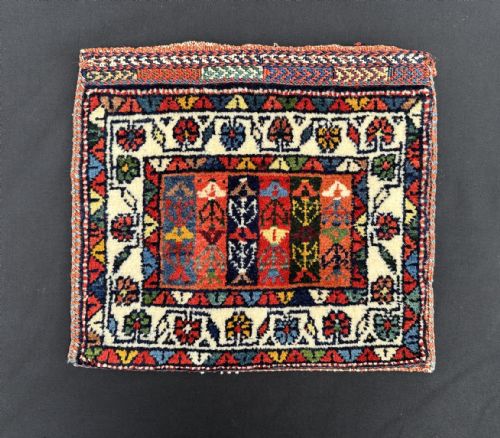
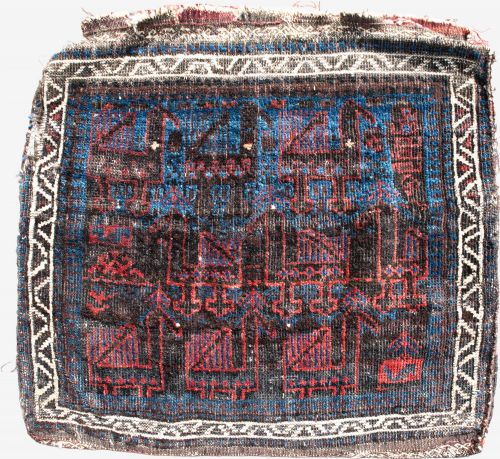
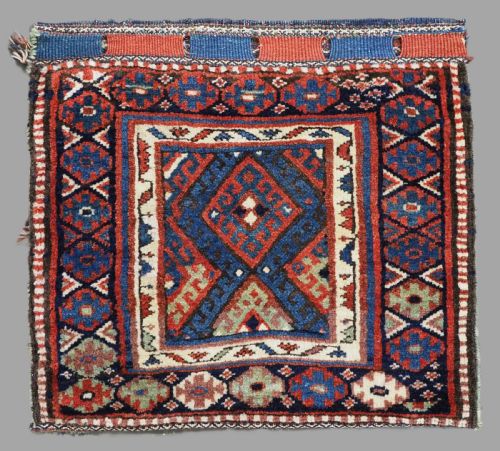
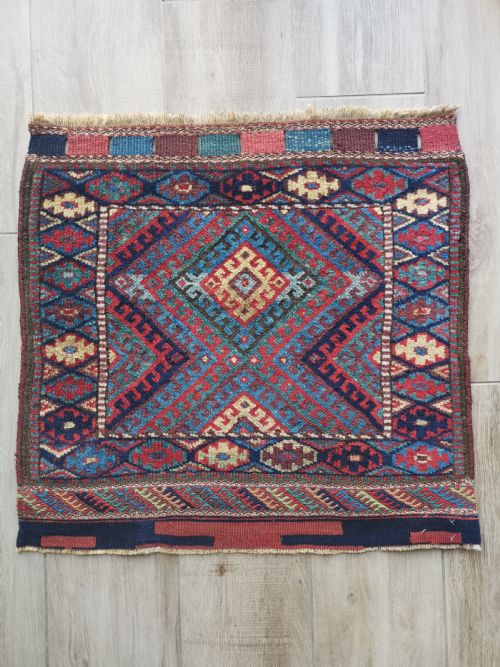
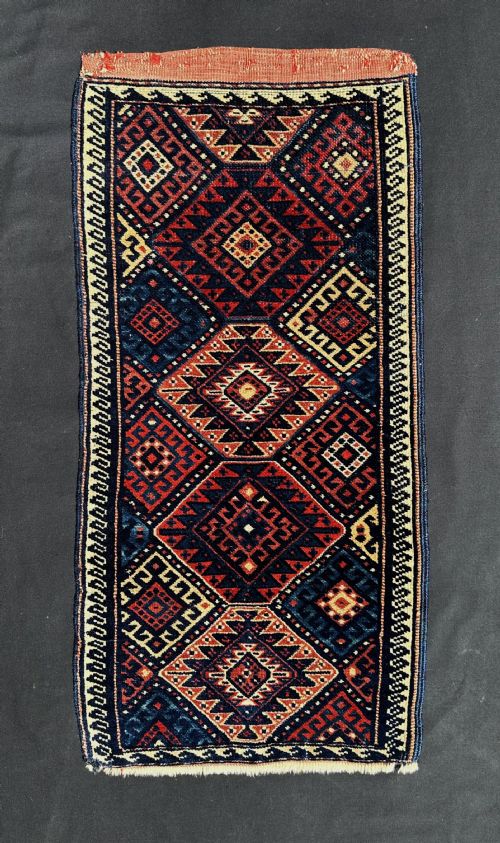
A persian tribal rug face represents the front panel of a larger nomadic container, such as a khorjin or saddlebag, separated from its backing over time. These fragments function as compact textile art, displaying the concentrated design vocabulary of groups including the Qashqai, Afshar, Baluch, and Luri peoples.
The selections available span the late nineteenth century into the early decades of the twentieth century, originating from regions across Persia from Fars to Khorasan. Common forms include vanity bags, chantehs, and pillow bag-faces that preserve the authentic iconography of tribal weaving.
How they were made
Weavers constructed these pieces using hand-spun wool for the pile and foundation, often pairing it with cotton for structural support in later examples. Natural dyes and vegetable dyes derived from local plants provide the rich palette that deepens with age.
Techniques range from hand-knotted pile work to flatwoven soumac and soumak structures, executed on portable horizontal looms set up in nomadic camps. The resulting textiles combine durability with intricate geometric or medallion motifs suited to daily transport and use.
Nomadic weavers carried their looms on pack animals, finishing intricate saddlebag faces while tending flocks across the mountains.
What varies in quality
Quality rests upon the fineness of the knotting or weaving density, which allows crisper execution of traditional motifs like boteh patterns, central medallions, or tile designs. Finer examples maintain precise symmetry and deliberate proportions across the field.
The depth and saturation of the dye work also set pieces apart, distinguishing complex natural colour combinations from simpler or more uniform applications. The integrity of the remaining wool pile and the crispness of the tribal drawing determine the visual impact of the fragment.
Lori-Bakhtiari Nomads·Afshar Tribes·Baluch Salar Khani Tribe·Kordi Tribes
The Persian Tribal Rug Face Glossary
- Khorjin
- A traditional double saddlebag used by nomadic groups for transport and storage. These were often separated over time into individual rug faces.
- Chanteh
- A small personal bag or vanity bag woven by tribal peoples for carrying small possessions. They frequently display the most concentrated weaving skill.
- Soumac
- A flatweave technique involving wraps of coloured weft threads over warp threads to create a textured, durable surface. It results in a sturdy fabric without a cut pile.
- Boteh
- A motif resembling a floral spray, almond, or twisted pear shape, commonly found in Persian weaving. This design symbolises life and eternity.
- Pushti
- A small mat or rug used for sitting against or placing on tent floors. These pieces share similar dimensions and wool qualities with bag faces.
Persian Tribal Rug Face: Frequently Asked Questions
What is a tribal bag face?
A tribal bag face is the decorated front panel of a nomadic storage bag, preserved as an independent textile after the plain back wore away or was removed.
These pieces were originally part of functional items like saddlebags or donkey bags used to carry belongings during seasonal migrations.
How were these bags used?
Nomadic families utilised these woven containers inside tents and on pack animals for storing grain, bedding, clothing, and personal possessions.
Because the front panels displayed the finest patterns and symbolism, they survived as decorative art long after the utility bags deteriorated.
How do I display a bag face?
Many collectors mount these textile panels on neutral fabric backgrounds or display them directly on walls using specialised non-damaging hanging methods.
They also function effectively as small accent pieces on tables or benches, provided they receive protection from heavy foot traffic.
How can I tell different tribes apart?
Distinctive colour palettes, specific structural weaves, and characteristic motifs point to particular tribal groups and geographic regions in Persia.
For instance, Baluch pieces often feature dark wools and geometric tile layouts, while Qashqai works frequently display vibrant reds and finely drawn medallions.