






Persian Style Wool Rug
When you search for a persian style wool rug, you encounter floor coverings woven with traditional motifs that anchor a room with enduring warmth and texture.
Persian Style Wool Rug
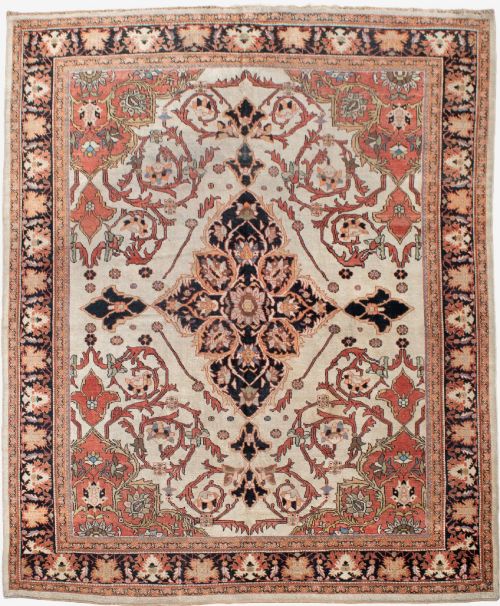
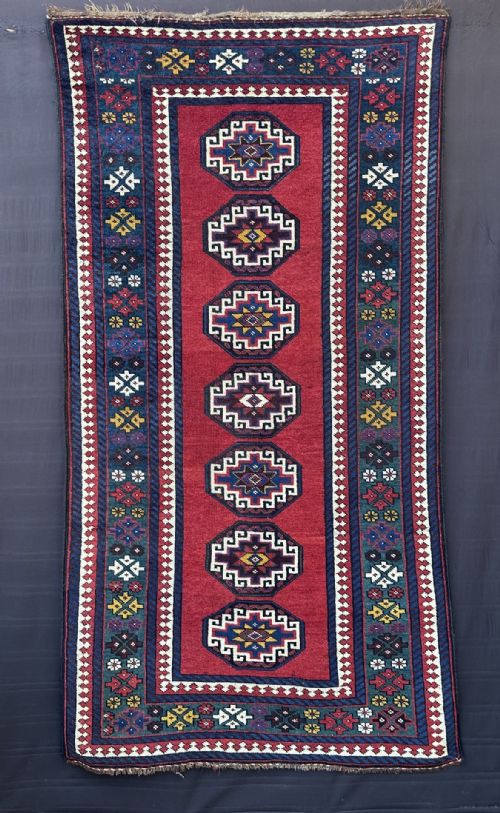
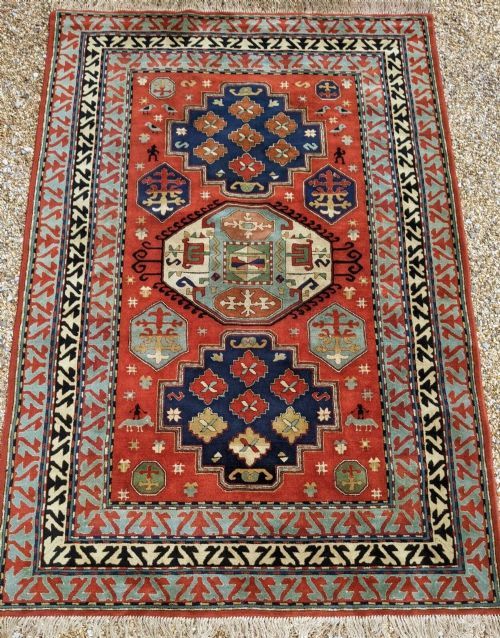
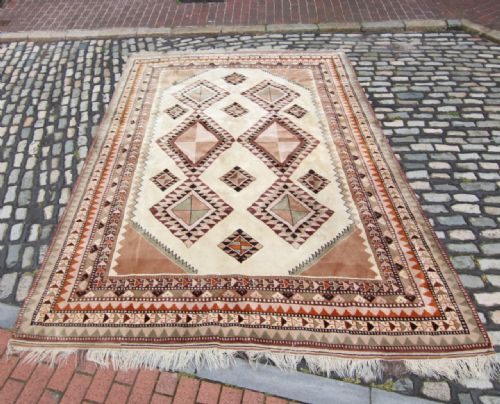
A persian style wool rug spans room-size carpets, long runners, and compact village pieces produced across the nineteenth and twentieth centuries. These floor coverings bring distinct geometric patterns, central medallions, and all-over field designs into domestic spaces.
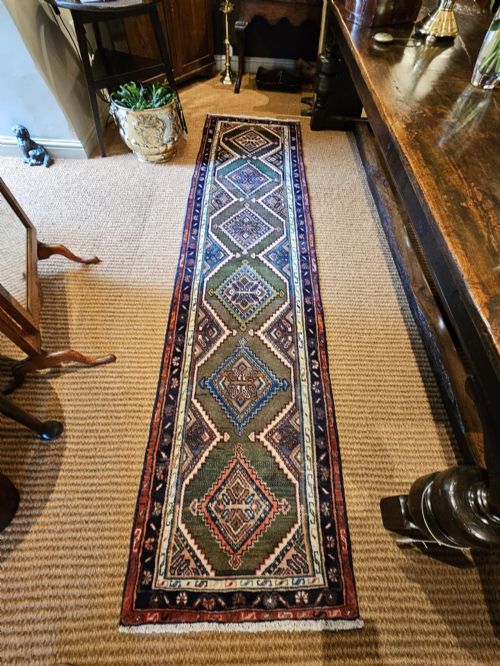
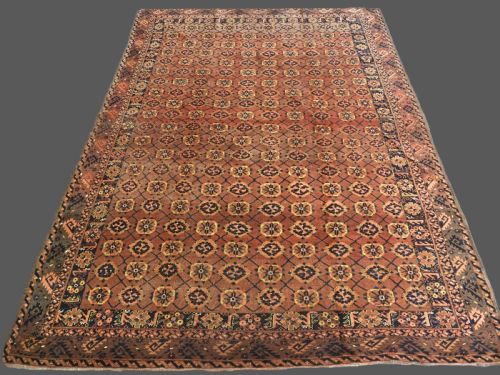
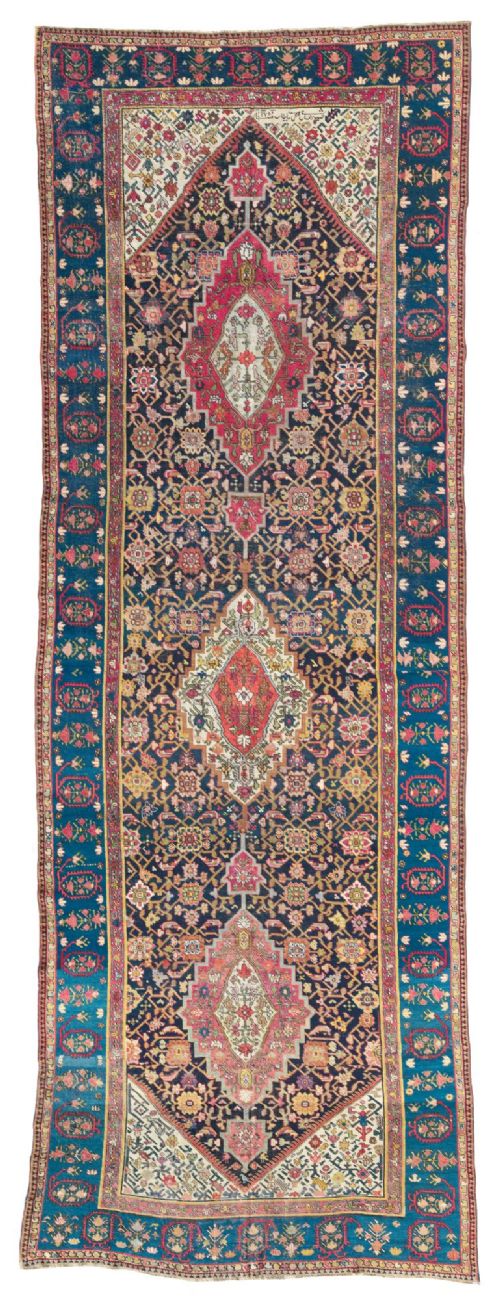
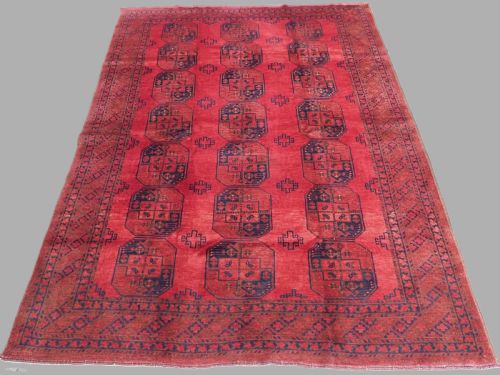
The selections on this page most commonly include traditional Persian village weaves alongside runners and carpets influenced by Heriz, Karadja, and Afghan tribal traditions. Buyers find examples ranging from small bag faces to large carpets suited for principal living spaces.
Materials and construction
These pieces rely primarily on wool and hand-spun wool for the pile, providing resilience and a dense surface underfoot. Cotton foundations frequently offer structural stability to the heavier carpets and runners.
Hand-knotted techniques dominate the construction, binding the wool pile securely to the warp and weft threads. This method produces the durable structures seen in village and tribal output from various regional workshops.
One listed runner bears the description 'crooked,' proving that human hands on a village loom loved a gentle wobble.
Evaluating quality
The quality of these textiles rests in the handling of the wool, the clarity of the dye work, and the precision of the knotting. Finer examples display saturated colour palettes and tight, even pile construction that withstands decades of foot traffic.
Design execution distinguishes standard village pieces from masterwork carpets. Well-drawn motifs and balanced proportions indicate greater care during the weaving process.
The Persian Style Wool Rug Glossary
- Runner
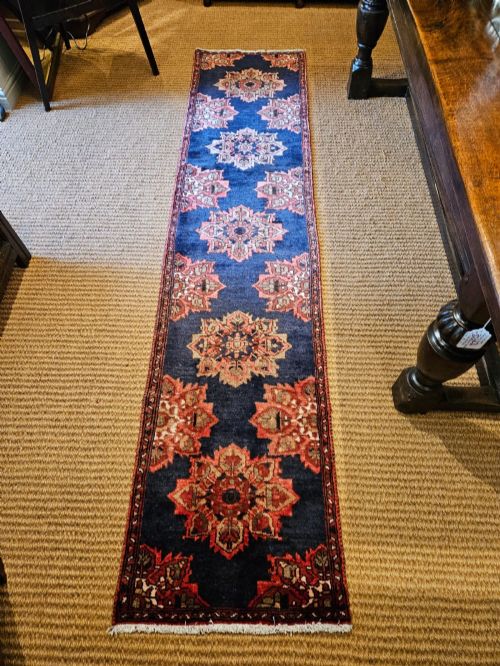
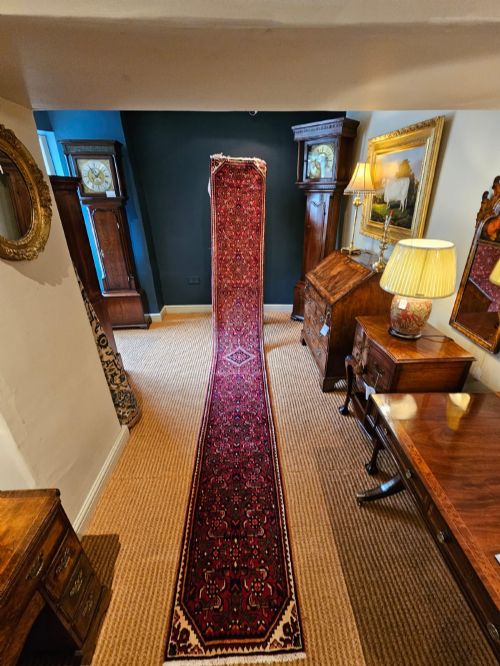
- A long, narrow carpet format designed for hallways, corridors, and staircases. These pieces measure significantly longer than they are wide.
- Kelleh
- A rectangular carpet format that is longer than a standard room rug but wider than a corridor runner. Collectors prize these for specific proportioning in traditional room layouts.
- Medallion
- A central decorative motif placed in the middle of the carpet field. This design element draws the eye and often anchors the surrounding geometric or floral patterns.
- Warp
- The vertical threads stretched tightly on the loom before knotting begins. The visible ends of these threads often form the fringe at either end of the rug.
Persian Style Wool Rug: Frequently Asked Questions
Where should I place a runner rug?
Runners suit narrow spaces such as hallways, entryways, and corridors where foot traffic benefits from a cushioned surface. Their elongated proportions also work effectively alongside long kitchen islands or beside a bed.
Ensure you measure the corridor width and allow clearance for doors to swing freely over the pile thickness before positioning the piece.
How do I care for wool floor coverings?
Regular vacuuming without the beater bar engaged removes surface dust and grit from the wool pile. Professional cleaning handles deeper dirt accumulation without disturbing the foundation threads.
Keep the textile out of direct, continuous sunlight to prevent fading of the natural and chemical dyes over time.
What defines a village carpet?
Village carpets originate from domestic weavers working independently or in small community groups rather than large urban manufactories. Their designs often feature bold geometric interpretations and expressive colour combinations.
These pieces reflect the personal choices of the weaver, resulting in charming irregularities within the repeated motifs.
How can I distinguish regional styles?
Regional types often reveal themselves through specific palette choices, structural stiffness, and distinct medallion layouts. For instance, Heriz weaves typically showcase prominent geometric corners and robust central structures.
Comparing the border arrangements and secondary filler motifs helps pinpoint the likely origin of an unmarked piece.