

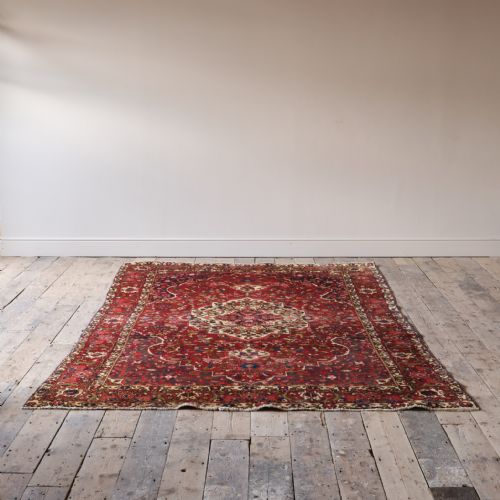
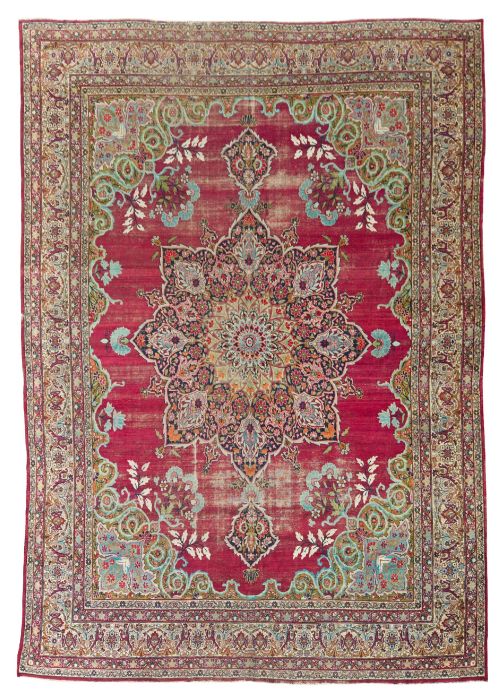
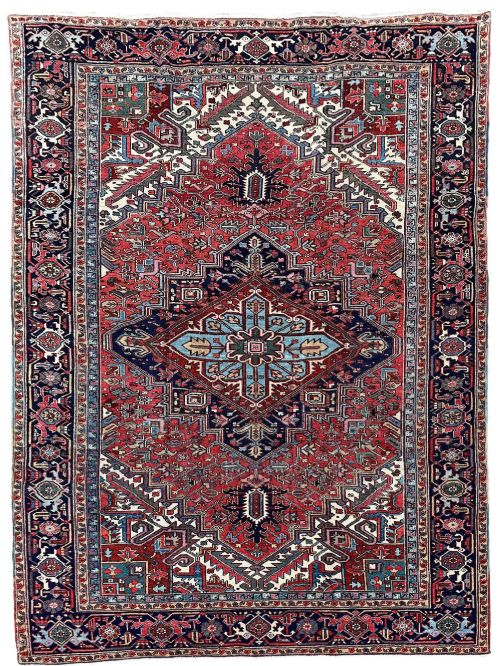
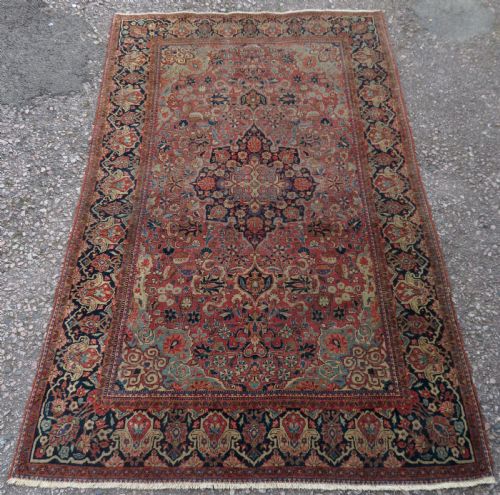

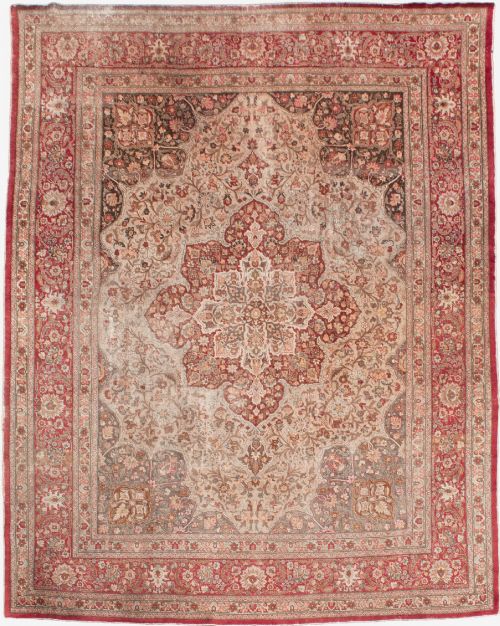
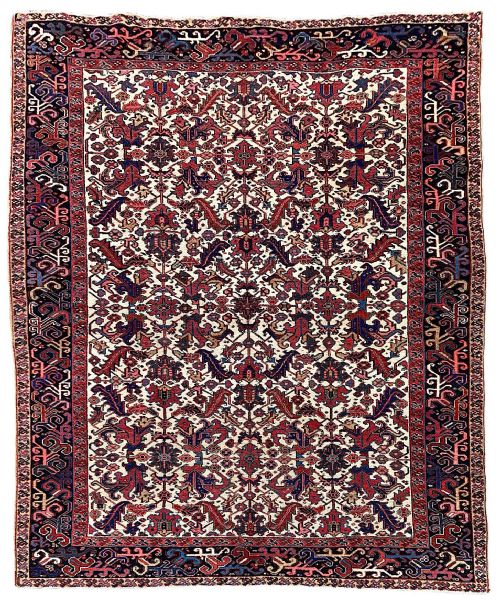
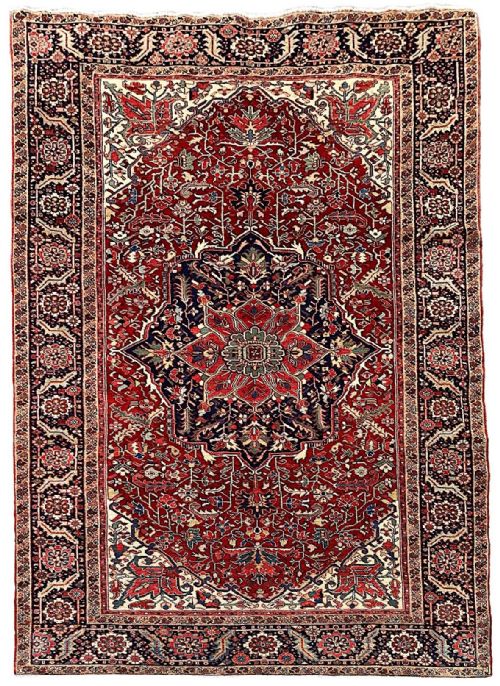
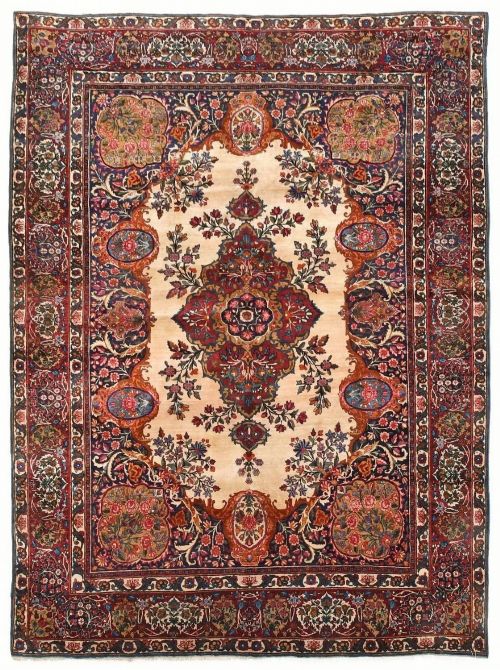


Persian Room Carpet
These large floor coverings offer deep cultural heritage and grounding texture, matching the search phrase persian room carpet.
Persian Room Carpet
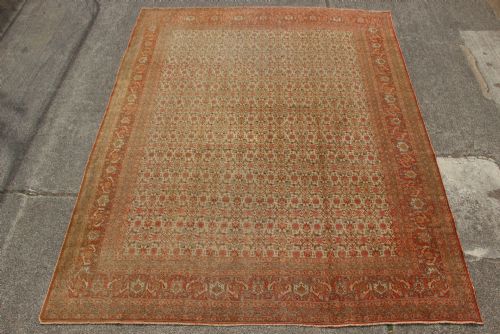
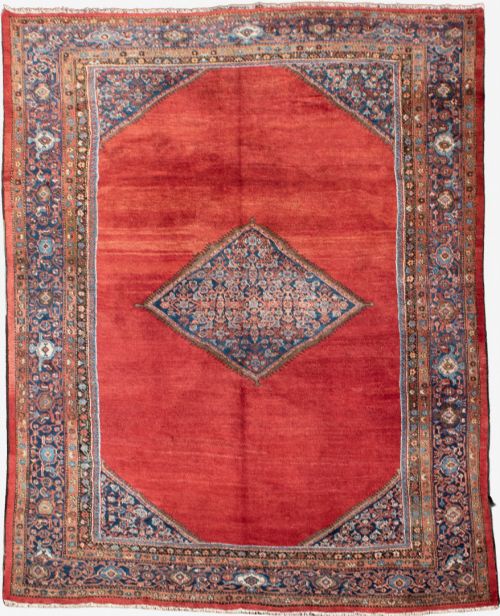
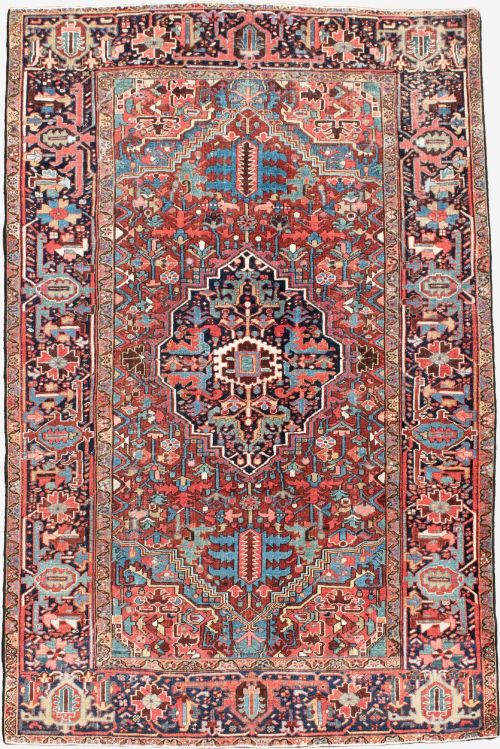
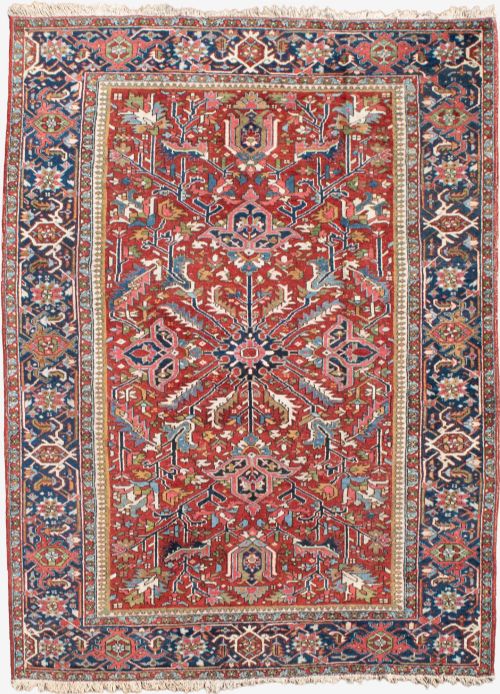
A persian room carpet grounds large living spaces with intricate motifs and dense pile. Buyers seeking this phrase encounter room-sized formats designed for formal parlours and reception rooms.
The selection ranges from geometric Heriz and Tabriz weaves to floral Kirman and Kashan examples. These textiles originate from workshops and villages across Persia and neighbouring regions during the late nineteenth and early twentieth centuries.
Makers utilised traditional formats, resulting in floor coverings that scale from compact scatter sizes to massive country house dimensions. Wool remains the dominant pile material, often combined with cotton foundations and occasional silk highlights.
Materials and Construction
Weavers knotted hand-spun wool onto cotton or wool warp and weft foundations to create durable surfaces. Silk elements appear in specific town pieces to highlight intricate medallion outlines and fine floral details.
Natural dye stuffs yielded deep reds, indigos, and soft pastels that mellow gracefully over decades. Loom techniques varied between city workshops employing symmetrical knots and tribal areas utilising asymmetrical knotting methods.
Persian Room Carpet Retail Price Guide 2026
Typical asking prices for persian room carpet among the pieces listed under this phrase on Sellingantiques today, from the lower quarter to the upper quarter. They describe what is for sale here now, not the wider market.
Every large carpet holds countless hidden weaver knots that whisper tales of village firesides and bustling Persian bazaars.
Assessing Quality and Execution
Knot density and precision of line separate standard village production from master workshop output. Finer carpets display complex curves and balanced symmetry within medallion and field layouts.
The choice of wool fleece and dye saturation dictates the depth and longevity of the pile. Superior examples maintain structural integrity and balanced proportions across large surface areas.
Benlian Tabriz·Kashan Workshop·Kirman Manufactory·Tabriz Weavers
The Persian Room Carpet Glossary
- Medb
- The central ornamental design element found in the field of many carpets. It often takes a circular, polygonal, or lobed shape.
- Warp
- The vertical threads stretched tightly on the loom that form the structural foundation of the carpet. Fringe ends originate from these running threads.
- Weft
- The horizontal threads passed across the warp threads after each row of knots is tied. This secures the pile firmly in place.
- Pile
- The vertical tufts of wool, silk, or cotton that form the soft upper surface of the carpet. Knotting individual strands creates this textured layer.
- Field
- The central background area of the carpet enclosed by the border. Patterns and medallions sit directly upon this expanse.
Persian Room Carpet: Frequently Asked Questions
How do I choose the right size?
Measure the room dimensions to ensure adequate exposed floorboards remain around the perimeter of the textile. Large formats require open floor space to display central medallions properly.
Consider heavy furniture placement when selecting dimensions so that key motifs remain visible beneath or beside tables.
How should I care for a wool carpet?
Vacuum gently using a suction-only attachment without a rotating brush roll to protect delicate vintage fibres. Keep the textile away from direct sunlight to prevent fading of natural dyes.
Rotate the floor covering periodically to ensure even wear patterns across high-traffic zones.
What is the difference between Heriz and Tabriz?
Heriz carpets feature bold geometric medallions and robust structural wool suited for heavy domestic use. They rely on strong angular lines and primary colour palettes.
Tabriz examples display refined curvilinear floral designs with higher knot counts reflecting city workshop traditions. They often incorporate delicate pastel shades and intricate border details.
Can I use these in modern interiors?
These large floor coverings anchor contemporary minimalist spaces by introducing rich texture and historical depth. Their subdued antique palettes complement neutral walls and modern furnishings.
Traditional patterns create a sophisticated contrast against clean architectural lines and contemporary decor.