




Persian Lattice Pattern Rug
These Persian lattice pattern rug examples bring structured geometric flora into your interior through time-honoured weaving traditions.
Persian Lattice Pattern Rug
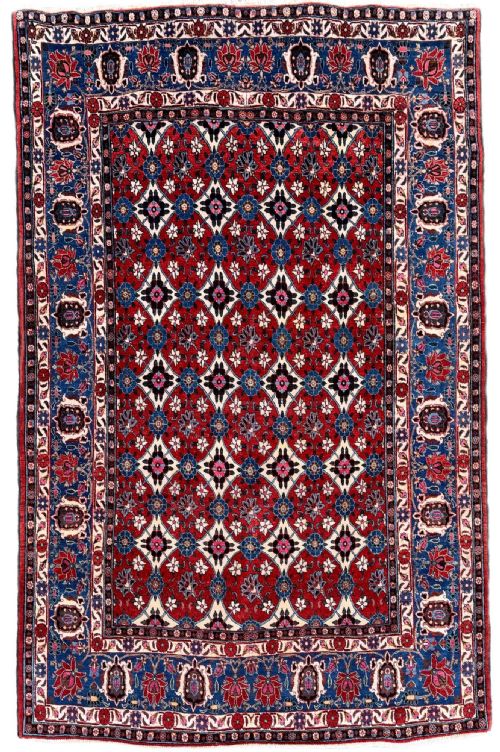
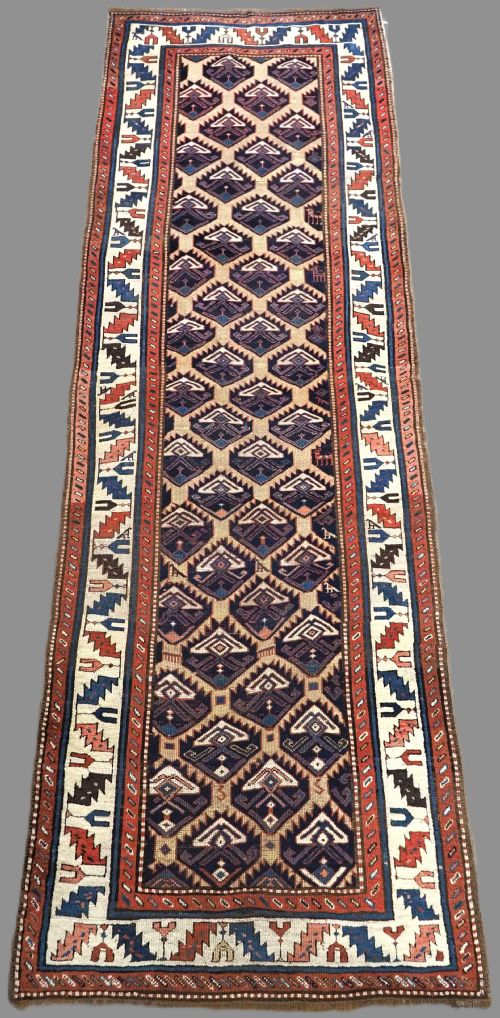
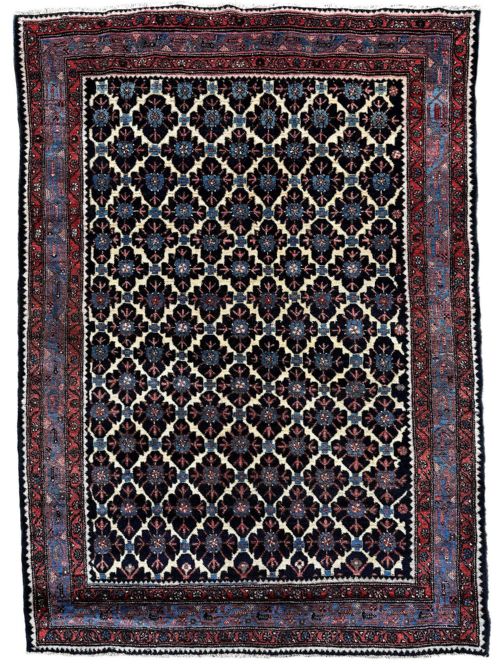
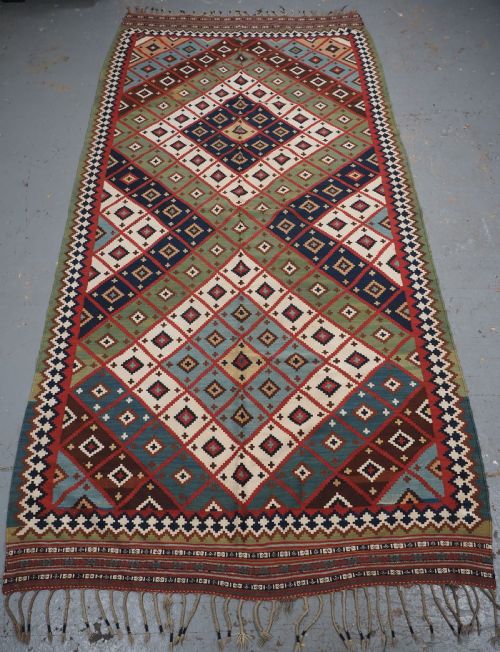
A persian lattice pattern rug displays a repeating geometric network enclosing floral motifs across the field. You meet these pieces in formats ranging from small hallway runners to large area carpets.
The selections span the late nineteenth century through to the mid-twentieth century. Origins include specific regional weaving centres such as Veramin, Joshagan, Mahal, and Hamadan.
Tribal and village pieces appear alongside room-size city carpets. Styles encompass Persian traditional, Caucasian, Mughal, and Baluch traditions.
Materials and construction
Weavers construct these floor coverings using wool pile on cotton foundations. Hand-spun wool provides the durable surface texture seen throughout the selection.
Natural dye traditions dictate the palette of the older examples. Foundation threads and pile yarns undergo manual preparation before knotting.
Dated examples span five decades from eighteen-eighty to nineteen-forty, representing diverse regional weaving traditions.
Judging the weave and design
Quality rests in the precision of the lattice grid and the crispness of the enclosed motifs. Finer knots permit more intricate delineation of the geometric flowers.
The character of the wool and the depth of the dye saturation distinguish village work from workshop productions. Structural integrity across the borders and corners completes the assessment.
The Persian Lattice Pattern Rug Glossary
- Lattice design
- A repeating network of intersecting diagonal lines forming compartments across the field. This geometric framework typically encloses floral or boteh motifs.
- Mina Khani
- A specific traditional Persian pattern featuring a repeating arrangement of daisy-like flowers linked by curved vines. It forms a balanced grid across the rug field.
- Pile
- The upright yarn loop surface of a carpet that forms the nap. It is clipped evenly after knotting to reveal the design.
- Runner
- A long, narrow carpet format designed for corridors and hallways. These pieces measure significantly longer than their width.
- Kilim
- A flat-weave carpet produced without a pile. The surface results from tightly interwovens warp and weft threads.
Persian Lattice Pattern Rug: Frequently Asked Questions
Where should I place a runner?
Runners suit narrow spaces such as hallways, corridors, and bedside areas. Their elongated proportions fit straight architectural passages.
Ensure the floor surface underneath is even and utilise an appropriate underlay to prevent sliding.
How do I clean my carpet?
Regular gentle vacuuming without a beater bar removes loose dirt from the wool pile. Professional specialist cleaning remains essential for deep maintenance.
Avoid saturation and harsh chemical detergents which damage natural dyes.
What defines a tribal rug?
Tribal rugs originate from nomadic or village weavers working outside major city workshops. Their designs often rely on memory and local tradition rather than drawn cartoons.
These pieces frequently display charming irregularities in symmetry and colour changes within the field.
How do I date these textiles?
Dating relies on wool characteristics, dye palettes, structural analysis, and stylistic conventions. Comparative study of known regional types helps narrow the period of origin.
Minor variations in construction indicate whether a piece dates to the nineteenth or twentieth century.