


Persian Veramin Rug
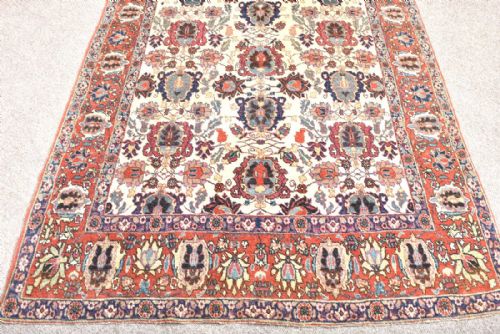
These persian veramin rug examples offer dense floral patterns and robust wool construction that anchor traditional interiors with genuine warmth and texture.
Persian Veramin Rug
A persian veramin rug represents a distinct tradition of floor coverings originating from the region south of Tehran, known for precise geometric and floral layouts. Buyers hunting for these pieces will encounter various formats, ranging from smaller scatter rugs to substantial carpets and narrow hallway runners.
The specimens seen across the inventory span the early decades of the twentieth century, specifically between 1900 and 1930. Persian and Persian traditional styles dominate, occasionally intersecting with tribal influences such as Kurdish Varamin weaving traditions.
How they were made
Weavers constructed these floor coverings using durable wool pile knotted onto sturdy cotton foundations. This pairing provides both the soft surface texture required underfoot and the structural stability necessary for long-term endurance.
The production relies on traditional hand-knotting techniques executed in village and regional workshops. Artisans utilised local materials to create dense piles capable of holding intricate motifs like the stylised Mina Khana pattern.
The inventory records two primary structural materials used across these textiles: wool and cotton.
What varies in quality
Knot density and precision of pattern execution set superior examples apart from standard workshop output. Finer specimens display crisper delineation of floral motifs and botanical grids across the field.
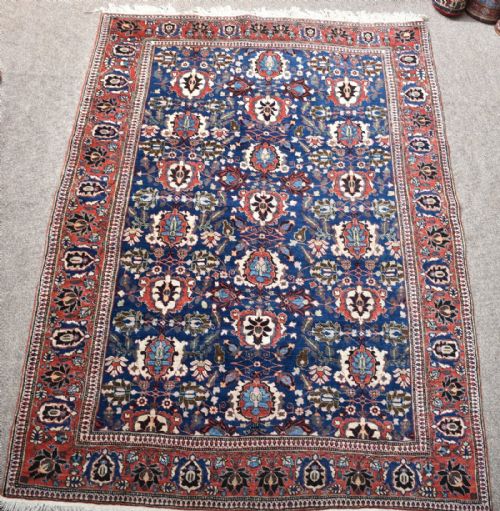
The handling of colour variation, such as mid blue grounds, influences the visual depth of the textile. Better pieces maintain balanced proportions and harmonious contrast between the central field and the surrounding borders.
The Persian Veramin Rug Glossary
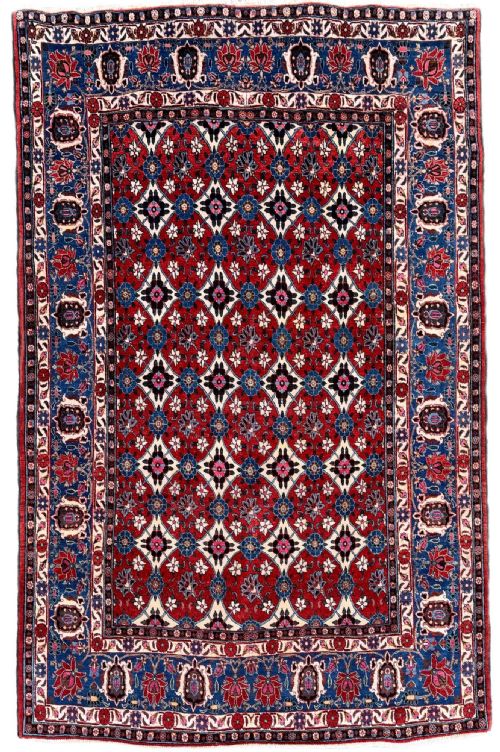
- Mina Khana pattern
- A repeating geometric floral motif of four-way blossoms arranged in a grid across the field. This design is characteristic of classic Persian village weaving.
- Runner
- A long, narrow carpet format specifically proportioned for corridors and hallways. Examples in this style often incorporate compressed border arrangements.
- Pile
- The upright yarn surface of the textile formed by individual knots. Its height and density determine the physical weight and tactile feel of the rug.
- Foundation
- The underlying structure of warp and weft threads that supports the knotted pile. Cotton serves as the standard material for these structural elements.
Persian Veramin Rug: Frequently Asked Questions
Where were they made?
These textiles originate from Veramin, an agricultural and carpet-weaving district located south of Tehran in Iran. Local workshops developed distinct visual vocabularies that set them apart from neighbouring production centres.
Weavers in this area drew upon regional motifs, integrating structured floral repeats and geometric frameworks into their floor coverings.
How do I care for a runner?
Regular gentle vacuuming without a beather bar helps remove embedded dust from the wool pile. Professional cleaning should be undertaken periodically by specialists familiar with antique Persian textiles.
Placing an appropriate underlay beneath the piece prevents slipping and reduces friction between the cotton foundation and the floor.
What is a Mina Khana pattern?
This traditional motif consists of repeating daisy-like flowers connected by a delicate lattice network. It creates a balanced, harmonious field that remains a hallmark of regional design.
The geometry requires careful planning by the weaver to maintain symmetry across the entire surface of the rug.
How do I date these carpets?
Dating relies on examining the specific materials, dye palettes, and structural wear characteristics visible in the piece. Evidence from early twentieth-century examples points to specific wool textures and knotting styles typical of the 1900 to 1930 era.
Comparing border details and stylistic shifts helps place an unmarked specimen within its historical period.