


Persian Hallway Runner Rug
A persian hallway runner rug brings linear warmth to long corridors through traditional regional patterns.
Persian Hallway Runner Rug
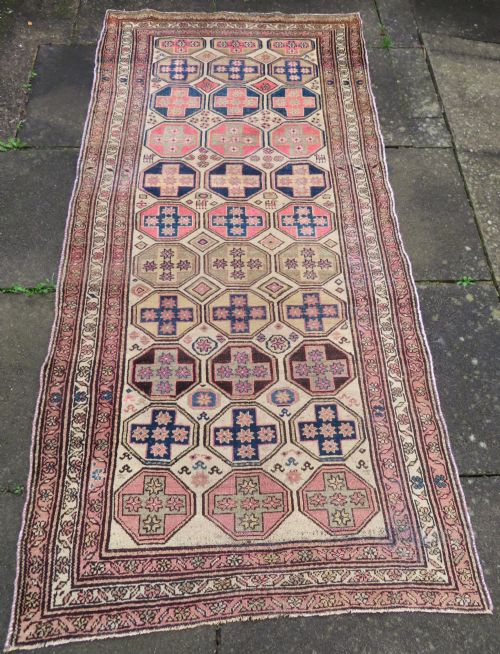
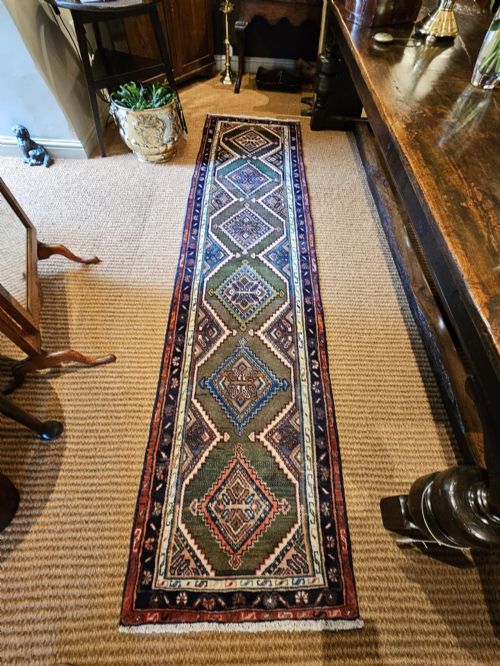
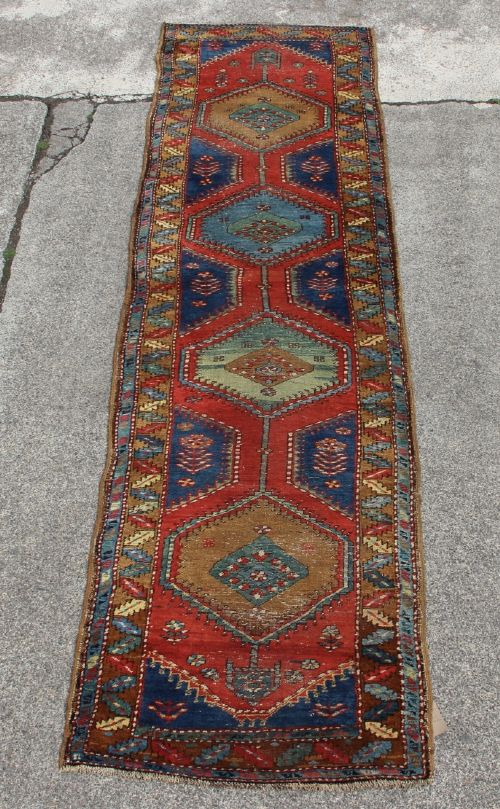
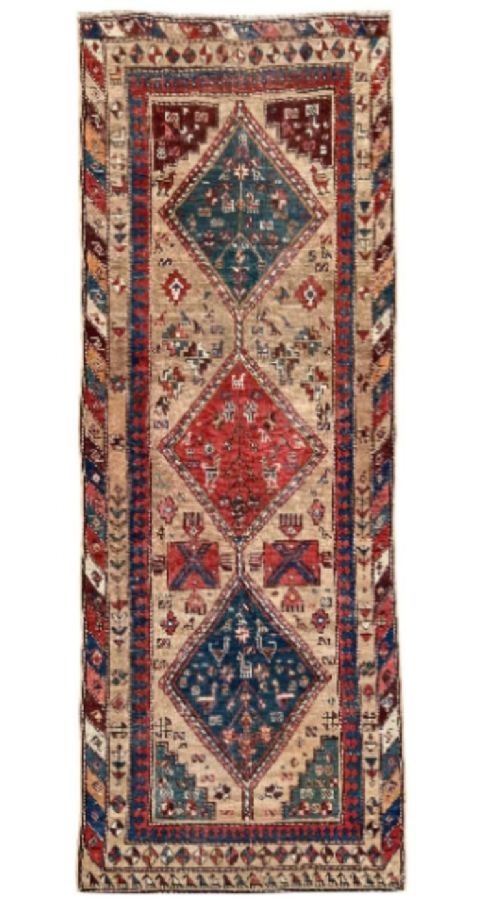
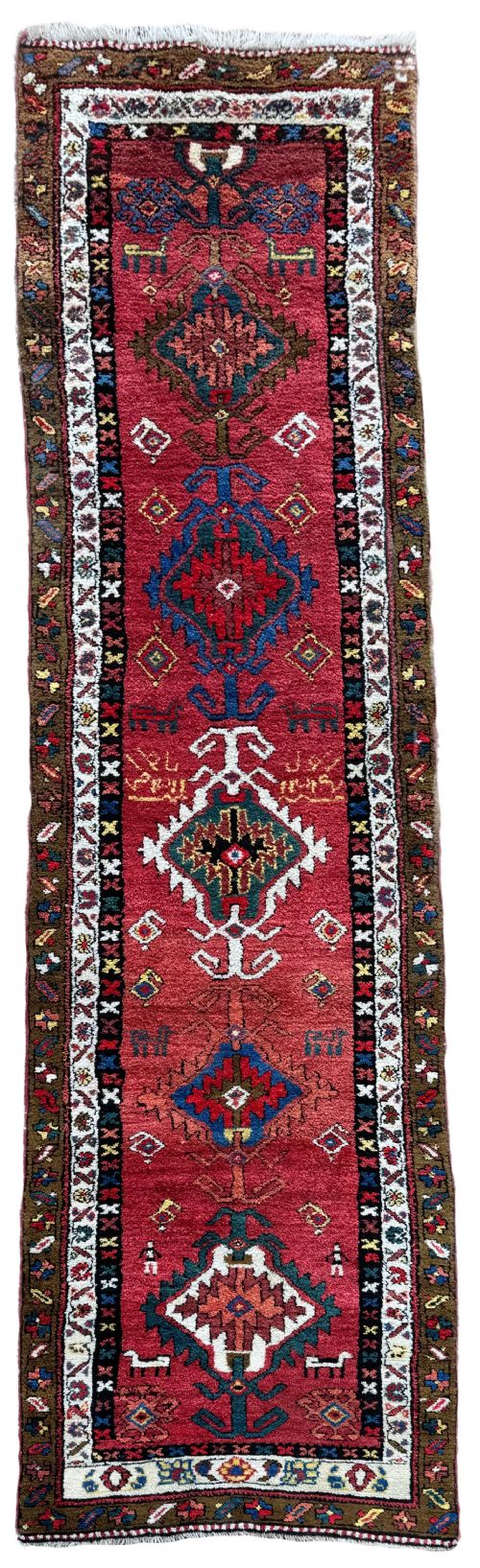
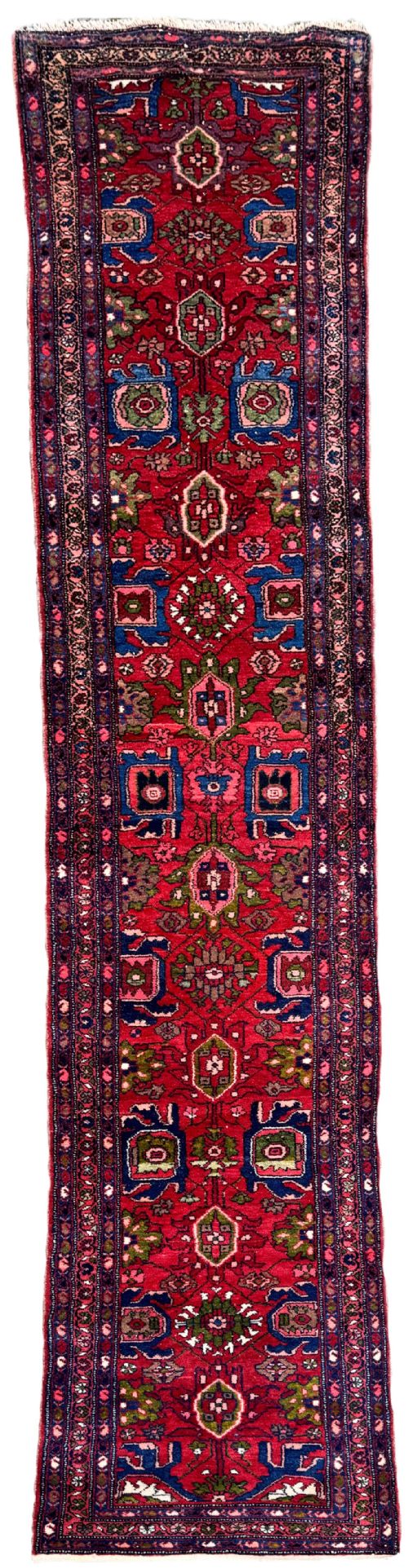
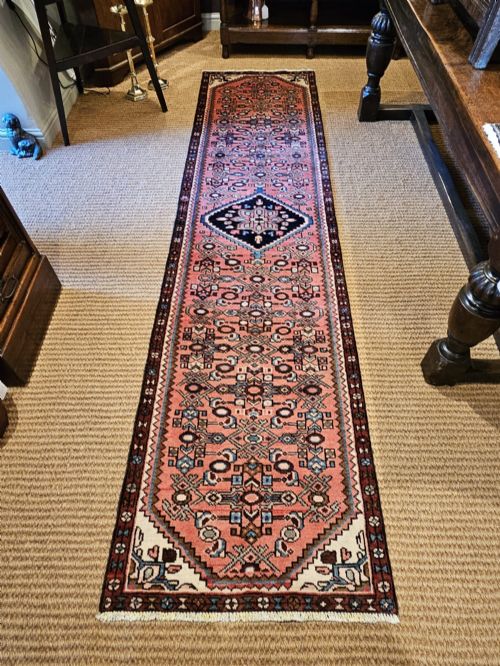
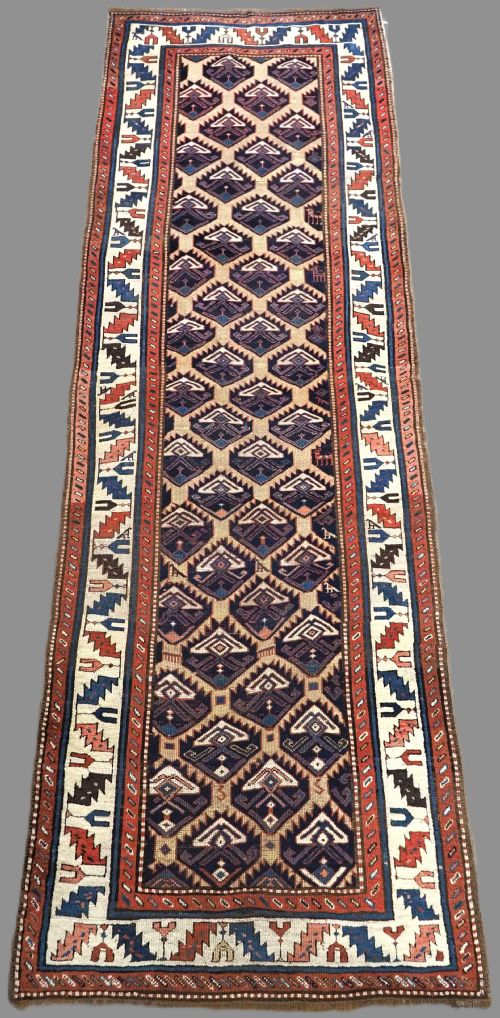
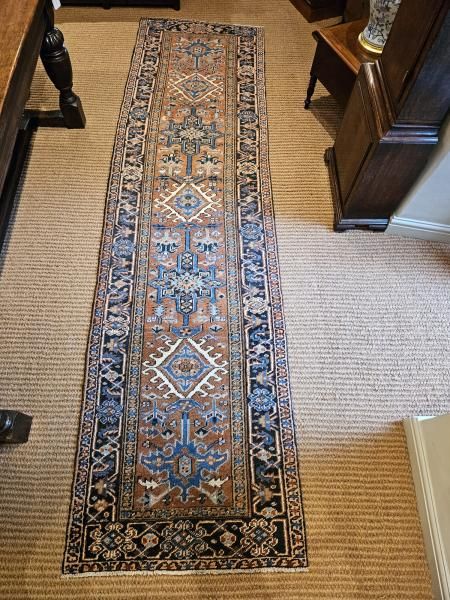
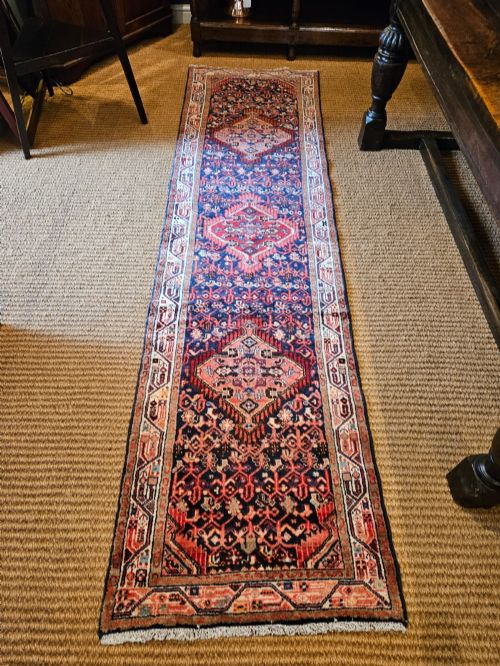
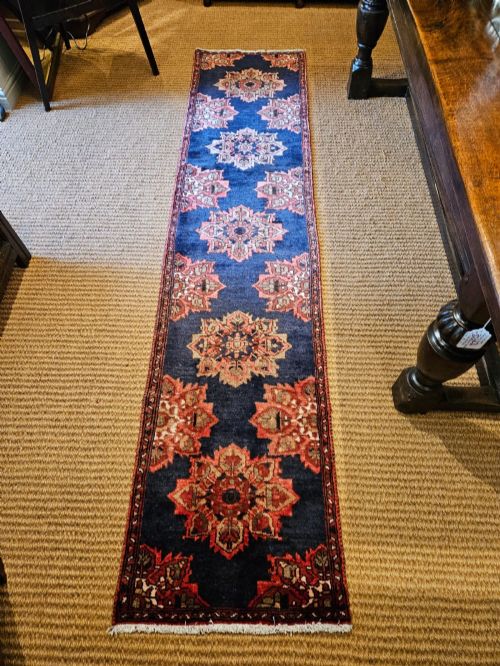
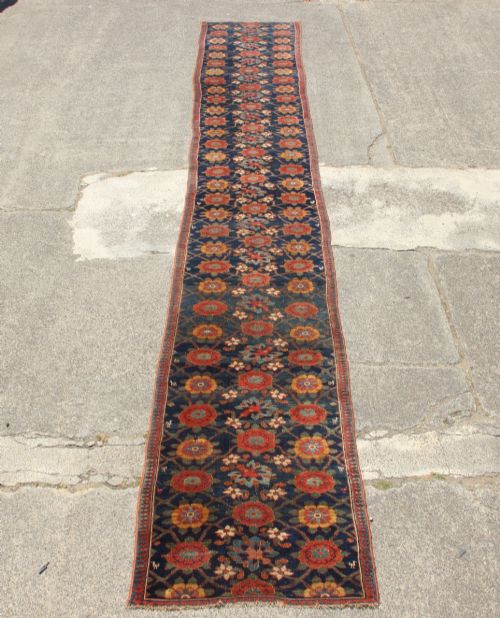
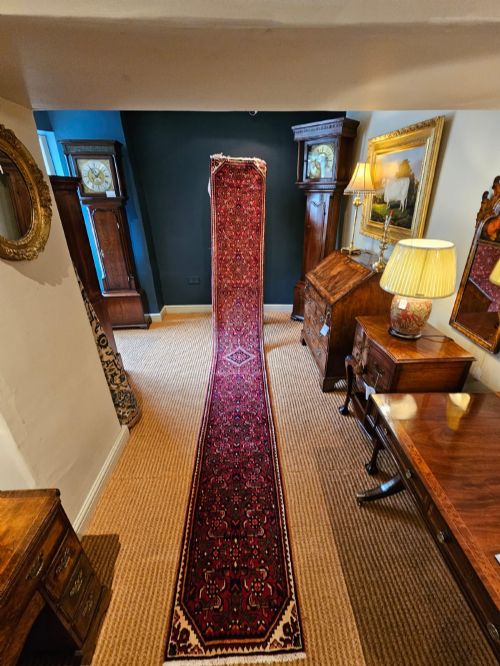
A persian hallway runner rug is a long, narrow floor covering designed for corridors, landings, and halls. These pieces originate from various regions including Heriz, Hamadan, and Kurdish areas, spanning dates from the nineteenth century into the twentieth century.
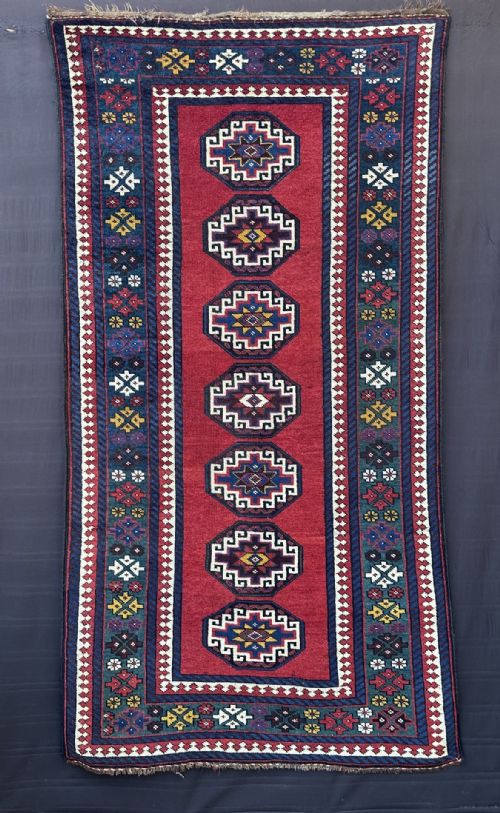
Most examples encountered here follow traditional tribal or classical Persian layouts scaled specifically for narrow spaces. They combine geometric medallions or all-over lattice motifs with elongated formats intended to anchor high-traffic passageways.
How they were made
Weavers constructed these long carpets using wool piles hand-knotted onto sturdy cotton foundations. This pairing provided the structural resilience required for prolonged floor use while allowing intricate pattern work.
Natural dye materials yielded deep tones of navy, olive green, and contrasting reds that developed rich patinas over decades of wear.
Listings span from the nineteenth century to the 1930s, utilising wool and cotton across diverse regional styles.
What varies in quality
Quality rests upon knot density, structural integrity, and the precision of the drawn design. Finer specimens display tight, even pile work that preserves intricate geometric lines along extended lengths.
The condition of the foundation and original selvedges dictates long-term durability. Examples retaining their initial proportions and uncompromised wool pile sit at the upper end of the scale.
Heriz·Hamadan·Sarouk·Bidjar·Shirvan
The Persian Hallway Runner Rug Glossary
- Runner
- A long, narrow carpet format specifically proportioned for corridors, hallways, and staircases. It directs movement through domestic spaces.
- Pile
- The upright loops or cut yarn ends forming the textured surface of a rug. It absorbs foot traffic and displays the woven design.
- Selvedge
- The reinforced outer edge of a carpet where weft threads turn back. It prevents fraying and maintains the linear shape.
- Medallion
- A central decorative motif placed in the field of a rug. It often anchors symmetrical geometric or floral compositions.
- Lattice
- An repeating network of diagonal lines forming a grid pattern across the field. This geometric framework structures many tribal designs.
Persian Hallway Runner Rug: Frequently Asked Questions
Where should I place a runner?
These long formats suit corridors, narrow entryways, and landing spaces where linear floor coverage is needed.
They guide movement through transit areas while protecting timber or stone flooring from heavy footsteps.
How do I clean an old wool runner?
Gentle surface brushing and careful vacuuming without a rotating beater bar remove loose dust and debris.
Professional specialist washing is recommended for deep cleaning to protect antique wool fibres and natural dyes.
Are these rugs durable enough for daily use?
The combination of dense wool pile and sturdy cotton foundations provides strong natural resistance to wear.
Placing a suitable underlay beneath the piece prevents slipping and reduces friction against the floor.
How do I identify a tribal design?
Tribal pieces often feature geometric motifs, stepped polygons, and spontaneous layouts rather than strict court symmetry.
Weavers from Kurdish, Afshar, and Caucasian groups relied on traditional memory patterns passed down through generations.