

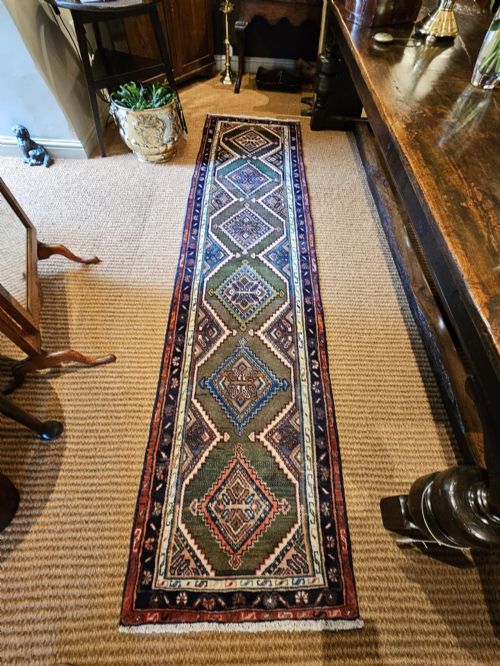



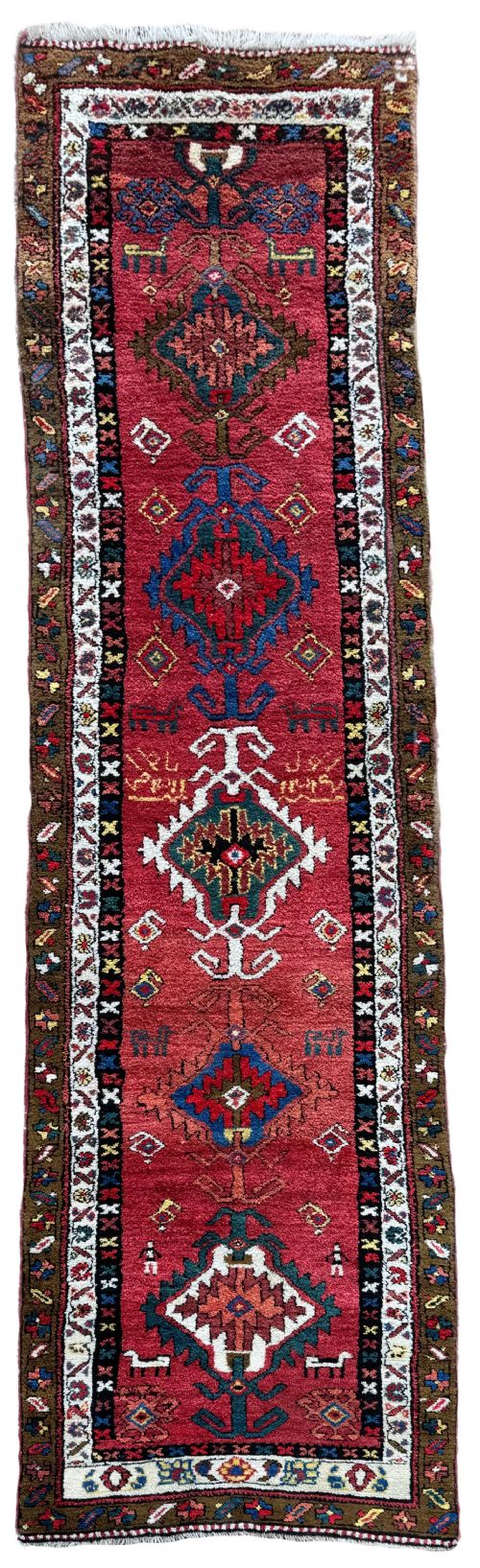
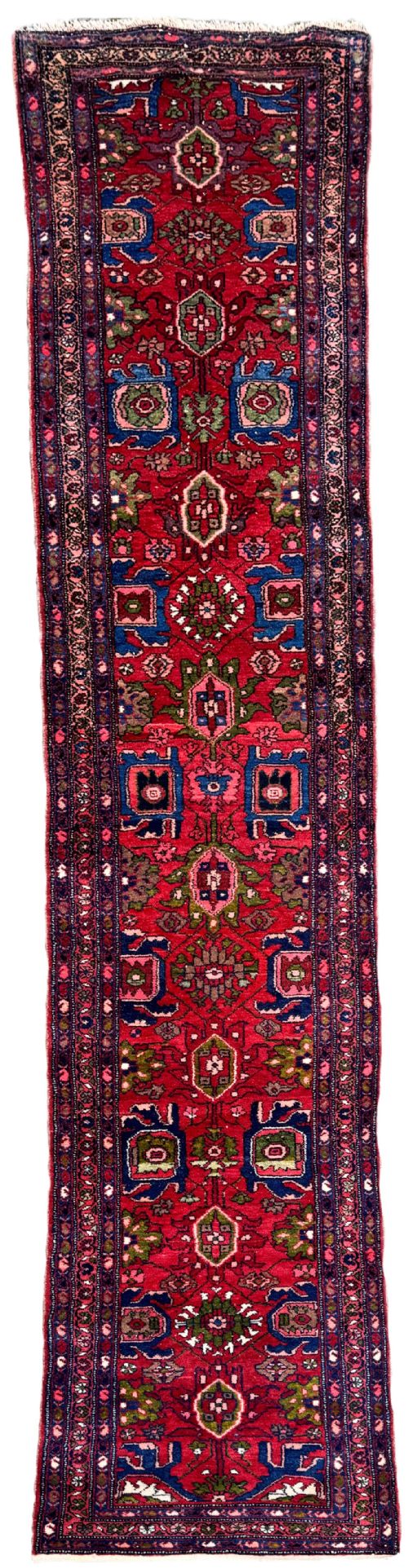
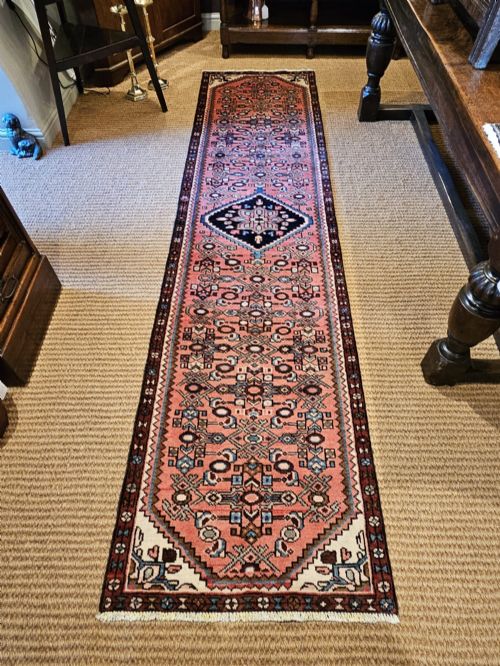
Geometric Persian Hallway Carpet
A geometric persian hallway carpet brings linear village motifs and tribal character into long corridors, offering durable wool construction designed for heavy footfall.
Geometric Persian Hallway Carpet
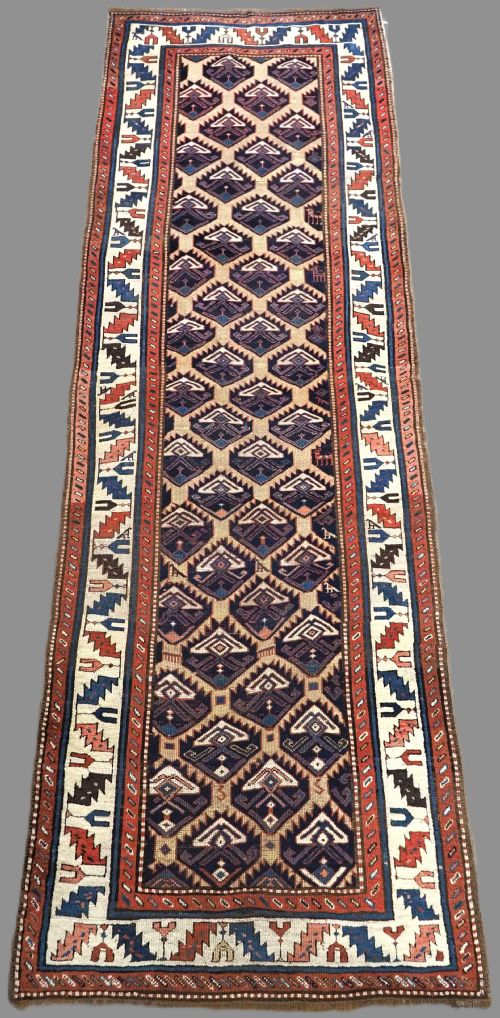
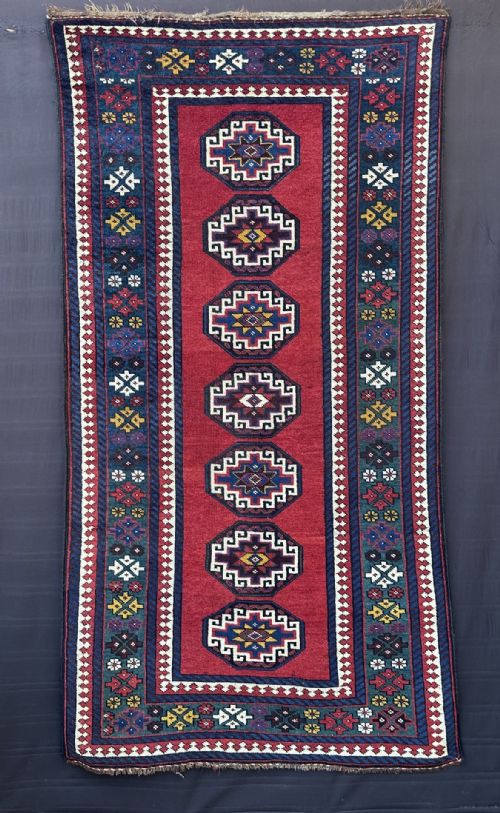
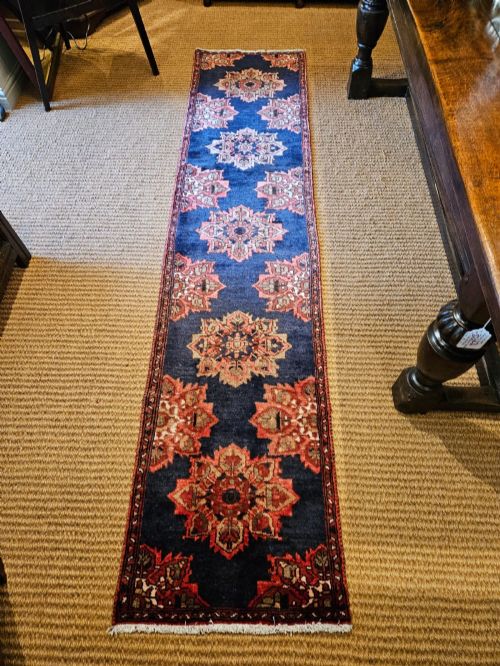
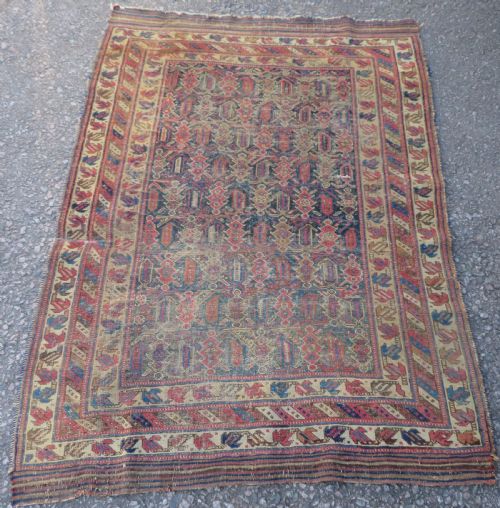
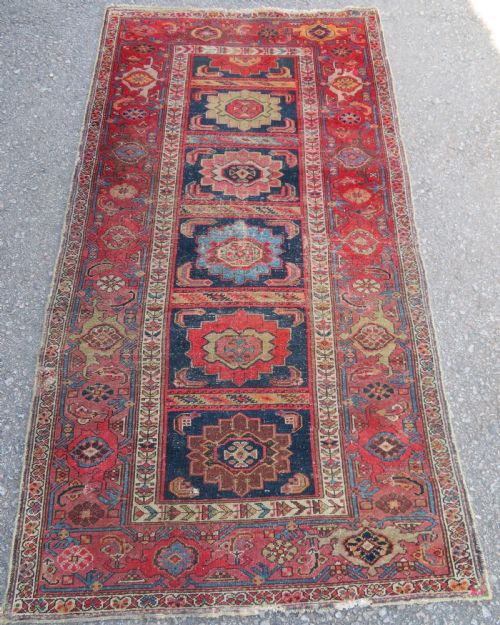
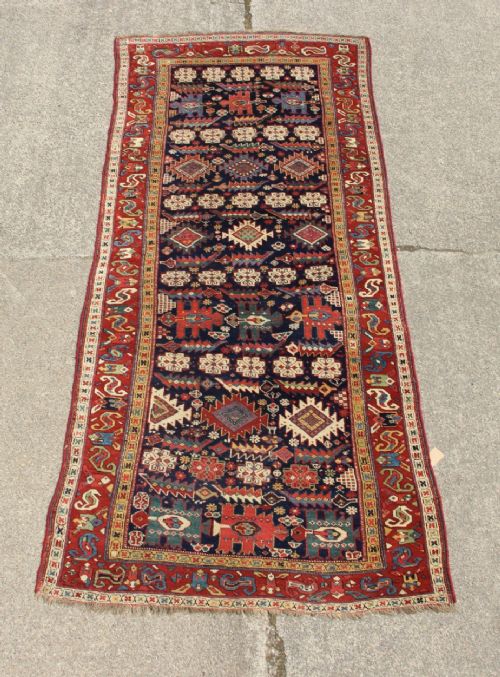
When searching for a geometric persian hallway carpet, buyers encounter long, narrow formats specifically tailored for corridors and passages. These pieces span production periods from the late nineteenth century through to the early decades of the twentieth century, originating from village and tribal workshops across Persia and the Caucasus.
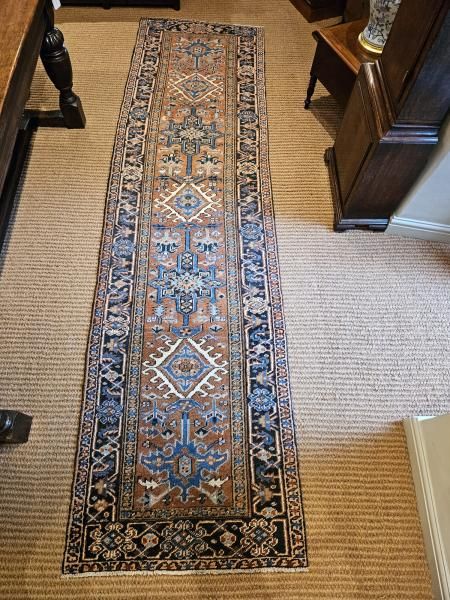
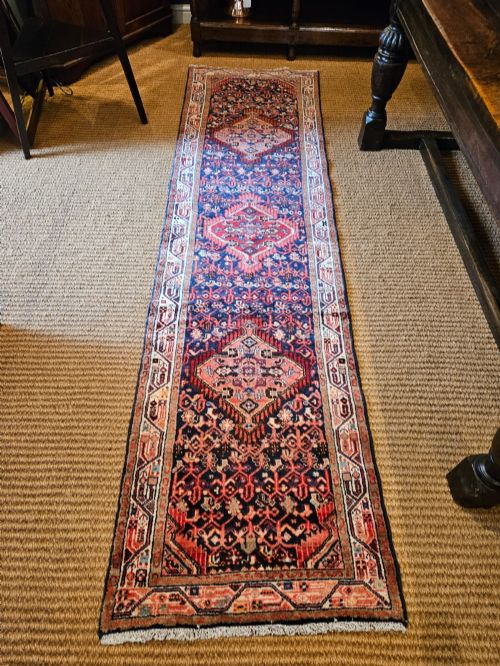
The designs rely heavily on repeating medallions, latch-hook motifs, and linear lattices rather than flowing floral court patterns. Runners and long rugs dominate the selection, measuring significantly longer than they are wide to fit traditional hallways.
Pieces attributed to regional production centres such as Heriz, Hamadan, Kurdish areas, and Bidjar appear frequently in this selection. Each region brings distinct structural habits and geometric vocabulary to the finished weaving.
Materials and construction
The foundation relies on sturdy cotton warps and wefts, paired with durable wool pile that withstands decades of transit. Certain examples utilise hand-spun wool, yielding variable texture and natural absorption of traditional vegetable dyes.
Weavers knotted the pile by hand onto vertical looms, utilising village techniques passed down through generations. This straightforward method produced tight, resilient structures capable of absorbing constant wear in domestic hallways.
Some antique runners arrive with slightly crooked geometric lines, tracing the exact moment the village weaver adjusted posture on the loom.
Separating top examples from standard pieces
Quality rests in the crispness of the geometric drawing and the saturation of the wool pile. Tighter knotting yields sharper definition in the lattice and medallion work, whereas looser weaving softens the linear edges.
The integrity of the wool foundation and the consistency of the hand-spun yarn dictate longevity. Patination and low pile reveal the underlying structure, showing whether the weaving held its tension evenly across the long format.
The Geometric Persian Hallway Carpet Glossary
- Runner
- A long, narrow carpet format designed primarily for hallways, corridors, and staircases. These pieces measure several times longer than their width.
- Medallion
- A central ornamental motif set into the field of the carpet. In geometric examples, these shapes tend to be polygonal, diamond, or stepped.
- Lattice
- An repeating network of intersecting lines forming diamond or grid patterns across the field. This element dominates many tribal and village designs.
- Hand-spun wool
- Yarn spun by hand rather than by industrial machinery, creating irregularities in thickness that take dye with rich variation. This material adds subtle texture to the surface of older runners.
- Warp
- The stationary vertical threads stretched on the loom that form the skeleton of the carpet. Cotton serves as the standard warp material in these regional runners.
Geometric Persian Hallway Carpet: Frequently Asked Questions
How do I choose the right hallway runner length?
Measure the clear floor space of your hallway, leaving a uniform margin of exposed floorboards or stone around the perimeter. Narrow runners typically range from under a metre to roughly one metre in width.
Account for doorways and clearance requirements so the rug does not obstruct internal doors opening into the hallway. Longer passages often utilise runners exceeding four metres to maintain visual continuity.
What is the difference between Heriz and Hamadan runners?
Heriz runners display bold, architectural geometric layouts with large central medallions and robust structural wool. Their designs originate from the mountains of north-west Persia.
Hamadan runners encompass a broader group of village productions featuring repeated all-over patterns and diverse tribal motifs. They utilise sturdy cotton foundations suited to heavy traffic.
How do I care for an antique wool runner?
Vacuum the runner gently using suction attachments without a rotating brush bar to protect the hand-knotted pile. Rotate the piece periodically to distribute wear evenly along the length of the corridor.
Keep the runner away from prolonged direct sunlight to prevent natural dye fading. Use a breathable underlay to prevent slipping and cushion the wool against hard floors.
Are these runners made with natural dyes?
Nineteenth and early twentieth-century village weavers relied on traditional natural dye sources, including madder root and plant extracts, to colour the wool. These materials age gracefully with subtle tonal shifts.
Examine the wool pile in natural light to spot gentleabrash, where colour tones vary slightly due to different dye batches. This tonal variation signals traditional hand-dyeing methods.