


Persian Geometric Accent Rug
These Persian geometric accent rug examples bring tribal artistry into smaller spaces through village and nomad weaving traditions spanning the late nineteenth and early twentieth centuries.
Persian Geometric Accent Rug
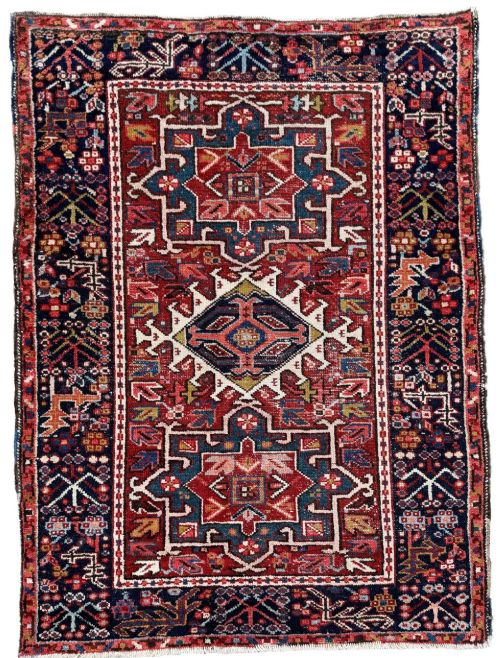
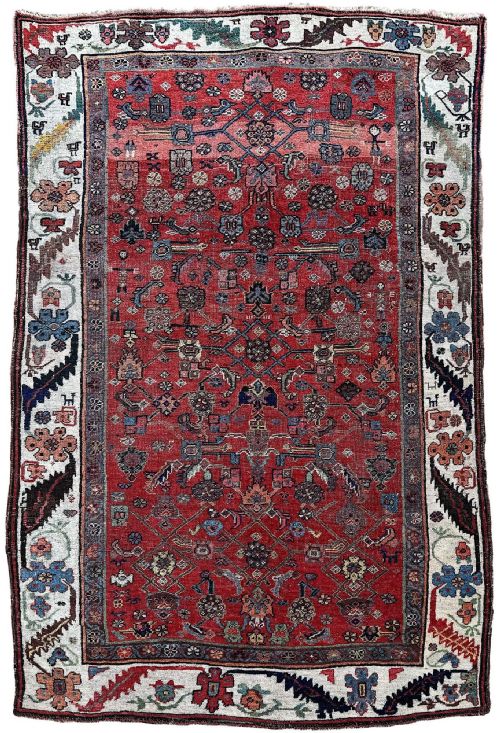
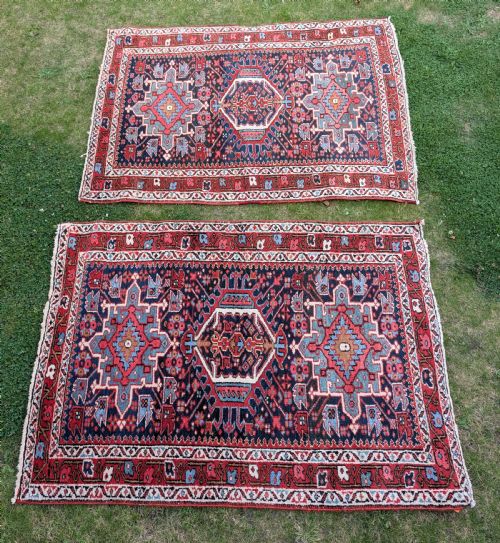
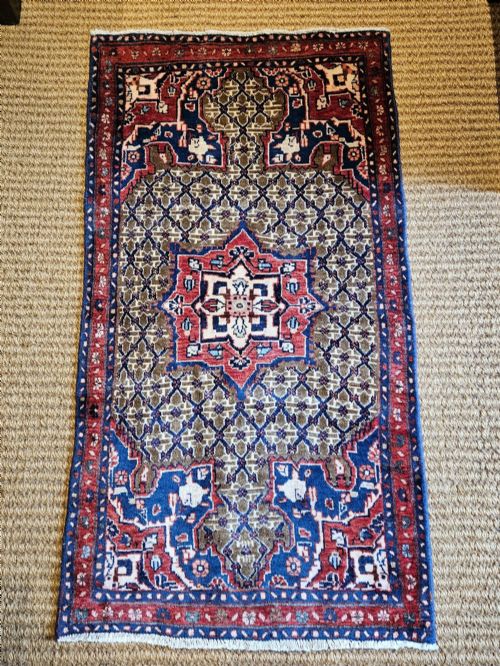
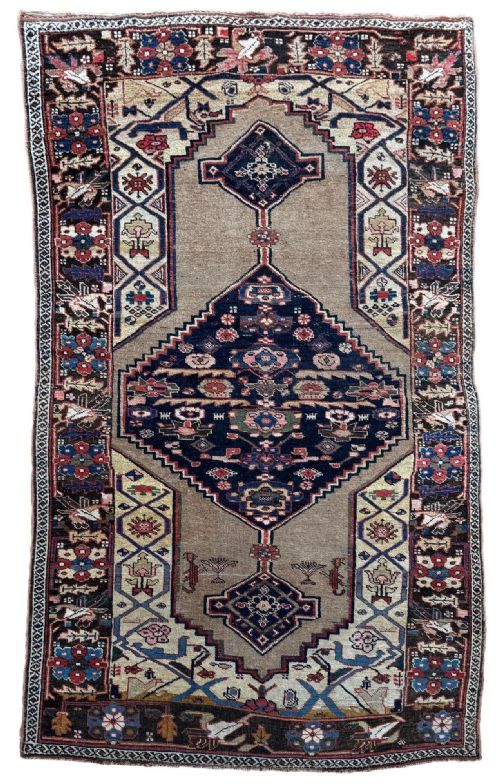
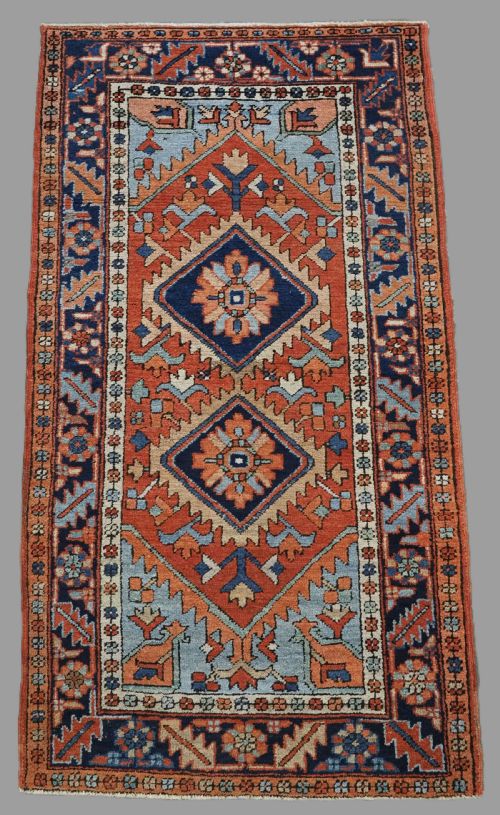
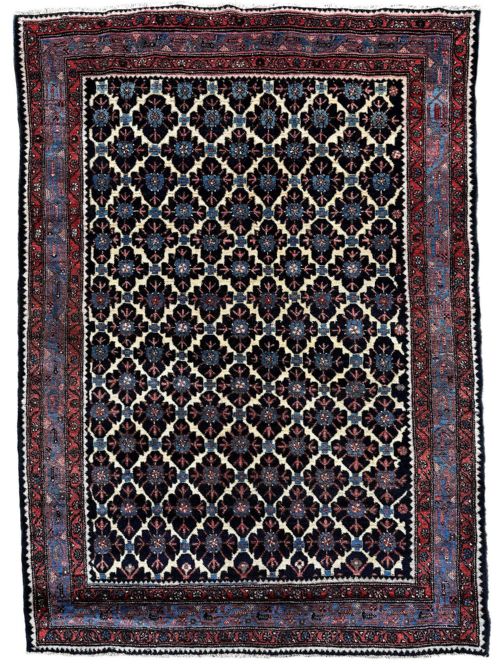
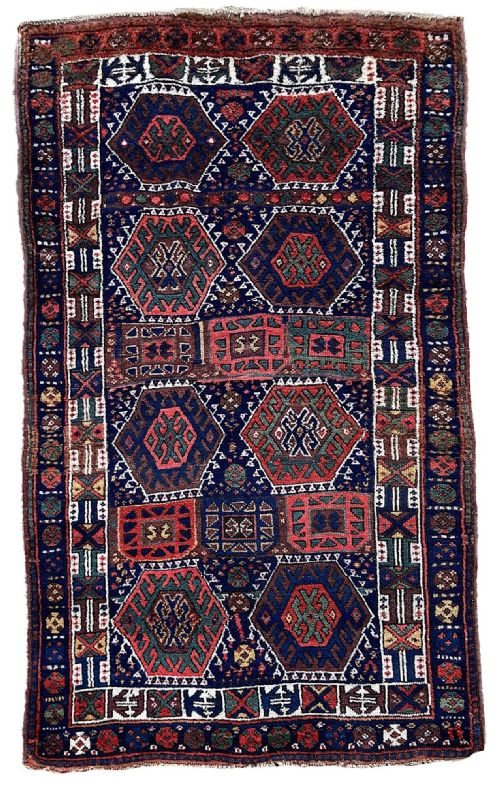
A Persian geometric accent rug represents centuries of village and nomadic weaving traditions from across Iran, including regions such as Heriz, Karaja, Bidjar, and Hamadan. Buyers seeking this type of furnishing will encounter smaller formats like hearth rugs, scatter sizes, and bag faces that suit compact rooms.
The aesthetic relies on rectilinear medallions, repeating latch-hook motifs, and bold angular lattice patterns rather than the curved floral schemes found in city workshop carpets. These smaller textiles function as practical floor coverings or decorative cushions originating from distinct tribal groups.
Most entries date from the late nineteenth century up through the nineteen-thirties, reflecting traditional hand-weaving methods passed down through generations of weavers. The inventory leans heavily toward regional village pieces produced by Kurdish, Afshar, Baluch, and Qashqai makers.
How they were made
Construction relies on hand-spun wool foundations paired with wool pile, frequently utilising cotton warps in specific regional workshops to achieve structural stability. Natural dyes provide the palette, yielding deep tones that mellow gradually across decades of use.
Weavers tied symmetrical or asymmetrical knots by hand onto vertical looms, beating each row down firmly with heavy combs to create a dense, durable textile. Finishing techniques involve securing the side selvedges with wool whipping and leaving the ends with original kilim ends or braided fringes.
Listings span production dates from eighteen-fifty through nineteen-thirty, capturing decades of nomadic and village weaving traditions.
What varies in quality
Quality rests primarily in the crispness of the drawing, where superior examples exhibit precise geometry and uncluttered negative space within the field. The complexity and saturation of the natural dye palette also dictate the visual depth of the textile.
Structural integrity depends upon the density of the knotting and the evenness of the wool pile across the surface. Pieces retaining their original outer borders and secure edges command greater appreciation among collectors.
Afshar Nomads·Mahdad Khani Tribe
The Persian Geometric Accent Rug Glossary
- Medallion
- A central decorative motif set into the middle of the rug field. It typically takes a geometric, star, or hexagonal shape in village weavings.
- Warp
- The vertical foundation threads stretched lengthwise on the loom before knotting begins. Cotton warp threads appear frequently in regional town carpets.
- Weft
- The horizontal threads passed back and forth across the warp strings after each row of knots. They bind the structure together tightly.
- Selvedge
- The reinforced outer edge running parallel to the length of the rug. It prevents the sides from fraying and defines the textile boundary.
- Bag face
- The decorative front panel of a utilitarian nomadic storage sack repurposed as a small rug or cushion. These panels often display concentrated tribal designs.
Persian Geometric Accent Rug: Frequently Asked Questions
What is a persian geometric accent rug?
It is a small hand-knotted floor covering originating from village or nomadic workshops in Iran, featuring angular motifs rather than floral curves.
These pieces typically measure under two metres in length, making them suitable for hearths, hallways, or compact seating areas.
How do i tell a heriz rug from a karaja rug?
Heriz rugs generally display large, bold geometric medallions with prominent corner spandrels and sturdy structural weight. Karaja rugs often feature multiple small medallion repeats or distinct geometric box patterns arranged in a row.
Both regional styles share a heavy village build quality using saturated natural dyes on wool foundations.
Where were baluch rugs made?
Baluch rugs were woven by nomadic and semi-nomadic tribes inhabiting the borderlands of eastern Persia, alongside related groups in Baluchistan. These pieces frequently incorporate deep indigo, madder red, and dark brown wool.
Weavers often utilised prayer designs or repeating box medallion patterns within compact formats.
How should i care for an antique wool rug?
Vacuum the rug gently without using a rotating brush bar to prevent snagging the hand-spun wool pile. Keep the textile out of direct sunlight to protect the natural dyes from fading over time.
Professional cleaning should occur infrequently using traditional hand-washing methods suited for antique textiles.