





Persian Bird Rug
These woven textiles gather avian motifs across regional Persian traditions, offering collectors rich village and tribal designs from the late nineteenth and early twentieth centuries.
Persian Bird Rug
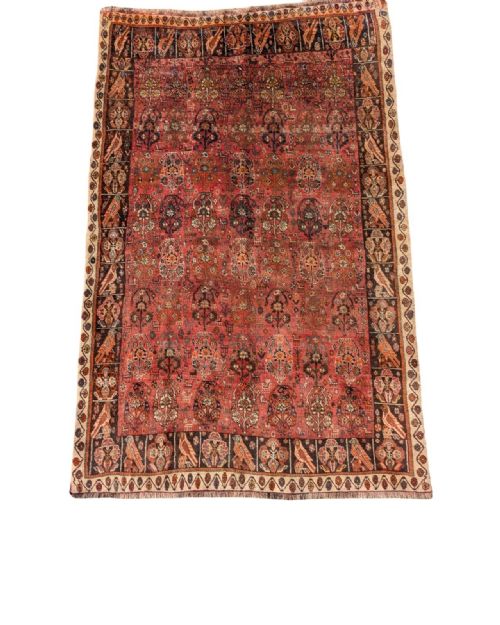
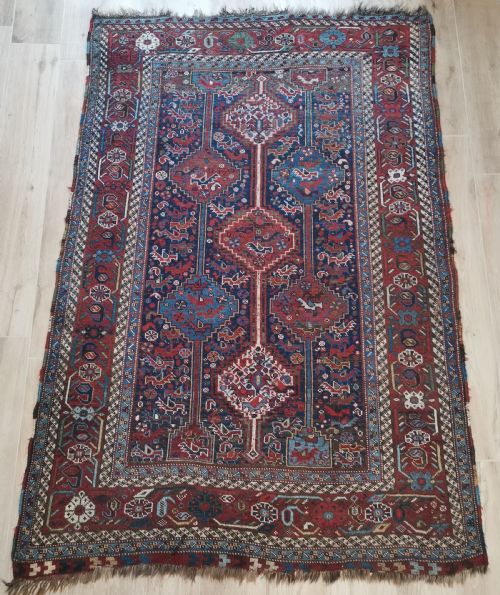
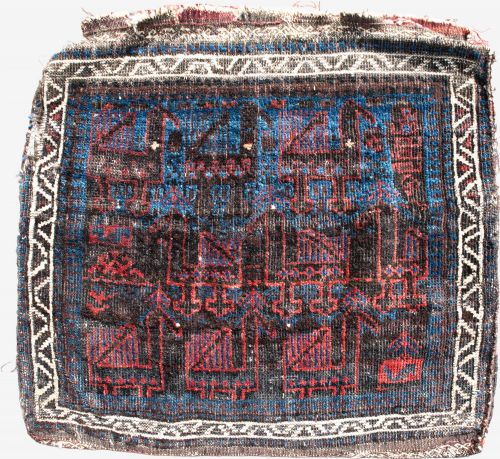
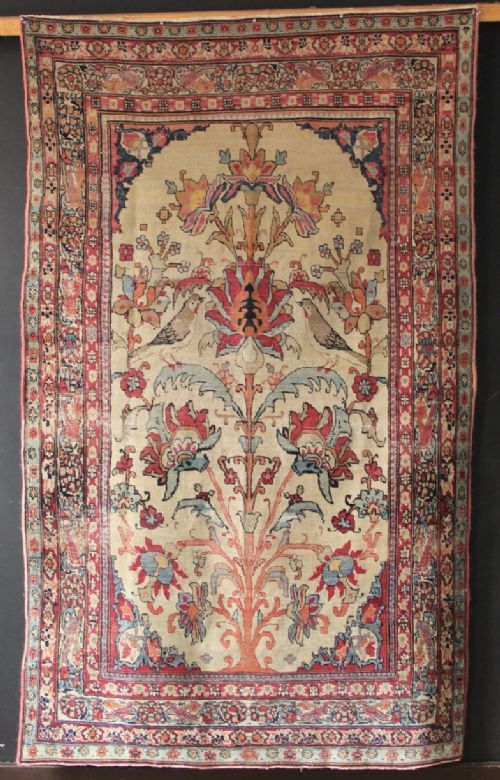
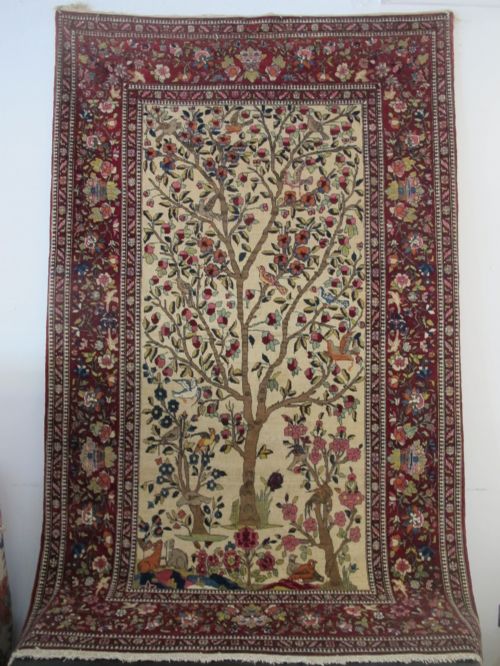
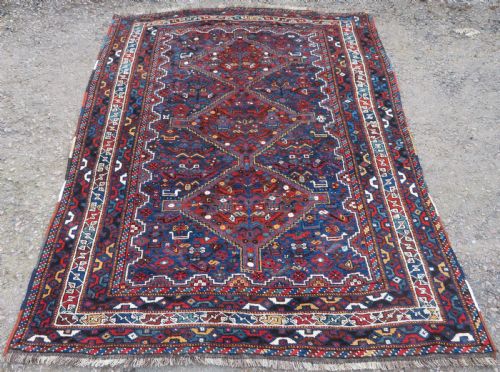
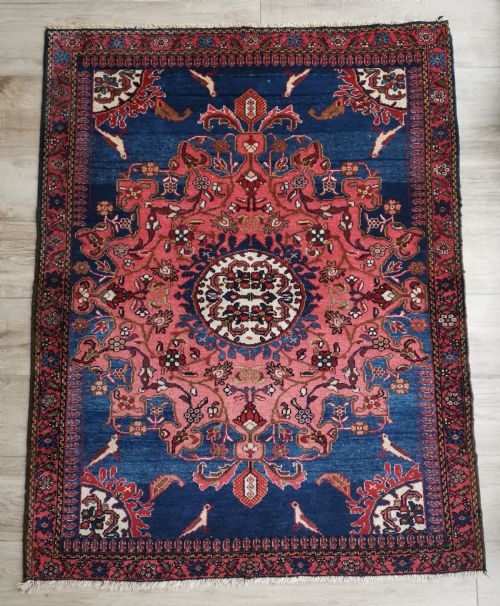
When you search for a persian bird rug, you encounter hand-knotted room-sized carpets, village runners, and small nomadic bag faces featuring stylised fowl, pecking chickens, and birds perched on trees. These pieces emerge from tribal groups and weaving centres across Persia, including Khamseh, Kirman, and Isfahan, spanning periods from the late nineteenth century to the interwar decades.
The regional diversity is wide, showing South West Persian nomadic works alongside formal city pieces. Village weavers rendered lively repetitions of birds and flora, while workshop looms produced finely detailed carpets with integrated animal and tree motifs.
Nomadic items such as Baluch bag faces and Shahsavan soumak pieces represent the smaller formats common to this category, whereas Khamseh and Malayer looms yielded larger floor coverings with dense avian iconography.
Materials and construction
Weavers relied principally on wool and cotton foundations, incorporating hand-spun wool for pile yarns and occasionally goat hair in tribal pieces. Natural and vegetable dyes provided the enduring palette seen across these rugs, creating deep tones that hold their character over generations.
Techniques varied from standard symmetrical knotting in village carpets to flatwoven soumak work on Shahsavan bag faces. Foundation threads of cotton or wool were manipulated on upright and horizontal looms to support dense piles or crisp geometric flatweave structures.
Listings feature wool, cotton, and natural dyes across village and tribal styles from eighteen-seventy to nineteen-thirty.
Assessing quality
Quality rests on the crispness of the drawing and the saturation of the natural dyes. Superior examples display sharply defined avian forms and balanced placement against the field, whereas lesser pieces show crowded or stiffly rendered motifs.
The integrity of the wool foundation and the handling of the pile height dictate the resilience of the textile. Finely spun wool retaining its original lanolin creates a supple handle that distinguishes workshop masterpieces from standard village output.
The Persian Bird Rug Glossary
- Soumak
- A flatweaving technique that wraps coloured weft threads over the warp to create a textured, durable surface. It appears frequently on nomadic bag faces and animal trappings.
- Bag face
- The decorative front panel of a utilitarian storage sack produced by nomadic weavers. These remnants are often mounted or collected independently for their compact tribal designs.
- Boteh
- A stylised almond or paisley motif representing a floral shoot or cypress tree. This symbol occurs often alongside avian elements in village and tribal weaves.
- Khamseh
- A confederation of nomadic tribes in South West Persia known for deeply saturated wool and bold tribal iconography. Their weavings frequently incorporate chickens and quadrupeds.
- Lavart
- A descriptor for fine Kirman weaving associated with soft wool and intricate floral compositions. These pieces represent the height of central Persian workshop production.
Persian Bird Rug: Frequently Asked Questions
What defines a bird rug?
These textiles feature recognisable avian figures integrated into the field design, often depicted as pecking chickens, pairs flanking trees, or scattered waterfowl.
Weavers across Persian tribal and village groups incorporated these creatures into geometric and pictorial compositions.
How old are these rugs?
The available pieces date primarily from the late nineteenth century through the early decades of the twentieth century.
Production periods span specific decades such as eighteen-eighty, nineteen-ten, and nineteen-thirty, reflecting traditional nomadic and village output.
Where were they made?
Originating across Persia, these works come from specific regions including South West Persia, Khamseh territories, Malayer, and Isfahan.
Nomadic confederations and settled village workshops each developed distinct structural methods and regional palettes.
How should I care for an antique rug?
Protect the textile by placing it in low-traffic areas away from direct sunlight to preserve the natural dyes and wool pile.
Vacuum gently without a rotating brush roll and consult a specialist for professional cleaning when necessary.