





Persian Baluchi Rug
A persian baluchi rug brings nomadic artistry into a room, offering rich woolwork and tribal motifs handed down through generations.
Persian Baluchi Rug
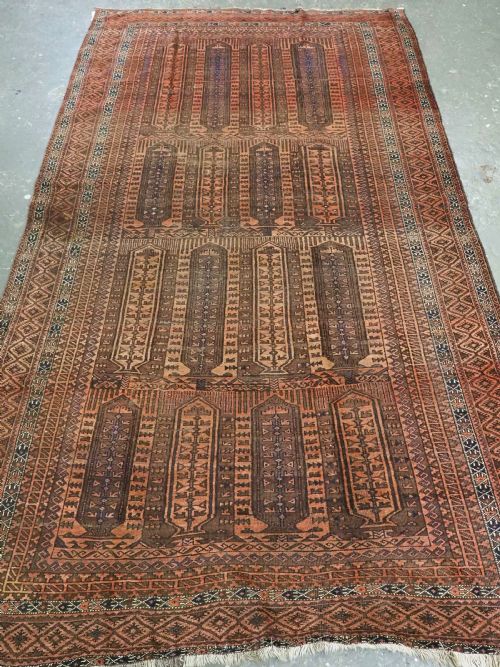
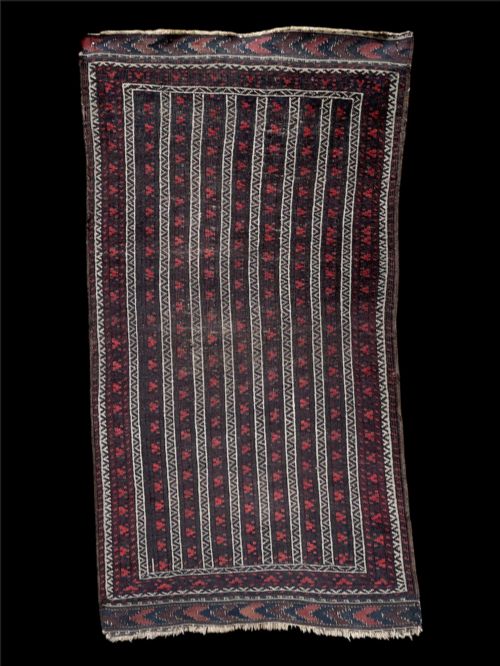
A persian baluchi rug represents the traditional weaving of nomadic and semi-nomadic groups originating across borderlands spanning Persia, Afghanistan, and the wider region. These floor coverings emerge in styles denoted as tribal, Baluch tribal, and Afghan tribal, reflecting centuries of mobile heritage.
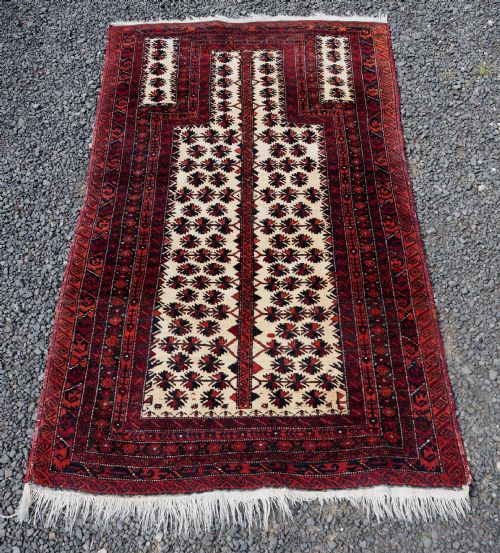
The pieces available here take the form of rugs, area rugs, and carpets, spanning a chronological range from the late nineteenth century into the twentieth century. Buyers encounter formats such as prayer rugs alongside larger main carpets, each displaying distinct regional patterns.
Makers utilised classic designs including the kalam donneh motif, repeat lotus leaf patterns, and other traditional tribal layouts. Regional attribution points to origins such as the Khorasan region or western Afghan territories.
How they were made
The construction relies on hand-woven wool, forming a dense and durable pile designed for nomadic life. Artisans employed natural dyes to achieve the varied colour palettes seen across these older carpets.
Weavers constructed these textiles on portable vertical or horizontal looms, incorporating structural techniques particular to tribal workshops. The resulting fabric combines resilient wool with traditional knotting methods.
Persian Baluchi Rug Retail Price Guide 2026
Typical asking prices for persian baluchi rug among the pieces listed under this phrase on Sellingantiques today, from the lower quarter to the upper quarter. They describe what is for sale here now, not the wider market.
Nomadic weavers often worked from memory alone, omitting preliminary sketches and letting the patterns evolve organically across the loom.
What varies in quality
The distinction between tiers rests upon the fineness of the knotting and the complexity of the design rendered by the weaver. Pieces featuring scarce layouts or unusual colour palettes tend to demonstrate greater artistic ambition.
Preservation of the wool pile and the integrity of the borders also determine the standing of an individual carpet. Examples retaining strong natural dyes and clear tribal iconography command greater attention.
The Persian Baluchi Rug Glossary
- Prayer rug
- A small rug featuring a mihrab or arch design intended to indicate the direction of prayer during religious observance. These pieces were woven for personal devotion.
- Kalam donneh
- A traditional motif resembling a stylised palm leaf or teardrop shape, frequently incorporated into tribal textile designs. It appears across various Anatolian and Persian carpets.
- Natural dyes
- Colourants derived from plant, insect, and mineral sources utilised before the widespread adoption of synthetic aniline dyes. They yield subtle tones that weather gracefully over decades.
- Main carpet
- A large-format floor covering intended for central placement in a dwelling, as opposed to smaller mats or prayer rugs. These pieces require substantial time and collaborative labour to weave.
- Tribal
- Pertaining to rugs produced by nomadic or semi-nomadic peoples rather than settled urban workshops. These designs preserve indigenous motifs passed down through family groups.
Persian Baluchi Rug: Frequently Asked Questions
How old are these rugs?
The pieces recorded here date from the late nineteenth century through to the early decades of the twentieth century, specifically spanning the period between eighteen-eighty and nineteen-thirty.
This timeframe encompasses examples attributed to the Victorian era and the interwar years, reflecting traditional nomadic production methods.
What is a prayer rug?
A prayer rug is a smaller format textile that traditionally incorporates an arched niche or mihrab motif within the design field. These rugs served a specific devotional purpose for the weaver or owner.
In domestic settings, they function effectively as wall hangings or accent pieces in smaller floor spaces.
Where were they made?
These textiles originate from nomadic and tribal groups operating across regions including Persia, western Afghanistan, and the Khorasan district. The makers moved across these borders while maintaining distinct weaving traditions.
Attributions often reference tribal groupings such as the Baluch or Timuri peoples.
How do I care for wool rugs?
Wool rugs require gentle treatment, including regular light vacuuming without a rotating brush to protect the pile and foundation. Keeping them out of direct sunlight prevents the natural dyes from fading prematurely.
Professional cleaning suited to antique textiles ensures the wool remains nourished over time.